


![[Marketing] Questao Topo - deslogado](https://storage.estuda.com.br/banners/0_6b7ebee90b03af1c560c73bb8bcce34a_banner_deslogado_70_dias.png)
Questões de Inglês
19.971 Questões
Questão 74 91305
UNIFESO 2014/2SARA STULAC is a paediatrician, but doctors in Rwanda
must be adaptable. One of her first patients after arriving from
America in 2005 was a young girl with a tumour the size of a
cauliflower on her face. The girl´s father had tried traditional
[5] healers and local doctors, but the tumour had grown, along
with expenses. An oncologist was needed. If only the country
had one. Eventually Dr Stulac called one in America who talked
her through the treatment that would save the girl´s life.
Residents of poor countries have long suffered from
[10]cancers, such as those of the liver and cervix, that are
associated with infections. But as they have grown richer,
drinking, smoking and fatty foods have led to more breast,
colorectal and lung cancer.
According to the World Health Organisation (WHO), low
[15] and middle-income countries accounted for 57% of the 14m
people diagnosed with cancer worldwide in 2012 – but 65% of
the deaths. Many developing countries do not have a treatment
centre. Even when it is available, the sick often delay because
they are poor or do not know that treatment is urgent. Besides
[20] although cancer claims more victims, it receives a tiny fraction
of the aid that goes to fighting HIV, malaria and tuberculosis.
Spotting cancer cases earlier would be a significant help.
About 90% of the patients at the Uganda Cancer Institute were
first seen with illnesses so advanced that they would have been
[25] hard to treat anywhere, says Corey Casper, an American
oncologist who works with the clinic. Also low-tech approaches
to screening can help. Some countries, including India and
Thailand, are testing for cervical cancer using vinegar instead of
doing Pap smears, and removing precancerous lesions with
[30] liquid nitrogen instead of pricier options. Such successes have
an unexpected benefit, too: the more that cancer is seen as
survivable, the more readily sufferers will seek timely
treatment.
A big worry is whether health-care systems designed to
[35] treat acute illnesses would be able to handle the increased
caseload. Rwanda provides a model. It now treats several
chronic illnesses, including cancer based on the system it used
for HIV, now itself a chronic disease. Young girls receive the HPV
vaccine, data on cancer cases are stored and doctors can
[40] consult oncologists in America as needed. In 2012 its first
modern cancer centre was opened. More young girls with
tumours are surviving as a result.
(From Worse than AIDS in The Economist, March 1st-7th 2014)
The verb phrase “was needed” (line 6) is a passive construction. All the following verb phrases are passive except:
Questão 71 91302
UNIFESO 2014/2SARA STULAC is a paediatrician, but doctors in Rwanda
must be adaptable. One of her first patients after arriving from
America in 2005 was a young girl with a tumour the size of a
cauliflower on her face. The girl´s father had tried traditional
[5] healers and local doctors, but the tumour had grown, along
with expenses. An oncologist was needed. If only the country
had one. Eventually Dr Stulac called one in America who talked
her through the treatment that would save the girl´s life.
Residents of poor countries have long suffered from
[10]cancers, such as those of the liver and cervix, that are
associated with infections. But as they have grown richer,
drinking, smoking and fatty foods have led to more breast,
colorectal and lung cancer.
According to the World Health Organisation (WHO), low
[15] and middle-income countries accounted for 57% of the 14m
people diagnosed with cancer worldwide in 2012 – but 65% of
the deaths. Many developing countries do not have a treatment
centre. Even when it is available, the sick often delay because
they are poor or do not know that treatment is urgent. Besides
[20] although cancer claims more victims, it receives a tiny fraction
of the aid that goes to fighting HIV, malaria and tuberculosis.
Spotting cancer cases earlier would be a significant help.
About 90% of the patients at the Uganda Cancer Institute were
first seen with illnesses so advanced that they would have been
[25] hard to treat anywhere, says Corey Casper, an American
oncologist who works with the clinic. Also low-tech approaches
to screening can help. Some countries, including India and
Thailand, are testing for cervical cancer using vinegar instead of
doing Pap smears, and removing precancerous lesions with
[30] liquid nitrogen instead of pricier options. Such successes have
an unexpected benefit, too: the more that cancer is seen as
survivable, the more readily sufferers will seek timely
treatment.
A big worry is whether health-care systems designed to
[35] treat acute illnesses would be able to handle the increased
caseload. Rwanda provides a model. It now treats several
chronic illnesses, including cancer based on the system it used
for HIV, now itself a chronic disease. Young girls receive the HPV
vaccine, data on cancer cases are stored and doctors can
[40] consult oncologists in America as needed. In 2012 its first
modern cancer centre was opened. More young girls with
tumours are surviving as a result.
(From Worse than AIDS in The Economist, March 1st-7th 2014)
In the passage, “tiny” (line 20) means
Questão 39 88995
UEFS Caderno 1 2014/1TEXTO:
Clever spider
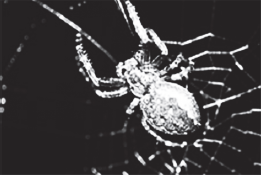
With the help of small pieces of leaf, dead insects
and other debris, a spider in the Amazon rainforest has
created a detailed replica of a spider larger than itself.
The crafty spider is thought to be a new member of the
5 genus Cyclosa, a family of spiders which has created
decoys before using spare egg sacs. But this new
spider’s sculpture is the first to have leg-like appendages.
Phil Torres, a biologist from the Rainforest
Expeditions, thinks they might have discovered a
10 completely new species. He says, “When you first see
it, it just looks like a spider hanging in a web. It’s about
an inch and an half long. As you approach, it kind of
looks like a dead spider as well but, as you approach, it
starts to move back and forth. There’s a little spider
15 hanging on the back of it so you’ll see little pieces of
leaf, little pieces of twig. There’s even a dead insect in
there. There must be very heavy predatory influence that
it would evolve to have such an intriguing defense.”
Mr. Torres will be returning to the Amazon rainforest
20 in January next year to investigate further as this masterful
spider is yet to be recognized as a new species. Mr.
Torres’ discovery will be registered, verified and his
findings published if this spider proves to be biologically
different from the known species of Cyclosa.
ZARINDAST, Karen. Clever spider. Disponível em: . Acesso em: 12 out. 2013.
According to this cartoon, it’s correct to say that, when the man woke up, he
Questão 37 88994
UEFS Caderno 1 2014/1TEXTO:
Clever spider
With the help of small pieces of leaf, dead insects
and other debris, a spider in the Amazon rainforest has
created a detailed replica of a spider larger than itself.
The crafty spider is thought to be a new member of the
5 genus Cyclosa, a family of spiders which has created
decoys before using spare egg sacs. But this new
spider’s sculpture is the first to have leg-like appendages.
Phil Torres, a biologist from the Rainforest
Expeditions, thinks they might have discovered a
10 completely new species. He says, “When you first see
it, it just looks like a spider hanging in a web. It’s about
an inch and an half long. As you approach, it kind of
looks like a dead spider as well but, as you approach, it
starts to move back and forth. There’s a little spider
15 hanging on the back of it so you’ll see little pieces of
leaf, little pieces of twig. There’s even a dead insect in
there. There must be very heavy predatory influence that
it would evolve to have such an intriguing defense.”
Mr. Torres will be returning to the Amazon rainforest
20 in January next year to investigate further as this masterful
spider is yet to be recognized as a new species. Mr.
Torres’ discovery will be registered, verified and his
findings published if this spider proves to be biologically
different from the known species of Cyclosa.
ZARINDAST, Karen. Clever spider. Disponível em: . Acesso em: 12 out. 2013.
The alternative in which there is a pair of opposites is
Questão 36 88993
UEFS Caderno 1 2014/1TEXTO:
Clever spider
With the help of small pieces of leaf, dead insects
and other debris, a spider in the Amazon rainforest has
created a detailed replica of a spider larger than itself.
The crafty spider is thought to be a new member of the
5 genus Cyclosa, a family of spiders which has created
decoys before using spare egg sacs. But this new
spider’s sculpture is the first to have leg-like appendages.
Phil Torres, a biologist from the Rainforest
Expeditions, thinks they might have discovered a
10 completely new species. He says, “When you first see
it, it just looks like a spider hanging in a web. It’s about
an inch and an half long. As you approach, it kind of
looks like a dead spider as well but, as you approach, it
starts to move back and forth. There’s a little spider
15 hanging on the back of it so you’ll see little pieces of
leaf, little pieces of twig. There’s even a dead insect in
there. There must be very heavy predatory influence that
it would evolve to have such an intriguing defense.”
Mr. Torres will be returning to the Amazon rainforest
20 in January next year to investigate further as this masterful
spider is yet to be recognized as a new species. Mr.
Torres’ discovery will be registered, verified and his
findings published if this spider proves to be biologically
different from the known species of Cyclosa.
ZARINDAST, Karen. Clever spider. Disponível em: . Acesso em: 12 out. 2013.
The only piece of information that is NOT TRUE about this spider’s sculpture is that it
Questão 34 88991
UEFS Caderno 1 2014/1TEXTO:
Another brick in the wall
We don’t need no education
We don’t need no thought control
No dark sarcasm in the classroom
Teachers leave us kids alone
Hey! Teacher! Leave us kids alone!
All in all it’s just another brick in the wall.
All in all you’re just another brick in the wall.
FLOYD, Pink. Disponível em: . Acesso em: 12 out. 2013.
Fill in the parentheses with T (True) or F (False). As songwriters tend to use colloquial English in their lyrics, some of the so-called “grammar mistakes” usually occur. In this song, for example, the proper equivalent forms of the first line “We don’t need no education”, according to standard English, are
( ) We need no education.
( ) We don’t need some education.
( ) We don’t need any education.
( ) We needn’t worry about education.
The correct sequence, from top to bottom, is
06