


![[Marketing] Questao Topo - deslogado](https://storage.estuda.com.br/banners/0_6b7ebee90b03af1c560c73bb8bcce34a_banner_deslogado_70_dias.png)
Questões de Inglês
19.971 Questões
Questão 18 94684
Mackenzie 2014/2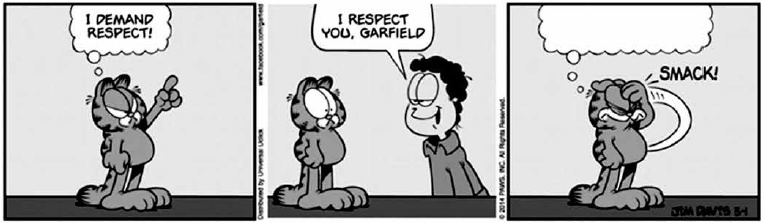
The space, in the cartoon, must be correctly completed with
Questão 17 94683
Mackenzie 2014/2BREAKING BAD
Breaking Bad is an American crime drama television series created and produced by Vince Gilligan. Set and produced in Albuquerque, New Mexico, Breaking Bad is the __ ( I )__ story of Walter White (Bryan Cranston), a struggling high school chemistry teacher who is diagnosed with __ ( II )__ lung cancer at the beginning of the series. He turns to a life of crime, producing and selling methamphetamine, in order to secure his family’s financial future before he dies, teaming with his former student, Jesse Pinkman (Aaron Paul). The series has been labeled a contemporary western by its creator.
The series premiered on January 20, 2008 in the United States and Canada on the cable channel AMC, and the series finale aired on September 29, 2013. Breaking Bad received __ ( III )__ critical acclaim, and is widely regarded as one of the greatest television series of all time. By its end, the series was among the __ ( IV ) _ _ cable shows on American television, with audience numbers that doubled in the fifth season from the previous year’s episodes.
Breaking Bad was created by Vince Gilligan, who spent several years writing the Fox series The X-Files. Gilligan wanted to create a series in which the protagonist became the antagonist. “Television is historically good at keeping its characters in a self-imposed stasis so that shows can go on for years or even decades,” he said. “When I realized this, the __ ( V )__ next step was to think, how can I do a show in which the fundamental drive is toward change?” He added that his goal with Walter White was to turn him from Mr. Chips into Scarface.
While Gilligan defines the term “breaking bad” as “to raise hell”, it apparently means more than that. According to Lily Rothman, it is an old phrase which “connotes more violence than ‘raising hell’ does.... The words possess a wide variety of nuances: to ‘break bad’ can mean to ‘go __ ( VI )__ ‘, to ‘defy authority’ and break the law, to be verbally ‘combative, belligerent, or _ _ ( VII )__ or, followed by the preposition ‘on,’ to ‘completely dominate or humiliate.’”
The concept emerged as Gilligan talked with his fellow writer Thomas Schnauz regarding their _ _ ( VIII )__ unemployment and joked that the solution was for them to put a “meth lab in the back of an RV and drive around the country cooking meth and making money.”
http://en.wikipedia.org/wiki/Breaking_Bad
According to the text,
Questão 14 94680
Mackenzie 2014/2Stop Wishing You Were Somewhere Else
If you reflect on this insidious tendency to be wishing you were somewhere else, you may agree that it’s a silly, even self-destructive thing to do. Before you jump up and say, “Wait a minute, I don’t do that,” let me explain whatI mean.
There are many ways that we __ ( I )__ time wishing we __ ( II )__ somewhere else. We’ll be at work and wish we __ ( III )__ home. Or during the middle of the week we __ ( IV )__ it were Friday. Sometimes we wish we __ ( V )__ something else with our careers. We wish we __ ( VI )__ different responsibilities or could spend our time with different people. We wish our boss were different, or our employees. We wish our working environment were different or we had a different kind of commute. We wish our industry were different, or that our circumstances would change. This list could obviously go on. The problem is, these wishes aren’t reality, but rather, they are thoughts of a different reality.
If you’re not careful, you can begin to wish your life away, always wishing you were somewhere other than where you actually are. But you’re not somewhere else. Rather, you’re right here. This is reality. One of my favorite quotes is, “Life is what’s happening while we’re busy making other plans.” A slightly different version might be, “Life is what’s happening while we’re wishing we were elsewhere.” When you are wishing you were somewhere else, it’s almost as though you are one step removed from life rather than actually being in it, open to life exactly as it is.
From a practical standpoint, it’s very difficult to be focused and effective when your mind is preoccupied with where it would rather be. In fact, the two are a contradiction of terms. Your concentration suffers because there is a lack of engagement, a lack of zeroing in on what’s truly significant. In addition, it’s virtually impossible to enjoy yourself and what you are doing when you’re focused more on where you’d rather be than where you actually are. Think about the things you enjoy most. In all cases, they are activities where you are completely absorbed in the moment, really focused on what you are doing. In the absence of the focus, the joy you experience is diminished. How much fun is it to read a good novel when you’re thinking about something else?
Adapted from Don’t Sweat The Small Stuff Treasury – A Special Collection for the Office by Richard Carlson
The verbs that properly fill in blanks I, II, III, IV, V and VI, in the text, are
Questão 18 94616
Mackenzie 2014/1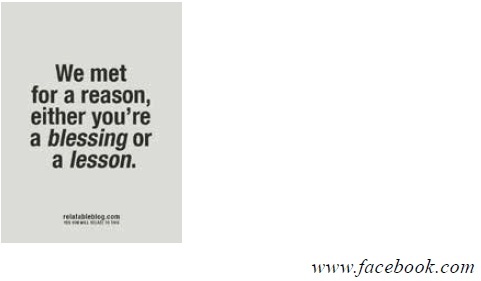
The message conveyed by the text above is that
Questão 14 94612
Mackenzie 2014/1LAUGHING ALL THE WAY
Understanding jokes is part of the process of native language acquisition, and jokes are part of the charm that belongs to any language. Learning to understand jokes in a new language is both a cause, and a consequence, of language proficiency (Cook 2000).
The most obvious benefit of understanding jokes is that it can help students feel more comfortable in their new language. A shared moment of humor lowers the affective filter, that invisible barrier that makes learners feel awkward and uncomfortable. A low affective filter is one of the cornerstones of successfully learning a new language (Krashen 1982). If a class can laugh together, they are likely to learn better together, too. Jokes based on wordplay have additional benefits because they build metalinguistic awareness, or conscious awareness of the forms of language, and this, ___( I )___, helps in learning more language (Ely and McCabe 1994; Zipke 2008; Lems 2011). In particular, metalinguistic awareness boots reading comprehension and encourages higher-order thinking.
___( II )___ native speakers need to access a great deal of linguisticinformation and background knowledge to “get” a joke (Aarons 2012). At the same time, jokes that are based on wordplay in another language can be really hard to understand because they need to be processed very quickly. In a social setting where everyone is standing around chatting, understanding a joke that comes up may seem like a high-stakes test. Not understanding a joke in this situation can make someone feel like an outsider and create a sense of isolation. ___( III )___, an important partof learning a new language is learning to enjoy its jokes.
Puns: A special form of joke
Puns are a special form of humor based on double meanings. Puns are sometimes nicknamed “the lowest form of humor” and often greeted with groans, but in fact, the language knowledge needed to understand a pun is very sophisticated (Pollack 2011).___( IV )__ they require processing the sound and meaning of words twice, puns demand considerable language agility. __( V )__ humor based on sight gags, funny facial expressions, or amusing visual arrangements, the humor ofpun is based on language play.
ENGLISH TEACHING FORUM – VOLUME 51 NUMBER 1 2013
The text states that
Questão 12 94610
Mackenzie 2014/1LAUGHING ALL THE WAY
Understanding jokes is part of the process of native language acquisition, and jokes are part of the charm that belongs to any language. Learning to understand jokes in a new language is both a cause, and a consequence, of language proficiency (Cook 2000).
The most obvious benefit of understanding jokes is that it can help students feel more comfortable in their new language. A shared moment of humor lowers the affective filter, that invisible barrier that makes learners feel awkward and uncomfortable. A low affective filter is one of the cornerstones of successfully learning a new language (Krashen 1982). If a class can laugh together, they are likely to learn better together, too. Jokes based on wordplay have additional benefits because they build metalinguistic awareness, or conscious awareness of the forms of language, and this, ___( I )___, helps in learning more language (Ely and McCabe 1994; Zipke 2008; Lems 2011). In particular, metalinguistic awareness boots reading comprehension and encourages higher-order thinking.
___( II )___ native speakers need to access a great deal of linguisticinformation and background knowledge to “get” a joke (Aarons 2012). At the same time, jokes that are based on wordplay in another language can be really hard to understand because they need to be processed very quickly. In a social setting where everyone is standing around chatting, understanding a joke that comes up may seem like a high-stakes test. Not understanding a joke in this situation can make someone feel like an outsider and create a sense of isolation. ___( III )___, an important partof learning a new language is learning to enjoy its jokes.
Puns: A special form of joke
Puns are a special form of humor based on double meanings. Puns are sometimes nicknamed “the lowest form of humor” and often greeted with groans, but in fact, the language knowledge needed to understand a pun is very sophisticated (Pollack 2011).___( IV )__ they require processing the sound and meaning of words twice, puns demand considerable language agility. __( V )__ humor based on sight gags, funny facial expressions, or amusing visual arrangements, the humor ofpun is based on language play.
ENGLISH TEACHING FORUM – VOLUME 51 NUMBER 1 2013
The word cornerstones in the text means
06