


![[Marketing] Questao Topo - deslogado](https://storage.estuda.com.br/banners/0_6b7ebee90b03af1c560c73bb8bcce34a_banner_deslogado_70_dias.png)
Questões de Inglês
19.971 Questões
Questão 50 99984
EBMSP Medicina 2014/1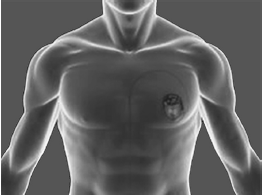
Hackers are making the headlines these days like never before. From video game systems to voicemail account, it seems like almost every type of electronic device or information storage medium can be hacked to either give up information or perform actions it wasn’t initially designed to do.
Considering medical implants, for example, high‑tech medical devices like pacemakers and insulin pumps can save lives, but hackers can actually utilize their built-in wireless features for less helpful purposes. Researchers have demonstrated that certain pacemakers that use a wireless signal for easy tweaking are vulnerable to anyone with the correct reprogramming hardware. Doctors use these wireless programming devices to make subtle adjustments to the heart helpers without the need for further surgeries. Unfortunately, the signal they use is unencrypted, meaning that anyone who finds a way to obtain such a device could literally manipulate the heart of a patient, causing cardiac arrest, or even death.
IInsulin pumps are apparently even more susceptible to outside interference, and at the recent Black Hat hacker conference in Las Vegas, the life‑saving pumps were shown to be vulnerable from distances of up to a half mile. Using power radio antennas, hackers can hijack a pump’s wireless signal and cause it to give a blast of insulin to a wearer, with potentially deadly results.
Disponível em: <http://news.yahoo.com/blogs/technology‑blog/5‑
things-probably-didn-t-know-could-hacked-174330493.html>.
Acesso em: 20 set.2013.
The only question to which there is no answer in the text is in alternative
Questão 49 99983
EBMSP Medicina 2014/1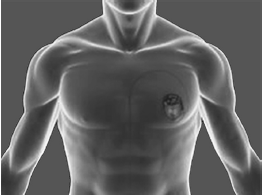
Hackers are making the headlines these days like never before. From video game systems to voicemail account, it seems like almost every type of electronic device or information storage medium can be hacked to either give up information or perform actions it wasn’t initially designed to do.
Considering medical implants, for example, high‑tech medical devices like pacemakers and insulin pumps can save lives, but hackers can actually utilize their built-in wireless features for less helpful purposes. Researchers have demonstrated that certain pacemakers that use a wireless signal for easy tweaking are vulnerable to anyone with the correct reprogramming hardware. Doctors use these wireless programming devices to make subtle adjustments to the heart helpers without the need for further surgeries. Unfortunately, the signal they use is unencrypted, meaning that anyone who finds a way to obtain such a device could literally manipulate the heart of a patient, causing cardiac arrest, or even death.
IInsulin pumps are apparently even more susceptible to outside interference, and at the recent Black Hat hacker conference in Las Vegas, the life‑saving pumps were shown to be vulnerable from distances of up to a half mile. Using power radio antennas, hackers can hijack a pump’s wireless signal and cause it to give a blast of insulin to a wearer, with potentially deadly results.
Disponível em: <http://news.yahoo.com/blogs/technology‑blog/5‑
things-probably-didn-t-know-could-hacked-174330493.html>.
Acesso em: 20 set.2013.
Fill in the parentheses with T (True) or F (False).
About hackers, it’s correct to say that they
( ) have never been reported in the news as often as nowadays.
( ) usually have more trouble connecting to a wireless device.
( ) are able to kill someone who is wearing a wireless insulin pump.
( ) can do their job by making use of no electronic device.
According to the text, the correct sequence, from top to bottom, is
Questão 32 99966
EBMSP Medicina 2014/1
Considering the white rabbit\'s attitude, the only alternative that is not true about it is that it
Questão 14 99948
EBMSP Medicina 2014/1Addiction Disorder Basics
Internet Addiction Disorder arises from the phenomenon of the Internet now being a part of the average person’s daily life. It is undeniable that the Internet provides people with the abilities to easily acquire information, learn new things, gain and maintain relationships, and make money. In short, the Internet has been instrumental in improving our quality of life.
However, for some, the Internet has the opposite effect. For these people, the Internet has led them into a state of mental disorder – in the true psychological sense of the word. While many may reject the idea of “Internet Addiction Disorder“, these people only need to look at the American Psychiatric Association’s official definition of a mental disorder: “A clinically significant behavioral or psychological syndrome or pattern that occurs in an individual and that is associated with present distress or disability or with a significantly increased risk of suffering death, pain, disability, or an important loss of freedom.”
Internet Addiction Disorder can affect anyone – even those with no prior addiction history. In addition, those with Internet Addiction Disorder may be spending their Internet time on a wide range of functions, including online games, chat rooms, and social media. It is not rare for a person with Internet Addiction Disorder to spend up to 60 hours per week online. Those with Internet Addiction Disorder are euphoric in front of their computers and dysphoric when not.
Disponível em: <http://internetaddictiondisorder.org>. Acesso em: 20 set. 2013.
According to the American Psychiatric Association’s official definition of a mental disorder, a person affected by Internet Addiction Disorder
Questão 13 99947
EBMSP Medicina 2014/1Addiction Disorder Basics
Internet Addiction Disorder arises from the phenomenon of the Internet now being a part of the average person’s daily life. It is undeniable that the Internet provides people with the abilities to easily acquire information, learn new things, gain and maintain relationships, and make money. In short, the Internet has been instrumental in improving our quality of life.
However, for some, the Internet has the opposite effect. For these people, the Internet has led them into a state of mental disorder – in the true psychological sense of the word. While many may reject the idea of “Internet Addiction Disorder“, these people only need to look at the American Psychiatric Association’s official definition of a mental disorder: “A clinically significant behavioral or psychological syndrome or pattern that occurs in an individual and that is associated with present distress or disability or with a significantly increased risk of suffering death, pain, disability, or an important loss of freedom.”
Internet Addiction Disorder can affect anyone – even those with no prior addiction history. In addition, those with Internet Addiction Disorder may be spending their Internet time on a wide range of functions, including online games, chat rooms, and social media. It is not rare for a person with Internet Addiction Disorder to spend up to 60 hours per week online. Those with Internet Addiction Disorder are euphoric in front of their computers and dysphoric when not.
Disponível em: . Acesso em: 20 set. 2013.
Fill in the parentheses with T (True) or F (False).
It’s stated in the text:
( ) Internet addiction is a consequence of excessive Internet use to the extent that it interferes with daily life.
( ) No one is free from having Internet Addiction Disorder.
( ) People only get Internet Addiction Disorder when they spend all their Internet time on a single function.
( ) People diagnosed with Internet Addiction Disorder feel extremely relieved when they are not online.
According to the text, the correct sequence, from top to bottom, is
Questão 47 99931
EBMSP Medicina 2014/2
The alternative that best explains the cartoon is:
06