


![[Marketing] Questao Topo - deslogado](https://storage.estuda.com.br/banners/0_6b7ebee90b03af1c560c73bb8bcce34a_banner_deslogado_70_dias.png)
Questões de Inglês
19.971 Questões
Questão 55 127674
UPE 2° Dia 2014RISING SEAS
As the planet warms, the sea rises. Coastlines flood. What will we protect? What will we abandon?
How will we face the danger of rising seas?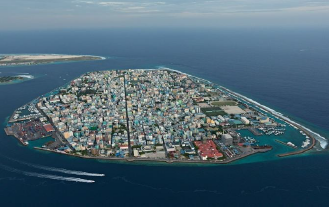
A seawall now protects Maale, capital of the Maldives, an Indian Ocean archipelago that is the lowest, flattest country on Earth.
By the time Hurricane Sandy veered toward the Northeast coast of the United States last October 29, it had mauled several countries in the Caribbean and left dozens dead. Faced with the largest storm ever spawned over the Atlantic, New York and other cities ordered mandatory evacuations of low-lying areas. Not everyone complied. Those who chose to ride out Sandy got a preview of the future, in which a warmer world will lead to inexorably rising seas.
A profoundly altered planet is what our fossil-fuel-driven civilization is creating, a planet where Sandy-scale flooding will become more common and more destructive for the world’s coastal cities. By releasing carbon dioxide and other heat-trapping gases into the atmosphere, we have warmed the Earth by more than a full degree Fahrenheit over the past century and raised sea level by about eight inches. Even if we stopped burning all fossil fuels tomorrow, the existing greenhouse gases would continue to warm the Earth for centuries. We have irreversibly committed future generations to a hotter world and rising seas. (…)
Global warming affects sea level in two ways. About a third of its current rise comes from thermal expansion – from the fact that water grows in volume as it warms. The rest comes from the melting of ice on land. So far it’s been mostly mountain glaciers, but the big concern for the future is the giant ice sheets in Greenland and Antarctica. Six years ago the Intergovernmental Panel on Climate Change (IPCC) issued a report predicting a maximum of 23 inches of sea-level rise by the end of this century. (…) However, that report intentionally omitted the possibility that the ice sheets might flow more rapidly into the sea, on the grounds that the physics of that process was poorly understood. But climate scientists now estimate that Greenland and Antarctica combined have lost on average about 50 cubic miles of ice each year since 1992 – roughly 200 billion metric tons of ice annually. Many think sea level will be at least three higher than today by 2100.
(National Geographic magazine. Vol. 224, nº 3, September 2013. Adaptado.)
No último parágrafo, há várias palavras formadas pelo sufixo ly. Veja estes exemplos: “That report intentionally omitted (...)”; “(…) that process was poorly understood”. Considerando as palavras destacadas, é CORRETO afirmar que sua função no texto é
Questão 53 127672
UPE 2° Dia 2014RISING SEAS
As the planet warms, the sea rises. Coastlines flood. What will we protect? What will we abandon?
How will we face the danger of rising seas?
A seawall now protects Maale, capital of the Maldives, an Indian Ocean archipelago that is the lowest, flattest country on Earth.
By the time Hurricane Sandy veered toward the Northeast coast of the United States last October 29, it had mauled several countries in the Caribbean and left dozens dead. Faced with the largest storm ever spawned over the Atlantic, New York and other cities ordered mandatory evacuations of low-lying areas. Not everyone complied. Those who chose to ride out Sandy got a preview of the future, in which a warmer world will lead to inexorably rising seas.
A profoundly altered planet is what our fossil-fuel-driven civilization is creating, a planet where Sandy-scale flooding will become more common and more destructive for the world’s coastal cities. By releasing carbon dioxide and other heat-trapping gases into the atmosphere, we have warmed the Earth by more than a full degree Fahrenheit over the past century and raised sea level by about eight inches. Even if we stopped burning all fossil fuels tomorrow, the existing greenhouse gases would continue to warm the Earth for centuries. We have irreversibly committed future generations to a hotter world and rising seas. (…)
Global warming affects sea level in two ways. About a third of its current rise comes from thermal expansion – from the fact that water grows in volume as it warms. The rest comes from the melting of ice on land. So far it’s been mostly mountain glaciers, but the big concern for the future is the giant ice sheets in Greenland and Antarctica. Six years ago the Intergovernmental Panel on Climate Change (IPCC) issued a report predicting a maximum of 23 inches of sea-level rise by the end of this century. (…) However, that report intentionally omitted the possibility that the ice sheets might flow more rapidly into the sea, on the grounds that the physics of that process was poorly understood. But climate scientists now estimate that Greenland and Antarctica combined have lost on average about 50 cubic miles of ice each year since 1992 – roughly 200 billion metric tons of ice annually. Many think sea level will be at least three higher than today by 2100.
(National Geographic magazine. Vol. 224, nº 3, September 2013. Adaptado.)
As palavras generations, scientists, sheets and seas obedecem à mesma regra de formação de plural da língua inglesa. Outra regra de plural está presente numa das alternativas, enquadrando toda a sequência de palavras. Assinale-a.
Questão 51 127667
UPE 2° Dia 2014RISING SEAS
As the planet warms, the sea rises. Coastlines flood. What will we protect? What will we abandon?
How will we face the danger of rising seas?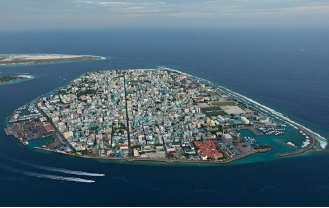
A seawall now protects Maale, capital of the Maldives, an Indian Ocean archipelago that is the lowest, flattest country on Earth.
By the time Hurricane Sandy veered toward the Northeast coast of the United States last October 29, it had mauled several countries in the Caribbean and left dozens dead. Faced with the largest storm ever spawned over the Atlantic, New York and other cities ordered mandatory evacuations of low-lying areas. Not everyone complied. Those who chose to ride out Sandy got a preview of the future, in which a warmer world will lead to inexorably rising seas.
A profoundly altered planet is what our fossil-fuel-driven civilization is creating, a planet where Sandy-scale flooding will become more common and more destructive for the world’s coastal cities. By releasing carbon dioxide and other heat-trapping gases into the atmosphere, we have warmed the Earth by more than a full degree Fahrenheit over the past century and raised sea level by about eight inches. Even if we stopped burning all fossil fuels tomorrow, the existing greenhouse gases would continue to warm the Earth for centuries. We have irreversibly committed future generations to a hotter world and rising seas. (…)
Global warming affects sea level in two ways. About a third of its current rise comes from thermal expansion – from the fact that water grows in volume as it warms. The rest comes from the melting of ice on land. So far it’s been mostly mountain glaciers, but the big concern for the future is the giant ice sheets in Greenland and Antarctica. Six years ago the Intergovernmental Panel on Climate Change (IPCC) issued a report predicting a maximum of 23 inches of sea-level rise by the end of this century. (…) However, that report intentionally omitted the possibility that the ice sheets might flow more rapidly into the sea, on the grounds that the physics of that process was poorly understood. But climate scientists now estimate that Greenland and Antarctica combined have lost on average about 50 cubic miles of ice each year since 1992 – roughly 200 billion metric tons of ice annually. Many think sea level will be at least three higher than today by 2100.
(National Geographic magazine. Vol. 224, nº 3, September 2013. Adaptado.)
Com base no texto 4, analise as afirmativas a seguir:
I. Cerca de um terço do aumento atual dos oceanos se deve à expansão térmica, ou seja, a água aumenta de volume à medida que aquece.
II. Grande parte do aumento dos oceanos se deve ao derretimento das geleiras das montanhas, algo que é menos preocupante em relação às futuras inundações.
III. Se nós parássemos de queimar todos os combustíveis fósseis amanhã, o problema do aquecimento dos oceanos seria resolvido ainda neste século, sem riscos de catástrofes.
IV. Os cientistas do clima estimam que a Groelândia e a Antártica juntas vêm perdendo grandes quantidades de gelo em metros cúbicos, por ano, desde 1992.
V. O Painel Intergovernamental sobre Mudança Climática emitiu um relatório no qual prevê, no máximo, vinte e três polegadas de aumento do nível do mar até o final deste século.
Estão CORRETAS
Questão 49 127664
UPE 2° Dia 2014S P E C I E S
Life on Earth is full of different species. Each species is adapted to a different environment. All you have to do is look around and observe.
In a forest, species specialization can be seen in the layer system of forest life. Animals that live on the top of the trees dare not come to the ground. It is too dangerous for them. Besides, all food and shelter that they need to survive is on the top layer of the forest. The same can be said about animals in the middle layer and in the ground layer. Other species, like some types of bacteria, have to live inside the bodies of other animals to survive. If they go in the open for too long, they die.
Humans also use to have their place in nature. They used to live in caves and feed on plants and on game. However, unlike other species, humans reasoned and wanted to change nature. They started defending themselves from their natural predators. They wanted to have a more comfortable life.
If we are careful enough to observe nature, we will see that humans are the biggest threat living on earth today. They are used to doing only what they want, and not what they must. They are not used to doing what they ought to do in favor of life in this planet. Things have gotten so out of control that humans constitute the single species that acts against the rules of nature. They dare so much in favor of their own well-being that life of all species on earth is threatened, including human life.
(PRESCHER, E; PASQUALIN, E; AMOS, E. New Graded English. Editora Moderna. Adaptado.)
Do humans protect the Earth like other species ? ___, they ____.
Questão 48 127663
UPE 2° Dia 2014S P E C I E S
Life on Earth is full of different species. Each species is adapted to a different environment. All you have to do is look around and observe.
In a forest, species specialization can be seen in the layer system of forest life. Animals that live on the top of the trees dare not come to the ground. It is too dangerous for them. Besides, all food and shelter that they need to survive is on the top layer of the forest. The same can be said about animals in the middle layer and in the ground layer. Other species, like some types of bacteria, have to live inside the bodies of other animals to survive. If they go in the open for too long, they die.
Humans also use to have their place in nature. They used to live in caves and feed on plants and on game. However, unlike other species, humans reasoned and wanted to change nature. They started defending themselves from their natural predators. They wanted to have a more comfortable life.
If we are careful enough to observe nature, we will see that humans are the biggest threat living on earth today. They are used to doing only what they want, and not what they must. They are not used to doing what they ought to do in favor of life in this planet. Things have gotten so out of control that humans constitute the single species that acts against the rules of nature. They dare so much in favor of their own well-being that life of all species on earth is threatened, including human life.
(PRESCHER, E; PASQUALIN, E; AMOS, E. New Graded English. Editora Moderna. Adaptado.)
According to the text,
I. there many different species on Earth.
II. all the species live in the same environment.
III. the species need different environment.
IV. some species live on the top of trees.
V. all the species eat the same kind of food.
It is CORRECT
Questão 47 127662
UPE 2° Dia 2014DO YOUR PART
At age 13, Alison Steiglitz of Miami, Florida, decided she wanted to feed the hungry on Thanksgiving Day, so she used money given to her as bat mitzyah gifts to distribute 15 Thanksgiving dinners to elderly homeless people. Today the organization that Alison helped to create serves breakfast and lunch to more than 250 people every Sunday.
Alison is certainly doing her part. You can do yours, too. It doesn’t have to be a big thing. Life in the third millennium will necessarily have to include social action by individual initiative. So you may start thinking about it right now. Start by defining the problem you would like to solve. There are all sorts of problems around you. Just pick one and aim your efforts in that direction.
Consider different solutions. Ask people around you for their ideas. Don’t be afraid to consider even the craziest ideas Find out who opposes your ideas. Meet with these people and try to win them over. Spread the word. Call your local TV and radio station and ask to speak to a reporter. Tell them what you’re doing. Invite them to come visit you and your friends to film your activities. Be a bigmouth – tell everyone about your activities. You never know who might be able to help.
No matter how much you care, you can’t change the world by yourself. Do everything you can to find others who feel the same way you do about these issues and combine efforts. Even if you find yourself working with people you don’t like, learn to get along with them for the purpose of accomplishing your goal.
Choose a plan and make it happen. You can solve a big problem by breaking it into smaller problems. And, most of all, hang in there! Don’t give up if things don’t go your way. If your solution fails, find out why and use what you’ve learned to develop a new solution.
(PRESCHER, E; PASQUALIN, E; AMOS, E. New Graded English 3. Editora Moderna. Adaptado.)
The author asks us
I. not to help other people.
II. to do our part.
III. to solve all the problems alone.
IV. never to give up.
V. to be selfish.
It is CORRECT
06