


![[Marketing] Questao Topo - deslogado](https://storage.estuda.com.br/banners/0_6b7ebee90b03af1c560c73bb8bcce34a_banner_deslogado_70_dias.png)
Questões de Inglês
19.971 Questões
Questão 51 160595
UFSM 2014/2haking up the Salt Myth: The History of Salt
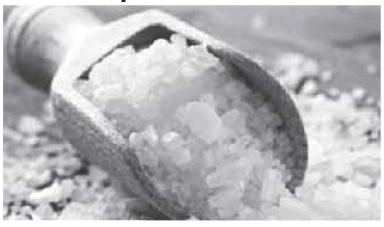
[1] The development of human civilization is
intricately linked to the pursuit of salt: wild
animals wore paths to salt licks, men followed
these animals and built settlements near the
[5] salt deposits. These settlements became
cities and nations. The human obsession with
salt has spanned thousands of years of human
history, across many different contexts and
continents. Nearly every society in existence
[10] has some level of salt use not only in their
cuisine, but also in their medicine, their
politics, their economies, and even their
religious practices.
As civilization and agriculture spread, salt
[15] became one of the first international
commodities of trade, its production was one
of the first industries, and a number of the
greatest public works were motivated by the
need to obtain salt. Salt trade routes
[20] traversed the globe, between Africa, Asia, the
Middle East, and Europe. Salt was often used
as money, and was desperately coveted,
hoarded, searched for, traded for, and even
fought over.
[25] Salt has even made its way into our language
as a metaphor for value: hardworking people
are known to be “worth their salt”, and the
most worthy amongst us are known as “the
salt of the earth”. The root word “sal-” is of
[30] Latin origin and refers to salt. Words that have
been historically based on humanity’s high
value for salt include “salubrious”, which
means “health-giving”, and “salary”, which is
derived from the Latin salarium, the money
[35] allotted to Roman soldiers for purchases of
salt.
“Salus” is the Roman goddess of health and
prosperity. Even the word “salad” originated
from the Italian salata, as the Romans often
[40] ate dishes of assorted raw vegetables with a
brined dressing, hence the name which is
short for herba salata or “salted vegetables”.
Nearly four pages of the Oxford English
Dictionary are taken up by references to salt,
[45] more than any other food. (12) Clearly, the high
value placed on salt in many cultures around
the world has greatly contributed to the
developmental course of human history.
by Chris Kresser, 2012
Fonte: Disponível em: https://chriskresser.com/shaking-up-the-salt-myth-history-of-salt. Acesso em: 15 set. 2014. (adaptado)
As metáforas “worth their salt” (ℓ.27) e “the salt of the earth” (ℓ.28-29) são usadas para se referir, respectivamente, a
Questão 49 160593
UFSM 2014/2Salt Uses & Tips
Beside making food delicious, it's believed
there are more than 14,000 uses for salt, and
our grandmothers were probably familiar with
most of them. A number of these uses were
for simple things around the home before the
advent of modern chemicals and cleaners.
Many of these salt uses are still valid today
and can be much cheaper and more environmentally-
friendly than more sophisticated
products. We make no guarantee about the
results if you try any of these uses and tips,
but there must be something to them since
they have been handed down over the years in
many households. Most of these salt uses
have stood the test of time.
Salt Uses&Tips: Health&Beauty
Gargling - Stir 1/2 teaspoon salt in an 8-
ounce glass of warm water for use as a gargle
for sore throats.
Cleaning teeth - Mix one part salt to two
parts baking soda after pulverizing the salt in
a blender or rolling it on a kitchen board with a
tumbler before mixing. It whitens teeth, helps
remove plaque and it is healthy for the gums.
Washingmouth - Mix equal parts of salt and
baking soda as a mouth wash that sweetens
the breath.
Reducing eye puffiness - Mix one teaspoon
of salt in a pint of hot water and apply pads
soaked in the solution on the puffy areas.
Relieving tired feet - Soak aching feet in
warm water to which a handful of salt has
been added. Rinse in cool water.
Relieving bee stings - If stung, immediately
wet the spot and cover with salt to relieve the
pain.
Relieving fatigue - Soak relaxed for at least
ten minutes in a tub of water into which
several handfuls of salt has been placed.
Removing dry skin - After bathing and while
still wet give yourself a massage with dry salt.
It removes dead skin particles and aids the
circulation.
Applying facial - For a stimulating facial,mix
equal parts of salt and olive oil and gently
massage the face and throat with long upward
and inward strokes. Remove mixture after five
minutes and wash face.
America’s Sea Salt Company®
Fonte: Disponível em: http://www.saltworks.us/salt_info/salt-uses-and-tips.asp. Acesso em: 15 set. 2014. (adaptado)
Associe os usos do sal na 1ª coluna às dosagens e aos demais ingredientes na 2ª coluna.
(1) Redução de inflamação da garganta
(2) Limpeza dos dentes
(3) Redução de inchaço nos olhos
(4) Alívio da fadiga dos pés
(5) Alívio da fadiga corporal
( ) Uma parte de sal triturado e duas partes de bicarbonato de sódio
( ) Várias mãos cheias de sal em uma banheira com água
( ) Meia colher de chá de sal emum copo de água morna
( ) Uma colher de chá de sal emum copo de água quente
( ) Uma mão cheia de sal e águamorna
A sequência correta é
Questão 46 160588
UFSM 2014/2Salt Uses & Tips
Beside making food delicious, it's believed
there are more than 14,000 uses for salt, and
our grandmothers were probably familiar with
most of them. A number of these uses were
for simple things around the home before the
advent of modern chemicals and cleaners.
Many of these salt uses are still valid today
and can be much cheaper and more environmentally-
friendly than more sophisticated
products. We make no guarantee about the
results if you try any of these uses and tips,
but there must be something to them since
they have been handed down over the years in
many households. Most of these salt uses
have stood the test of time.
Salt Uses&Tips: Health&Beauty
Gargling - Stir 1/2 teaspoon salt in an 8-
ounce glass of warm water for use as a gargle
for sore throats.
Cleaning teeth - Mix one part salt to two
parts baking soda after pulverizing the salt in
a blender or rolling it on a kitchen board with a
tumbler before mixing. It whitens teeth, helps
remove plaque and it is healthy for the gums.
Washingmouth - Mix equal parts of salt and
baking soda as a mouth wash that sweetens
the breath.
Reducing eye puffiness - Mix one teaspoon
of salt in a pint of hot water and apply pads
soaked in the solution on the puffy areas.
Relieving tired feet - Soak aching feet in
warm water to which a handful of salt has
been added. Rinse in cool water.
Relieving bee stings - If stung, immediately
wet the spot and cover with salt to relieve the
pain.
Relieving fatigue - Soak relaxed for at least
ten minutes in a tub of water into which
several handfuls of salt has been placed.
Removing dry skin - After bathing and while
still wet give yourself a massage with dry salt.
It removes dead skin particles and aids the
circulation.
Applying facial - For a stimulating facial,mix
equal parts of salt and olive oil and gently
massage the face and throat with long upward
and inward strokes. Remove mixture after five
minutes and wash face.
America’s Sea Salt Company®
Fonte: Disponível em: http://www.saltworks.us/salt_info/salt-uses-and-tips.asp. Acesso em: 15 set. 2014. (adaptado)
Sobre os usos do sal para a saúde e a beleza, indique se as afirmações a seguir estão em acordo (A) ou desacordo (D) com as informações do texto.
( ) Previne a cárie e branqueia os dentes.
( ) É relaxante para pés cansados.
( ) Alivia a dor do ferrão de abelha.
( ) Melhora a circulação e elimina a oleosidade da pele.
A sequência correta é
Questão 50 160530
UFSM 2014/1Brazilian Food - a Mix of Influences
For Sunday Times Extra, 6 July 2014
In a country as geographically expansive as
Brazil, it isn't easy to define the cuisine. Native
Indians and colonisation by the Portuguese,
who brought over African slaves, have all
played their part in the culinary culture. There
is a mix of influences that have endured and
intermingled in Brazil.
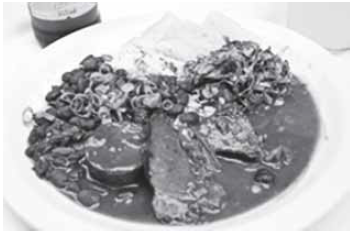
There seems to be an understanding that
feijoada, the black bean stew made with
various pork cuts, with its roots in Africa, is the
national dish. Unctuous and hearty, it's served
with pork crackling, orange slices and collard
greens and enjoyed on Saturdays.
Just as many Asians rely on rice as a staple,
Brazilians look to the starchy tuber cassava
(known as manioc or yuca) – boiled, fried,
stewed, ground into flour and toasted with
butter, as their daily bread.
The South East (São Paulo and Rio fall here)
tends to serve a mix from around the country.
Coxinha (chicken croquettes), tapioca pancakes,
salt cod pasteis (deep-fried pastries)
and pão de queijo (cheese rolls) are popular
city snacks.
Other Brazilian foods to try:
1. The North: Influenced by the Amazon Indians,
the food here is as close to what it was
before colonisation. Try:
• Açaí: A superfruit and Guaraná, a berry
used to make energy drinks.
• Pimenta: spicy peppers.
• Pudim de Tambaqui: A soufflé-like fish
dish with shrimp sauce.
• Tacacá: A soup with salted dry jumbo
prawns and local watercress.
2. The North East: slaves on the sugar cane
plantations used palm oil, coconut milk and
okra, popular in some African countries.
Try:
• Acarajé: A fritter made with beans and
fried in palm oil.
• Bobó de Camarão: Hearty shrimp stew,
made with manioc, coconut milk, and
palm oil.
• Caruru: A stew of okra, dried shrimp and
toasted cashews.
3. South Brazil: A melting pot of cultural
influences from German to Lebanese can be
found here. Try:
• Arroz de Carreteiro: Fried rice with
rehydrated charque – South American
biltong.
• Churrasco: Brazilian braai. Meat
marinated in salt and milk or cachaça –
distilled sugar-cane spirits.
Fonte: Disponível em: http://www.foodandthefabulous.com/recipes/brazilian-food-mix-influences. Acesso em: 15 set. 2014. (adaptado)
Considere as afirmações a seguir sobre as três regiõesgeográficas do Brasil destacadas no texto.
I - A comida, na região Norte, recebe influência indígena.
II - Alguns ingredientes de pratos típicos do Nordeste são herança de escravos africanos.
III - Na região Sul, a comida sofre influência de duas culturas: alemã e libanesa.
Está(ão) correta(s)
Questão 86 158253
FMJ 2014Neuron growth in children ‘leaves no room for memories’
25 May 2013
The reason we struggle to recall memories from our early childhood is down to high levels of neuron production during the first years of life, say Canadian researchers. The formation of new brain cells increases the capacity for learning but also clears the mind of old memories. This could be behind the absence of long-term memory events from early childhood, known as infantile amnesia. The findings were presented to the Canadian Association of Neuroscience.
Neurogenesis, or the formation of new neurons in the hippocampus - a region of the brain known to be important for learning and remembering, reaches its peak before and after birth. It then declines steadily during childhood and adulthood. Dr Paul Frankland and Dr Sheena Josselyn, from the Hospital for Sick Children in Toronto and the University of Toronto, wanted to find out how the process of new neuron generation impacted on memory storage. They carried out their research on younger and older mice in the lab.
Early amnesia
In adult mice, they found that increasing neurogenesis after memory formation was enough to bring about forgetting. In infant mice, they discovered that decreasing neurogenesis after memory formation meant that the normal forgetting observed at this age did not occur. Their research suggests a direct link between a reduction in neuron growth and increased memory recall. They found the opposite to be true also - a decreased ability to remember when neurogenesis is increased (as happens during infancy).
The researchers said this provided an explanation for the absence of long-term memory events from early childhood, known as infantile amnesia. Previous studies have shown that although young children can remember events in the short term, these memories do not persist.
Dr Frankland, senior scientist in neuroscience and mental health, at the hospital, said: “Why infantile amnesia exists has long 84 a mystery. We think our new studies begin to explain 85 we have no memories from our earliest years. Before the ages of four or five, we have a highly dynamic hippocampus which can’t stably store information. As new neurons are generated, memory may be compromised by that process.”
(www.bbc.co.uk. Adaptado.)
No trecho final do último parágrafo – As new neurons are generated, memory may be compromised by that process. –, a palavra as equivale, em português, a
Questão 85 158252
FMJ 2014Neuron growth in children ‘leaves no room for memories’
25 May 2013
The reason we struggle to recall memories from our early childhood is down to high levels of neuron production during the first years of life, say Canadian researchers. The formation of new brain cells increases the capacity for learning but also clears the mind of old memories. This could be behind the absence of long-term memory events from early childhood, known as infantile amnesia. The findings were presented to the Canadian Association of Neuroscience.
Neurogenesis, or the formation of new neurons in the hippocampus - a region of the brain known to be important for learning and remembering, reaches its peak before and after birth. It then declines steadily during childhood and adulthood. Dr Paul Frankland and Dr Sheena Josselyn, from the Hospital for Sick Children in Toronto and the University of Toronto, wanted to find out how the process of new neuron generation impacted on memory storage. They carried out their research on younger and older mice in the lab.
Early amnesia
In adult mice, they found that increasing neurogenesis after memory formation was enough to bring about forgetting. In infant mice, they discovered that decreasing neurogenesis after memory formation meant that the normal forgetting observed at this age did not occur. Their research suggests a direct link between a reduction in neuron growth and increased memory recall. They found the opposite to be true also - a decreased ability to remember when neurogenesis is increased (as happens during infancy).
The researchers said this provided an explanation for the absence of long-term memory events from early childhood, known as infantile amnesia. Previous studies have shown that although young children can remember events in the short term, these memories do not persist.
Dr Frankland, senior scientist in neuroscience and mental health, at the hospital, said: “Why infantile amnesia exists has long 84 a mystery. We think our new studies begin to explain 85 we have no memories from our earliest years. Before the ages of four or five, we have a highly dynamic hippocampus which can’t stably store information. As new neurons are generated, memory may be compromised by that process.”
(www.bbc.co.uk. Adaptado.)
Para responder às questões de números 84 e 85, assinale a alternativa que preenche, correta e respectivamente, as lacunas numeradas no texto.
06