


![[Marketing] Questao Topo - deslogado](https://storage.estuda.com.br/banners/0_6b7ebee90b03af1c560c73bb8bcce34a_banner_deslogado_70_dias.png)
Questões de Inglês
19.971 Questões
Questão 49 258018
Unit-SE Medicina - Caderno 1 2014
According to this cartoon, the doctor thinks that the woman
Questão 48 258015
Unit-SE Medicina - Caderno 1 2014TEXTO:
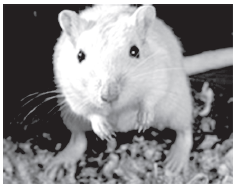
Scientists believe they have found an area within
the brain that controls the ageing process. In a series of
experiments on mice, they found that changes to this
region could shorten or lengthen the animal’s lifespan.
[5] The study is published in the journal Nature.
The hypothalamus is a small structure located deep
within the brain. It plays a critical role in controlling
growth, reproduction and metabolism — but now it could
hold the key to ageing too.
[10] A team of scientists in the US looked at this region
of the brain in mice. They found that blocking a chemical
in this area increased the animals’ lifespan. Healthy mice
typically live for between 600 to 1000 days.
But the rodents in the study were living about a fifth
[15] longer without suffering problems that are common in
old age, such as muscle loss or memory problems.
Conversely, when the scientists boosted the substance
in the hypothalamus, the animal’s lifespan was
shortened.
[20] The researchers now want to fully understand the
biological mechanism behind this process. They say
the work could provide new insights into age - related
diseases — and in the future even raise the prospect of
drugs that could increase our lifespan.
Disponível em: <www.bbc.co.uk/worldservice/learningenglish/language/wordsinthenews/2013/05/130503_witn_ageing.shtml>. Acesso em: 12 out. 2013.
About the perspective of future research benefit from the present study, scientists feel
Questão 45 258003
Unit-SE Medicina - Caderno 1 2014TEXTO:
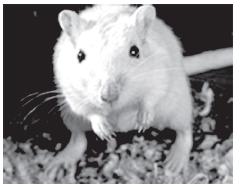
Scientists believe they have found an area within
the brain that controls the ageing process. In a series of
experiments on mice, they found that changes to this
region could shorten or lengthen the animal’s lifespan.
[5] The study is published in the journal Nature.
The hypothalamus is a small structure located deep
within the brain. It plays a critical role in controlling
growth, reproduction and metabolism — but now it could
hold the key to ageing too.
[10] A team of scientists in the US looked at this region
of the brain in mice. They found that blocking a chemical
in this area increased the animals’ lifespan. Healthy mice
typically live for between 600 to 1000 days.
But the rodents in the study were living about a fifth
[15] longer without suffering problems that are common in
old age, such as muscle loss or memory problems.
Conversely, when the scientists boosted the substance
in the hypothalamus, the animal’s lifespan was
shortened.
[20] The researchers now want to fully understand the
biological mechanism behind this process. They say
the work could provide new insights into age - related
diseases — and in the future even raise the prospect of
drugs that could increase our lifespan.
Disponível em: <www.bbc.co.uk/worldservice/learningenglish/language/wordsinthenews/2013/05/130503_witn_ageing.shtml>. Acesso em: 12 out. 2013.
A suitable title for this text is
Questão 41 257992
Unit-SE Medicina - Caderno 1 2014TEXTO:
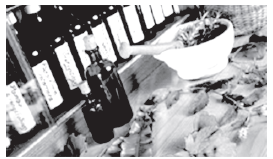
Scientists say that a common ingredient found in
Chinese herbal medicine is responsible for the very high
incidence of some cancers and kidney disease in
Taiwan. For thousands of years the aristolochia plant
[5] with its reddish-yellow flowers has been a mainstay of
Chinese herbal medicine. Sometimes referred to as
birthwort in Europe, the toxic nature of the plant was
discovered in the 1990s when dozens of Belgian women
began developing kidney failure and urinary tract cancers.
[10] They had been using aristolochia-based slimming aids
at clinic.
Now scientists say that the key element,
aristolochic acid, is responsible for the very high levels
of kidney disease and urinary tract tumors in Taiwan.
[15] It’s estimated that about one in three of the population
there have used herbal medicines containing the toxin.
The country has the world’s highest incidence of cancers
of the upper urinary tract - and in their study the scientists
say more than half can be directly linked to the ingredient.
[20] While products containing aristolochic acid are
banned in many countries, one of the big concerns is
China. In 2004 a study suggests Chinese farmers
produce enough of the plant to dose 100 million people.
Scientists are concerned, that in the decades to come,
[25] disease caused by the aristolochia will create an
international public health problem of considerable
magnitude.
Disponível em: <www.bbc.co.uk/worldservice/learningenglish/language/wordsinthenews/2012/04/120412_witn_herbal_medicine.shtml>. Acesso em: 12 out. 2013.
The Belgian women mentioned in the text were using aristolochia to
Questão 40 257987
Unit-SE Medicina - Caderno 1 2014TEXTO:
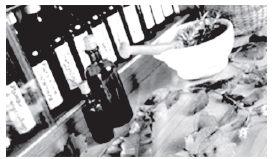
Scientists say that a common ingredient found in
Chinese herbal medicine is responsible for the very high
incidence of some cancers and kidney disease in
Taiwan. For thousands of years the aristolochia plant
[5] with its reddish-yellow flowers has been a mainstay of
Chinese herbal medicine. Sometimes referred to as
birthwort in Europe, the toxic nature of the plant was
discovered in the 1990s when dozens of Belgian women
began developing kidney failure and urinary tract cancers.
[10] They had been using aristolochia-based slimming aids
at clinic.
Now scientists say that the key element,
aristolochic acid, is responsible for the very high levels
of kidney disease and urinary tract tumors in Taiwan.
[15] It’s estimated that about one in three of the population
there have used herbal medicines containing the toxin.
The country has the world’s highest incidence of cancers
of the upper urinary tract - and in their study the scientists
say more than half can be directly linked to the ingredient.
[20] While products containing aristolochic acid are
banned in many countries, one of the big concerns is
China. In 2004 a study suggests Chinese farmers
produce enough of the plant to dose 100 million people.
Scientists are concerned, that in the decades to come,
[25] disease caused by the aristolochia will create an
international public health problem of considerable
magnitude.
Disponível em: <www.bbc.co.uk/worldservice/learningenglish/language/wordsinthenews/2012/04/120412_witn_herbal_medicine.shtml>. Acesso em: 12 out. 2013.
Fill in the parentheses with T (True) or F (False).
About the aristolochia plant, it’s correct to say:
( ) It started being used as a natural remedy by the end of the last century.
( ) It has been an essential part of Chinese herbal medicine.
( ) Scientists have now confirmed that it is harmful.
( ) Its harmful nature was first detected in Belgium in the nineties.
According to the text, the correct sequence, from top to bottom, is
Questão 39 257985
Unit-SE Medicina - Caderno 1 2014TEXTO:
Life in the age of internet addiction

Just one more tweet, dad!
Anyone who spends their day staring at screens
can speak to the modern-day epidemic of eye fatigue.
But what is our digital obsession doing to our brains?
Researchers have noted a rise in something called Digital
[5] Attention Disorder — the addiction to social networks
and computers in general.
How does it work? More than 50 years ago,
psychologist B.F. Skinner was experimenting on rats
and pigeons, and noticed that the unpredictability of
[10] reward was a major motivator for animals. If a reward
arrives either predictably or too infrequently, the animal
eventually loses interest. But when there was anticipation
of a reward that comes with just enough frequency, the
animals’ brains would consistently release dopamine, a
[15] neurotransmitter in the brain that (basically) regulates
pleasure.
What does this have to do with the internet? Some
researchers believe that intermittent reinforcement — in
the form of texts, tweets, and various other social
[20] media — may be working on our brains the same way
rewards did on Skinner’s rats. “Internet addiction is the
same as any other addiction — excessive release of
dopamine,” says Hilarie Cash, executive director of the
reStart program for internet addiction and recovery, a
[25] Seattle-area rehab program that helps wean people off
the internet. “Addiction is addiction. Whether it’s
gambling, cocaine, alcohol, or Facebook.”
“The vast majority of the American population is
mildly addicted to technology, and our clinic treats only
[30] very serious cases,” she told me in a phone interview.
“Most of the people that come are young adult males
around the ages of 18 to 30 who spend a lot of time on
the internet. Their health is poor, their social relationships
have turned to crap, they have no social confidence or
[35] real-world friends. They don’t date. They don’t work.”
Internet and video game addiction starts young.
Most young men are given computer or video games
when they are five or six years old and therefore their
childhood development is profoundly wired for these
[40] activities. It’s quite different to drug addicts and alcoholics
who are usually exposed to drugs or alcohol closer to
the age of 15. Internet addicts usually have 15 to 20
years of addiction on them due to starting younger.
The problem isn’t just young men, either. “Women
[45] are getting addicted, too,” Cash told me. ”Although
women usually become addicted later in life and, more
often than not, directly to social media, while men are
more adept to becoming addicted to multiplayer games.
Women seem to juggle addiction and life better than
[50] men.”
Life in the age of internet addiction. Disponível em: . Acesso em:12 out. 2013.
The word or expression from the text expresses what is stated on the right in alternative
06