


![[Marketing] Questao Topo - deslogado](https://storage.estuda.com.br/banners/0_6b7ebee90b03af1c560c73bb8bcce34a_banner_deslogado_70_dias.png)
Questões de Inglês
19.971 Questões
Questão 46 307524
UCS Verão 2014A questão refere-se ao texto abaixo.
A CHRISTMAS STORY
[1] My five-year-old daughter knew exactly what she wanted for Christmas of 1977, and told me so. Yes, she
[2] still would like the pink-and-green plastic umbrella with a clear top she’d been talking about. It was great to
[3] observe patterns of rain drops. Books, long flannel nightgown, fuzzy slippers – fine. But really, there was only one
[4] thing that mattered: a Barbie Townhouse, with all the accessories.
[5] This was a surprise. Rebecca was not a Barbie girl, she preferred stuffed animals to dolls, and didn’t like to
[6] play in a structured environment. She was always a make-up-the-rules, design-your-own-world, do-it-my-way kid.
[7] Maybe, I thought, the point wasn’t Barbie, but the house, a domicile she could claim for herself, since we’d
[8] already moved five times during her brief life.
[9] Next day, I stopped at the mall. The huge Barbie Townhouse box was adorned with exclamations: “Three
[10] Floors of High-Styled Fun!” “Elevator Can Stop on All Floors!” “Some Assembly Required.”
[11] Uh-oh. My track record for assembling things was miserable. Brooklyn-born, I was raised in apartment
[12] buildings in a family that didn’t build things. A few years earlier, I’d spent one week assembling a six-foot-tall
[13] jungle gym from a kit containing so many parts, I spent the first five days sorting and weeping and the last two
[14] trying to figure out _____ there were so many leftover pieces. The day after I finished building it, as if to remind
[15] me of my limitations, a tornado touched down close enough to scatter the jungle gym across an acre of field.
[16] I started assembling the Barbie Townhouse on Christmas Eve. Making it level, keeping the columns and the
[17] door from looking like they’d melted and been refrozen, and getting that elevator to work were almost more than I
[18] could manage. And building it in curse-free silence so my daughter would continue sleeping – if, in fact, she was
[19] sleeping – added a layer of challenge. By dawn I was done.
[20] Shortly thereafter, my daughter walked into the living room, stuffed bear tucked under her arm, pretending to
[21] be shocked and looking as tired as I did. Her surprise may have been false, but her delight was utterly genuine
[22] and moves me to this day, 36 years later. Rebecca had spurred me to do something I didn’t think I could do. It was
[23] for her, and – like so much of the privilege of being her father – it brought me further outside myself and let me
[24] overcome doubts about my capacities.
[25] Now that I think about it, there probably was real surprise in her first glimpse of her Barbie Townhouse. Not
[26] at the gift itself but that it had been built and remained standing in the morning light. Or maybe it was simpler than
[27] that: Maybe she was surprised because she’d planned on building the thing herself.
Fonte: SKLOOT, Floyd. A Christmas story. Disponível em: <http://www.rd.com/true-stories/inspiring/holiday-stories-some-assembly-required/>. Acesso em: 12 ago. 2013. (Adaptado)
Segundo o texto, Rebecca
I costumava criar as regras para as suas brincadeiras.
II gostava de animais de estimação.
III tinha uma camisola comprida de flanela.
Das afirmativas acima, pode-se dizer que
Questão 45 307523
UCS Verão 2014A questão refere-se ao texto abaixo.
A CHRISTMAS STORY
[1] My five-year-old daughter knew exactly what she wanted for Christmas of 1977, and told me so. Yes, she
[2] still would like the pink-and-green plastic umbrella with a clear top she’d been talking about. It was great to
[3] observe patterns of rain drops. Books, long flannel nightgown, fuzzy slippers – fine. But really, there was only one
[4] thing that mattered: a Barbie Townhouse, with all the accessories.
[5] This was a surprise. Rebecca was not a Barbie girl, she preferred stuffed animals to dolls, and didn’t like to
[6] play in a structured environment. She was always a make-up-the-rules, design-your-own-world, do-it-my-way kid.
[7] Maybe, I thought, the point wasn’t Barbie, but the house, a domicile she could claim for herself, since we’d
[8] already moved five times during her brief life.
[9] Next day, I stopped at the mall. The huge Barbie Townhouse box was adorned with exclamations: “Three
[10] Floors of High-Styled Fun!” “Elevator Can Stop on All Floors!” “Some Assembly Required.”
[11] Uh-oh. My track record for assembling things was miserable. Brooklyn-born, I was raised in apartment
[12] buildings in a family that didn’t build things. A few years earlier, I’d spent one week assembling a six-foot-tall
[13] jungle gym from a kit containing so many parts, I spent the first five days sorting and weeping and the last two
[14] trying to figure out _____ there were so many leftover pieces. The day after I finished building it, as if to remind
[15] me of my limitations, a tornado touched down close enough to scatter the jungle gym across an acre of field.
[16] I started assembling the Barbie Townhouse on Christmas Eve. Making it level, keeping the columns and the
[17] door from looking like they’d melted and been refrozen, and getting that elevator to work were almost more than I
[18] could manage. And building it in curse-free silence so my daughter would continue sleeping – if, in fact, she was
[19] sleeping – added a layer of challenge. By dawn I was done.
[20] Shortly thereafter, my daughter walked into the living room, stuffed bear tucked under her arm, pretending to
[21] be shocked and looking as tired as I did. Her surprise may have been false, but her delight was utterly genuine
[22] and moves me to this day, 36 years later. Rebecca had spurred me to do something I didn’t think I could do. It was
[23] for her, and – like so much of the privilege of being her father – it brought me further outside myself and let me
[24] overcome doubts about my capacities.
[25] Now that I think about it, there probably was real surprise in her first glimpse of her Barbie Townhouse. Not
[26] at the gift itself but that it had been built and remained standing in the morning light. Or maybe it was simpler than
[27] that: Maybe she was surprised because she’d planned on building the thing herself.
Fonte: SKLOOT, Floyd. A Christmas story. Disponível em: <http://www.rd.com/true-stories/inspiring/holiday-stories-some-assembly-required/>. Acesso em: 12 ago. 2013. (Adaptado)
O pronome it (linha 18) refere-se
Questão 44 279427
FACASPER 2014Spilt Milk by Chico Buarque: review
A mishmash of influences gives rise to a vivid portrait of Brazil
By Ian Thomson
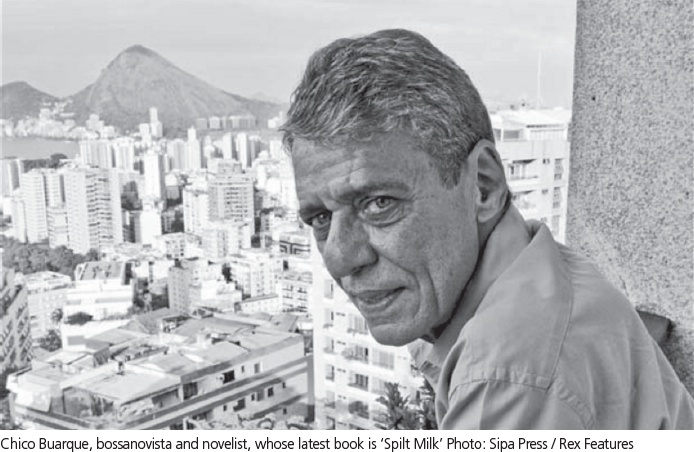
Back in the Sixties, Brazil thrilled to a new dance beat called bossa nova. With its languid jazz tones, the music had a hushed intensity and underlying air of sadness. Chico Buarque, a leading bossanovistasongwriter and novelist, is revered in Brazil as a political hero. In 1968, he was imprisoned by the military for “counter-culture activities”.
Spilt Milk, Buarque’s fourth novel, displays a typically Brazilian mishmash of influences ranging from memoir to adventure to political diatribe. A crotchety old man, Eulálio d’Assumpção, lies moribund in a Rio de Janeiro hospital, musing on his life while lashing out at stenographers and “spiteful” orderlies. The food, we learn, reeks unpleasantly of garlic (“Wait till my mother finds out”).
Aged 150, he has come down in the world wretchedly. In pages of rambling monologue, the improbably old narrator describes the decline of his family over generations of Brazilian history. Amid sagas of political tribalism and grievous dictatorship, plantation-owning forebears have squandered fortunes on drink, drugs and armament deals. A souring smell of “spilt milk” hangs over the narrative as it twists round half-remembered family feuds and hatreds.
Along the way, Buarque paints an exceptionally vivid picture of Brazilian high society in the 1890s, with its German governesses, imported French clothes and Chopin waltzes. Though bedbound and drugged, Eulálio recalls the love of his life, Matilde, whose cinnamon-coloured skin and “Moorish eyes” had worked a fatal charm on him years ago. Where is she now? At first glance, Spilt Milk appears to be in narrative disarray, as the book wanders backwards and forwards in time. Eventually, though, the inchoate strands cohere into an absorbing, if bitter, meditation on Brazil.
Just as bossa nova had borrowed from samba and West Coast jazz, so Buarque borrows from Samuel Beckett, Gabriel García Marquez and others. In a now-famous book of 1928, Manifesto Antropófago, Brazil’s leading modernist poet Oswald de Andrade had defined Brazilian literature as anthropophagic, or cannibalistic, “eating” other forms of European and African writing. Spilt Milk, brocaded with a range of literary influences, conforms to the ideal beautifully.
Source: http://www.telegraph.co.uk/culture/books/fictionreviews/9573627/Spilt-Milk-by-Chico-Buarque-review.html
The word ideal in the last sentence of the book review refers to
Questão 50 270872
CESUPA 2014READ THE TEXT BELOW, THEN ANSWER THE FOLLOWING QUESTION.
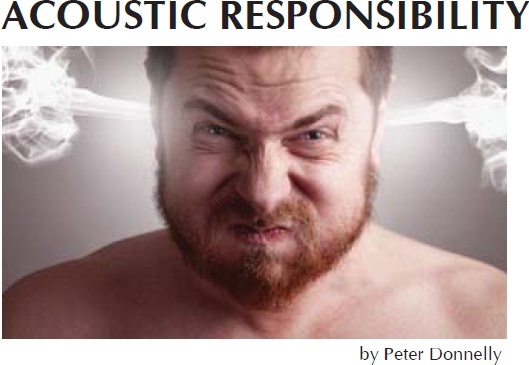
Imagine that every time someone on your street mowed the lawn, or every time an airplane passed overhead, the ambient was filled with a nauseating smell. Suppose this same odor seeped into your bedroom at 3 a.m. when a motorcycle went by, and again at 7 a.m. when a building contractor started his work.
Suppose, indeed, that this stink was around you for 24 hours a day, sometimes stronger, sometimes not so strong, but always there, making your life unpleasant, destroying your ability to experience pleasant aromas, and perhaps even making you ill.
Would our society tolerate activities that really did generate such an odor? Of course not. Yet we show an amazing tolerance for a form of pollution that is every bit as disturbing and harmful: noise.
As a society we have chosen to make a tradeoff. We’ve been willing to tolerate a certain amount of noise for the sake of having what we see as benefits: things like motorized travel, labor-saving machines, and amplified sound at community and private events. We have essentially granted ourselves the right to make noise. But along with rights, as is so often said, come responsibilities. Have we developed a sense of acoustic responsibility in our society?
Noise is garbage, and it is a particularly insidious form of garbage. It destroys community life, pursues us into our homes, keeps us from sleeping, and is a cause of many stress-related illnesses as well as hearing loss.
Our acoustic environment has been described as something that belongs to all of us. Everyone has the right to use it, but no one has the right to abuse it. Let’s start using it responsibly!
Adapted from http://www.acousticecology.org/writings/acousticresponsibility.html
Glossary: seeped = penetrou
contractor = empreiteiro
stink = fedor
tradeoff = troca
pursues us = persegue-nos
People have been accepting noise pollution because
Questão 49 270869
CESUPA 2014READ THE TEXT BELOW, THEN ANSWER THE FOLLOWING QUESTION.
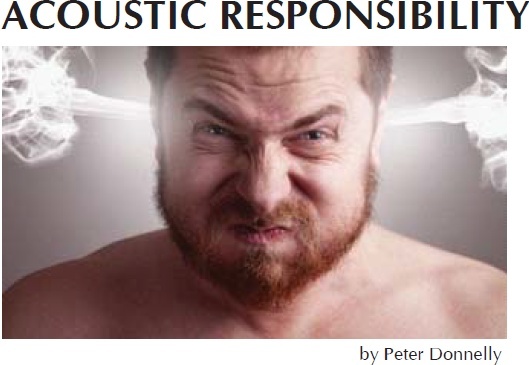
Imagine that every time someone on your street mowed the lawn, or every time an airplane passed overhead, the ambient was filled with a nauseating smell. Suppose this same odor seeped into your bedroom at 3 a.m. when a motorcycle went by, and again at 7 a.m. when a building contractor started his work.
Suppose, indeed, that this stink was around you for 24 hours a day, sometimes stronger, sometimes not so strong, but always there, making your life unpleasant, destroying your ability to experience pleasant aromas, and perhaps even making you ill.
Would our society tolerate activities that really did generate such an odor? Of course not. Yet we show an amazing tolerance for a form of pollution that is every bit as disturbing and harmful: noise.
As a society we have chosen to make a tradeoff. We’ve been willing to tolerate a certain amount of noise for the sake of having what we see as benefits: things like motorized travel, labor-saving machines, and amplified sound at community and private events. We have essentially granted ourselves the right to make noise. But along with rights, as is so often said, come responsibilities. Have we developed a sense of acoustic responsibility in our society?
Noise is garbage, and it is a particularly insidious form of garbage. It destroys community life, pursues us into our homes, keeps us from sleeping, and is a cause of many stress-related illnesses as well as hearing loss.
Our acoustic environment has been described as something that belongs to all of us. Everyone has the right to use it, but no one has the right to abuse it. Let’s start using it responsibly!
Adapted from http://www.acousticecology.org/writings/acousticresponsibility.html
Glossary: seeped = penetrou
contractor = empreiteiro
stink = fedor
tradeoff = troca
pursues us = persegue-nos
The author wants to show that
Questão 48 270865
CESUPA 2014READ THE TEXT BELOW, THEN ANSWER THE FOLLOWING QUESTION.
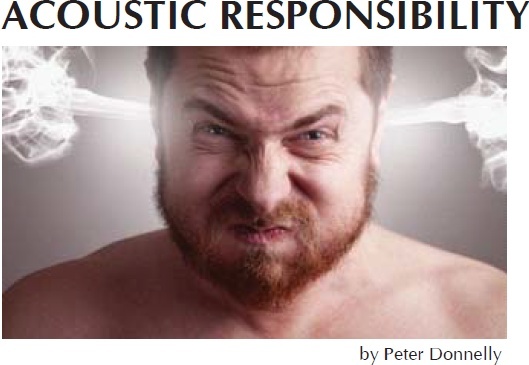
Imagine that every time someone on your street mowed the lawn, or every time an airplane passed overhead, the ambient was filled with a nauseating smell. Suppose this same odor seeped into your bedroom at 3 a.m. when a motorcycle went by, and again at 7 a.m. when a building contractor started his work.
Suppose, indeed, that this stink was around you for 24 hours a day, sometimes stronger, sometimes not so strong, but always there, making your life unpleasant, destroying your ability to experience pleasant aromas, and perhaps even making you ill.
Would our society tolerate activities that really did generate such an odor? Of course not. Yet we show an amazing tolerance for a form of pollution that is every bit as disturbing and harmful: noise.
As a society we have chosen to make a tradeoff. We’ve been willing to tolerate a certain amount of noise for the sake of having what we see as benefits: things like motorized travel, labor-saving machines, and amplified sound at community and private events. We have essentially granted ourselves the right to make noise. But along with rights, as is so often said, come responsibilities. Have we developed a sense of acoustic responsibility in our society?
Noise is garbage, and it is a particularly insidious form of garbage. It destroys community life, pursues us into our homes, keeps us from sleeping, and is a cause of many stress-related illnesses as well as hearing loss.
Our acoustic environment has been described as something that belongs to all of us. Everyone has the right to use it, but no one has the right to abuse it. Let’s start using it responsibly!
Adapted from http://www.acousticecology.org/writings/acousticresponsibility.html
Glossary: seeped = penetrou
contractor = empreiteiro
stink = fedor
tradeoff = troca
pursues us = persegue-nos
Most people
06