


![[Marketing] Questao Topo - deslogado](https://storage.estuda.com.br/banners/0_6b7ebee90b03af1c560c73bb8bcce34a_banner_deslogado_70_dias.png)
Questões de Inglês
19.971 Questões
Questão 11 8393380
UEA - Geral 2022Leia o texto para responder à questão.
Michigan State University’s Quick Check
1. Check the website name and domain: Fake sites often
have a “.co” in the domain.
2. Spelling & Grammar: Are there multiple errors or does the
site look professionally edited?
3. Author Attribution: Is an author listed? Are there links
to their profile and credentials? Anonymous articles
generally should be avoided.
4. Emotional Manipulation: Do you feel emotions by simply
reading the headline?
5. Statement of Ethics: Most reputable news sites have a
Statement of Ethics.
6. Corrections: Again, reputable sites have a Corrections
section or policy.
7. Named Sources, Studies etc.: Does the article name a
source or study for its information?
8. Identify Editorials vs News: Reputable news sources
clearly identify editorials, which as we know are just
someone’s opinion.
9. Check A Reporter’s Body of Work: Does the reporter
have a large body of work? Do they generally cover the
same topic(s), or do the topics seem to be random or
inconsistent?
10. Verify Information Using Multiple Sources: This is a good
habit for all research. Make sure you can find more than
one reputable source reporting the same information.
(www.libguides.valenciacollege.edu, 04.08.2022. Adaptado.)
The purpose of the text is to
Questão 10 8393378
UEA - Geral 2022Leia o texto para responder à questão.
If you are in a major city anywhere in the world, it is probably quite easy to grab a cheap hamburger from a nearby fast-food restaurant. But what you may not realize is that the meat in that cheap burger can actually illustrate a grand narrative about how humans have shaped the planet. From the land used to raise cattle for beef consumption, to the water used to feed those cattle, to the fuel used to transport the beef all over the world, the human progress that enables us to easily buy a burger — and, for that matter, hop on a plane, charge our phones, and take part in the multitude of activities that make up our everyday experiences — has changed the biosphere.
(Lori Dajose. www.caltech.edu, 03.08.2022.)
No trecho “the human progress that enables us to easily buy a burger”, o termo sublinhado equivale, em português, a
Questão 19 8331792
UESB 1° Dia 2022A day in the life of (almost) every vending machine in the world
What’s behind the indestructible appeal of the robotic snack?
By Tom Lamont
A minute before midnight on 21 July 2021, as passengers staggered sleepily through Manchester airport, I stood wringing my hands in the glow of a vending machine that was seven feet tall, conspicuously branded with the name of its owner – BRODERICK – and positioned like a clever trap between arrivals and the taxi rank. Standard agonies. Sweet or savoury? Liquid or something to munch? I opted for Doritos, keying in a three-digit code and touching my card to the reader so that the packet moved jerkily forwards, propelled by a churning plastic spiral and tipped into the well of the machine. My Doritos landed with a thwap, a sound that always brings relief to the vending enthusiast, because there hasn’t been a mechanical miscue. Judged by the clock, which now read 12am, it was the UK’s first vending-machine sale of the day.
Nine hours later, I was sitting in a spruce office in the Manchester suburb of Wythenshawe, drinking coffee with John “Johnny Brod” Broderick, the man who owned and operated that handsome airport machine. I’d had an idea to try to capture 24 hours in the life of vending machines. These weird, conspicuous objects! With their backs against the wall of everyday existence, they tempt out such a peculiar range of emotions, from relief to frustration, condescension to childish glee. For decades I’d been a steady and unquestioning patron. I figured that by spending some time in the closer company of the machines and their keepers, by immersing myself in their history, by looking to their future, I might get to the bottom of their enduring appeal. What made entrepreneurs from the Victorian age onwards want to hawk their goods in this way? What made generations of us buy? Johnny Brod seemed a good first person to ask.
Freckle-tanned, portly and quick to laugh, Broderick has a playful exterior that conceals the fiery heart of a vending fundamentalist. He is a man so invested in the roboticised transmission of snacks that, come Halloween, Johnny Brod has been known to park a machine full of sweets in his driveway, letting any costumed local kids issue their demand for treats via prodded forefinger. With his brother Peter and his father, John Sr, he runs the vending empire Broderick’s Ltd, its 2,800 machines occupying some of the most sought-after corridors and crannies of the UK. The Broderick family sugar and sustain office workers, factory workers, students, gym goers, shoppers and schoolchildren. They pep up breaktimes in a nuclear power station. If you’ve ever wolfed a postpartum Snickers in the maternity ward at Chesterfield or Leeds General, or turned thirsty while waiting to fly out of Stansted or Birmingham airports, then you’ve almost certainly shopped, at one mechanical remove, with Johnny Brod. He thanks you.
[…]
Every one of his machines, he countered, was fitted with a contactless card reader. […] Big change was sweeping through automated vending, and the first thing to go was small change. As cash sales tumbled in 2020 and 2021, and contactless sales climbed, the Brodericks had been the beneficiary of new and better information about their customers. […] Now the tycoons of vending understood us better. Johnny Brod had released a smartphone app that tempted people with discounts in return for permission to track their vending habits.
[…]
As the social historian Kerry Segrave notes in her 2002 book, Vending Machines, the moment these “silent salesmen” appeared on the streets, they were viewed as fair game to be swindled. Tricking vending machines was called “slugging”, because you fed in cheap brass slugs instead of money. Hundreds of worthless metal lozenges advertising boot polish were found inside a single machine in south-west London in 1914. More than a century later, Johnny Brod told me that sluggers were still at large, only these days they tended to use counterfeit currency. He once had a shoebox full of recovered dud coins in his Wythenshawe office, but it was stolen during a break-in.
Back in 1926, the battle against the cheats brought the Fry family into vending. And the Fry family changed the whole game. B. E. Fry was an inventor in St Louis, Missouri, who noted that the machines in his city were gullible enough to be fooled by cardboard circles. He came up with an improved coin-swallowing mechanism that would answer to nickels and dimes or nothing, he swore. By the 1940s, Fry’s family business, renamed National Vendors, was booming. National Vendors established many of the industry customs that hold sway today. Roving technicians on the roads. A sales team on the phones back at HQ, fighting off turf incursions from rivals, signing new sites to new contracts.
Every vending machine is a battleground. Profits are ruthlessly haggled over. Competition for spots is intense. Broadly speaking, the vending game is built on deals between operators (who own machines and have the skills to install them, fix them, constantly fill them with fats and sugars) and site owners (who have the rights to advantageous pieces of land). Either a machine is placed on private property – say, a factory, where the site owner surrenders profits to the operator in return for keeping a workforce fed and present – or, a machine is placed somewhere public, inside a teeming airport, for instance. Here the site owner will expect a cut of each item sold, anywhere from 10% to 30%.
Those midnight Doritos at Manchester airport cost me £1.10. Though Johnny Brod, the operator, would not say how much of a cut went to the site owner, Manchester Airports Group, he did acknowledge that he made 22p in profit per Doritos packet. (And that Manchester Airport Group made more.) We were discussing this in headquarters when his father, John Sr, wandered through the office, ready to reminisce about the old days. John Sr explained how he founded the business in the 1960s with a single National Vendors machine, imported from the US. He struck a deal to put it in the foyer of Macclesfield baths. Everything escalated from there. […]
(Source: https://www.theguardian.com/business/2022/apr/14/aday-in-the-life-of-almost-every-vending-machine-in-the-world. Access: 04/14/2022).
Mark the option that best describes what John “Johnny Brod” Broderick does during Halloween, according to the text:
Questão 16 8331773
UESB 1° Dia 2022A day in the life of (almost) every vending machine in the world
What’s behind the indestructible appeal of the robotic snack?
By Tom Lamont
A minute before midnight on 21 July 2021, as passengers staggered sleepily through Manchester airport, I stood wringing my hands in the glow of a vending machine that was seven feet tall, conspicuously branded with the name of its owner – BRODERICK – and positioned like a clever trap between arrivals and the taxi rank. Standard agonies. Sweet or savoury? Liquid or something to munch? I opted for Doritos, keying in a three-digit code and touching my card to the reader so that the packet moved jerkily forwards, propelled by a churning plastic spiral and tipped into the well of the machine. My Doritos landed with a thwap, a sound that always brings relief to the vending enthusiast, because there hasn’t been a mechanical miscue. Judged by the clock, which now read 12am, it was the UK’s first vending-machine sale of the day.
Nine hours later, I was sitting in a spruce office in the Manchester suburb of Wythenshawe, drinking coffee with John “Johnny Brod” Broderick, the man who owned and operated that handsome airport machine. I’d had an idea to try to capture 24 hours in the life of vending machines. These weird, conspicuous objects! With their backs against the wall of everyday existence, they tempt out such a peculiar range of emotions, from relief to frustration, condescension to childish glee. For decades I’d been a steady and unquestioning patron. I figured that by spending some time in the closer company of the machines and their keepers, by immersing myself in their history, by looking to their future, I might get to the bottom of their enduring appeal. What made entrepreneurs from the Victorian age onwards want to hawk their goods in this way? What made generations of us buy? Johnny Brod seemed a good first person to ask.
Freckle-tanned, portly and quick to laugh, Broderick has a playful exterior that conceals the fiery heart of a vending fundamentalist. He is a man so invested in the roboticised transmission of snacks that, come Halloween, Johnny Brod has been known to park a machine full of sweets in his driveway, letting any costumed local kids issue their demand for treats via prodded forefinger. With his brother Peter and his father, John Sr, he runs the vending empire Broderick’s Ltd, its 2,800 machines occupying some of the most sought-after corridors and crannies of the UK. The Broderick family sugar and sustain office workers, factory workers, students, gym goers, shoppers and schoolchildren. They pep up breaktimes in a nuclear power station. If you’ve ever wolfed a postpartum Snickers in the maternity ward at Chesterfield or Leeds General, or turned thirsty while waiting to fly out of Stansted or Birmingham airports, then you’ve almost certainly shopped, at one mechanical remove, with Johnny Brod. He thanks you.
[…]
Every one of his machines, he countered, was fitted with a contactless card reader. […] Big change was sweeping through automated vending, and the first thing to go was small change. As cash sales tumbled in 2020 and 2021, and contactless sales climbed, the Brodericks had been the beneficiary of new and better information about their customers. […] Now the tycoons of vending understood us better. Johnny Brod had released a smartphone app that tempted people with discounts in return for permission to track their vending habits.
[…]
As the social historian Kerry Segrave notes in her 2002 book, Vending Machines, the moment these “silent salesmen” appeared on the streets, they were viewed as fair game to be swindled. Tricking vending machines was called “slugging”, because you fed in cheap brass slugs instead of money. Hundreds of worthless metal lozenges advertising boot polish were found inside a single machine in south-west London in 1914. More than a century later, Johnny Brod told me that sluggers were still at large, only these days they tended to use counterfeit currency. He once had a shoebox full of recovered dud coins in his Wythenshawe office, but it was stolen during a break-in.
Back in 1926, the battle against the cheats brought the Fry family into vending. And the Fry family changed the whole game. B. E. Fry was an inventor in St Louis, Missouri, who noted that the machines in his city were gullible enough to be fooled by cardboard circles. He came up with an improved coin-swallowing mechanism that would answer to nickels and dimes or nothing, he swore. By the 1940s, Fry’s family business, renamed National Vendors, was booming. National Vendors established many of the industry customs that hold sway today. Roving technicians on the roads. A sales team on the phones back at HQ, fighting off turf incursions from rivals, signing new sites to new contracts.
Every vending machine is a battleground. Profits are ruthlessly haggled over. Competition for spots is intense. Broadly speaking, the vending game is built on deals between operators (who own machines and have the skills to install them, fix them, constantly fill them with fats and sugars) and site owners (who have the rights to advantageous pieces of land). Either a machine is placed on private property – say, a factory, where the site owner surrenders profits to the operator in return for keeping a workforce fed and present – or, a machine is placed somewhere public, inside a teeming airport, for instance. Here the site owner will expect a cut of each item sold, anywhere from 10% to 30%.
Those midnight Doritos at Manchester airport cost me £1.10. Though Johnny Brod, the operator, would not say how much of a cut went to the site owner, Manchester Airports Group, he did acknowledge that he made 22p in profit per Doritos packet. (And that Manchester Airport Group made more.) We were discussing this in headquarters when his father, John Sr, wandered through the office, ready to reminisce about the old days. John Sr explained how he founded the business in the 1960s with a single National Vendors machine, imported from the US. He struck a deal to put it in the foyer of Macclesfield baths. Everything escalated from there. […]
(Source: https://www.theguardian.com/business/2022/apr/14/aday-in-the-life-of-almost-every-vending-machine-in-the-world. Access: 04/14/2022).
Read the first paragraph again. Mark the option that best describes what is happening in such paragraph.
Questão 5 8281898
UEMS 2022A respeito dos termos destacados, a alternativa correta
A tortoise was resting under a tree, on which a bird had built its nest. The tortoise spoke to the bird mockingly, “What a shabby home you have! It is made of broken twigs, it has no roof, and looks crude. What’s worse is that you had to build it yourself. I think my house, which is my shell, is much better than your pathetic nest”.
“Yes, it is made of broken sticks, looks shabby and is open to the elements of nature. It is crude, but I built it, and I like it.”
“I guess it’s just like any other nest, but not better than mine”, said the tortoise. “You must be jealous of my shell, though.”
“On the contrary”, the bird replied. “My home has space for my family and friends; your shell cannot accommodate anyone other than you. Maybe you have a better house. But I have a better home”, said the bird happily.
Questão 4 8281890
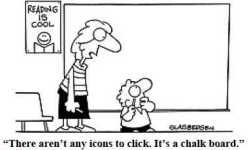
UEMS 2022De acordo com o cartum a seguir, a criança demonstra estar:
06