


![[Marketing] Questao Topo - deslogado](https://storage.estuda.com.br/banners/0_6b7ebee90b03af1c560c73bb8bcce34a_banner_deslogado_70_dias.png)
Questões de Inglês
19.971 Questões
Questão 51 87216
UEMG 2015Read the passage below to complete the gaps with the relative pronouns (1- 4):
Online friends are people _______ always post messages and pictures of the places _______ they are, _______ they are with and ______ they are doing.
1. what
2. who
3. whom
4. where
The CORRECT sequence is:
Questão 50 87215
UEMG 2015Virtual People, Real Friends
by Anna Pickard (The Guardian)
The benefits of forming friendships with those we meet online are obvious, so why is the idea still treated with such disdain?
Another week, another survey claiming to reveal great truths about ourselves. This one says that people are increasingly turning “online friends” into people they’d think worthy of calling real-life friends. Well, that’s stating the obvious, I would have thought! If there’s a more perfect place for making friends, I have yet to find it. However, when surveys like this are reported in the media, it’s always with a slight air of “it’s a crazy, crazy world!” And whenever the subject crops up in the conversation, it’s clear that people look down on friends like these. In fact some members of my family still refer to my partner of six years as my “Internet Boyfriend.”
It’s the shocked reaction that surprises me as if people on the internet were not “real” at all. Certainly, people play a character online quite often – they may be a more confident or more argumentative version of their real selves – but what’s the alternative? Is meeting people at work so much better than making friends in a virtual world? Perhaps, but for some a professional distance between their “work” selves and their “social” selves is necessary, especially, if they tend to let their guard down and might say or do something they will later regret.
Those people disapproving of online friendships argue that the concept of “friendship” is used loosely in a world driven by technology, in which you might have a thousand online friends. They make a distinction between “social connections” – acquaintances who are only one click away – and meaningful human interaction, which they say requires time and effort. They note that for many Facebook “friends,” conversation is a way of exchanging information quickly and efficiently rather than being a social activity.
However, I’ve found that far from being the home of oddballs and potential serial killers, the internet is full of like-minded people. For the first time in history, we’re lucky to enough to choose friends not by location or luck, but by those who have similar interests and senses of humour, or passionate feelings about the same things. The friends I’ve made online might be spread wide geographically, but I’m closer to them than anyone I went to school with, by millions miles. They are the best friends I have.
Obviously, there will be concerns about the dangers of online friendship. There are always stories buzzing around such as “man runs off with the woman he met on Second Life” or people who meet their “soulmate” online and are never seen again. But people are people, whether online or not. As for “real” friendship dying out, surely, is social networking simply redefining our notion of what this is in the twenty-first century? The figures – half a billion Facebook users worldwide – speak for themselves. And technology has allowed countless numbers of these people to keep in close contact with their loved ones, however far away they are. Without it, many disabled or household people might go without social contact at all. Call me naive, call me a social misfit, I don’t care. Virtual people make best real friends.
Adapted from http://www.theguardian.com/commentisfree/2009/jan/02/internet-relationships
In the sentence “(…) acquaintances who are only one click away (…)” (4th paragraph), what does acquaintance mean?
Questão 49 87214
UEMG 2015Virtual People, Real Friends
by Anna Pickard (The Guardian)
The benefits of forming friendships with those we meet online are obvious, so why is the idea still treated with such disdain?
Another week, another survey claiming to reveal great truths about ourselves. This one says that people are increasingly turning “online friends” into people they’d think worthy of calling real-life friends. Well, that’s stating the obvious, I would have thought! If there’s a more perfect place for making friends, I have yet to find it. However, when surveys like this are reported in the media, it’s always with a slight air of “it’s a crazy, crazy world!” And whenever the subject crops up in the conversation, it’s clear that people look down on friends like these. In fact some members of my family still refer to my partner of six years as my “Internet Boyfriend.”
It’s the shocked reaction that surprises me as if people on the internet were not “real” at all. Certainly, people play a character online quite often – they may be a more confident or more argumentative version of their real selves – but what’s the alternative? Is meeting people at work so much better than making friends in a virtual world? Perhaps, but for some a professional distance between their “work” selves and their “social” selves is necessary, especially, if they tend to let their guard down and might say or do something they will later regret.
Those people disapproving of online friendships argue that the concept of “friendship” is used loosely in a world driven by technology, in which you might have a thousand online friends. They make a distinction between “social connections” – acquaintances who are only one click away – and meaningful human interaction, which they say requires time and effort. They note that for many Facebook “friends,” conversation is a way of exchanging information quickly and efficiently rather than being a social activity.
However, I’ve found that far from being the home of oddballs and potential serial killers, the internet is full of like-minded people. For the first time in history, we’re lucky to enough to choose friends not by location or luck, but by those who have similar interests and senses of humour, or passionate feelings about the same things. The friends I’ve made online might be spread wide geographically, but I’m closer to them than anyone I went to school with, by millions miles. They are the best friends I have.
Obviously, there will be concerns about the dangers of online friendship. There are always stories buzzing around such as “man runs off with the woman he met on Second Life” or people who meet their “soulmate” online and are never seen again. But people are people, whether online or not. As for “real” friendship dying out, surely, is social networking simply redefining our notion of what this is in the twenty-first century? The figures – half a billion Facebook users worldwide – speak for themselves. And technology has allowed countless numbers of these people to keep in close contact with their loved ones, however far away they are. Without it, many disabled or household people might go without social contact at all. Call me naive, call me a social misfit, I don’t care. Virtual people make best real friends.
Adapted from http://www.theguardian.com/commentisfree/2009/jan/02/internet-relationships
What is the article mainly about?
Questão 58 85699
UNIFOR Graduação 2015/1Um dos usos do discurso indireto é o de expressar pensamentos, ideias, opiniões ou sentimentos.
Analise as sentenças que reportam à forma correta do discurso indireto da sentença abaixo:
People think he is completely mad.
I. People think him to be completely mad.
II. It is thought that he is completely mad.
III. He is thought to be completely mad.
IV. People think him is completely mad.
É correta APENAS o que se afirma em:
Questão 57 85698
UNIFOR Graduação 2015/1Garfield é criação de Jim Davis, em 1978. A tira de Garfield ironiza pessoas que transformam os animais de estimação nos “donos da casa”. Também mostra um gato atuando como homem (inclusive, andando em 2 patas) e enfrentando problemas humanos (dieta, tédio, aversão às segundas-feiras etc.).

Leia a tirinha acima e marque a opção correta referente ao sentido do verbo modal “MUST” utilizado
Questão 55 85696
UNIFOR Graduação 2015/1No dia 7 de outubro, os doutores Isamu Akasaki, Hiroshi Amano e Shuji Nakamura foram agraciados com o Prêmio Nobel de Física por terem criado um diodo emissor de luz LED.
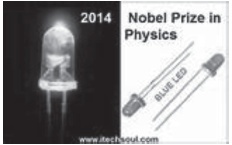
New light to illuminate the world 7 October 2014
This year’s Nobel Laureates are rewarded for
having invented a new energy-efficient and
environmentfriendly
light
[5] source – the
blue lighte
m i t t i n g
diode (LED).
In the spirit of
[10] Alfred Nobel
the Prize rewards an invention of greatest benefit
to mankind; using blue LEDs, white light can be
created in a new way. With the advent of LED
lamps we now have more long-lasting and more
[15] efficient alternatives to older light sources.
When Isamu Akasaki, Hiroshi Amano and Shuji
Nakamura produced bright blue light beams from
their semi-conductors in the early 1990s, they
triggered a fundamental transformation of lighting
[20] technology. Red and green diodes had been
around for a long time but without blue light, white
lamps could not be created. Despite considerable
efforts, both in the scientific community and in
industry, the blue LED had remained a challenge
[25] for three decades.
They succeeded where everyone else had
failed. Akasaki worked together with Amano at
the University of Nagoya, while Nakamura was
employed at Nichia Chemicals, a small company
[30] in Tokushima. Their inventions were revolutionary.
Incandescent light bulbs lit the 20th century; the
21st century will be lit by LED lamps.
White LED lamps emit a bright white light, are
long-lasting and energy-efficient. They are
[35] constantly improved, getting more efficient with
higher luminous flux (measured in lumen) per unit
electrical input power (measured in watt). The
most recent record is just over 300 lm/W, which
can be compared to 16 for regular light bulbs and
[40] close to 70 for fluorescent lamps. As about one
fourth of world electricity consumption is used for
lighting purposes, the LEDs contribute to saving
the Earth’s resources. Materials consumption
is also diminished as LEDs last up to 100,000
[45] hours, compared to 1,000 for incandescent bulbs
and 10,000 hours for fluorescent lights.
The LED lamp holds great promise for increasing
the quality of life for over 1.5 billion people around
the world who lack access to electricity grids: due
[50] to low power requirements it can be powered by
cheap local solar power.
The invention of the blue LED is just twenty years
old, but it has already contributed to create white
light in an entirely new manner to the benefit of
[55] us all.
Disponível em: http://www.nobelprize.org/nobel_prizes/physics/laureates/2014/press.html
Qual a opção que melhor resume a ideia geral do texto “New light to illuminate the world”?
06