


![[Marketing] Questao Topo - deslogado](https://storage.estuda.com.br/banners/0_6b7ebee90b03af1c560c73bb8bcce34a_banner_deslogado_70_dias.png)
Questões de Inglês
19.971 Questões
Questão 21 93011
UNESP 2015/1
Examine o quadrinho.
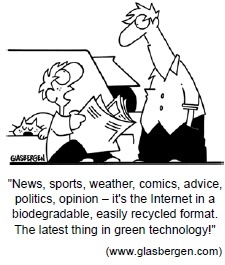
The boy
Questão 20 92233
PUC- RJ 2015/1Do screens make us stupider?
Time for a rethink of reading
At the university where I teach, fewer and fewer
new books are available from the library in their
physical, printed form. And yet, the company that just
published my textbook tells me that about 90 percent
[5] of students who buy my book choose to lug around
the four-pound paper version rather than purchase
the weightless e-book.
The information is exactly the same, so why would
students opt for the pricier and more cumbersome
[10] version? Is the library missing something important
about the nature of printed versus electronic books?
Some studies do show that information becomes
more securely fixed in people’s minds when they read
it from paper than when they read it from the screen.
[15] Findings like these may resonate with our subjective
experience of reading, and yet still seem puzzling at
an intellectual level. This is because we’re used to
thinking about reading—or information processing
more generally—as the metaphorical equivalent of
[20] consuming food. We talk about devouring novels,
digesting a report, and absorbing information. If we’re
ingesting the same material, whether it’s presented
in print or electronically, how can the results be so
different?
[25] Within the prevailing food metaphor, the only
sensible way to think about these different outcomes
is that reading from paper leads to more efficient or
complete digestion. An intuitive explanation may
be that visual fatigue or the effort of navigating text
[30] onscreen interferes with the processing of information.
Or perhaps we’ve picked up shallow mental habits
while onscreen that prevent us from taking the time
to properly chew on the information as we take it
in. In both cases, the implication is that valuable
[35] informational nutrients that are “there” in the text end
up being mentally excreted rather than absorbed.
But, in reality, the whole reading-as-digestion
metaphor is deeply flawed. Cognitive research shows
that while reading, it’s possible, among other things,
[40] to generate strong visual images based on the text, to
marshal arguments against the author’s main point,
to speculate about the motivations of characters, to
connect the text to personal experiences, to form
an opinion, or to notice the sensory and aesthetic
[45] qualities of the text, to name just a few. Not all of
these take place every time you read, so there is not
just one activity called “reading,” done either poorly
or well.
There are probably all sorts of subtle cues
[50] around us, influencing our cognitive goals moment
by moment. A study showed that when people read
a product review in a hard-to-read font, they more
carefully evaluated the merits of the arguments than
when the same information was presented in easyto-
[55] read font—suggesting that when information
merely feels hard to process, we automatically bring
out the heavy cognitive machinery. The emerging
research on cognitive goals and their triggers offers
an intriguing way to think about why reading the same
[60] text in different formats or even styles of presentation
might engage the mind in such different ways. A
hard-copy textbook may serve as a powerful cue that
sets off cognitive activities that are very distinct from
those that are involved in reading your Twitter feed or
[65] thumbing through a paperback romance novel.
The research should also motivate publishers—
especially of online text—to think deeply about how
elements of presentation and design can serve as
signals to nudge the reader into the mental activities
[70] that do justice to the text. For example, an online
literary magazine may leave readers with unsatisfying
experiences simply because it’s too hard to arouse
the contemplative and sensory goals that lead to
properly savoring its content. The magazine needs
[75] to signal that a different kind of reading is called for,
perhaps by borrowing some of the elements that
poets have long used to cue readers to pay close
attention to the language of a poem: stripping away
graphic distractions, formatting text sparsely and
[80] unconventionally, and surrounding it with generous
swaths of empty space.
Understanding how reading works means
abandoning the idea that the presentation of a text
is as inconsequential as whether a plate of food is
[85] served with a sprig of decorative parsley. In fact,
the packaging of text likely contains rich implicit
instructions for what we do with it.
Available at: <http://blogs.discovermagazine.com/crux/2014/06/17/do- -screens-make-us-stupider-time-for-a-rethink-of-reading/>. Retrieved on: July 10th, 2014. Adapted.
In paragraph 8 (lines 82-87), the author presents her main argument about what she calls “a rethink of reading”.
According to her,
Questão 19 92232
PUC- RJ 2015/1Do screens make us stupider?
Time for a rethink of reading
At the university where I teach, fewer and fewer
new books are available from the library in their
physical, printed form. And yet, the company that just
published my textbook tells me that about 90 percent
[5] of students who buy my book choose to lug around
the four-pound paper version rather than purchase
the weightless e-book.
The information is exactly the same, so why would
students opt for the pricier and more cumbersome
[10] version? Is the library missing something important
about the nature of printed versus electronic books?
Some studies do show that information becomes
more securely fixed in people’s minds when they read
it from paper than when they read it from the screen.
[15] Findings like these may resonate with our subjective
experience of reading, and yet still seem puzzling at
an intellectual level. This is because we’re used to
thinking about reading—or information processing
more generally—as the metaphorical equivalent of
[20] consuming food. We talk about devouring novels,
digesting a report, and absorbing information. If we’re
ingesting the same material, whether it’s presented
in print or electronically, how can the results be so
different?
[25] Within the prevailing food metaphor, the only
sensible way to think about these different outcomes
is that reading from paper leads to more efficient or
complete digestion. An intuitive explanation may
be that visual fatigue or the effort of navigating text
[30] onscreen interferes with the processing of information.
Or perhaps we’ve picked up shallow mental habits
while onscreen that prevent us from taking the time
to properly chew on the information as we take it
in. In both cases, the implication is that valuable
[35] informational nutrients that are “there” in the text end
up being mentally excreted rather than absorbed.
But, in reality, the whole reading-as-digestion
metaphor is deeply flawed. Cognitive research shows
that while reading, it’s possible, among other things,
[40] to generate strong visual images based on the text, to
marshal arguments against the author’s main point,
to speculate about the motivations of characters, to
connect the text to personal experiences, to form
an opinion, or to notice the sensory and aesthetic
[45] qualities of the text, to name just a few. Not all of
these take place every time you read, so there is not
just one activity called “reading,” done either poorly
or well.
There are probably all sorts of subtle cues
[50] around us, influencing our cognitive goals moment
by moment. A study showed that when people read
a product review in a hard-to-read font, they more
carefully evaluated the merits of the arguments than
when the same information was presented in easyto-
[55] read font—suggesting that when information
merely feels hard to process, we automatically bring
out the heavy cognitive machinery. The emerging
research on cognitive goals and their triggers offers
an intriguing way to think about why reading the same
[60] text in different formats or even styles of presentation
might engage the mind in such different ways. A
hard-copy textbook may serve as a powerful cue that
sets off cognitive activities that are very distinct from
those that are involved in reading your Twitter feed or
[65] thumbing through a paperback romance novel.
The research should also motivate publishers—
especially of online text—to think deeply about how
elements of presentation and design can serve as
signals to nudge the reader into the mental activities
[70] that do justice to the text. For example, an online
literary magazine may leave readers with unsatisfying
experiences simply because it’s too hard to arouse
the contemplative and sensory goals that lead to
properly savoring its content. The magazine needs
[75] to signal that a different kind of reading is called for,
perhaps by borrowing some of the elements that
poets have long used to cue readers to pay close
attention to the language of a poem: stripping away
graphic distractions, formatting text sparsely and
[80] unconventionally, and surrounding it with generous
swaths of empty space.
Understanding how reading works means
abandoning the idea that the presentation of a text
is as inconsequential as whether a plate of food is
[85] served with a sprig of decorative parsley. In fact,
the packaging of text likely contains rich implicit
instructions for what we do with it.
Available at: <http://blogs.discovermagazine.com/crux/2014/06/17/do- -screens-make-us-stupider-time-for-a-rethink-of-reading/>. Retrieved on: July 10th, 2014. Adapted.
In paragraph 7 (lines 66-81), the author defends the idea that magazine editors should borrow some of the elements that poets have long used to cue readers to pay attention to their poems. Among these elements, the one that is NOT mentioned is:
Questão 18 92231
PUC- RJ 2015/1Do screens make us stupider?
Time for a rethink of reading
At the university where I teach, fewer and fewer
new books are available from the library in their
physical, printed form. And yet, the company that just
published my textbook tells me that about 90 percent
[5] of students who buy my book choose to lug around
the four-pound paper version rather than purchase
the weightless e-book.
The information is exactly the same, so why would
students opt for the pricier and more cumbersome
[10] version? Is the library missing something important
about the nature of printed versus electronic books?
Some studies do show that information becomes
more securely fixed in people’s minds when they read
it from paper than when they read it from the screen.
[15] Findings like these may resonate with our subjective
experience of reading, and yet still seem puzzling at
an intellectual level. This is because we’re used to
thinking about reading—or information processing
more generally—as the metaphorical equivalent of
[20] consuming food. We talk about devouring novels,
digesting a report, and absorbing information. If we’re
ingesting the same material, whether it’s presented
in print or electronically, how can the results be so
different?
[25] Within the prevailing food metaphor, the only
sensible way to think about these different outcomes
is that reading from paper leads to more efficient or
complete digestion. An intuitive explanation may
be that visual fatigue or the effort of navigating text
[30] onscreen interferes with the processing of information.
Or perhaps we’ve picked up shallow mental habits
while onscreen that prevent us from taking the time
to properly chew on the information as we take it
in. In both cases, the implication is that valuable
[35] informational nutrients that are “there” in the text end
up being mentally excreted rather than absorbed.
But, in reality, the whole reading-as-digestion
metaphor is deeply flawed. Cognitive research shows
that while reading, it’s possible, among other things,
[40] to generate strong visual images based on the text, to
marshal arguments against the author’s main point,
to speculate about the motivations of characters, to
connect the text to personal experiences, to form
an opinion, or to notice the sensory and aesthetic
[45] qualities of the text, to name just a few. Not all of
these take place every time you read, so there is not
just one activity called “reading,” done either poorly
or well.
There are probably all sorts of subtle cues
[50] around us, influencing our cognitive goals moment
by moment. A study showed that when people read
a product review in a hard-to-read font, they more
carefully evaluated the merits of the arguments than
when the same information was presented in easyto-
[55] read font—suggesting that when information
merely feels hard to process, we automatically bring
out the heavy cognitive machinery. The emerging
research on cognitive goals and their triggers offers
an intriguing way to think about why reading the same
[60] text in different formats or even styles of presentation
might engage the mind in such different ways. A
hard-copy textbook may serve as a powerful cue that
sets off cognitive activities that are very distinct from
those that are involved in reading your Twitter feed or
[65] thumbing through a paperback romance novel.
The research should also motivate publishers—
especially of online text—to think deeply about how
elements of presentation and design can serve as
signals to nudge the reader into the mental activities
[70] that do justice to the text. For example, an online
literary magazine may leave readers with unsatisfying
experiences simply because it’s too hard to arouse
the contemplative and sensory goals that lead to
properly savoring its content. The magazine needs
[75] to signal that a different kind of reading is called for,
perhaps by borrowing some of the elements that
poets have long used to cue readers to pay close
attention to the language of a poem: stripping away
graphic distractions, formatting text sparsely and
[80] unconventionally, and surrounding it with generous
swaths of empty space.
Understanding how reading works means
abandoning the idea that the presentation of a text
is as inconsequential as whether a plate of food is
[85] served with a sprig of decorative parsley. In fact,
the packaging of text likely contains rich implicit
instructions for what we do with it.
Available at: <http://blogs.discovermagazine.com/crux/2014/06/17/do- -screens-make-us-stupider-time-for-a-rethink-of-reading/>. Retrieved on: July 10th, 2014. Adapted.
The word nudge, in the fragment “how elements of presentation and design can serve as signals to nudge the reader into the mental activities that do justice to the text.” (lines 67-70), is closest in meaning to
Questão 17 92230
PUC- RJ 2015/1Do screens make us stupider?
Time for a rethink of reading
At the university where I teach, fewer and fewer
new books are available from the library in their
physical, printed form. And yet, the company that just
published my textbook tells me that about 90 percent
[5] of students who buy my book choose to lug around
the four-pound paper version rather than purchase
the weightless e-book.
The information is exactly the same, so why would
students opt for the pricier and more cumbersome
[10] version? Is the library missing something important
about the nature of printed versus electronic books?
Some studies do show that information becomes
more securely fixed in people’s minds when they read
it from paper than when they read it from the screen.
[15] Findings like these may resonate with our subjective
experience of reading, and yet still seem puzzling at
an intellectual level. This is because we’re used to
thinking about reading—or information processing
more generally—as the metaphorical equivalent of
[20] consuming food. We talk about devouring novels,
digesting a report, and absorbing information. If we’re
ingesting the same material, whether it’s presented
in print or electronically, how can the results be so
different?
[25] Within the prevailing food metaphor, the only
sensible way to think about these different outcomes
is that reading from paper leads to more efficient or
complete digestion. An intuitive explanation may
be that visual fatigue or the effort of navigating text
[30] onscreen interferes with the processing of information.
Or perhaps we’ve picked up shallow mental habits
while onscreen that prevent us from taking the time
to properly chew on the information as we take it
in. In both cases, the implication is that valuable
[35] informational nutrients that are “there” in the text end
up being mentally excreted rather than absorbed.
But, in reality, the whole reading-as-digestion
metaphor is deeply flawed. Cognitive research shows
that while reading, it’s possible, among other things,
[40] to generate strong visual images based on the text, to
marshal arguments against the author’s main point,
to speculate about the motivations of characters, to
connect the text to personal experiences, to form
an opinion, or to notice the sensory and aesthetic
[45] qualities of the text, to name just a few. Not all of
these take place every time you read, so there is not
just one activity called “reading,” done either poorly
or well.
There are probably all sorts of subtle cues
[50] around us, influencing our cognitive goals moment
by moment. A study showed that when people read
a product review in a hard-to-read font, they more
carefully evaluated the merits of the arguments than
when the same information was presented in easyto-
[55] read font—suggesting that when information
merely feels hard to process, we automatically bring
out the heavy cognitive machinery. The emerging
research on cognitive goals and their triggers offers
an intriguing way to think about why reading the same
[60] text in different formats or even styles of presentation
might engage the mind in such different ways. A
hard-copy textbook may serve as a powerful cue that
sets off cognitive activities that are very distinct from
those that are involved in reading your Twitter feed or
[65] thumbing through a paperback romance novel.
The research should also motivate publishers—
especially of online text—to think deeply about how
elements of presentation and design can serve as
signals to nudge the reader into the mental activities
[70] that do justice to the text. For example, an online
literary magazine may leave readers with unsatisfying
experiences simply because it’s too hard to arouse
the contemplative and sensory goals that lead to
properly savoring its content. The magazine needs
[75] to signal that a different kind of reading is called for,
perhaps by borrowing some of the elements that
poets have long used to cue readers to pay close
attention to the language of a poem: stripping away
graphic distractions, formatting text sparsely and
[80] unconventionally, and surrounding it with generous
swaths of empty space.
Understanding how reading works means
abandoning the idea that the presentation of a text
is as inconsequential as whether a plate of food is
[85] served with a sprig of decorative parsley. In fact,
the packaging of text likely contains rich implicit
instructions for what we do with it.
Available at: <http://blogs.discovermagazine.com/crux/2014/06/17/do- -screens-make-us-stupider-time-for-a-rethink-of-reading/>. Retrieved on: July 10th, 2014. Adapted.
In the fragment “The research should also motivate publishers…” (line 66), “should” conveys the idea of
Questão 16 92229
PUC- RJ 2015/1Do screens make us stupider?
Time for a rethink of reading
At the university where I teach, fewer and fewer
new books are available from the library in their
physical, printed form. And yet, the company that just
published my textbook tells me that about 90 percent
[5] of students who buy my book choose to lug around
the four-pound paper version rather than purchase
the weightless e-book.
The information is exactly the same, so why would
students opt for the pricier and more cumbersome
[10] version? Is the library missing something important
about the nature of printed versus electronic books?
Some studies do show that information becomes
more securely fixed in people’s minds when they read
it from paper than when they read it from the screen.
[15] Findings like these may resonate with our subjective
experience of reading, and yet still seem puzzling at
an intellectual level. This is because we’re used to
thinking about reading—or information processing
more generally—as the metaphorical equivalent of
[20] consuming food. We talk about devouring novels,
digesting a report, and absorbing information. If we’re
ingesting the same material, whether it’s presented
in print or electronically, how can the results be so
different?
[25] Within the prevailing food metaphor, the only
sensible way to think about these different outcomes
is that reading from paper leads to more efficient or
complete digestion. An intuitive explanation may
be that visual fatigue or the effort of navigating text
[30] onscreen interferes with the processing of information.
Or perhaps we’ve picked up shallow mental habits
while onscreen that prevent us from taking the time
to properly chew on the information as we take it
in. In both cases, the implication is that valuable
[35] informational nutrients that are “there” in the text end
up being mentally excreted rather than absorbed.
But, in reality, the whole reading-as-digestion
metaphor is deeply flawed. Cognitive research shows
that while reading, it’s possible, among other things,
[40] to generate strong visual images based on the text, to
marshal arguments against the author’s main point,
to speculate about the motivations of characters, to
connect the text to personal experiences, to form
an opinion, or to notice the sensory and aesthetic
[45] qualities of the text, to name just a few. Not all of
these take place every time you read, so there is not
just one activity called “reading,” done either poorly
or well.
There are probably all sorts of subtle cues
[50] around us, influencing our cognitive goals moment
by moment. A study showed that when people read
a product review in a hard-to-read font, they more
carefully evaluated the merits of the arguments than
when the same information was presented in easyto-
[55] read font—suggesting that when information
merely feels hard to process, we automatically bring
out the heavy cognitive machinery. The emerging
research on cognitive goals and their triggers offers
an intriguing way to think about why reading the same
[60] text in different formats or even styles of presentation
might engage the mind in such different ways. A
hard-copy textbook may serve as a powerful cue that
sets off cognitive activities that are very distinct from
those that are involved in reading your Twitter feed or
[65] thumbing through a paperback romance novel.
The research should also motivate publishers—
especially of online text—to think deeply about how
elements of presentation and design can serve as
signals to nudge the reader into the mental activities
[70] that do justice to the text. For example, an online
literary magazine may leave readers with unsatisfying
experiences simply because it’s too hard to arouse
the contemplative and sensory goals that lead to
properly savoring its content. The magazine needs
[75] to signal that a different kind of reading is called for,
perhaps by borrowing some of the elements that
poets have long used to cue readers to pay close
attention to the language of a poem: stripping away
graphic distractions, formatting text sparsely and
[80] unconventionally, and surrounding it with generous
swaths of empty space.
Understanding how reading works means
abandoning the idea that the presentation of a text
is as inconsequential as whether a plate of food is
[85] served with a sprig of decorative parsley. In fact,
the packaging of text likely contains rich implicit
instructions for what we do with it.
Available at: <http://blogs.discovermagazine.com/crux/2014/06/17/do- -screens-make-us-stupider-time-for-a-rethink-of-reading/>. Retrieved on: July 10th, 2014. Adapted.
The demonstrative “those” (line 64), in the fragment “from those that are involved in reading your Twitter feed or thumbing through a paperback romance novel”, makes reference to
06