


![[Marketing] Questao Topo - deslogado](https://storage.estuda.com.br/banners/0_6b7ebee90b03af1c560c73bb8bcce34a_banner_deslogado_70_dias.png)
Questões de Inglês
19.971 Questões
Questão 1 96687
FATEC 2015/1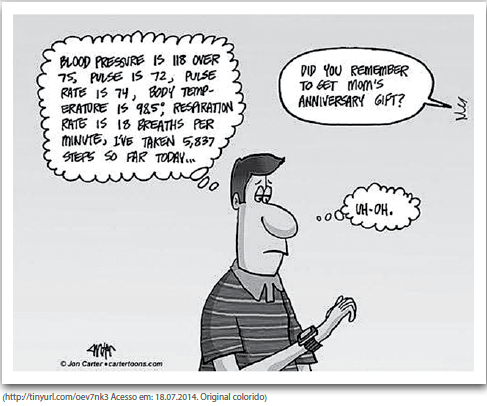
Glossário
uh - oh: representação escrita do som que as pessoas produzem quando descobrem que fizeram algo de errado.
De acordo com a situação apresentada no cartum, o relógio do rapaz
Questão 46 96575
UDESC Manhã 2015/2TEXTO 4
[1] O nome de Emir quase nunca era mencionado nas horas das refeições ou nas
conversas animadas por baforadas de narguilé, goles de áraque e lances de gamão. Os
filhos de Emilie éramos proibidos de participar dessas reuniões que varavam a noite e
terminavam no pátio da fonte, aclarado por uma luz azulada. Era um momento em que
[5] os assuntos, já peneirados, esgotados e fartos de serem repetidos, davam lugar a
confidências e lamúrias, abafadas às vezes pela linguagem dos pássaros, e
entremeadas por exclamações e vozes que pronunciavam o nome de Deus. Era como
se a manhã – como uma intrusa que silencia as vozes calorosas da noite – dispersasse
o ambiente festivo, arrefecendo os gestos dos mais exaltados, chamando-os ao ofício
[10] que se inicia com a aurora. Mas, em algumas reuniões de sextas-feiras, o prenúncio da
manhã não os dispersava. Eu acordava com berros dilacerantes, gemidos terríveis,
ruídos de trote e uma algazarra de alimárias que assistiam à agonia dos carneiros que
possuíam nomes e eram alimentados pelas mãos de Emilie.
HATOUM, Milton. Relato de um certo Oriente. São Paulo: Companhia das Letras, 2008, pp. 50 e 51.
Assinale a alternativa incorreta em relação à obra Relato de um certo Oriente, Milton Hatoum, e ao Texto 4.
Questão 35 96534
UDESC Manhã 2015/2
The character is trying to say that:
Questão 34 96533
UDESC Manhã 2015/2The next north-European ice age
There are still a few people in northern Europe …………… think that global warming
might not be such a bad thing. …………..Britain, ……………. summer can sometimes
seem to last little more than a few weeks, many would ……………….. the idea of it
getting a bit ……………………..
Unfortunately things are not so simple. Global warming doesn't just mean that the world
will slowly get warmer. Paradoxically, it could cause certain areas to get colder – a lot
colder. The latest predictions are that northern Europe could even be plunged into an
ice age. While areas of south-eastern Europe, such as Greece, would continue to get
hotter and drier, Britain could find itself, in the winter months at least, surrounded by
sea ice.
The reason for this concerns the Greenland ice sheet. This is one of the biggest
expanses of ice in the world – around 1,500km long and 600km wide. It is so big that if
it all melted sea levels would rise by 7 metres. Due to rising emissions of greenhouse
gases, such as carbon dioxide from the combustion of fossil fuels, this ice sheet is
melting at an alarming rate. But how could the melting of the Greenland ice sheet
threaten to plunge northern Europe into a new ice age?
The link in the chain of events is what some call the Gulf Stream and others call the
Atlantic Conveyor. This is the stream of warm water that comes up from central
America and flows across the Atlantic to northern Europe. It is this huge mass of warm
water which accounts for the relatively high temperatures enjoyed by Britain, for
instance, compared with parts of Canada and Russia which are equally far north of the
equator. Warm water is conveyed across to Europe near the surface of the Atlantic,
and at its northernmost point it cools and sinks because the water from the tropics has
a higher salt content, making it denser and so heavier than the water near the arctic.
The cold, dense water then flows south close to the ocean floor, back towards central
and south America to complete the cycle.
Scientists are beginning to make bleak predictions of an impending ice age in the
northern hemisphere because they have observed that the water flowing from the
melting Greenland ice sheet is flowing into the path of the Gulf Stream. The water from
the melted ice will reduce the density of the water in the Gulf Stream, stopping the
water sinking in the north, thereby cutting off the deep southerly current, which, in turn,
will cut off the northerly flow of warmer water. At that point the seas around Britain will
begin to freeze.
http://fullspate.digitalcounterrevolution.co.uk/archive/globalwarming (seen on 19th/03/2015)
The words which best complete paragraph 1 are consecutively:
Questão 32 96531
UDESC Manhã 2015/2The next north-European ice age
There are still a few people in northern Europe …………… think that global warming
might not be such a bad thing. …………..Britain, ……………. summer can sometimes
seem to last little more than a few weeks, many would ……………….. the idea of it
getting a bit ……………………..
Unfortunately things are not so simple. Global warming doesn't just mean that the world
will slowly get warmer. Paradoxically, it could cause certain areas to get colder – a lot
colder. The latest predictions are that northern Europe could even be plunged into an
ice age. While areas of south-eastern Europe, such as Greece, would continue to get
hotter and drier, Britain could find itself, in the winter months at least, surrounded by
sea ice.
The reason for this concerns the Greenland ice sheet. This is one of the biggest
expanses of ice in the world – around 1,500km long and 600km wide. It is so big that if
it all melted sea levels would rise by 7 metres. Due to rising emissions of greenhouse
gases, such as carbon dioxide from the combustion of fossil fuels, this ice sheet is
melting at an alarming rate. But how could the melting of the Greenland ice sheet
threaten to plunge northern Europe into a new ice age?
The link in the chain of events is what some call the Gulf Stream and others call the
Atlantic Conveyor. This is the stream of warm water that comes up from central
America and flows across the Atlantic to northern Europe. It is this huge mass of warm
water which accounts for the relatively high temperatures enjoyed by Britain, for
instance, compared with parts of Canada and Russia which are equally far north of the
equator. Warm water is conveyed across to Europe near the surface of the Atlantic,
and at its northernmost point it cools and sinks because the water from the tropics has
a higher salt content, making it denser and so heavier than the water near the arctic.
The cold, dense water then flows south close to the ocean floor, back towards central
and south America to complete the cycle.
Scientists are beginning to make bleak predictions of an impending ice age in the
northern hemisphere because they have observed that the water flowing from the
melting Greenland ice sheet is flowing into the path of the Gulf Stream. The water from
the melted ice will reduce the density of the water in the Gulf Stream, stopping the
water sinking in the north, thereby cutting off the deep southerly current, which, in turn,
will cut off the northerly flow of warmer water. At that point the seas around Britain will
begin to freeze.
http://fullspate.digitalcounterrevolution.co.uk/archive/globalwarming (seen on 19th/03/2015)
Mark the correct alternative according to the use of the words from the text.
Questão 31 96530
UDESC Manhã 2015/2The next north-European ice age
There are still a few people in northern Europe …………… think that global warming
might not be such a bad thing. …………..Britain, ……………. summer can sometimes
seem to last little more than a few weeks, many would ……………….. the idea of it
getting a bit ……………………..
Unfortunately things are not so simple. Global warming doesn't just mean that the world
will slowly get warmer. Paradoxically, it could cause certain areas to get colder – a lot
colder. The latest predictions are that northern Europe could even be plunged into an
ice age. While areas of south-eastern Europe, such as Greece, would continue to get
hotter and drier, Britain could find itself, in the winter months at least, surrounded by
sea ice.
The reason for this concerns the Greenland ice sheet. This is one of the biggest
expanses of ice in the world – around 1,500km long and 600km wide. It is so big that if
it all melted sea levels would rise by 7 metres. Due to rising emissions of greenhouse
gases, such as carbon dioxide from the combustion of fossil fuels, this ice sheet is
melting at an alarming rate. But how could the melting of the Greenland ice sheet
threaten to plunge northern Europe into a new ice age?
The link in the chain of events is what some call the Gulf Stream and others call the
Atlantic Conveyor. This is the stream of warm water that comes up from central
America and flows across the Atlantic to northern Europe. It is this huge mass of warm
water which accounts for the relatively high temperatures enjoyed by Britain, for
instance, compared with parts of Canada and Russia which are equally far north of the
equator. Warm water is conveyed across to Europe near the surface of the Atlantic,
and at its northernmost point it cools and sinks because the water from the tropics has
a higher salt content, making it denser and so heavier than the water near the arctic.
The cold, dense water then flows south close to the ocean floor, back towards central
and south America to complete the cycle.
Scientists are beginning to make bleak predictions of an impending ice age in the
northern hemisphere because they have observed that the water flowing from the
melting Greenland ice sheet is flowing into the path of the Gulf Stream. The water from
the melted ice will reduce the density of the water in the Gulf Stream, stopping the
water sinking in the north, thereby cutting off the deep southerly current, which, in turn,
will cut off the northerly flow of warmer water. At that point the seas around Britain will
begin to freeze.
http://fullspate.digitalcounterrevolution.co.uk/archive/globalwarming (seen on 19th/03/2015)
The text talks about:
06