


![[Marketing] Questao Topo - deslogado](https://storage.estuda.com.br/banners/0_6b7ebee90b03af1c560c73bb8bcce34a_banner_deslogado_70_dias.png)
Questões de Inglês
19.971 Questões
Questão 12 98957
FCM PB Medicina 2015/2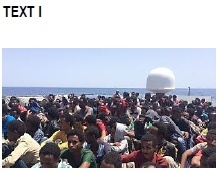
An Italian Navy ship on Wednesday rescued 290 desperate Eritrean migrants from a rickety boat on the Mediterranean, as they attempted to reach safer shores in Europe. CNN's Christiane Amanpour was onboard the frigate as it conducted the operation, just one of several carried out by the Navy today. "It is people taking their lives in their hands, getting on these boats," Amanpour told. "They've either been peddled a bunch of lies from the human traffickers, who advertise that this is a comfortable and reliable trip from Libyan ports across the Mediterranean, when of course it isn't, or they just basically say to themselves as the gentleman told me, you know, 'I would rather risk this than death at home."
More than 35,000 migrants have arrived in Italy via the Mediterranean this year alone, and the numbers continue to climb, says the International Organization for Migration. Most are Eritrean, but they come from all over Africa and Syria. At least 1,826 migrants have died in the Mediterranean so far this year, many times more than had perished during the same period last year. "We did see one of those who tried to get across to safety in this small, rickety boat was dead on arrival," Amanpour reported. "And three others were taken to the helicopter on the island of Lampedusa. So they were given emergency care there. The rest will be staying on board until they can be offloaded at Lampedusa, or somewhere else, and then processed on land."
Europe has come under severe criticism for not taking the humanitarian crisis more seriously. After a series of disasters last month, the EU has stepped up funding. But critics still say that countries are approaching the problem too militaristically; the EU on Monday agreed to set up a naval mission to go after the gangs that facilitate the perilous crossing. Italy has borne the brunt of the rescue mission as Europe struggle to deal with an influx of refugees and migrants braving unimaginable conditions at sea.
"It's an extraordinarily complex process. It takes quite a long time to rescue boat of 300 people. They have to make sure that there's nothing hostile on board. Then all the naval personnel suit up in white hazardous material suits with masks and gloves -- we all had to do the same thing -- in order to make sure that you don't get contaminated by any potential disease, any illness. The weather is good today, and that attracted some of these migrants. It may not get so good tomorrow, and people are quite concerned that migrants might set off from Libya, and then find themselves in very hostile, unfriendly, and swelling seas in these terrible boats."
(Adapted from: http://edition.cnn.com/2015/05/20/world/)
In the sentence: “Italy has borne the brunt of the rescue mission as Europe struggle to deal with an influx of refugees and migrants braving unimaginable conditions at sea.” the words in bold could be respectively best replaced by:
Questão 57 98392
IMEPAC Medicina 2015/1DRUG & REFERENCE INFORMATION
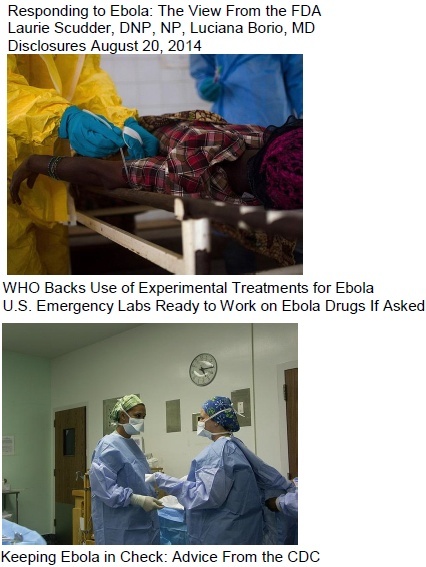
Editor's Note: The issue of compassionate use of unapproved therapies has been brought to the attention of all healthcare providers recently after the decision to treat 2 Americans infected with the Ebola virus with an experimental serum never before used in humans. With the Ebola epidemic deemed to be out of control by the World Health Organization (WHO), the need for effective treatments has researchers and regulators scrambling to find, test, and potentially approve previously untested therapies.
In a press release in August, WHO discussed the ethics of using Ebola drugs that have never been cleared for human use, wary of a long history of medicines being tested on people who were never properly informed of the risks. In the countries hardest hit by Ebola, suspicion of foreign medical workers is already widespread.
Medscape spoke with Luciana Borio, MD, at the US Food and Drug Administration (FDA) about the issue of compassionate use and their efforts to respond to this crisis. Dr. Borio serves as the Acting Deputy Chief Scientist and Assistant Commissioner for Counterterrorism Policy in the Office of Counterterrorism and Emerging Threats at the FDA. In this capacity, Dr. Borio is responsible for providing leadership, coordination, and oversight for FDA's national and global health security, counterterrorism, and emerging threat portfolios.
She serves as FDA's point of entry on policy and planning matters concerning counterterrorism and emerging threats, and collaborates across the US government and internationally on actions to advance global health security and US national security.
Medscape: Can you define "compassionate use" as a regulatory and legal concept?
Luciana Borio, MD: I'd like to begin by taking a step back. Ultimately, the goal for the FDA is to have products that are approved, licensed, or cleared to prevent or treat diseases. However, during a public health emergency, such as the one we are currently facing with Ebola, we don't always have these approved products available, and the best way for us to meet patients' needs might be the use of an unapproved product.
FDA has mechanisms that we can use to facilitate patient access to investigational products; one of these is the Emergency Investigational New Drug (IND) application, often referred to as "compassionate use." It is one of a number of mechanisms under our expanded access program.
Through this emergency IND mechanism, we can allow the use of an investigational product outside of a clinical trial being conducted to develop the product toward approval, in order to treat a patient with a serious or immediately life-threatening disease when the patient has no comparable or satisfactory alternative treatment option.
To evaluate a request for an emergency IND, we have to assess whether the benefits outweigh the risks on the basis of the best available scientific evidence that we have because, clearly, the data package at this point is often quite incomplete. The product may be effective or may not, and we also may see sometimes unexpected serious side effects. Sometimes we don't know exactly what is the most appropriate dose, for example, to give to a sick patient. We have only incomplete information about the use of these products, but we do the best we can to conduct a proper benefit/risk assessment with the available scientific data.
Under this mechanism, it is usually the patient's clinician who contacts the FDA requesting the emergency IND or compassionate use exemption. If, after an evaluation of the application, FDA believes the use is appropriate, the doctor will then make arrangements directly with the product developer to obtain the product. The manufacturer may or may not be willing to make the product available outside of the clinical trial, and FDA cannot compel the company to do so. So when the company provides expanded access to its product, it is doing so voluntarily.
http://www.medscape.com/viewarticle/829611 (Accessed on August 25th, 2014, edited)
The discussion in the present text was triggered by the
Questão 56 98391
IMEPAC Medicina 2015/1DRUG & REFERENCE INFORMATION
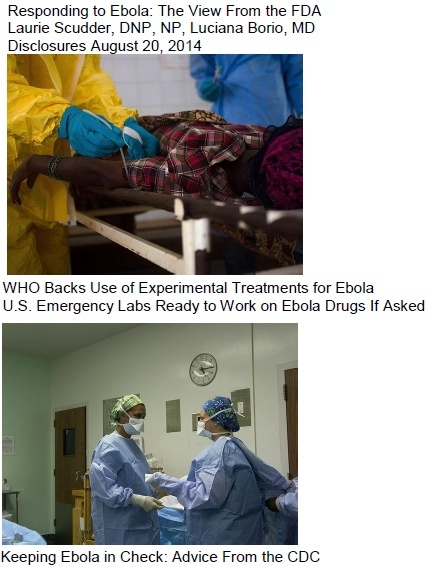
Editor's Note: The issue of compassionate use of unapproved therapies has been brought to the attention of all healthcare providers recently after the decision to treat 2 Americans infected with the Ebola virus with an experimental serum never before used in humans. With the Ebola epidemic deemed to be out of control by the World Health Organization (WHO), the need for effective treatments has researchers and regulators scrambling to find, test, and potentially approve previously untested therapies.
In a press release in August, WHO discussed the ethics of using Ebola drugs that have never been cleared for human use, wary of a long history of medicines being tested on people who were never properly informed of the risks. In the countries hardest hit by Ebola, suspicion of foreign medical workers is already widespread.
Medscape spoke with Luciana Borio, MD, at the US Food and Drug Administration (FDA) about the issue of compassionate use and their efforts to respond to this crisis. Dr. Borio serves as the Acting Deputy Chief Scientist and Assistant Commissioner for Counterterrorism Policy in the Office of Counterterrorism and Emerging Threats at the FDA. In this capacity, Dr. Borio is responsible for providing leadership, coordination, and oversight for FDA's national and global health security, counterterrorism, and emerging threat portfolios.
She serves as FDA's point of entry on policy and planning matters concerning counterterrorism and emerging threats, and collaborates across the US government and internationally on actions to advance global health security and US national security.
Medscape: Can you define "compassionate use" as a regulatory and legal concept?
Luciana Borio, MD: I'd like to begin by taking a step back. Ultimately, the goal for the FDA is to have products that are approved, licensed, or cleared to prevent or treat diseases. However, during a public health emergency, such as the one we are currently facing with Ebola, we don't always have these approved products available, and the best way for us to meet patients' needs might be the use of an unapproved product.
FDA has mechanisms that we can use to facilitate patient access to investigational products; one of these is the Emergency Investigational New Drug (IND) application, often referred to as "compassionate use." It is one of a number of mechanisms under our expanded access program.
Through this emergency IND mechanism, we can allow the use of an investigational product outside of a clinical trial being conducted to develop the product toward approval, in order to treat a patient with a serious or immediately life-threatening disease when the patient has no comparable or satisfactory alternative treatment option.
To evaluate a request for an emergency IND, we have to assess whether the benefits outweigh the risks on the basis of the best available scientific evidence that we have because, clearly, the data package at this point is often quite incomplete. The product may be effective or may not, and we also may see sometimes unexpected serious side effects. Sometimes we don't know exactly what is the most appropriate dose, for example, to give to a sick patient. We have only incomplete information about the use of these products, but we do the best we can to conduct a proper benefit/risk assessment with the available scientific data.
Under this mechanism, it is usually the patient's clinician who contacts the FDA requesting the emergency IND or compassionate use exemption. If, after an evaluation of the application, FDA believes the use is appropriate, the doctor will then make arrangements directly with the product developer to obtain the product. The manufacturer may or may not be willing to make the product available outside of the clinical trial, and FDA cannot compel the company to do so. So when the company provides expanded access to its product, it is doing so voluntarily.
http://www.medscape.com/viewarticle/829611 (Accessed on August 25th, 2014, edited)
The expression “compassionate use” of drugs is understood as the
Questão 64 97916
FACERES Medicina 2015/1Politicians face investigation in Brazil's biggest ever corruption scandal
Saturday 7 March 2015 04.00 GMT
The Guardian
Brazil’s supreme court has approved the investigation of dozens of senior politicians, including a former president and leaders of congress, for alleged connections to what prosecutors call the country’s biggest ever corruption scandal.
In total, 54 people are to be investigated by the attorney general, including 21 federal deputies and 12 senators — though that figure is expected to grow as evidence is gathered on corruption involving the state energy company Petrobras.
The investigations and any possible trials will take years to play out, but the action announced on Friday throws the second term of president Dilma Rousseff into further disarray as she faces dueling political and economic crises. She is not being investigated despite serving as chair of the Petrobras board for several years as the kickback scheme played out.
Experts say the investigations could create further gridlock in congress just as Brazil and its sputtering economy desperately need fiscal and political reform measures passed.
But the investigation is widely viewed as necessary for the nation’s democracy to advance and shake off deep-rooted impunity for the rich and powerful.
“You can’t put this genie back in the bottle. People are going to have to face the consequences,” said Paulo Sotero, director of the Brazil Institute at the Woodrow Wilson International Center for Scholars in Washington. “There used to be the idea that people in positions of power in Brazil were untouchable. They’re no longer untouchable.”
Federal investigators revealed a year ago that they had started an investigation into the scheme, and efforts until now focused efforts on big construction and engineering firms that allegedly paid over $800m in bribes and other funds. The money purportedly won them inflated contracts with Petrobras, and prosecutors say some of that cash flowed into the campaign coffers of the president’s Workers’ Party and its allies. (…)
http://www.theguardian.com/world/2015/mar/07/brazilian-court-approves-investigation-into-politicians-in-petrobras-scanda
Indicate the degree used in the stretch “Politicians face investigation in Brazil\'s biggest ever corruption scandal”:
Questão 62 97914
FACERES Medicina 2015/1Politicians face investigation in Brazil's biggest ever corruption scandal
Saturday 7 March 2015 04.00 GMT
The Guardian
Brazil’s supreme court has approved the investigation of dozens of senior politicians, including a former president and leaders of congress, for alleged connections to what prosecutors call the country’s biggest ever corruption scandal.
In total, 54 people are to be investigated by the attorney general, including 21 federal deputies and 12 senators — though that figure is expected to grow as evidence is gathered on corruption involving the state energy company Petrobras.
The investigations and any possible trials will take years to play out, but the action announced on Friday throws the second term of president Dilma Rousseff into further disarray as she faces dueling political and economic crises. She is not being investigated despite serving as chair of the Petrobras board for several years as the kickback scheme played out.
Experts say the investigations could create further gridlock in congress just as Brazil and its sputtering economy desperately need fiscal and political reform measures passed.
But the investigation is widely viewed as necessary for the nation’s democracy to advance and shake off deep-rooted impunity for the rich and powerful.
“You can’t put this genie back in the bottle. People are going to have to face the consequences,” said Paulo Sotero, director of the Brazil Institute at the Woodrow Wilson International Center for Scholars in Washington. “There used to be the idea that people in positions of power in Brazil were untouchable. They’re no longer untouchable.”
Federal investigators revealed a year ago that they had started an investigation into the scheme, and efforts until now focused efforts on big construction and engineering firms that allegedly paid over $800m in bribes and other funds. The money purportedly won them inflated contracts with Petrobras, and prosecutors say some of that cash flowed into the campaign coffers of the president’s Workers’ Party and its allies. (…)
http://www.theguardian.com/world/2015/mar/07/brazilian-court-approves-investigation-into-politicians-in-petrobras-scanda
“There used to be the idea that people in positions of power in Brazil were untouchable. They’re no longer untouchable” means:
Questão 61 97913
FACERES Medicina 2015/1Politicians face investigation in Brazil's biggest ever corruption scandal
Saturday 7 March 2015 04.00 GMT
The Guardian
Brazil’s supreme court has approved the investigation of dozens of senior politicians, including a former president and leaders of congress, for alleged connections to what prosecutors call the country’s biggest ever corruption scandal.
In total, 54 people are to be investigated by the attorney general, including 21 federal deputies and 12 senators — though that figure is expected to grow as evidence is gathered on corruption involving the state energy company Petrobras.
The investigations and any possible trials will take years to play out, but the action announced on Friday throws the second term of president Dilma Rousseff into further disarray as she faces dueling political and economic crises. She is not being investigated despite serving as chair of the Petrobras board for several years as the kickback scheme played out.
Experts say the investigations could create further gridlock in congress just as Brazil and its sputtering economy desperately need fiscal and political reform measures passed.
But the investigation is widely viewed as necessary for the nation’s democracy to advance and shake off deep-rooted impunity for the rich and powerful.
“You can’t put this genie back in the bottle. People are going to have to face the consequences,” said Paulo Sotero, director of the Brazil Institute at the Woodrow Wilson International Center for Scholars in Washington. “There used to be the idea that people in positions of power in Brazil were untouchable. They’re no longer untouchable.”
Federal investigators revealed a year ago that they had started an investigation into the scheme, and efforts until now focused efforts on big construction and engineering firms that allegedly paid over $800m in bribes and other funds. The money purportedly won them inflated contracts with Petrobras, and prosecutors say some of that cash flowed into the campaign coffers of the president’s Workers’ Party and its allies. (…)
http://www.theguardian.com/world/2015/mar/07/brazilian-court-approves-investigation-into-politicians-in-petrobras-scanda
According to the reporting:
06