


![[Marketing] Questao Topo - deslogado](https://storage.estuda.com.br/banners/0_6b7ebee90b03af1c560c73bb8bcce34a_banner_deslogado_70_dias.png)
Questões de Inglês
19.971 Questões
Questão 15 99796
EBMSP Medicina 2015/2[1] How tall you are is strongly related to the genes you
inherit, and previous studies suggested that as much as
80% of the variance in height among people is due to their
DNA. And in the largest genetic study of height-related
[5] genes to date, scientists have identified 423 genetic
regions connected to height – which could explain as
much as 60% of that genetic component.
Dr. Joel Hirschhorn, leader of the GIANT consortium
at Harvard Medical School says that for a trait like height,
[10] which isn’t determined by a single gene but likely the
combined effects of multiple genes involved in multiple
different processes from bone growth to cell growth, the
new findings are like finding biggest nuggets of gold in
a riverbed. The latest analysis, published in the journal
[15] Nature Genetics, describes the gene variants most
commonly shared among people that likely contribute to
height.
They emerged from a sweep of the genomes of
more than 250,000 people of various heights, and from
[20] correlating their stature with their genetics. Many of the
known and familiar factors related to height, including
those dealing with skeletal growth and collagen that
are mutated in people with medically short stature, for
example, appeared in the study, confirming their role in
[25] determining how tall people get.
But there were also some surprises ‒ genetic regions
that previously had never been thought to be related
to height, including a gene known to be involved in cell
growth but not in skeletal functions. “It’s a mix ranging
[30] from completely known things, to those that make sense
to things that are completely surprising and things we don’t
even know what to think about them,” says Hirschhorn.
What the group has identified are gene regions of
interest, and a new round of studies will have to delve
[35] deeper into those areas to isolate specific genes that
are actually responsible for determining height. But it’s a
critical first step, and could lead to potential new ways of
treating medical conditions of short stature or gigantism
that can have negative health effects on the heart and
[40] joints.
PARK, Alice. New genes found that determine your height. Disponível em: <http://www.time.com/3462490/nev-gines-found-that-determine-your-height>. Acesso em: 14 abr. 2015. Adaptado.
Fill in the parentheses with T (True) or F (False). It’s stated in the text
( ) DNA is said to account for most of differences in height among people.
( ) scientists have already identified over four hundred genetic regions related to height.
( ) it came as a surprise to scientists that there seems to be fewer genetic regions connected to height than at first thought.
( ) the results of the present study seem pretty conclusive and there’ll be no need for further investigation.
The correct sequence, from top to bottom, is
Questão 19 99074
FCM PB Medicina 2015/1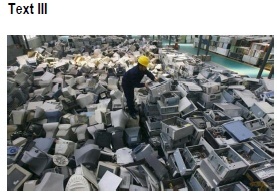
While the fact that 95.5 million Americans said they would shop on Black Friday is good news for retailers, it is a far less positive figure for the environment. Cheap electronics are one of the biggest draws for shoppers on the day (and indeed the rest of the year), but these immediate savings hide the ultimate collective cost - old electronics (e-waste) that are improperly disposed of can result in environmental pollution with its attendant health risks, as well as data theft.
In 2012, the world amassed almost 49 million metric tons of e-waste, including everything from last generation cellphones and laptops to televisions and washing machines. And the trend is only growing. One study, conducted by a United Nations partner organization, projects that this number will rise to 65.4 million metric tons by 2017.
But awareness of the e-waste issue is finally growing around the world. John Shegerian, CEO and co-founder of Electronic Recyclers International (ERI) - the largest e-waste recycling company in the US – told Newsweek that when his company launched in April of 2005, ERI recycled 10,000 pounds of e-waste its first month. Last month, Shegerian says ERI recycled nearly 25 million pounds. ERI has clients ranging from cities and corporations, to New York City apartment buildings. Once the e-waste enters their facility, each item is barcoded and tracked. Customers can then watch the progress of their device’s recycling online. ERI either recycles the parts, or refurbishes the device for reuse according to the contract created with the customer. In the case of recycling, the company separates the different materials and throws the electronic carcass into an industrial shredder. ERI then sells the broken down materials, and pays a responsible smelter to take the glass. If a device is being prepared for reuse, ERI cleans and fixes the item, wipes the data, and then repackages and resells it.
Source: Newsweek.com (Adapted from http://www.newsweek.com/, Nov 2014)
Which of the following is NOT mentioned in the text?
Questão 18 99073
FCM PB Medicina 2015/1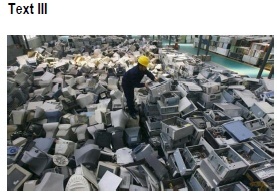
While the fact that 95.5 million Americans said they would shop on Black Friday is good news for retailers, it is a far less positive figure for the environment. Cheap electronics are one of the biggest draws for shoppers on the day (and indeed the rest of the year), but these immediate savings hide the ultimate collective cost - old electronics (e-waste) that are improperly disposed of can result in environmental pollution with its attendant health risks, as well as data theft.
In 2012, the world amassed almost 49 million metric tons of e-waste, including everything from last generation cellphones and laptops to televisions and washing machines. And the trend is only growing. One study, conducted by a United Nations partner organization, projects that this number will rise to 65.4 million metric tons by 2017.
But awareness of the e-waste issue is finally growing around the world. John Shegerian, CEO and co-founder of Electronic Recyclers International (ERI) - the largest e-waste recycling company in the US – told Newsweek that when his company launched in April of 2005, ERI recycled 10,000 pounds of e-waste its first month. Last month, Shegerian says ERI recycled nearly 25 million pounds. ERI has clients ranging from cities and corporations, to New York City apartment buildings. Once the e-waste enters their facility, each item is barcoded and tracked. Customers can then watch the progress of their device’s recycling online. ERI either recycles the parts, or refurbishes the device for reuse according to the contract created with the customer. In the case of recycling, the company separates the different materials and throws the electronic carcass into an industrial shredder. ERI then sells the broken down materials, and pays a responsible smelter to take the glass. If a device is being prepared for reuse, ERI cleans and fixes the item, wipes the data, and then repackages and resells it.
Source: Newsweek.com (Adapted from http://www.newsweek.com/, Nov 2014)
The sentence: “But awareness of the e-waste issue is finally growing around the world. […]” means that:
Questão 17 99072
FCM PB Medicina 2015/1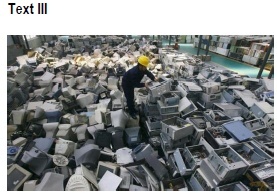
While the fact that 95.5 million Americans said they would shop on Black Friday is good news for retailers, it is a far less positive figure for the environment. Cheap electronics are one of the biggest draws for shoppers on the day (and indeed the rest of the year), but these immediate savings hide the ultimate collective cost - old electronics (e-waste) that are improperly disposed of can result in environmental pollution with its attendant health risks, as well as data theft.
In 2012, the world amassed almost 49 million metric tons of e-waste, including everything from last generation cellphones and laptops to televisions and washing machines. And the trend is only growing. One study, conducted by a United Nations partner organization, projects that this number will rise to 65.4 million metric tons by 2017.
But awareness of the e-waste issue is finally growing around the world. John Shegerian, CEO and co-founder of Electronic Recyclers International (ERI) - the largest e-waste recycling company in the US – told Newsweek that when his company launched in April of 2005, ERI recycled 10,000 pounds of e-waste its first month. Last month, Shegerian says ERI recycled nearly 25 million pounds. ERI has clients ranging from cities and corporations, to New York City apartment buildings. Once the e-waste enters their facility, each item is barcoded and tracked. Customers can then watch the progress of their device’s recycling online. ERI either recycles the parts, or refurbishes the device for reuse according to the contract created with the customer. In the case of recycling, the company separates the different materials and throws the electronic carcass into an industrial shredder. ERI then sells the broken down materials, and pays a responsible smelter to take the glass. If a device is being prepared for reuse, ERI cleans and fixes the item, wipes the data, and then repackages and resells it.
Source: Newsweek.com (Adapted from http://www.newsweek.com/, Nov 2014)
Which alternative below has the CORRECT information about the word and its function in the text?
Questão 14 99069
FCM PB Medicina 2015/1Text I
When 25-year old Fatuma was raped just a few doors away from her own home in Khayelitsha, South Africa, she knew exactly what to do afterwards. “I was in shock and I felt as though my life was ruined forever. But something in me must have wanted to survive because I knew I mustn’t wash and that I had to get to a clinic within 72 hours to get medicines to protect me from HIV. I had heard it on the radio and read the leaflets.”
This vital information came from the Khayelitsha Thuthuzela Forensic Centre, a “one-stop shop” for survivors of rape that is a beacon of hope in an area of South Africa that has a very high rate of sexual violence. People are advised to go straight to the centre if they are sexually assaulted, to receive emergency HIV prevention medication - a 28-day course of antiretrovirals, known as “PEP”. Once there, they are also offered advice and support on preventing other sexually transmitted diseases, as well avoiding unwanted pregnancies. They are given psychological support and, if they want it, help to seek justice. “Because South Africa has such a high prevalence of HIV, survivors of sexual assault are increasingly aware that it is essential to receive HIV prevention medication quickly. When it is taken properly, within 72 hours of a person being exposed to the virus, PEP can reduce the risk of infection by 80%.” says Dr. Genine Josias, the centre’s medical coordinator.
The need in South Africa for PEP, which stands for post-exposure prophylaxis, cannot be underestimated. Globally, the country has the largest number of people living with HIV. This, combined with high rates of sexual violence, means sizeable numbers of people are at risk of being infected with the virus. PEP has been available in South Africa since the 1990s. Understanding of how effective it can be has been growing both amongst health providers and people who may need it. However, as in other countries, compliance with the PEP drug regimen is a challenge. “Recent evidence shows that globally only around 40% of victims of sexual assault who begin PEP complete the course properly,” said Dr Nathan Ford from WHO’s department of HIV/AIDS. “This is partly due to the complexity of prescribing PEP and also to the side effects of some of the drugs used,” he added. Dr Josias, however, believes that another reason for many survivors of sexual assault not completing their course of PEP is because they underestimate the risk of their being infected with HIV. “Victims often know their attacker and think they also know their HIV status. But they may well be wrong,” Dr Josias explained. As such, raising awareness in the community is a critical part of the work of the Khayelitsha Thuthuzela Forensic Centre and the other Thuthuzela Centres doing similar work in different parts of the country. “There are always more people who need to be educated, new children growing up. We disseminate information in every way we can, from newspaper adverts through to puppeteering and workshops.”
Source: World Health Organization (Adapted from http://www.who.int/features/2014/, November 2014)
A contextual synonym for “sizeable” (Text I – paragraph 3) is:
Questão 13 99068
FCM PB Medicina 2015/1Text I
When 25-year old Fatuma was raped just a few doors away from her own home in Khayelitsha, South Africa, she knew exactly what to do afterwards. “I was in shock and I felt as though my life was ruined forever. But something in me must have wanted to survive because I knew I mustn’t wash and that I had to get to a clinic within 72 hours to get medicines to protect me from HIV. I had heard it on the radio and read the leaflets.”
This vital information came from the Khayelitsha Thuthuzela Forensic Centre, a “one-stop shop” for survivors of rape that is a beacon of hope in an area of South Africa that has a very high rate of sexual violence. People are advised to go straight to the centre if they are sexually assaulted, to receive emergency HIV prevention medication - a 28-day course of antiretrovirals, known as “PEP”. Once there, they are also offered advice and support on preventing other sexually transmitted diseases, as well avoiding unwanted pregnancies. They are given psychological support and, if they want it, help to seek justice. “Because South Africa has such a high prevalence of HIV, survivors of sexual assault are increasingly aware that it is essential to receive HIV prevention medication quickly. When it is taken properly, within 72 hours of a person being exposed to the virus, PEP can reduce the risk of infection by 80%.” says Dr. Genine Josias, the centre’s medical coordinator.
The need in South Africa for PEP, which stands for post-exposure prophylaxis, cannot be underestimated. Globally, the country has the largest number of people living with HIV. This, combined with high rates of sexual violence, means sizeable numbers of people are at risk of being infected with the virus. PEP has been available in South Africa since the 1990s. Understanding of how effective it can be has been growing both amongst health providers and people who may need it. However, as in other countries, compliance with the PEP drug regimen is a challenge. “Recent evidence shows that globally only around 40% of victims of sexual assault who begin PEP complete the course properly,” said Dr Nathan Ford from WHO’s department of HIV/AIDS. “This is partly due to the complexity of prescribing PEP and also to the side effects of some of the drugs used,” he added. Dr Josias, however, believes that another reason for many survivors of sexual assault not completing their course of PEP is because they underestimate the risk of their being infected with HIV. “Victims often know their attacker and think they also know their HIV status. But they may well be wrong,” Dr Josias explained. As such, raising awareness in the community is a critical part of the work of the Khayelitsha Thuthuzela Forensic Centre and the other Thuthuzela Centres doing similar work in different parts of the country. “There are always more people who need to be educated, new children growing up. We disseminate information in every way we can, from newspaper adverts through to puppeteering and workshops.”
Source: World Health Organization (Adapted from http://www.who.int/features/2014/, November 2014)
According to the information in the text, South Africa:
06