


![[Marketing] Questao Topo - deslogado](https://storage.estuda.com.br/banners/0_6b7ebee90b03af1c560c73bb8bcce34a_banner_deslogado_70_dias.png)
Questões de Inglês
19.971 Questões
Questão 47 128809
Unisinos Verão 2015
1. World Carfree Day – We all know about the dangers of too much pollution to our environment, yet every
2. day we get in our cars and make the situation worse. This important awareness day aims to help highlight the
3. pollution of the world caused by car use and persuade us to leave the car at home and have a no car day!
4. It is not just the pollution that can make travelling by car a misery. I hate sitting grid-locked in a city traffic
5. jam when I could be walking past the very traffic I am stuck in. I think it would be nice to travel at my own pace
6. and not have that set by other commuters.
7. Some methods of public transport also shorten your journey time by avoiding congested roads and taking
8. more direct routes offered by infrastructure such as railway lines.
9. Car use is seen as the norm in modern society but why should it be? Imagine a day when there is no traffic
10. noise, everyone is car free and you can hear the birds sing! Beyond the day to day journeying and pollution,
11. cars blight our environment with discarded parts such as batteries and tyres, oil leaks and then eventually the
12. carcass of the car when it is no longer fit for use.
13. Actually World Carfree Day was first organized back during the 1970s oil crisis and more days were
14. organized in the 1990s in cities in Europe. The problem is that most people don’t take notice at all or take part
15. for one day then revert back to the old way!
16. So on 22 September 2014 please take part in World Carfree Day and help make our world a little bit nicer
17. to live in ... you might even enjoy a change of scenery!
18. Remember the famous scene from this video? It’s time to step out of our cars and follow their lead!
Fonte: http://www.national-awareness-days.com/world-carfree-day.html
Na oração “…yet every day we get in our cars and make the situation worse” (linhas 1-2), a conjunção yet estabelece uma relação de _______________ entre as duas orações. A alternativa que preenche adequadamente essa lacuna é
Questão 57 128286
UPE 2° Dia 2015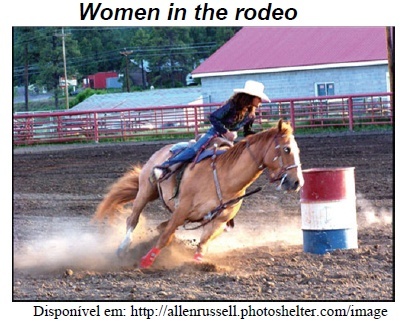
In the huge, open lands of the American west, herding cattle is one way to make a living. The image of the cowboy on his horse is a familiar one, ……………… in reality, women also participate in ranch work. This reality can be seen in the rodeo, ………………. cowboys and cowgirls compete in roping young steer, and riding adult bulls. Throwing a rope around a steer is something ranchers must do ………………….. give the young animals medicine or to mark the steers as their property. ……………….., riding on the back of a large and angry bull is purely for sport – a brutal and dangerous sport. ……………….., the danger doesn’t stop the men and women who love the rodeo.”
JOHANNSEN, Kristin & CHASE, Rebecca. World English: real people, real places, real language. Boston: Heinle Cengage, 2010. Adaptado.
Fill in the gaps with the CORRECT words or expressions to give the text cohesion an coherence.
Questão 56 128280
UPE 2° Dia 2015Vive la reine!
PARIS
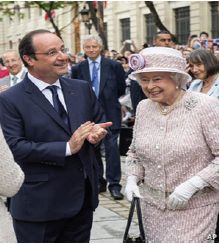
THE capital of the French republic is better known for beheading monarchs than celebrating them. But
Paris went wild for Britain’s queen during her state visit last week. Crowds
on the Champs-Elysées cheered as her royal convoy drove past. Socialist
ministers lined up enthusiastically to greet her at her birthday garden party.
The queen’s arrival at the international ceremony on “Sword” beach to
remember the 70th anniversary of D-Day drew louder applause than that of
America’s president. Anne Hidalgo, the Socialist mayor of Paris, even had a
flower market named after her on the capital’s Ile de la Cité, which happens
to be home to the Conciergerie prison where Marie-Antoinette was held
before being carted to the guillotine in 1793. “The queen of the French” ran
a headline in Le Monde, a left-learnig daily
Why are the French so smitten by the world’s longest-reigning queen?
Partly because she embodies the post-war era in which their modern
republic was born: she was crowned in 1953 and has known all seven
presidents of the Fifth Republic. Her affection for France, and grasp of the language, also help. […] After a
state dinner at the Elyzée Palace, with François Hollande, the president, she spoke of her “grande
affection” for the French people. This was the queen’s fifth state visit to the republic.
Another reason is that the French, shorn of their own monarchy, have long become avid voyeurs of
everybody else’s. Point de vue and Paris-Match, two magazines that splash photos of royals across their
pages, were launched back in the 1940s. The French turned the Monaco royals into celebrities before
reality television invented instant fame for everybody else. In 2011 the French cleared the airwaves to cover
Prince William’s wedding on live public television; 9m viewers tuned in to watch.
Perhaps the hidden reason for French royal fervour, though, is a secret envy mixed with regret. Mr
Hollande, stuck with a 16% popularity rating, is said to have noted wryly how refreshing it was to hear
cheering crowds when he accompanied the queen. Asked in a poll what they thought today of the execution
of Louis XVI in 1793, more of the French (29%) judged it “unfair” than “understandable” (23%). The French
“have a royalty complex”, wrote Hervé Gattegno in Le Point, and have built their republic on monarchical
traditions as if to compensate. The president, who has more sweeping powers than almost any other
modern democratic leader, is fussed over by much pomp and splendour—and the seat of the presidency is
a palace.
(In: The French and monarchy. The Economist, vol. 411, number 8891. June, 14th 2014. Adaptado)
Na frase “The capital of the French republic is better known for beheading monarchs than celebrating them.”, a palavra em destaque significa
Questão 55 128279
UPE 2° Dia 2015Vive la reine!
PARIS
THE capital of the French republic is better known for beheading monarchs than celebrating them. But
Paris went wild for Britain’s queen during her state visit last week. Crowds
on the Champs-Elysées cheered as her royal convoy drove past. Socialist
ministers lined up enthusiastically to greet her at her birthday garden party.
The queen’s arrival at the international ceremony on “Sword” beach to
remember the 70th anniversary of D-Day drew louder applause than that of
America’s president. Anne Hidalgo, the Socialist mayor of Paris, even had a
flower market named after her on the capital’s Ile de la Cité, which happens
to be home to the Conciergerie prison where Marie-Antoinette was held
before being carted to the guillotine in 1793. “The queen of the French” ran
a headline in Le Monde, a left-learnig daily
Why are the French so smitten by the world’s longest-reigning queen?
Partly because she embodies the post-war era in which their modern
republic was born: she was crowned in 1953 and has known all seven
presidents of the Fifth Republic. Her affection for France, and grasp of the language, also help. […] After a
state dinner at the Elyzée Palace, with François Hollande, the president, she spoke of her “grande
affection” for the French people. This was the queen’s fifth state visit to the republic.
Another reason is that the French, shorn of their own monarchy, have long become avid voyeurs of
everybody else’s. Point de vue and Paris-Match, two magazines that splash photos of royals across their
pages, were launched back in the 1940s. The French turned the Monaco royals into celebrities before
reality television invented instant fame for everybody else. In 2011 the French cleared the airwaves to cover
Prince William’s wedding on live public television; 9m viewers tuned in to watch.
Perhaps the hidden reason for French royal fervour, though, is a secret envy mixed with regret. Mr
Hollande, stuck with a 16% popularity rating, is said to have noted wryly how refreshing it was to hear
cheering crowds when he accompanied the queen. Asked in a poll what they thought today of the execution
of Louis XVI in 1793, more of the French (29%) judged it “unfair” than “understandable” (23%). The French
“have a royalty complex”, wrote Hervé Gattegno in Le Point, and have built their republic on monarchical
traditions as if to compensate. The president, who has more sweeping powers than almost any other
modern democratic leader, is fussed over by much pomp and splendour—and the seat of the presidency is
a palace.
(In: The French and monarchy. The Economist, vol. 411, number 8891. June, 14th 2014. Adaptado)
The sentences: “Marie-Antoinette was held …”; “Point de vue and Paris-Match […] were launched back in the 1940s; “she was crowned in 1953…”, and “The president […] is fussed over by much pomp and splendour” are all in the
Questão 54 128278
UPE 2° Dia 2015Vive la reine!
PARIS
THE capital of the French republic is better known for beheading monarchs than celebrating them. But
Paris went wild for Britain’s queen during her state visit last week. Crowds
on the Champs-Elysées cheered as her royal convoy drove past. Socialist
ministers lined up enthusiastically to greet her at her birthday garden party.
The queen’s arrival at the international ceremony on “Sword” beach to
remember the 70th anniversary of D-Day drew louder applause than that of
America’s president. Anne Hidalgo, the Socialist mayor of Paris, even had a
flower market named after her on the capital’s Ile de la Cité, which happens
to be home to the Conciergerie prison where Marie-Antoinette was held
before being carted to the guillotine in 1793. “The queen of the French” ran
a headline in Le Monde, a left-learnig daily
Why are the French so smitten by the world’s longest-reigning queen?
Partly because she embodies the post-war era in which their modern
republic was born: she was crowned in 1953 and has known all seven
presidents of the Fifth Republic. Her affection for France, and grasp of the language, also help. […] After a
state dinner at the Elyzée Palace, with François Hollande, the president, she spoke of her “grande
affection” for the French people. This was the queen’s fifth state visit to the republic.
Another reason is that the French, shorn of their own monarchy, have long become avid voyeurs of
everybody else’s. Point de vue and Paris-Match, two magazines that splash photos of royals across their
pages, were launched back in the 1940s. The French turned the Monaco royals into celebrities before
reality television invented instant fame for everybody else. In 2011 the French cleared the airwaves to cover
Prince William’s wedding on live public television; 9m viewers tuned in to watch.
Perhaps the hidden reason for French royal fervour, though, is a secret envy mixed with regret. Mr
Hollande, stuck with a 16% popularity rating, is said to have noted wryly how refreshing it was to hear
cheering crowds when he accompanied the queen. Asked in a poll what they thought today of the execution
of Louis XVI in 1793, more of the French (29%) judged it “unfair” than “understandable” (23%). The French
“have a royalty complex”, wrote Hervé Gattegno in Le Point, and have built their republic on monarchical
traditions as if to compensate. The president, who has more sweeping powers than almost any other
modern democratic leader, is fussed over by much pomp and splendour—and the seat of the presidency is
a palace.
(In: The French and monarchy. The Economist, vol. 411, number 8891. June, 14th 2014. Adaptado)
Observe this passage:
“The president, who has more sweeping powers than almost any other modern democratic leader, is fussed
over by much pomp and splendour — and the seat of the presidency is a palace.”
Na oração em destaque, percebe-se que o autor do texto
Questão 53 128277
UPE 2° Dia 2015Vive la reine!
PARIS
THE capital of the French republic is better known for beheading monarchs than celebrating them. But
Paris went wild for Britain’s queen during her state visit last week. Crowds
on the Champs-Elysées cheered as her royal convoy drove past. Socialist
ministers lined up enthusiastically to greet her at her birthday garden party.
The queen’s arrival at the international ceremony on “Sword” beach to
remember the 70th anniversary of D-Day drew louder applause than that of
America’s president. Anne Hidalgo, the Socialist mayor of Paris, even had a
flower market named after her on the capital’s Ile de la Cité, which happens
to be home to the Conciergerie prison where Marie-Antoinette was held
before being carted to the guillotine in 1793. “The queen of the French” ran
a headline in Le Monde, a left-learnig daily
Why are the French so smitten by the world’s longest-reigning queen?
Partly because she embodies the post-war era in which their modern
republic was born: she was crowned in 1953 and has known all seven
presidents of the Fifth Republic. Her affection for France, and grasp of the language, also help. […] After a
state dinner at the Elyzée Palace, with François Hollande, the president, she spoke of her “grande
affection” for the French people. This was the queen’s fifth state visit to the republic.
Another reason is that the French, shorn of their own monarchy, have long become avid voyeurs of
everybody else’s. Point de vue and Paris-Match, two magazines that splash photos of royals across their
pages, were launched back in the 1940s. The French turned the Monaco royals into celebrities before
reality television invented instant fame for everybody else. In 2011 the French cleared the airwaves to cover
Prince William’s wedding on live public television; 9m viewers tuned in to watch.
Perhaps the hidden reason for French royal fervour, though, is a secret envy mixed with regret. Mr
Hollande, stuck with a 16% popularity rating, is said to have noted wryly how refreshing it was to hear
cheering crowds when he accompanied the queen. Asked in a poll what they thought today of the execution
of Louis XVI in 1793, more of the French (29%) judged it “unfair” than “understandable” (23%). The French
“have a royalty complex”, wrote Hervé Gattegno in Le Point, and have built their republic on monarchical
traditions as if to compensate. The president, who has more sweeping powers than almost any other
modern democratic leader, is fussed over by much pomp and splendour—and the seat of the presidency is
a palace.
(In: The French and monarchy. The Economist, vol. 411, number 8891. June, 14th 2014. Adaptado)
No trecho “Another reason is that the French, shorn of their own monarchy, have long become avid voyeurs of everybody else’s.”, a palavra que completa o sentido do caso possessivo em destaque é
06