


![[Marketing] Questao Topo - deslogado](https://storage.estuda.com.br/banners/0_6b7ebee90b03af1c560c73bb8bcce34a_banner_deslogado_70_dias.png)
Questões de Inglês
19.971 Questões
Questão 58 206117
UECE 2015TEXT
The global mortality rate for children younger than 5 has dropped by nearly half since 1990, the United Nations said Tuesday in an annual report on progress aimed at ensuring child survival, but the decline still falls short of meeting the organization’s goal of a two-thirds reduction by next year. Without accelerated improvements in reducing health risks to young children, the report said, that goal will not be reached until 2026, 11 years behind schedule.
Nearly all of the countries with the highest mortality rates are in Africa, the report said, and two countries that are among the world’s most populous — India and Nigeria — account for nearly a third of all deaths among children younger than 5.
A collaboration of Unicef, other United Nations agencies and the World Bank, the report provides a barometer of health care and nutrition in every country. A child mortality rate can be a potent indicator of other elements in a country’s basic quality of life.
The report showed that the mortality rate for children younger than 5, the most vulnerable period, fell to 46 deaths per 1,000 live births last year, from 90 per 1,000 births in 1990. It also showed that the gap in mortality rates between the richest and poorest households had fallen in all regions over most of the past two decades, except for sub-Saharan Africa.
The report attributed much of the progress to broad interventions over the years against leading infectious diseases in some of the most impoverished regions, including immunizations and the use of insecticide-treated mosquito nets, as well improvements in health care to expectant mothers and in battling the effects of diarrhea and other dehydrating maladies that pose acute risks to the young.
“There has been dramatic and accelerating progress in reducing mortality among children, and the data prove that success is possible even for poorly resourced countries,” Dr. Mickey Chopra, the head of global health programs for Unicef, said in a statement about the report’s conclusions.
Geeta Rao Gupta, Unicef’s deputy executive director, said, “The data clearly demonstrate that an infant’s chances of survival increase dramatically when their mother has sustained access to quality health care during pregnancy and delivery.”
Despite the advances, from 1990 and 2013, 223 million children worldwide died before their fifth birthday, a number that the report called “staggering.” In 2013, the report said, 6.3 million children younger than 5 died, 200,000 fewer than the year before. Nonetheless, that is still the equivalent of about 17,000 child deaths a day, largely attributable to preventable causes that include insufficient nutrition; complications during pregnancy, labor and delivery; pneumonia; diarrhea; and malaria.
While sub-Saharan Africa has reduced the under-5 mortality rate by 48 percent since 1990, the report said, the region still has the world’s highest rate: 92 deaths per 1,000 live births, nearly 15 times the average in the most affluent countries. Put another way, the report said, children born in Angola, which has the world’s highest rate — 167 deaths per 1,000 live births — are 84 times as likely to die before they turn 5 as children born in Luxembourg, with the lowest rate — two per 1,000.
The report noted that “a child’s risk of dying increases if she or he is born in a remote rural area, into a poor household or to a mother with no education.”
From: www.nytimes.com Sept. 16, 2014
Some of the broad interventions that brought progress against the mortality rate for children include
Questão 57 206116
UECE 2015TEXT
The global mortality rate for children younger than 5 has dropped by nearly half since 1990, the United Nations said Tuesday in an annual report on progress aimed at ensuring child survival, but the decline still falls short of meeting the organization’s goal of a two-thirds reduction by next year. Without accelerated improvements in reducing health risks to young children, the report said, that goal will not be reached until 2026, 11 years behind schedule.
Nearly all of the countries with the highest mortality rates are in Africa, the report said, and two countries that are among the world’s most populous — India and Nigeria — account for nearly a third of all deaths among children younger than 5.
A collaboration of Unicef, other United Nations agencies and the World Bank, the report provides a barometer of health care and nutrition in every country. A child mortality rate can be a potent indicator of other elements in a country’s basic quality of life.
The report showed that the mortality rate for children younger than 5, the most vulnerable period, fell to 46 deaths per 1,000 live births last year, from 90 per 1,000 births in 1990. It also showed that the gap in mortality rates between the richest and poorest households had fallen in all regions over most of the past two decades, except for sub-Saharan Africa.
The report attributed much of the progress to broad interventions over the years against leading infectious diseases in some of the most impoverished regions, including immunizations and the use of insecticide-treated mosquito nets, as well improvements in health care to expectant mothers and in battling the effects of diarrhea and other dehydrating maladies that pose acute risks to the young.
“There has been dramatic and accelerating progress in reducing mortality among children, and the data prove that success is possible even for poorly resourced countries,” Dr. Mickey Chopra, the head of global health programs for Unicef, said in a statement about the report’s conclusions.
Geeta Rao Gupta, Unicef’s deputy executive director, said, “The data clearly demonstrate that an infant’s chances of survival increase dramatically when their mother has sustained access to quality health care during pregnancy and delivery.”
Despite the advances, from 1990 and 2013, 223 million children worldwide died before their fifth birthday, a number that the report called “staggering.” In 2013, the report said, 6.3 million children younger than 5 died, 200,000 fewer than the year before. Nonetheless, that is still the equivalent of about 17,000 child deaths a day, largely attributable to preventable causes that include insufficient nutrition; complications during pregnancy, labor and delivery; pneumonia; diarrhea; and malaria.
While sub-Saharan Africa has reduced the under-5 mortality rate by 48 percent since 1990, the report said, the region still has the world’s highest rate: 92 deaths per 1,000 live births, nearly 15 times the average in the most affluent countries. Put another way, the report said, children born in Angola, which has the world’s highest rate — 167 deaths per 1,000 live births — are 84 times as likely to die before they turn 5 as children born in Luxembourg, with the lowest rate — two per 1,000.
The report noted that “a child’s risk of dying increases if she or he is born in a remote rural area, into a poor household or to a mother with no education.”
From: www.nytimes.com Sept. 16, 2014
The world's highest under-five mortality rate is in
Questão 56 206115
UECE 2015TEXT
The global mortality rate for children younger than 5 has dropped by nearly half since 1990, the United Nations said Tuesday in an annual report on progress aimed at ensuring child survival, but the decline still falls short of meeting the organization’s goal of a two-thirds reduction by next year. Without accelerated improvements in reducing health risks to young children, the report said, that goal will not be reached until 2026, 11 years behind schedule.
Nearly all of the countries with the highest mortality rates are in Africa, the report said, and two countries that are among the world’s most populous — India and Nigeria — account for nearly a third of all deaths among children younger than 5.
A collaboration of Unicef, other United Nations agencies and the World Bank, the report provides a barometer of health care and nutrition in every country. A child mortality rate can be a potent indicator of other elements in a country’s basic quality of life.
The report showed that the mortality rate for children younger than 5, the most vulnerable period, fell to 46 deaths per 1,000 live births last year, from 90 per 1,000 births in 1990. It also showed that the gap in mortality rates between the richest and poorest households had fallen in all regions over most of the past two decades, except for sub-Saharan Africa.
The report attributed much of the progress to broad interventions over the years against leading infectious diseases in some of the most impoverished regions, including immunizations and the use of insecticide-treated mosquito nets, as well improvements in health care to expectant mothers and in battling the effects of diarrhea and other dehydrating maladies that pose acute risks to the young.
“There has been dramatic and accelerating progress in reducing mortality among children, and the data prove that success is possible even for poorly resourced countries,” Dr. Mickey Chopra, the head of global health programs for Unicef, said in a statement about the report’s conclusions.
Geeta Rao Gupta, Unicef’s deputy executive director, said, “The data clearly demonstrate that an infant’s chances of survival increase dramatically when their mother has sustained access to quality health care during pregnancy and delivery.”
Despite the advances, from 1990 and 2013, 223 million children worldwide died before their fifth birthday, a number that the report called “staggering.” In 2013, the report said, 6.3 million children younger than 5 died, 200,000 fewer than the year before. Nonetheless, that is still the equivalent of about 17,000 child deaths a day, largely attributable to preventable causes that include insufficient nutrition; complications during pregnancy, labor and delivery; pneumonia; diarrhea; and malaria.
While sub-Saharan Africa has reduced the under-5 mortality rate by 48 percent since 1990, the report said, the region still has the world’s highest rate: 92 deaths per 1,000 live births, nearly 15 times the average in the most affluent countries. Put another way, the report said, children born in Angola, which has the world’s highest rate — 167 deaths per 1,000 live births — are 84 times as likely to die before they turn 5 as children born in Luxembourg, with the lowest rate — two per 1,000.
The report noted that “a child’s risk of dying increases if she or he is born in a remote rural area, into a poor household or to a mother with no education.”
From: www.nytimes.com Sept. 16, 2014
One positive aspect Dr. Chopra cites is that the report shows
Questão 60 195651
IMEPAC 2015TEXT:
Responding to Ebola: The View From the FDA
Laurie Scudder, DNP, NP, Luciana Borio, MD
Disclosures August 20, 2014
WHO Backs Use of Experimental Treatments for Ebola
U.S. Emergency Labs Ready to Work on Ebola Drugs If Asked
Keeping Ebola in Check: Advice From the CDC
DRUG & REFERENCE INFORMATION
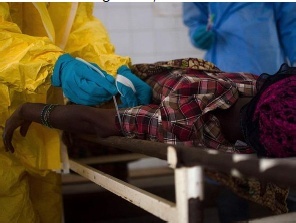
Editor's Note: The issue of compassionate use of unapproved therapies has been brought to the attention of all healthcare providers recently after the decision to treat 2 Americans infected with the Ebola virus with an experimental serum never before used in humans. With the Ebola epidemic deemed to be out of control by the World Health Organization (WHO), the need for effective treatments has researchers and regulators scrambling to find, test, and potentially approve previously untested therapies.
In a press release in August, WHO discussed the ethics of using Ebola drugs that have never been cleared for human use, wary of a long history of medicines being tested on people who were never properly informed of the risks. In the countries hardest hit by Ebola, suspicion of foreign medical workers is already widespread.
Medscape spoke with Luciana Borio, MD, at the US Food and Drug Administration (FDA) about the issue of compassionate use and their efforts to respond to this crisis. Dr. Borio serves as the Acting Deputy Chief Scientist and Assistant Commissioner for Counterterrorism Policy in the Office of Counterterrorism and Emerging Threats at the FDA. In this capacity, Dr. Borio is responsible for providing leadership, coordination, and oversight for FDA's national and global health security, counterterrorism, and emerging threat portfolios.
She serves as FDA's point of entry on policy and planning matters concerning counterterrorism and emerging threats, and collaborates across the US government and internationally on actions to advance global health security and US national security.
Medscape: Can you define "compassionate use" as a regulatory and legal concept?
Luciana Borio, MD: I'd like to begin by taking a step back. Ultimately, the goal for the FDA is to have products that are approved, licensed, or cleared to prevent or treat diseases. However, during a public health emergency, such as the one we are currently facing with Ebola, we don't always have these approved products available, and the best way for us to meet patients' needs might be the use of an unapproved product.
FDA has mechanisms that we can use to facilitate patient access to investigational products; one of these is the Emergency Investigational New Drug (IND) application, often referred to as "compassionate use." It is one of a number of mechanisms under our expanded access program.
Through this emergency IND mechanism, we can allow the use of an investigational product outside of a clinical trial being conducted to develop the product toward approval, in order to treat a patient with a serious or immediately life-threatening disease when the patient has no comparable or satisfactory alternative treatment option.
To evaluate a request for an emergency IND, we have to assess whether the benefits outweigh the risks on the basis of the best available scientific evidence that we have because, clearly, the data package at this point is often quite incomplete. The product may be effective or may not, and we also may see sometimes unexpected serious side effects. Sometimes we don't know exactly what is the most appropriate dose, for example, to give to a sick patient. We have only incomplete information about the use of these products, but we do the best we can to conduct a proper benefit/risk assessment with the available scientific data.
Under this mechanism, it is usually the patient's clinician who contacts the FDA requesting the emergency IND or compassionate use exemption. If, after an evaluation of the application, FDA believes the use is appropriate, the doctor will then make arrangements directly with the product developer to obtain the product. The manufacturer may or may not be willing to make the product available outside of the clinical trial, and FDA cannot compel the company to do so. So when the company provides expanded access to its product, it is doing so voluntarily.
http://www.medscape.com/viewarticle/829611 (Accessed on August 25th, 2014, edited)
The word coordination, found in the text, is formed by the word coordinate and the suffix tion, which transforms the verb into a noun. Many words in English are formed from a word to which a prefix or a suffix is added.
Mark the alternative that DOES NOT constitute a word formed in this way:

Questão 58 195648
IMEPAC 2015TEXT:
Responding to Ebola: The View From the FDA
Laurie Scudder, DNP, NP, Luciana Borio, MD
Disclosures August 20, 2014
WHO Backs Use of Experimental Treatments for Ebola
U.S. Emergency Labs Ready to Work on Ebola Drugs If Asked
Keeping Ebola in Check: Advice From the CDC
DRUG & REFERENCE INFORMATION
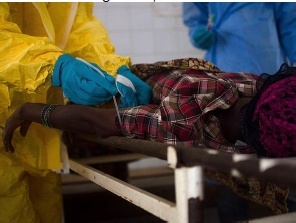
Editor's Note: The issue of compassionate use of unapproved therapies has been brought to the attention of all healthcare providers recently after the decision to treat 2 Americans infected with the Ebola virus with an experimental serum never before used in humans. With the Ebola epidemic deemed to be out of control by the World Health Organization (WHO), the need for effective treatments has researchers and regulators scrambling to find, test, and potentially approve previously untested therapies.
In a press release in August, WHO discussed the ethics of using Ebola drugs that have never been cleared for human use, wary of a long history of medicines being tested on people who were never properly informed of the risks. In the countries hardest hit by Ebola, suspicion of foreign medical workers is already widespread.
Medscape spoke with Luciana Borio, MD, at the US Food and Drug Administration (FDA) about the issue of compassionate use and their efforts to respond to this crisis. Dr. Borio serves as the Acting Deputy Chief Scientist and Assistant Commissioner for Counterterrorism Policy in the Office of Counterterrorism and Emerging Threats at the FDA. In this capacity, Dr. Borio is responsible for providing leadership, coordination, and oversight for FDA's national and global health security, counterterrorism, and emerging threat portfolios.
She serves as FDA's point of entry on policy and planning matters concerning counterterrorism and emerging threats, and collaborates across the US government and internationally on actions to advance global health security and US national security.
Medscape: Can you define "compassionate use" as a regulatory and legal concept?
Luciana Borio, MD: I'd like to begin by taking a step back. Ultimately, the goal for the FDA is to have products that are approved, licensed, or cleared to prevent or treat diseases. However, during a public health emergency, such as the one we are currently facing with Ebola, we don't always have these approved products available, and the best way for us to meet patients' needs might be the use of an unapproved product.
FDA has mechanisms that we can use to facilitate patient access to investigational products; one of these is the Emergency Investigational New Drug (IND) application, often referred to as "compassionate use." It is one of a number of mechanisms under our expanded access program.
Through this emergency IND mechanism, we can allow the use of an investigational product outside of a clinical trial being conducted to develop the product toward approval, in order to treat a patient with a serious or immediately life-threatening disease when the patient has no comparable or satisfactory alternative treatment option.
To evaluate a request for an emergency IND, we have to assess whether the benefits outweigh the risks on the basis of the best available scientific evidence that we have because, clearly, the data package at this point is often quite incomplete. The product may be effective or may not, and we also may see sometimes unexpected serious side effects. Sometimes we don't know exactly what is the most appropriate dose, for example, to give to a sick patient. We have only incomplete information about the use of these products, but we do the best we can to conduct a proper benefit/risk assessment with the available scientific data.
Under this mechanism, it is usually the patient's clinician who contacts the FDA requesting the emergency IND or compassionate use exemption. If, after an evaluation of the application, FDA believes the use is appropriate, the doctor will then make arrangements directly with the product developer to obtain the product. The manufacturer may or may not be willing to make the product available outside of the clinical trial, and FDA cannot compel the company to do so. So when the company provides expanded access to its product, it is doing so voluntarily.
http://www.medscape.com/viewarticle/829611 (Accessed on August 25th, 2014, edited)
One of the concerns of the World Health Organization is

Questão 56 195645
IMEPAC 2015INSTRUCTIONS
Read the following text carefully and then choose the correct alternatives that answer the questions or complete the statements placed after it
TEXT:
Responding to Ebola: The View From the FDA
Laurie Scudder, DNP, NP, Luciana Borio, MD
Disclosures August 20, 2014
WHO Backs Use of Experimental Treatments for Ebola
U.S. Emergency Labs Ready to Work on Ebola Drugs If Asked
Keeping Ebola in Check: Advice From the CDC
DRUG & REFERENCE INFORMATION
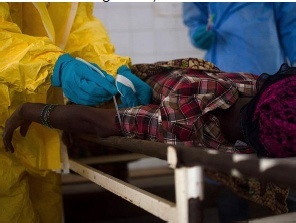
Editor's Note: The issue of compassionate use of unapproved therapies has been brought to the attention of all healthcare providers recently after the decision to treat 2 Americans infected with the Ebola virus with an experimental serum never before used in humans. With the Ebola epidemic deemed to be out of control by the World Health Organization (WHO), the need for effective treatments has researchers and regulators scrambling to find, test, and potentially approve previously untested therapies.
In a press release in August, WHO discussed the ethics of using Ebola drugs that have never been cleared for human use, wary of a long history of medicines being tested on people who were never properly informed of the risks. In the countries hardest hit by Ebola, suspicion of foreign medical workers is already widespread.
Medscape spoke with Luciana Borio, MD, at the US Food and Drug Administration (FDA) about the issue of compassionate use and their efforts to respond to this crisis. Dr. Borio serves as the Acting Deputy Chief Scientist and Assistant Commissioner for Counterterrorism Policy in the Office of Counterterrorism and Emerging Threats at the FDA. In this capacity, Dr. Borio is responsible for providing leadership, coordination, and oversight for FDA's national and global health security, counterterrorism, and emerging threat portfolios.
She serves as FDA's point of entry on policy and planning matters concerning counterterrorism and emerging threats, and collaborates across the US government and internationally on actions to advance global health security and US national security.
Medscape: Can you define "compassionate use" as a regulatory and legal concept?
Luciana Borio, MD: I'd like to begin by taking a step back. Ultimately, the goal for the FDA is to have products that are approved, licensed, or cleared to prevent or treat diseases. However, during a public health emergency, such as the one we are currently facing with Ebola, we don't always have these approved products available, and the best way for us to meet patients' needs might be the use of an unapproved product.
FDA has mechanisms that we can use to facilitate patient access to investigational products; one of these is the Emergency Investigational New Drug (IND) application, often referred to as "compassionate use." It is one of a number of mechanisms under our expanded access program.
Through this emergency IND mechanism, we can allow the use of an investigational product outside of a clinical trial being conducted to develop the product toward approval, in order to treat a patient with a serious or immediately life-threatening disease when the patient has no comparable or satisfactory alternative treatment option.
To evaluate a request for an emergency IND, we have to assess whether the benefits outweigh the risks on the basis of the best available scientific evidence that we have because, clearly, the data package at this point is often quite incomplete. The product may be effective or may not, and we also may see sometimes unexpected serious side effects. Sometimes we don't know exactly what is the most appropriate dose, for example, to give to a sick patient. We have only incomplete information about the use of these products, but we do the best we can to conduct a proper benefit/risk assessment with the available scientific data.
Under this mechanism, it is usually the patient's clinician who contacts the FDA requesting the emergency IND or compassionate use exemption. If, after an evaluation of the application, FDA believes the use is appropriate, the doctor will then make arrangements directly with the product developer to obtain the product. The manufacturer may or may not be willing to make the product available outside of the clinical trial, and FDA cannot compel the company to do so. So when the company provides expanded access to its product, it is doing so voluntarily.
http://www.medscape.com/viewarticle/829611 (Accessed on August 25th, 2014, edited)
The expression “compassionate use” of drugs is understood as the

06