


![[Marketing] Questao Topo - deslogado](https://storage.estuda.com.br/banners/0_6b7ebee90b03af1c560c73bb8bcce34a_banner_deslogado_70_dias.png)
Questões de Inglês
19.971 Questões
Questão 43 418674
UNIFEV 2015/2Breastfeeding “linked to higher IQ”
March 18, 2015

A long-term study has pointed to a link between breastfeeding and intelligence. The research in Brazil traced nearly 3,500 babies, from all walks of life, and found those who had been breastfed for longer went on to score higher on IQ tests as adults. Experts say the results, while not conclusive, appear to back current advice that babies should be exclusively breastfed for six months. But they say mothers should still have a choice about whether or not to do it.
Regarding the findings – published in The Lancet Global Health – they stress there are many different factors other than breastfeeding that could have an impact on intelligence, although the researchers did try to rule out the main confounders, such as mother’s education, family income and birth weight.
Dr Bernardo Lessa Horta, from the Federal University of Pelotas in Brazil, said his study offers a unique insight because in the population he studied, breastfeeding was evenly distributed across social class – not something just practised by the rich and educated.
Most of the babies, irrespective of social class, were breastfed – some for less than a month and others for more than a year. Those who were breastfed for longer scored higher on measures of intelligence as adults. They were also more likely to earn a higher wage and to have completed more schooling.
• Long-term impact
Dr Horta believes breast milk may offer an advantage because it is a good source of long-chain saturated fatty acids which are essential for brain development. But experts say the study findings cannot confirm this and that much more research is needed to explore any possible link between breastfeeding and intelligence.
Kevin Fenton, national director of health and wellbeing, Public Health England (PHE), said there was strong evidence that breastfeeding provides some health benefits for babies - reduced respiratory and gastrointestinal infections in infancy, for example. He said: “PHE’s advice remains that exclusive breastfeeding for around the first six months of life provides health benefits to babies. We recognise, however, that not all mothers choose, or are able, to breastfeed and infant formula is the only alternative to breast milk for babies under 12 months old.” Janet Fyle of the Royal College of Midwives said new mothers needed breastfeeding support.
Dr Colin Michie, chairman of the Royal College of Paediatrics and Child Health’s nutrition committee, said: “There have been many studies on the link between breastfeeding and IQ over the years with many having had their validity challenged. This study however, looks at a number of other factors including education achievement and income at age 30 which, along with the high sample size, makes this study a very powerful one. It is important to note that breastfeeding is one of many factors that can contribute to a child’s outcomes, however this study emphasises the need for continued and enhanced breastfeeding promotion so expectant mothers are aware of the benefits of breastfeeding.”
(www.bbc.com. Adaptado.)
No trecho do primeiro parágrafo “while not conclusive”, o termo “while” pode ser corretamente substituído, sem alteração de sentido, por
Questão 41 418670
UNIFEV 2015/2Breastfeeding “linked to higher IQ”
March 18, 2015
A long-term study has pointed to a link between breastfeeding and intelligence. The research in Brazil traced nearly 3,500 babies, from all walks of life, and found those who had been breastfed for longer went on to score higher on IQ tests as adults. Experts say the results, while not conclusive, appear to back current advice that babies should be exclusively breastfed for six months. But they say mothers should still have a choice about whether or not to do it.
Regarding the findings – published in The Lancet Global Health – they stress there are many different factors other than breastfeeding that could have an impact on intelligence, although the researchers did try to rule out the main confounders, such as mother’s education, family income and birth weight.
Dr Bernardo Lessa Horta, from the Federal University of Pelotas in Brazil, said his study offers a unique insight because in the population he studied, breastfeeding was evenly distributed across social class – not something just practised by the rich and educated.
Most of the babies, irrespective of social class, were breastfed – some for less than a month and others for more than a year. Those who were breastfed for longer scored higher on measures of intelligence as adults. They were also more likely to earn a higher wage and to have completed more schooling.
• Long-term impact
Dr Horta believes breast milk may offer an advantage because it is a good source of long-chain saturated fatty acids which are essential for brain development. But experts say the study findings cannot confirm this and that much more research is needed to explore any possible link between breastfeeding and intelligence.
Kevin Fenton, national director of health and wellbeing, Public Health England (PHE), said there was strong evidence that breastfeeding provides some health benefits for babies - reduced respiratory and gastrointestinal infections in infancy, for example. He said: “PHE’s advice remains that exclusive breastfeeding for around the first six months of life provides health benefits to babies. We recognise, however, that not all mothers choose, or are able, to breastfeed and infant formula is the only alternative to breast milk for babies under 12 months old.” Janet Fyle of the Royal College of Midwives said new mothers needed breastfeeding support.
Dr Colin Michie, chairman of the Royal College of Paediatrics and Child Health’s nutrition committee, said: “There have been many studies on the link between breastfeeding and IQ over the years with many having had their validity challenged. This study however, looks at a number of other factors including education achievement and income at age 30 which, along with the high sample size, makes this study a very powerful one. It is important to note that breastfeeding is one of many factors that can contribute to a child’s outcomes, however this study emphasises the need for continued and enhanced breastfeeding promotion so expectant mothers are aware of the benefits of breastfeeding.”
(www.bbc.com. Adaptado.)
Segundo o texto, a pesquisa realizada no Brasil
Questão 59 417641
FDV 2015/2Texto
WHY CARLOS SLIM'S THREE-DAY WORKING WEEK IDEA COULD WORK
It’s Friday, traditionally the last day of the working week. But what if we changed all that and introduced three day working weeks? We would be well into the weekend already…
As I blogged recently, the way we all work is going to change - and fast. The set-in-stone notion of working Monday to Friday is rapidly becoming outdated, and is increasingly inefficient. Working three day weeks could actually increase productivity, and make better use of the skills people across society have to offer.
Carlos Slim is the latest to speak out about flexible working. “People are going to have to work for more years, until they are 70 or 75, and just work three days a week – perhaps 11 hours a day,” he said.
He is putting his ideas into action too. I applaud his initiative at phone company Telmex, where those eligible for retirement can opt to work four-day weeks on full pay.
Mr Slim’s proposals focused mostly on the elderly, as he rightly noted that people are living longer, are more healthy, and want to
continue enjoying an active life for as long as possible. However, I believe changes to working practices shouldn’t just focus on older workers. The concept of flexible working should apply to everyone, which is something we encourage at Virgin.
While the diverse nature of the Virgin Group means that our companies have different practices, we firmly believe that people should be encouraged to work when, where and how they like, in order to get the best results possible. If this means hot-desking, working from home, working three or four day weeks, or job-sharing, then that’s great. Go with the approach that works best for you.
As Michael Skapinker’s thoughtful piece in the Financial Times (£) noted, Carlos Slim’s proposal that we work a three-day week is far from crazy. “Many, in 1922, thought Henry Ford crazy when he announced that his staff would work a five-day week.”
The way we work has always been in flux, and will continue to do so as the way we live our lives changes. As technology advances, we all need to work smarter, not longer.
There is plenty of healthy debate around this area. We recently ran a series of interesting viewpoints on flexible working, while it was good to read the contrasting opinions of CEOs and economists over at The Guardian.
However, the best way of finding what works and what doesn’t is trial and error. We already have some great approaches to flexible working at Virgin and are continuing to build on this with more new initiatives.
Do you agree the three day week could make us happier, healthier and more productive? Or are you satisfied working nine-to-five, five days a week? Let us know.
(BRANSON, Richard. Why Carlos slim's three-day working week idea could work. Disponível em: <http://www.virgin.com/richardbranson/why-carlos-slims-three-day-working-week-idea-could-work>. Acesso em: 10 abr. 2015)
Assinale a alternative que apresenta a mellhor tradução para approaches em “[...] some great approaches […].”
Questão 55 417631
FDV 2015/2Texto
WHY A GLOBAL THREE-DAY WORKWEEK WOULD BE GOOD FOR INNOVATION
The world’s second-richest man, Carlos Slim of Mexico, recently proposed the concept of a global three-day workweek at a business conference in Paraguay, arguing that working three days a week for a longer period of our lives — potentially up to age 75 — would better reflect the underlying economic and demographic reality of the modern world.
He’s got a good point.
Nobody seriously expects to retire by the age of 50 these days, so working until 70 or 75 no longer sounds as outrageous as it might have sounded a decade or two ago. We’re living longer and, therefore, requiring more savings for retirement. Moreover, there’s a strong argument to be made for the three-day workweek on economic productivity grounds. The OECD has produced a number of very compelling charts showing that worker productivity starts to decrease when you work too many hours a week. This intuitively makes sense: Companies don’t want to hire more workers than they have to, so they try to squeeze more hours out of workers, and that leads to further productivity trade-offs.
But the real argument for the three-day workweek comes when you think of its ability to boost the innovation potential of individuals, companies and even nations. Working fewer hours a week frees up time to take on personal creativity and passion projects. That was the original logic of Google’s 20 percent time, which stipulated loosely that workers should dedicate 20 percent of their workweek to dreaming up new projects and tinkering. Other companies also have experimented with giving workers more time to dream up innovative new products or developing side projects. You can think of corporate hackathons as another way that companies are trying to give workers more time to come up with innovative ideas. Giving workers four days off a week basically eliminates any excuse for not launching that new business or product you’ve been talking about for years.
And, as Slim pointed out, “Having four days [off] would be very important to generate new entertainment activities and other ways of being occupied.” That almost sounds like a throwaway line – isn’t it obvious that if people are only working three days a week, that they will have to fill their time with other activities? On one hand, you can imagine people heading to the beach for a never-ending series of four-day weekends, or using those four days to binge-watch the latest season of “Game of Thrones.” On the other hand, you can imagine people actually creating those new entertainment activities and ways of being occupied.
(BASULTO, Dominic Basulto. Why a global three-day workweek would be good for innovation. The Whashington Post, Whashington, July 30 2014. Disponível em: <At:http://www.washingtonpost.com/blogs/innovations/wp/2014/07 /30/why-a-global-3-day-workweek-would-be-good-for-innovation/>. Acesso em: 10 fev. 2015)
Chose the alternative in which the word in bold type and the italicized one convey equivalent ideas.
Questão 59 402171
URCA 2° Dia 2015/2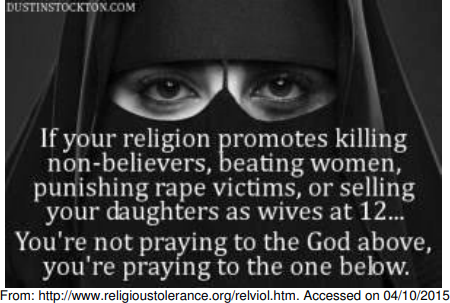
The conditional tense used in the text above represents:
Questão 58 402169
URCA 2° Dia 2015/2THE GUARDIAN VIEW ON RELIGIOUS INTOLERANCE: THE BURDEN OF THE CROSS
The hideous convulsions that followed the invasion in Iraq (2003) have been dreadful for everyo e in the region, but nobody has suffered more than the Christians, persecuted alike in Sunni and Shia states. In he nations that are not at war, they are tolerated but oppressed; in the Gulf, most Christians are servants, abom nably treated. Their religion must be practised in secret, with converts threatened with death. In Iran, a missionary or a pastor is hanged from time to time as an exercise in public morality.
In the states where war rages, every man’s hand is against them. The Christian population of Iraq was more than a million in 2003. Now it is less than a third of that size, with perhaps half that number in Ku distan, which is functionally independent of the Shia government anyway. They are not coming back. Nor can th y feel safe in Kurdistan. It was Sunni Kurds who did much of the killing in Turkey’s attempted genocide of the Armenian Christians 100 years ago, and both sides remember this.
In Syria, a brutal sectarian insurgency drives some Christians to support the ruthless Assad regi e. In Egypt, the already vulnerable Coptic Christians, who lived there for 600 years before the Muslims arrived, ad a dreadful Arab spring under the Islamist regime of President Mohamed Morsi and, after the counter revolutionary coup, continue to be persecuted, both inside and outside the law. Even Israel, which presents itself as beacon of religious liberty, is a dreadful place to live for Christian Arabs, caught between an occupying arm in the West Bank and Muslim fundamentalism in Gaza. Further east, in Pakistan, a corrupt government fails o challenge deep prejudice that leaves Christians vulnerable to judicial murder under the blasphemy laws, as well as to the lynchings and pogroms to which the authorities turn an understanding eye. Those rare politicians brave enough to speak up for toleration can be assassinated, sometimes by their own bodyguards.
Across a wide belt of sub Saharan Africa, but especially in Nigeria, northern Kenya and the Central African Republic, there are simmering wars between Muslim and Christian ethnic groups. In some cases, in the Democratic Republic of the Congo and in South Sudan, Christian armies fight merciless civil war against each other and civilian populations. It isn’t just a simple story of Muslims persecuting Christians. In Ch na and in North Korea, atheist governments are persecuting Christians; in Russia, an Orthodox Christian regime reats Catholics with suspicion and Protestants with brutality. In India, state governments have indulged the pers cution of Christians under the ludicrous pretext that they are stamping out proselytism.
Nonetheless, the problem of Christian persecution is most pronounced in Islamic societies, and specially in places where oil riches are inflaming prejudice. Of course, Muslims in Europe or North America confront intolerance too, but it would be silly to deny that the situation of Christians in the Middle East is ery much worse.
The answer´s not to inflame matching animosity against Islam. A clearer understanding of that faith’s complexities would be a help, both to praise the visions of peace it contains and to condemn the way that certain Muslim ideas are turned into aggression by some adherents. But this is best done in terms that uslims themselves can embrace, through a discussion involving people of all faiths as well as those of none.
Just as important is a resolute stand for the principle of religious freedom everywhere. Religious belief is fundamental to many human identities. Freedom of faith must be defended, irrespective of whet er the attacks come from totalitarian atheist regimes or theocracies. For the faithful, what they believe about G d is inseparable from what they understand about human beings. But God’s rights must never be allowed to tram le on human rights.
Adapted from: http://www.theguardian.com/commentisfree/2014/dec/25/guardianviewreligiousintoleranceburdencross. Accessed on: 03/18/2015
Check the alternative that DOES NOT contain a sentence in the genitive case.
06