


![[Marketing] Questao Topo - deslogado](https://storage.estuda.com.br/banners/0_6b7ebee90b03af1c560c73bb8bcce34a_banner_deslogado_70_dias.png)
Questões de Inglês
19.971 Questões
Questão 22 479767
CESMAC Medicina 1° Dia 2015/1In Europe, Fear of Ebola Exceeds the Actual Risks
After more than a decade working as a charity director setting up schools in West Africa, Miriam Mason-Sesay got an unpleasant surprise recently when she returned to Britain and could not find a school willing to teach her own 9-yearold son.
Ms. Mason-Sesay said, her son, Kofi, had always enrolled for short periods at a primary school near Manchester, in northern England, but this year the school refused to take him because the parents of other pupils were frightened: They did not want their children sharing classes with a boy who had spent time in Sierra Leone, one of the three countries hardest hit by the Ebola epidemic.
Across Europe, as in the United States, a virus that, outside Africa, has infected only a handful of people, all of them medical workers in hospitals treating Ebola patients, has stirred a wave of alarm that doctors and psychologists say reflects the insecurities of the modern mind far more than any significant danger to public health.
The result has been a string of unfounded Ebola scares, which in some parts of Europe have led to entire buildings being sealed off and the people inside being held so they could be examined for symptoms.
“People think that Ebola is lurking behind every tree and bush and waiting to get them,” said Ms. Mason-Sesay, the British charity director. She added that the banishment of her son — who had been certified healthy by doctors — pointed to a disturbing mood of fear fueled by ignorance and misinformation.
In a statement, Elizabeth Inman, the principal of St. Simon’s Catholic Primary School, said she had made a “pragmatic decision” not to admit Ms. Mason-Sesay’s son.
Adaptado de: <http://www.nytimes.com/2014/10/18/world/europe/in-europe-fear-ofebola-far-outweighs-the-true-risks.html?ref=health> Acessado em 18 de outubro de 2014.
Parents of other pupils in schools where Mirian’s son might get enrolled were
Questão 20 476914
CESMAC Medicina 1° Dia 2015/1The Future of Women’s and Children’s Health and
the Sustainable Development Goals
Next year, the Millennium Development Goals (MDG) will be replaced by the Sustainable Development Goals(SDG) -- a set of even more ambitious targets for global development. In a bold attempt to create the healthiest generation of young women and children in the world, the new SDGs will require the near elimination of preventable maternal and child deaths by 2030.
What we have learned from the MDGs is that making the world healthier for women and children has a transformative effect on economic and social development. One recent study in the Lancet, Global Health 2035, found that reductions in premature death accounted for 11% of recent economic growth in low and middle income countries.
But despite this compelling evidence, public and private sector financing for women's and children’s health has not been adequate to achieve the MDGs and without additional investment the ambitious new SDG goals will not be reached.
The major sources of public-sector financing for global health in the MDG-era included the US President’s AIDS and malaria initiatives (PEPFAR and PMI), the Global Fund to Fight AIDS, TB and Malaria (GFATM) and the GlobalAlliance for Vaccines and Immunization (GAVI). The private pharmaceutical, energy, mining, and consumer goods sectors all rallied around these massive global efforts and as a result there has been strong progress in reversing the spread of AIDS and malaria and impressive reductions in vaccine-preventable child deaths, particularly from measles and tetanus.
We have not seen the same levels of investment in some of the most critical areas affecting women’s and children’s health. 2.5 billion people do not have access to a toilet. And pneumonia, the disease that causes more child deaths than AIDS, TB, and malaria combined -- still lacks public and private sector financial support with the majority of children who die from pneumonia each year failing to receive the recommended antibiotic treatment or oxygen therapy.
Adaptado de: <http://www.uschamberfoundation.org/blog/post/future-women-sand-
children-s-health-and-sustainable-development-goals/41836 >
Acessado em 18 de outubro de 2014.
According to the text, one can state that
Questão 19 476908
CESMAC Medicina 1° Dia 2015/1The Future of Women’s and Children’s Health and
the Sustainable Development Goals
Next year, the Millennium Development Goals (MDG) will be replaced by the Sustainable Development Goals(SDG) -- a set of even more ambitious targets for global development. In a bold attempt to create the healthiest generation of young women and children in the world, the new SDGs will require the near elimination of preventable maternal and child deaths by 2030.
What we have learned from the MDGs is that making the world healthier for women and children has a transformative effect on economic and social development. One recent study in the Lancet, Global Health 2035, found that reductions in premature death accounted for 11% of recent economic growth in low and middle income countries.
But despite this compelling evidence, public and private sector financing for women's and children’s health has not been adequate to achieve the MDGs and without additional investment the ambitious new SDG goals will not be reached.
The major sources of public-sector financing for global health in the MDG-era included the US President’s AIDS and malaria initiatives (PEPFAR and PMI), the Global Fund to Fight AIDS, TB and Malaria (GFATM) and the GlobalAlliance for Vaccines and Immunization (GAVI). The private pharmaceutical, energy, mining, and consumer goods sectors all rallied around these massive global efforts and as a result there has been strong progress in reversing the spread of AIDS and malaria and impressive reductions in vaccine-preventable child deaths, particularly from measles and tetanus.
We have not seen the same levels of investment in some of the most critical areas affecting women’s and children’s health. 2.5 billion people do not have access to a toilet. And pneumonia, the disease that causes more child deaths than AIDS, TB, and malaria combined -- still lacks public and private sector financial support with the majority of children who die from pneumonia each year failing to receive the recommended antibiotic treatment or oxygen therapy.
Adaptado de: <http://www.uschamberfoundation.org/blog/post/future-women-sand-
children-s-health-and-sustainable-development-goals/41836 >
Acessado em 18 de outubro de 2014.
Public and private sector financing for women's and children’s health has been
Questão 18 476905
CESMAC Medicina 1° Dia 2015/1The Future of Women’s and Children’s Health and
the Sustainable Development Goals
Next year, the Millennium Development Goals (MDG) will be replaced by the Sustainable Development Goals(SDG) -- a set of even more ambitious targets for global development. In a bold attempt to create the healthiest generation of young women and children in the world, the new SDGs will require the near elimination of preventable maternal and child deaths by 2030.
What we have learned from the MDGs is that making the world healthier for women and children has a transformative effect on economic and social development. One recent study in the Lancet, Global Health 2035, found that reductions in premature death accounted for 11% of recent economic growth in low and middle income countries.
But despite this compelling evidence, public and private sector financing for women's and children’s health has not been adequate to achieve the MDGs and without additional investment the ambitious new SDG goals will not be reached.
The major sources of public-sector financing for global health in the MDG-era included the US President’s AIDS and malaria initiatives (PEPFAR and PMI), the Global Fund to Fight AIDS, TB and Malaria (GFATM) and the GlobalAlliance for Vaccines and Immunization (GAVI). The private pharmaceutical, energy, mining, and consumer goods sectors all rallied around these massive global efforts and as a result there has been strong progress in reversing the spread of AIDS and malaria and impressive reductions in vaccine-preventable child deaths, particularly from measles and tetanus.
We have not seen the same levels of investment in some of the most critical areas affecting women’s and children’s health. 2.5 billion people do not have access to a toilet. And pneumonia, the disease that causes more child deaths than AIDS, TB, and malaria combined -- still lacks public and private sector financial support with the majority of children who die from pneumonia each year failing to receive the recommended antibiotic treatment or oxygen therapy.
Adaptado de: <http://www.uschamberfoundation.org/blog/post/future-women-sand-
children-s-health-and-sustainable-development-goals/41836 >
Acessado em 18 de outubro de 2014.
According to the text, heathier women and children
Questão 17 476879
CESMAC Medicina 1° Dia 2015/1The Future of Women’s and Children’s Health and
the Sustainable Development Goals
Next year, the Millennium Development Goals (MDG) will be replaced by the Sustainable Development Goals(SDG) -- a set of even more ambitious targets for global development. In a bold attempt to create the healthiest generation of young women and children in the world, the new SDGs will require the near elimination of preventable maternal and child deaths by 2030.
What we have learned from the MDGs is that making the world healthier for women and children has a transformative effect on economic and social development. One recent study in the Lancet, Global Health 2035, found that reductions in premature death accounted for 11% of recent economic growth in low and middle income countries.
But despite this compelling evidence, public and private sector financing for women's and children’s health has not been adequate to achieve the MDGs and without additional investment the ambitious new SDG goals will not be reached.
The major sources of public-sector financing for global health in the MDG-era included the US President’s AIDS and malaria initiatives (PEPFAR and PMI), the Global Fund to Fight AIDS, TB and Malaria (GFATM) and the GlobalAlliance for Vaccines and Immunization (GAVI). The private pharmaceutical, energy, mining, and consumer goods sectors all rallied around these massive global efforts and as a result there has been strong progress in reversing the spread of AIDS and malaria and impressive reductions in vaccine-preventable child deaths, particularly from measles and tetanus.
We have not seen the same levels of investment in some of the most critical areas affecting women’s and children’s health. 2.5 billion people do not have access to a toilet. And pneumonia, the disease that causes more child deaths than AIDS, TB, and malaria combined -- still lacks public and private sector financial support with the majority of children who die from pneumonia each year failing to receive the recommended antibiotic treatment or oxygen therapy.
Adaptado de: <http://www.uschamberfoundation.org/blog/post/future-women-sand-
children-s-health-and-sustainable-development-goals/41836 >
Acessado em 18 de outubro de 2014.
As for targets regarding global development, it is correct to assert that
Questão 35 472474
UNIPE 2015/1TEXTO
Light shed on how genes shape face
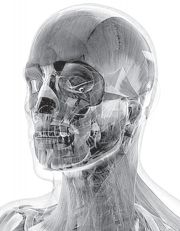
Scientists are starting to understand why one
person’s face can look so different from another’s.
Working on mice, researchers have identified thousands
of small regions of DNA that influence the way facial
[5] features develop. The study also shows that tweaks to
genetic material can subtly alter face shape. The findings,
published in Science, could also help researchers to
learn how facial birth defects arise.
The researchers said that although the work was
[10] carried out on animals, the human face was likely to
develop in the same way. Professor Axel Visel, from the
Joint Genome Institute at the Lawrence Berkeley
National Laboratory in California, told BBC News: “We’re
trying to find out how these instructions for building the
[15] human face are embedded in human DNA.”Somewhere
in there must be that blueprint that defines what our face
looks like.”
The international team has found more than 4,000
“enhancers” in the mouse genome that appear to play a
[20] role in facial appearance. These short stretches of DNA
act like switches, turning genes on and off. And for 200
of these, the researchers have identified how and where
they work in developing mice. Prof Visel said: “In the
mouse embryos we can see where exactly, as the face
[25] develops, this switch turns on the gene that it controls.”
The scientists also looked at what happened when
some of these genetic switches were removed from mice.
“These mice looked pretty normal, but it is really hard
for humans to see differences in the face of mice,”
[30] explained Prof. Visel. By comparing the transgenic mice
with unmodified mice, the researchers found that the
changes were very subtle. However some mice developed
longer or shorter skulls, while others have wider or
narrower faces. “What this really tells us is that this
[35] particular switch also plays a role in development of the
skull and can affect what exactly the skull looks like,”
he explained.
Understanding this could also help to reveal why
and how things can go wrong as embryos develop in the
[40] womb, leading to facial birth defects. Prof Visel said:
“There are many kinds of craniofacial birth defects; cleft
of the lip and palate are the most common ones.And
they have severe implications for the kids that are
affected. They affect feeding, speech, breathing, they
[45] can require extensive surgery and they have psychological
implications.”While some of these are caused by genetic
mutations, the researchers want to understand how the
genetic switches interact.
Professor Visel added that scientists were just at
[50] the beginning of understanding the processes that shape
the face, but their early results suggested it was an
extremely complex process. He said it was unlikely in
the near future that DNA could be used to predict
someone’s exact appearance, or that parents could alter
[55] genetic material to change the way a baby looks.
MORELLE,Rebecca,Science reporter,BBC World Service Disponível: .Acesso em: 8 dez. 2014. Adaptado.
Considering verb forms used in the text, it’s correct to say:
06