


![[Marketing] Questao Topo - deslogado](https://storage.estuda.com.br/banners/0_6b7ebee90b03af1c560c73bb8bcce34a_banner_deslogado_70_dias.png)
Questões de Inglês
19.971 Questões
Questão 93 951681
PUC-RS Inverno 2015INSTRUCTION: Answer question in relation to text.
TEXT
If you think the food airline companies serve up is bland
or unappetising, it’s not necessarily their fault. Essentially,
you leave your normal sense of taste behind at the airport
departure gate. Get on board a plane and cruise to a level
[5] of thousands of feet, and the flavour of everything from
a pasta dish to a mouthful of wine becomes manipulated
in a whole host of ways that we are only beginning to
understand.
Taste buds and sense of smell are the first things to go at
[10] 30,000 feet, says Russ Brown, director of In-flight Dining
& Retail at American Airlines. “Flavour is a combination
of both, and our perception of saltiness and sweetness
drop when inside a pressurised cabin.”
Everything that makes up the in-flight experience affects
[15] how your food tastes. There are several reasons for this:
lack of humidity, lower air pressure, and the background
noise. The combination of dryness and low pressure
reduces the sensitivity of your taste buds to sweet and
salty foods by around 30%, according to a 2010 study.
[20] Interestingly, the study found that we take leave of our
sweet and salty senses only. Sour, bitter and spicy
flavours are almost unaffected.
But it’s not just about our taste buds. Up to 80% of what
people think is taste, is in fact smell. We need evaporating
[25] nasal mucus to smell, but in the parched cabin air our
odour receptors do not work properly, and the effect is
that this makes food taste twice as bland.
So airlines have to give in-flight food an extra kick, by
salting and spicing it much more than a restaurant on the
[30] ground ever would. “Proper seasoning is key to ensure
food tastes good in the air,” says Brown at American
Airlines. “Often, recipes are modified with additional salt
or seasoning to account for the cabin dining atmosphere.”
By Katia Moskvitch http://www.bbc.com/future/story/20150112-why-in-flight-foodtastes-weird (adapted)
According to the text, the most outstanding factor/factors, affecting the way food tastes is/are
Questão 92 951675
PUC-RS Inverno 2015INSTRUCTION: Answer question in relation to text.
TEXT
If you think the food airline companies serve up is bland
or unappetising, it’s not necessarily their fault. Essentially,
you leave your normal sense of taste behind at the airport
departure gate. Get on board a plane and cruise to a level
[5] of thousands of feet, and the flavour of everything from
a pasta dish to a mouthful of wine becomes manipulated
in a whole host of ways that we are only beginning to
understand.
Taste buds and sense of smell are the first things to go at
[10] 30,000 feet, says Russ Brown, director of In-flight Dining
& Retail at American Airlines. “Flavour is a combination
of both, and our perception of saltiness and sweetness
drop when inside a pressurised cabin.”
Everything that makes up the in-flight experience affects
[15] how your food tastes. There are several reasons for this:
lack of humidity, lower air pressure, and the background
noise. The combination of dryness and low pressure
reduces the sensitivity of your taste buds to sweet and
salty foods by around 30%, according to a 2010 study.
[20] Interestingly, the study found that we take leave of our
sweet and salty senses only. Sour, bitter and spicy
flavours are almost unaffected.
But it’s not just about our taste buds. Up to 80% of what
people think is taste, is in fact smell. We need evaporating
[25] nasal mucus to smell, but in the parched cabin air our
odour receptors do not work properly, and the effect is
that this makes food taste twice as bland.
So airlines have to give in-flight food an extra kick, by
salting and spicing it much more than a restaurant on the
[30] ground ever would. “Proper seasoning is key to ensure
food tastes good in the air,” says Brown at American
Airlines. “Often, recipes are modified with additional salt
or seasoning to account for the cabin dining atmosphere.”
By Katia Moskvitch http://www.bbc.com/future/story/20150112-why-in-flight-foodtastes-weird (adapted)
The word “both” (line 12) refers to
Questão 91 951654
PUC-RS Inverno 2015INSTRUCTION: Answer question in relation to text.
TEXT
If you think the food airline companies serve up is bland
or unappetising, it’s not necessarily their fault. Essentially,
you leave your normal sense of taste behind at the airport
departure gate. Get on board a plane and cruise to a level
[5] of thousands of feet, and the flavour of everything from
a pasta dish to a mouthful of wine becomes manipulated
in a whole host of ways that we are only beginning to
understand.
Taste buds and sense of smell are the first things to go at
[10] 30,000 feet, says Russ Brown, director of In-flight Dining
& Retail at American Airlines. “Flavour is a combination
of both, and our perception of saltiness and sweetness
drop when inside a pressurised cabin.”
Everything that makes up the in-flight experience affects
[15] how your food tastes. There are several reasons for this:
lack of humidity, lower air pressure, and the background
noise. The combination of dryness and low pressure
reduces the sensitivity of your taste buds to sweet and
salty foods by around 30%, according to a 2010 study.
[20] Interestingly, the study found that we take leave of our
sweet and salty senses only. Sour, bitter and spicy
flavours are almost unaffected.
But it’s not just about our taste buds. Up to 80% of what
people think is taste, is in fact smell. We need evaporating
[25] nasal mucus to smell, but in the parched cabin air our
odour receptors do not work properly, and the effect is
that this makes food taste twice as bland.
So airlines have to give in-flight food an extra kick, by
salting and spicing it much more than a restaurant on the
[30] ground ever would. “Proper seasoning is key to ensure
food tastes good in the air,” says Brown at American
Airlines. “Often, recipes are modified with additional salt
or seasoning to account for the cabin dining atmosphere.”
By Katia Moskvitch http://www.bbc.com/future/story/20150112-why-in-flight-foodtastes-weird (adapted)
According to the first paragraph of the text, it is possible to say that
Questão 59 820576
FIP-Moc Medicina 2015/2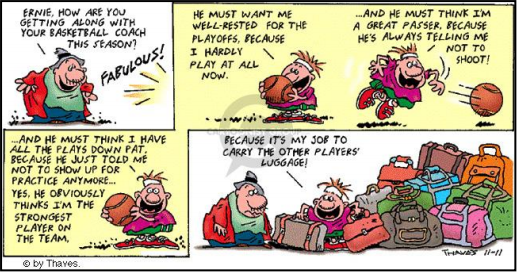
On the cartoon above the verb must indicates:
Questão 57 820554
FIP-Moc Medicina 2015/2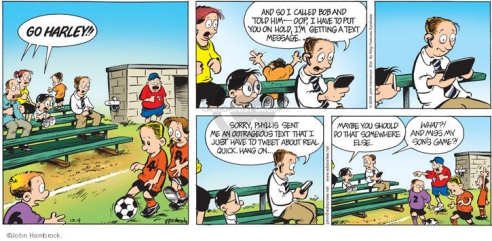
It is claimed through the cartoon above that technology is…
Questão 56 820551
FIP-Moc Medicina 2015/2How to Beat Bad Ankles
ANKLE INJURIES CAN IMPAIR ONE'S BALANCE LONG AFTER THEY HEAL
People who’ve sprained an ankle are likely to sprain it again, writes Gretchen Reynolds for the New York Times, but there may be a "supremely low-tech" fix: balance training. An ankle sprain interferes with the neural receptors in the ligaments that transmit balance information to the brain. Even when the sprain is healed, balance can still remain impaired—increasing the chance of a future injury.
"If you don’t mind your spouse sniggering," writes Reynolds, you can beat bad ankles at home. It’s not complicated: When your ankle has healed well enough to bear weight, simply try standing on one foot for one minute. If that’s too easy, try crossing your arms closing your eyes, or brushing your teeth while on one foot. One study noted dramatic balance improvement in a month.
Source: Newser.com
After spraining an ankle its balance recovery takes place…
06