


![[Marketing] Questao Topo - deslogado](https://storage.estuda.com.br/banners/0_6b7ebee90b03af1c560c73bb8bcce34a_banner_deslogado_70_dias.png)
Questões de Inglês
19.971 Questões
Questão 13 16140944
IDOMED Medicina (edital 2) 2025/1BRAIN ROT
Anna Tyzack
December 20, 2024
While not a clinical diagnosis, the term “brain rot” captures the burnt out feeling that follows an online scrolling session. The brain is exposed to far more information and demands than it can handle without proper breaks, which over time leads to difficult concentration, poor memory and emotional exhaustion. If we are finding it hard to focus, feeling a bit low and having a memory like a sieve, chances are we need a break – a screen break. Brain rot, the colloquial term used to describe excessive consumption of low-quality online content, particularly short videos on social media, has become so mainstream that it was voted Oxford Dictionary’s Word of the Year for 2024.
Content demands and digital distractions are leaving us feeling mentally burnt out. When our brain is under stress it acts like a computer with too many tabs open – it slows down, overheats and struggles to function effectively. This can affect our performance at school, university or work and lead to relationship issues and struggles with mental health and addictions. It can also be compared to “fast food”. In the past we used to have to hunt and gather food, but today we can get information whenever we want through artificial intelligence or video content as fast as we get fast food, and our brains are suffering the consequences. This happens because the brain actually prefers focused, intellectual engagement and if we want to keep it healthy, we need to be aware of this and change our behavior accordingly.
Digital media traps us in a reward system, with each ‘like’, share, or engaging article triggering the brain to release the feel-good hormone, dopamine. Clicking on a funny short video or interesting headline gives a dopamine hit, but this content is so quickly digestible that you instantly want another, so you keep scrolling, creating a feedback loop. In the short term, we feel happy and engaged, but in the long term this kind of dopamine-driven behavior affects critical thinking and higher order cognitive function.
Doom scrolling also impairs our memory and ability to solve problems, as we’re constantly living in our limbic brain which processes emotions. A 2018 study by psychologists at Stanford University found that those who engage with multiple social media platforms at once perform worse on memory tasks. The hippocampus, the part of our brain that creates and retains new memories, is not stimulated by repetitive content and we are also not using our prefrontal cortex, which deals with future planning, problem solving and personality development. In this case, a digital detox with no access to your favorite platforms is the most effective way to reset brain function and improve emotional wellbeing, but this is easier said than done given that our screens are how we work and socialize.
All in all, the key is to follow a healthy digital diet, taking regular screen breaks and carving out tech-free spaces in the day. We should also aim to promote brain health by eating healthily and mindfully, with no screens at the dinner table, and taking time to exercise, which increases blood flow to the brain. The more we rely on tech, the more sedentary we are. It’s about noticing the impact of digital media on our brain and finding a way to relieve stress. A bath, a walk with a friend and small screen-free pauses can make a big difference to how our brain works and how we feel.
Available at: https://www.yahoo.com/lifestyle/brain-rot-modern-life-turning-070000390.html?fr=sycsrp_catchall. Access in: 6 jan. 2025. (Adapted).
The main objective of the article is:
Questão 19 16046542
UESB 1 Dia 2025There have always been myths about immortality, that is, being able to live forever. Well, our Marine Biologists have found a creature that comes close – a tiny transparent jellyfish. While it has the unofficial name of Immortal Jellyfish, its official name is Turritopsis dohrnii. After an adult male T. dohrnii squirts his sperm into the ocean waters, some of them end up inside a female T. dohrnii. This creates the fertilised eggs, which then turn into tiny free-swimming larvae called “planula”. After a while, the planula give up swimming, dive down to the sea floor, and attach themselves to a rock. They then change shape entirely into columns of highly branched polyps. After a few days, another change of shape happens. Tiny jellyfish (about 1 mm across) “bud” off from the tips of the polyp and, like miniature asexual umbrellas with tentacles, float through the ocean. After 2-4 weeks, they become sexually mature males or females.
Now T. dohrnii jellyfish can be eaten by bigger creatures – so they are not truly immortal. But when T. dohrnii suffers a physical attack, instead of dying, they change firstly into a tiny blob, and then back to the polyp stage within 3 days. They become another polyp colony sitting on a rock. The polyp is genetically identical to the original jellyfish – but is packaged differently.
Did that original jellyfish die? Not really. Did that original jellyfish continue to live in the same body? No. It’s kind of like a butterfly that instead of dying changes back to a caterpillar – or an aged chicken turning back into an egg. So technically it’s more like “Regeneration”, but it’s the closest that we have to immortality. And once we learn how T. dohrnii does it, we could apply this knowledge to medical science for humans.
Internet:www.natgeokids.com (adapted).
An adequate synonym for “squirts” (fourth sentence of the first paragraph) in the context presented in the text is
Questão 16 16046526
UESB 1 Dia 2025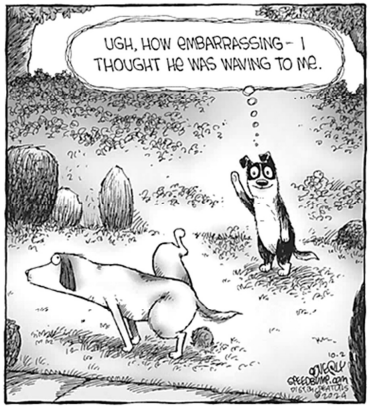
Dave Coverly. Speed Bump. 2/10/2024.
The humorous aspect of the cartoon above is due to the fact that
Questão 60 16025803
CEFSA Conhecimentos Gerais 2025/2Read the poster from the National Health Service (NHS) in the United Kingdom to answer the question.
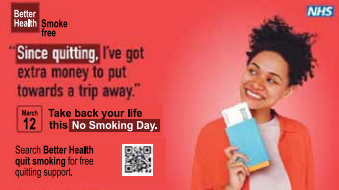
(https://campaignresources.dhsc.gov.uk. Adaptado.)
No trecho “‘Since quitting, I’ve got extra money’”, a expressão sublinhada equivale, em português, a:
Questão 56 16025781
CEFSA Conhecimentos Gerais 2025/2Leia o texto para responder à questão.
You probably know what an “influencer” is — people with large, highly engaged social media followings who have the power to sway beliefs and purchasing decisions. But you might not have yet heard of virtual influencers.
They’re like human influencers … but they’re not human. They’re characters brought to life by computer-generated imagery (CGI) and artificial intelligence (AI), designed to target demographic groups from a first-person perspective.
Virtual influencers are becoming more popular and prevalent every day. A full-blown industry has sprung up around them — an industry with agencies and companies dedicated to creating and managing them, with some of the top personas earning millions annually.
As we enter the era of AI proliferation, it seems virtual influencers are here to stay. There are at least 200 digital personalities out there today, and platforms like Facebook, Instagram and TikTok are rolling out new tools that will enable everyday users to craft their own virtual personas.
Given the absence of laws for non-humans, the rise of virtual influencers on social media raises a whole host of urgent ethical questions about authenticity online.
(Ateqah Khaki et al. www.theconversation.com, 20.02.2025. Adaptado.)
De acordo com o primeiro parágrafo, influenciadores podem ser definidos como pessoas que
Questão 59 16024577
CEFSA Conhecimentos Gerais 2025/1Read the comic strip by Charles M. Schultz to answer the question
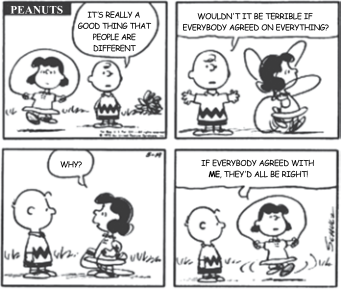
(https://peanuts.fandom.com)
A menina, Lucy,
06