


![[Marketing] Questao Topo - deslogado](https://storage.estuda.com.br/banners/0_6b7ebee90b03af1c560c73bb8bcce34a_banner_deslogado_70_dias.png)
Questões de Inglês
19.971 Questões
Questão 35 215668
FACISA 2016/2TEXT B
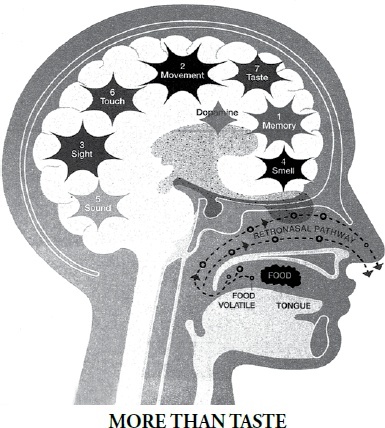
How the brain constructs flavor
The tongue detects basic tastes, but the nose – with hundreds of receptors for chemicals that waft off food – contributes more to flavor. According to neurobiologist Gordon Shepherd, the brain draws on all the senses to assemble a complex “flavor image” that lingers in our memory.
ANTICIPATION
A flavor experience may begin with a past meal: The memory activates dopamine reward centers, leading us to crave the flavors to come. We salivate.
SENSORY OVERTURE
A brain primed for pleasure begins to receive sensory impulses from the food as we move it to our mouth, see its colors and shapes, and inhale its aromas.
SOUNDS DELICIOUS
We chew. Sound and mouthfeel add key information: Is the food gooey, crunchy, or crispy? Receptors in our taste buds register sweet, salty, sour [and] bitter[…].
SENSATIONS MERGE TO CREATE FLAVOR
Volatile chemicals waft off food as we chew and swallow it, and as we exhale, they’re carried into the nasal cavity from behind. The brain combines information from all the senses to produce the experience of flavor. And though we think it originates in the mouth, most of it actually comes from these “retronasal” smells detected by receptors in the nose. They build the memory that prepares us for the next experience.
National Geographic, December 2015
Which sense organ is most important in the detection of flavor, according to TEXT B?
Questão 34 215665
FACISA 2016/2TEXT A
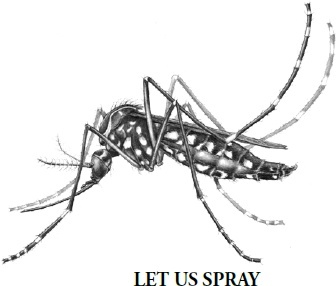
Don’t panic. Kill mosquitoes
Pandemics make for good horror films. Few things are scarier than a dangerous, incurable new disease that spreads quickly. And globalisation means that plagues can travel far, wide and terrifyingly fast. […] The newest horror is Zika. This mosquito borne virus, which originated in Africa, was spotted in Brazil last year. It is now moving across Latin America and the Caribbean, with cases in more than 20 countries. Originally, it was thought to cause little worse than a rash and fever. Now, propelling the disease into the realm of nightmares, doctors suspect that when pregnant women catch it, their babies may be permanently damaged. Zika is the prime suspect for a sharp increase in the number of babies with microcephaly in Brazil. Children are born with abnormally small heads and are likely to be brain-damaged. They may suffer severe learning difficulties, seizures and other problems. Many will die young.
Scientists are trying to confirm the link between Zika and microcephaly. Some suspect that the virus may also occasionally cause serious damage to nerves and the immune system in infected adults. Though a mosquito bite is the main way to catch it, there are fears that it can also be transmitted sexually. [...]
Zika has no cure and a vaccine will not be available for at least a decade. But that is no cause for despair. […] Two things are known for certain. The first is that the main, possibly only, transmission route is via mosquitoes, which pick up the virus from infected people and pass it on when the pests next take a meal. The second is how to cut the number of mosquitoes – and preferably eradicate them. […]
Research into novel ways to kill mosquitoes […] deserves more funding. Genetic modification, which produces mosquitoes that are sterile but still attractive to other mosquitoes, shows promise. A trial in Brazil suggests that releasing swarms of modified insects can reduce the unmodified population in months.
All this will be pricey. But it would bring not one, but several, dread diseases under control. Aedes aegypti does not carry malaria, but the methods used to kill it will also kill Anopheles, which does. The moment has come again to take the fight to the mosquitoes – and this time to finish the job.
The expressions which are underlined in bold in TEXT A indicate
Questão 32 215661
FACISA 2016/2TEXT A

Don’t panic. Kill mosquitoes
Pandemics make for good horror films. Few things are scarier than a dangerous, incurable new disease that spreads quickly. And globalisation means that plagues can travel far, wide and terrifyingly fast. […] The newest horror is Zika. This mosquito borne virus, which originated in Africa, was spotted in Brazil last year. It is now moving across Latin America and the Caribbean, with cases in more than 20 countries. Originally, it was thought to cause little worse than a rash and fever. Now, propelling the disease into the realm of nightmares, doctors suspect that when pregnant women catch it, their babies may be permanently damaged. Zika is the prime suspect for a sharp increase in the number of babies with microcephaly in Brazil. Children are born with abnormally small heads and are likely to be brain-damaged. They may suffer severe learning difficulties, seizures and other problems. Many will die young.
Scientists are trying to confirm the link between Zika and microcephaly. Some suspect that the virus may also occasionally cause serious damage to nerves and the immune system in infected adults. Though a mosquito bite is the main way to catch it, there are fears that it can also be transmitted sexually. [...]
Zika has no cure and a vaccine will not be available for at least a decade. But that is no cause for despair. […] Two things are known for certain. The first is that the main, possibly only, transmission route is via mosquitoes, which pick up the virus from infected people and pass it on when the pests next take a meal. The second is how to cut the number of mosquitoes – and preferably eradicate them. […]
Research into novel ways to kill mosquitoes […] deserves more funding. Genetic modification, which produces mosquitoes that are sterile but still attractive to other mosquitoes, shows promise. A trial in Brazil suggests that releasing swarms of modified insects can reduce the unmodified population in months.
All this will be pricey. But it would bring not one, but several, dread diseases under control. Aedes aegypti does not carry malaria, but the methods used to kill it will also kill Anopheles, which does. The moment has come again to take the fight to the mosquitoes – and this time to finish the job.
TEXT A recommends that the quickest way to conquer Zika is
Questão 60 212062
UNIVAG 2016/2Out of Shape at 18, at Risk for Future Diabetes
Nicholas Bakalar
March 9, 2016
Being out of shape at age 18 may increase your risk for eventually developing Type 2 diabetes, regardless of your weight and family history, a new study says. The study looked at data from more than 1.5 million Swedish men, using tests of muscle strength and aerobic capacity when they were conscripted for military service at age 18, between 1969 and 1997. Their muscle strength had been measured with handgrip and other tests, and their aerobic capacity calculated as they exercised on a stationary bicycle.
With this data in hand, researchers checked the men’s medical records from 1987 to 2012. They found 34,008 cases of Type 2 diabetes over an average 26 years of follow-up. The study is in the Annals of Internal Medicine. Both low aerobic capacity and low muscle strength at 18 were associated with a higher risk for Type 2 diabetes; poor aerobic capacity was a slightly stronger risk factor. Having both weak muscles and low aerobic capacity more than tripled the risk for future diabetes. The effect was independent of other risk factors — body mass index, family history of diabetes, education and socioeconomic status.
“Early life interventions are really important,” said the lead author, Dr. Casey Crump, a professor of family medicine at the Icahn School of Medicine at Mount Sinai in New York. “Prevention of Type 2 diabetes should begin early in life, and should include both aerobic fitness and muscular strength. This is important regardless of people’s weight.”
(http://well.blogs.nytimes.com)
No trecho do último parágrafo “Prevention of Type 2 diabetes should begin early in life, and should include both aerobic fitness and muscular strength”, os termos em destaque indicam
Questão 58 212052
UNIVAG 2016/2Out of Shape at 18, at Risk for Future Diabetes
Nicholas Bakalar
March 9, 2016
Being out of shape at age 18 may increase your risk for eventually developing Type 2 diabetes, regardless of your weight and family history, a new study says. The study looked at data from more than 1.5 million Swedish men, using tests of muscle strength and aerobic capacity when they were conscripted for military service at age 18, between 1969 and 1997. Their muscle strength had been measured with handgrip and other tests, and their aerobic capacity calculated as they exercised on a stationary bicycle.
With this data in hand, researchers checked the men’s medical records from 1987 to 2012. They found 34,008 cases of Type 2 diabetes over an average 26 years of follow-up. The study is in the Annals of Internal Medicine. Both low aerobic capacity and low muscle strength at 18 were associated with a higher risk for Type 2 diabetes; poor aerobic capacity was a slightly stronger risk factor. Having both weak muscles and low aerobic capacity more than tripled the risk for future diabetes. The effect was independent of other risk factors — body mass index, family history of diabetes, education and socioeconomic status.
“Early life interventions are really important,” said the lead author, Dr. Casey Crump, a professor of family medicine at the Icahn School of Medicine at Mount Sinai in New York. “Prevention of Type 2 diabetes should begin early in life, and should include both aerobic fitness and muscular strength. This is important regardless of people’s weight.”
(http://well.blogs.nytimes.com)
No trecho do primeiro parágrafo “and their aerobic capacity calculated as they exercised on a stationary bicycle”, o termo em destaque pode ser substituído, sem alteração de sentido, por
Questão 57 212049
UNIVAG 2016/2Out of Shape at 18, at Risk for Future Diabetes
Nicholas Bakalar
March 9, 2016
Being out of shape at age 18 may increase your risk for eventually developing Type 2 diabetes, regardless of your weight and family history, a new study says. The study looked at data from more than 1.5 million Swedish men, using tests of muscle strength and aerobic capacity when they were conscripted for military service at age 18, between 1969 and 1997. Their muscle strength had been measured with handgrip and other tests, and their aerobic capacity calculated as they exercised on a stationary bicycle.
With this data in hand, researchers checked the men’s medical records from 1987 to 2012. They found 34,008 cases of Type 2 diabetes over an average 26 years of follow-up. The study is in the Annals of Internal Medicine. Both low aerobic capacity and low muscle strength at 18 were associated with a higher risk for Type 2 diabetes; poor aerobic capacity was a slightly stronger risk factor. Having both weak muscles and low aerobic capacity more than tripled the risk for future diabetes. The effect was independent of other risk factors — body mass index, family history of diabetes, education and socioeconomic status.
“Early life interventions are really important,” said the lead author, Dr. Casey Crump, a professor of family medicine at the Icahn School of Medicine at Mount Sinai in New York. “Prevention of Type 2 diabetes should begin early in life, and should include both aerobic fitness and muscular strength. This is important regardless of people’s weight.”
(http://well.blogs.nytimes.com)
Segundo o texto, o risco de desenvolver diabetes tipo 2 foi três vezes maior para
06