


![[Marketing] Questao Topo - deslogado](https://storage.estuda.com.br/banners/0_6b7ebee90b03af1c560c73bb8bcce34a_banner_deslogado_70_dias.png)
Questões de Inglês
19.971 Questões
Questão 45 278055
UniCesumar Medicina 2016Obesity: in statistics
People are getting fatter almost everywhere in the world. Obesity is a modern problem - statistics for it did not even exist 50 years ago. The increase of convenience foods, labour-saving devices, motorised transport and more sedentary jobs means people are getting fatter. Figures for 2005 showed 1.6 billion adults were overweight and 400 million were obese. The World Health Organization predicted there would be 2.3 billion overweight adults in the world by 2015 and more than 700 million ofthem would be obese.
http://news.bbc.co.uk/2/hi/health/7151813.stm Acessado em 25/09/2015. Adaptado para fins educacionais.
De acordo com o texto,
Questão 44 278054
UniCesumar Medicina 2016A Dartmouth photos shows mosquitoes in this image released on September 15, 2015.
REUTERS/Lauren CuIIer/Dartmouth College/Handout via Reuters
WASHINGTON BY WiII Dunham
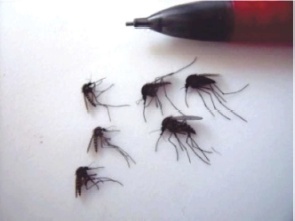
Rising temperatures at the top of the world may be bad news for Arctic denizens like polar bears, but good news for the local mosquitoes, pesky bloodsuckers that prosper with warmer weather.
Researchers said on Tuesday that increasing temperatures were enabling Arctic mosquitoes to grow more quickly and emerge sooner from their pupal stage, greatly expanding their numbers and menacing the caribou whose blood they eat. The findings illustrate the complex and sometimes unpredictable consequences of climate change, particularly in sensitive regions like the Arctic, the researchers said.
The researchers said mosquitoes were already emerging two weeks sooner than in the past and experiencing accelerated growth that lets them reduce their time in the ponds when they could be eaten by their main predators, diving beetles.
http://www. reuters.com/articIe/201 5/09/1 6/us-science-mosquitoes-idUSKCNORGO1 Q201 5091 6 Acessado em 16/09/2015. Adaptado para fins educacionais.
Assinale a alternativa que NÃO é verdadeira.
Questão 43 278052
UniCesumar Medicina 2016A Dartmouth photos shows mosquitoes in this image released on September 15, 2015.
REUTERS/Lauren CuIIer/Dartmouth College/Handout via Reuters
WASHINGTON BY WiII Dunham
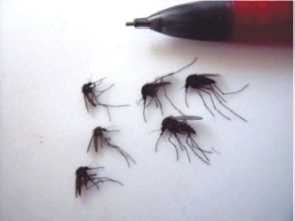
Rising temperatures at the top of the world may be bad news for Arctic denizens like polar bears, but good news for the local mosquitoes, pesky bloodsuckers that prosper with warmer weather.
Researchers said on Tuesday that increasing temperatures were enabling Arctic mosquitoes to grow more quickly and emerge sooner from their pupal stage, greatly expanding their numbers and menacing the caribou whose blood they eat. The findings illustrate the complex and sometimes unpredictable consequences of climate change, particularly in sensitive regions like the Arctic, the researchers said.
The researchers said mosquitoes were already emerging two weeks sooner than in the past and experiencing accelerated growth that lets them reduce their time in the ponds when they could be eaten by their main predators, diving beetles.
http://www. reuters.com/articIe/201 5/09/1 6/us-science-mosquitoes-idUSKCNORGO1 Q201 5091 6 Acessado em 16/09/2015. Adaptado para fins educacionais.
Escolha o título mais adequado ao artigo dentre as alternativas a seguir.
Questão 41 278048
UniCesumar Medicina 2016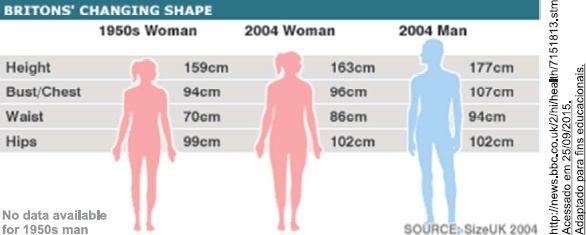
De acordo com o gráfico,
Questão 60 262182
CESUPA 2016Read the text below, then answer the following question.
Heavier the Internet use, higher the blood pressure risk in teens

Researchers at Henry Ford Hospital in Detroit found that teens who spent at least 14 hours a week on the Internet had elevated blood pressure. Of 134 teens described by researchers as heavy Internet users (the ones who spent an average of 25 hours a week), 26 had elevated blood pressure. The findings add to growing research that has shown an association between heavy Internet use and other health risks like addiction, anxiety, depression, obesity and social isolation.
Lead author Andrea Cassidy-Bushrow says the takehome message for teens and parents is moderation. “Using the Internet is part of our daily life but it shouldn’t consume us,” she says. She added that it’s important that young people take regular breaks from their computer or smartphone and engage in some form of physical activity, recommending parents to limit their children’s’ time at home on the Internet. “Two hours a day, five days a week is good rule of thumb.” Cassidy-Bushrow says the findings provide valuable information for school nurses for monitoring the health of students. School nurses could conduct annual health screenings where blood pressure and Internet use behaviors could be assessed. Students with an elevated blood pressure would then have a follow-up visit to determine next steps.
(Source: https://www.yahoo.com/tech/heavier-internet-higher-bp-risk-teens-024855511.html)
Glossary
average: média.
breaks: intervalos.
good rule of thumb: um bom parâmetro.
follow-up: subsequente.
screenings: controles.
The research findings mentioned in the text may serve as
Questão 59 262172
CESUPA 2016Read the text below, then answer the following question.
Heavier the Internet use, higher the blood pressure risk in teens

Researchers at Henry Ford Hospital in Detroit found that teens who spent at least 14 hours a week on the Internet had elevated blood pressure. Of 134 teens described by researchers as heavy Internet users (the ones who spent an average of 25 hours a week), 26 had elevated blood pressure. The findings add to growing research that has shown an association between heavy Internet use and other health risks like addiction, anxiety, depression, obesity and social isolation.
Lead author Andrea Cassidy-Bushrow says the takehome message for teens and parents is moderation. “Using the Internet is part of our daily life but it shouldn’t consume us,” she says. She added that it’s important that young people take regular breaks from their computer or smartphone and engage in some form of physical activity, recommending parents to limit their children’s’ time at home on the Internet. “Two hours a day, five days a week is good rule of thumb.” Cassidy-Bushrow says the findings provide valuable information for school nurses for monitoring the health of students. School nurses could conduct annual health screenings where blood pressure and Internet use behaviors could be assessed. Students with an elevated blood pressure would then have a follow-up visit to determine next steps.
(Source: https://www.yahoo.com/tech/heavier-internet-higher-bp-risk-teens-024855511.html)
Glossary
average: média.
breaks: intervalos.
good rule of thumb: um bom parâmetro.
follow-up: subsequente.
screenings: controles.
According to lead author Andrea Cassidy-Bushrow, teenagers
06