


![[Marketing] Questao Topo - deslogado](https://storage.estuda.com.br/banners/0_6b7ebee90b03af1c560c73bb8bcce34a_banner_deslogado_70_dias.png)
Questões de Inglês
19.971 Questões
Questão 15 388696
IFSulDeMinas 2016/2O texto indica a melhor localização para cada um dos equipamentos descritos. Assinale único caso em que a localização indicada NÃO se relaciona com o correto funcionamento do equipamento.
Questão 14 388690
IFSulDeMinas 2016/2Texto
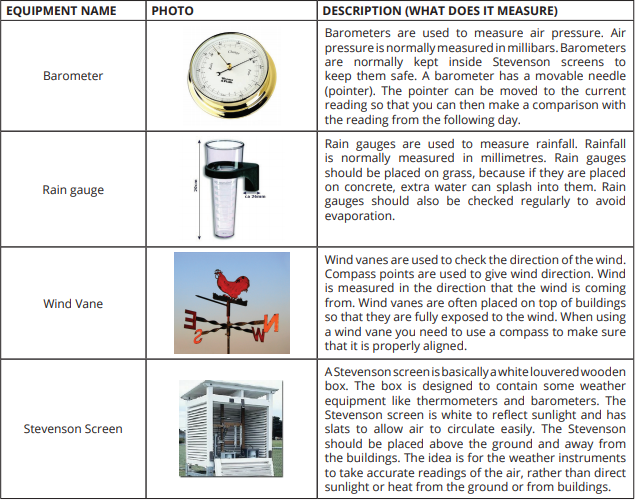
The equipments above are used for:
Questão 12 388685
IFSulDeMinas 2016/2Texto
Zika Is Coming
by Peter J. Hotez - April 8, 2016
Houston — IF I were a pregnant woman living on the Gulf Coast or in Florida, in an impoverished neighborhood in a city like Houston, New Orleans, Miami, Biloxi, Miss., or Mobile, Ala., I would be nervous right now. If mosquitoes carrying the Zika virus reach the United States later this spring or summer, these are the major urban areas where the sickness will spread. If we don’t intervene now, we could begin seeing newborns with microcephaly and stunted brain development on the obstetrics wards in one or more of these places.
There are many theories for Zika’s rapid rise, but the most plausible is that the virus mutated from an African to a pandemic strain a decade or more ago and then spread east across the Pacific from Micronesia and French Polynesia, until it struck Brazil. There, it infected more than a million people over the last one to two years. Today, the extremely poor cities of Brazil’s northeastern states make up the epicenter of the epidemic.
There are three reasons that Zika has slammed this particular part of Brazil: the presence of the main mosquito species that carries the virus and transmits it to humans, Aedes aegypti; overcrowding; and extreme poverty
The same factors are present in the poorest urban areas of coastal Texas, Louisiana, Mississippi and Alabama, in addition to South Florida, and an area around Tucson.
It’s only April, but temperatures are hitting the 80s in the afternoons, and Aedes mosquitoes are already here. By May or June we will start seeing those mosquitoes in much larger numbers.
Several Zika vaccines are being created, but none will be ready in time for this year’s epidemic. In place of a vaccine we need a robust program of mosquito control and environmental cleanup in the poorest neighborhoods of our Gulf Coast cities and in Florida. This should include removing garbage and debris, and installing gutters to replace drainage ditches. We need to improve access to contraception, and provide pregnant women with proper window screens for their homes and information about the risk of Zika. Finally, we will need to train teams to visit homes in poor neighborhoods and instruct occupants on how to empty water containers and spray for mosquitoes, just as we are doing now in Puerto Rico.
This coordination is labor intensive and will not be easy, but if we don’t start working now, by the end of the year, I am afraid we will see microcephaly cases in Houston and elsewhere on the Gulf Coast. This could be a catastrophe to rival Hurricane Katrina or other recent miseries that disproportionately affect the poor.
Peter J. Hotez, a pediatrician and microbiologist at Texas Children’s Hospital, is dean of the National School of Tropical Medicine at Baylor College of Medicine.
Disponível em http://www.nytimes.com/2016/04/09/opinion/zika-is-coming.html acesso em 09/04/2016 (texto reduzido)
Are actions of mosquito control and environmental cleanup, EXCEPT:
Questão 18 375929
UFAM PSC 2016/3Some Silent Signs You Might Have Diabetes
New studies show a shocking 25 percent of people with type 2 diabetes don't even know it. You're taking more bathroom breaks; You've lost a little weight; You feel shaky and hungry; You're tired all the time; You're moody and grumpy, Your vision seems blurry; Your cuts and scrapes heal more slowly; Your feet tingle; You're more prone to urinary tract and yeast infections. If you experience some of these subtle signs and symptoms, talk to your doctor about getting tested. Diabetes has plenty of early signs, but they're subtle enough that you might not notice."It's not like you wake up one day and all of a sudden you're thirsty, hungry, and going to the bathroom all the time," says Melissa Joy Dobbins, RD, a certified diabetes educator in Illinois and a spokesperson for the American Association of Diabetes Educators. "It picks up gradually." Indeed, "most people are unaware that they have diabetes in its early or even middle phases," says Aaron Cypess, MD, assistant professor of medicine at Harvard Medical School and staff physician at Joslin Diabetes Center. Just because you're not keyed in, it doesn't mean you're immune from problems associated with diabetes. The longer you go without controlling diabetes, the greater your risk for heart disease, kidney disease, amputation, blindness, and other serious complications. "We recommend that people with risk factors for diabetes, such as a family history or being overweight, get evaluated on a regular basis," Dr. Cypess says. If you've been feeling off, talk to your doctor about getting a simple blood test that can diagnose the disease. And pay attention to these subtle diabetes signs and symptoms. When you have diabetes, your body becomes less efficient at breaking food down into sugar, so you have more sugar sitting in your bloodstream, says Dobbins. "Your body gets rid of it by flushing it out in the urine. That's why you're going to the bathroom a lot." Most patients aren't necessarily aware of how often they use the bathroom, says Dr. Cypess. "When we ask about it, we often hear, 'Oh yeah, I guess I’m going more often than I used to,'" he says. But one red flag is whether the need to urinate keeps you up at night. Once or twice might be normal, but if it's affecting your ability to sleep, that could be a symptom to pay attention to. It's not uncommon for patients to suddenly feel unsteady and immediately need to reach for carbs, says Marjorie Cypress, a nurse practitioner at an endocrinology clinic in Albuquerque, New Mexico, and 2014 president of health care and education for the American Diabetes Association. "When you have high blood sugar, your body has a problem regulating its glucose," she explains. "If you've eaten something high in carbohydrates, your body shoots out a little too much insulin, and your glucose drops quickly. This makes you feel shaky, and you tend to crave carbs or sugar. This can lead to a vicious cycle."Of course you're exhausted every now and then. But ongoing fatigue is an important symptom to pay attention to; it might mean the food you're eating for energy isn't being broken down and used by cells as it's supposed to. "You're not getting the fuel your body needs," says Dobbins. "You're going to be tired and feel sluggish." But in many cases of type 2 diabetes, your sugar levels can be elevated for a while, so these symptoms could come on slowly.
By Lauren Gelman
http://www.rd.com/health/conditions/signs-diabetes/ acesso no dia 17 de dezembro de 2015 e editado.
A palavra “shaky” destacada em negrito no texto significa:
Questão 17 375928
UFAM PSC 2016/3Some Silent Signs You Might Have Diabetes
New studies show a shocking 25 percent of people with type 2 diabetes don't even know it. You're taking more bathroom breaks; You've lost a little weight; You feel shaky and hungry; You're tired all the time; You're moody and grumpy, Your vision seems blurry; Your cuts and scrapes heal more slowly; Your feet tingle; You're more prone to urinary tract and yeast infections. If you experience some of these subtle signs and symptoms, talk to your doctor about getting tested. Diabetes has plenty of early signs, but they're subtle enough that you might not notice."It's not like you wake up one day and all of a sudden you're thirsty, hungry, and going to the bathroom all the time," says Melissa Joy Dobbins, RD, a certified diabetes educator in Illinois and a spokesperson for the American Association of Diabetes Educators. "It picks up gradually." Indeed, "most people are unaware that they have diabetes in its early or even middle phases," says Aaron Cypess, MD, assistant professor of medicine at Harvard Medical School and staff physician at Joslin Diabetes Center. Just because you're not keyed in, it doesn't mean you're immune from problems associated with diabetes. The longer you go without controlling diabetes, the greater your risk for heart disease, kidney disease, amputation, blindness, and other serious complications. "We recommend that people with risk factors for diabetes, such as a family history or being overweight, get evaluated on a regular basis," Dr. Cypess says. If you've been feeling off, talk to your doctor about getting a simple blood test that can diagnose the disease. And pay attention to these subtle diabetes signs and symptoms. When you have diabetes, your body becomes less efficient at breaking food down into sugar, so you have more sugar sitting in your bloodstream, says Dobbins. "Your body gets rid of it by flushing it out in the urine. That's why you're going to the bathroom a lot." Most patients aren't necessarily aware of how often they use the bathroom, says Dr. Cypess. "When we ask about it, we often hear, 'Oh yeah, I guess I’m going more often than I used to,'" he says. But one red flag is whether the need to urinate keeps you up at night. Once or twice might be normal, but if it's affecting your ability to sleep, that could be a symptom to pay attention to. It's not uncommon for patients to suddenly feel unsteady and immediately need to reach for carbs, says Marjorie Cypress, a nurse practitioner at an endocrinology clinic in Albuquerque, New Mexico, and 2014 president of health care and education for the American Diabetes Association. "When you have high blood sugar, your body has a problem regulating its glucose," she explains. "If you've eaten something high in carbohydrates, your body shoots out a little too much insulin, and your glucose drops quickly. This makes you feel shaky, and you tend to crave carbs or sugar. This can lead to a vicious cycle."Of course you're exhausted every now and then. But ongoing fatigue is an important symptom to pay attention to; it might mean the food you're eating for energy isn't being broken down and used by cells as it's supposed to. "You're not getting the fuel your body needs," says Dobbins. "You're going to be tired and feel sluggish." But in many cases of type 2 diabetes, your sugar levels can be elevated for a while, so these symptoms could come on slowly.
By Lauren Gelman
http://www.rd.com/health/conditions/signs-diabetes/ acesso no dia 17 de dezembro de 2015 e editado.
As expressões “moody e grumpy” destacadas em negrito no texto significam, respectivamente:
Questão 17 366453
UNIMONTES 2° Etapa 2016Our weird lack of hair may be the key to our success
[1] Look closely at your friends, family and even strangers. Spot anything strange?
Ignore any large noses or unusually-shaped brows. Instead, look at their hair – or rather, the lack of it.
It might not seem strange, because we are used to having relatively little hair covering our bodies. But
when we compare ourselves to the rest of the mammals, and our closest living ape cousins, it is downright
[5] bizarre that we are the only large-bodied mammal with so little of it.
Unlike hairy chimpanzees and bonobos – and all other primates – most of our skin is on display. We
have evolved this way, even though fur is beneficial: it insulates and protects the skin, and in some cases
acts as a useful camouflage. So if it is so advantageous, why did we lose so much of it?
It was Charles Darwin who first taught the public that humans are descended from an ape-like
[10] ancestor. He also wondered why we had so little hair.
“No one supposes that the nakedness of the skin is any direct advantage to man; his body, therefore,
cannot have been divested of hair through natural selection,” Darwin wrote in The Descent of Man.
He proposed that we lost much of our fur due to sexual selection: we preferred hairless mates, and that
is why hairlessness became common.
[15] But that cannot be the whole picture. Before a preference
for hairlessness began, we first had to start losing hair.
Our earliest human-like ancestors, known as hominins, were
ape-like. For them, fur would have been useful, keeping them
warm on cold nights.
[20] Something must have created an evolutionary pressure for
these hominins to lose their fur.
A few million years ago, there were several hominin species
roaming the Earth. These included the famous fossil known as “Lucy”, an Australopithecus afarensis from
3.2 million years ago.
[25] These hominins were ape-like. Lucy was a lot like a chimpanzee, except that she could walk upright
and had a slightly bigger brain. Her skin was not preserved, but she was probably covered with fur.
However, between two and three millions years ago our ancestors began to inhabit more open
savannahs. This meant they were out in the Sun’s glaring heat for many more hours each day.
Around the same time, they also started to hunt and eat more meat – and game animals were more
[30] abundant in the open. This move into open spaces offered an explanation for our lack of hair.
In the 1990s, Peter Wheeler of Liverpool John Moores University in the UK came up with a
mathematical model showing how much excess heat hominins would need to lose in open habitats in order
to function. If their brains got too hot, their thought processes would be impaired.
If the hominins were covered in hair, they could not have lost heat fast enough. Wheeler reasoned that
[35] two related changes happened that allowed our ancestors to keep cool.
One was an upright gait. Walking on two legs meant that only the tops of their bodies were under
direct sunlight.
But the hominins also started running long distances. This meant they could bring down large game
animals by running them to exhaustion, but it also put them at risk of over-heating. To cope with that, they
[40] needed to lose their fur – in order to help them sweat. [...]

Fonte: HOGENBOOM, Melissa. Our weird lack of hair may be the key to our sucess. 2 ago. 2016. Disponível em: http://www.bbc.com/earth/story/20160801-our-weird-lack-of-hair-may-be-the-key-to-our-sucess. Acesso em: 15 set. 2016. Adaptado.
No trecho “It might not seem strange, because we are used to having relatively little hair covering our bodies.” (linha 3), a melhor tradução para o trecho em negrito é:
06