


![[Marketing] Questao Topo - deslogado](https://storage.estuda.com.br/banners/0_6b7ebee90b03af1c560c73bb8bcce34a_banner_deslogado_70_dias.png)
Questões de Inglês
19.971 Questões
Questão 30 468309
UNIPE 2016/2TEXTO:
Most of us think of germs as ‘dirty’ — and
dangerous. But as you’ve probably heard, you’re crawling
with bugs, and these microbes are crucial for digestion,
skin health, and immunity. People now know to take it
[5] easy on antibiotics and eat lots of fermented foods, but
our squeaky-clean lifestyle is still a big problem, says
Robynne Chutkan, M.D., the founder of the Digestive
Center for Women in Chevy Chase, Maryland. Regular
contact with dirt and grime teaches your microbiome how
[10] to recognize friendly germs versus foes, Dr. Chutkan
explains. She gave us some tips for swapping out our
super clean lifestyle for one that’s filled with more bugs.
• First things first, what’s wrong with soap?
There’s a role for the occasional bar of soap when
[15] we’re particularly grubby, but a mild soap made from
organic ingredients, rather than anti-bacterial soaps that
are often full of harsh chemicals, is definitely the way to
go. By scouring ourselves in the shower every day, we
are actually stripping our skin of bacteria that keep us
[20] acne — and eczema — free. Unless you’ve just finished
a Mud Run, the only places that need daily soaping are
your armpits and groin. The rest of your body does fine
with a rinse — even after a sweaty workout. Dirt doesn’t
cause disease — but repeatedly killing off the good
[25] bacteria on our skin may actually harm our immunity.
• What is one thing that most people do in
terms of cleanliness that is unnecessary?
Harsh hand sanitizers! Unless you’ve been hanging
out on an Ebola ward, the vast majority of microbes on
[30] your skin and hands are not virulent germs that cause
serious infection; they’re harmless bacteria that won’t
hurt you.
• Even during cold and flu season?
Yes, you should take a bit more precaution when
[35] your co-workers are coughing and sneezing non-stop.
But you still don’t need anti-bacterial soaps and
cleansers; those work against bacteria, and the common
cold and flu is caused by a virus. All that’s necessary
during cold and flu season is regularly washing hands
[40] with all-natural soap and warm water for at least 20
seconds. This dislodges viruses and bacteria, so they
wash down the drain, whereas antibacterial soaps expose
you to antibiotics you don’t need in your life.
MOST of us...Disponível em: <news.health.com/2015/10/06/heres-whyyou-don’t-need-to-shower-with-soap/>. Acesso em: 13 maio 2016.
The only alternative in which the phrase from the text has not been correctly defined is
Questão 27 468147
UNIPE 2016/2TEXTO:
Most of us think of germs as ‘dirty’ — and
dangerous. But as you’ve probably heard, you’re crawling
with bugs, and these microbes are crucial for digestion,
skin health, and immunity. People now know to take it
[5] easy on antibiotics and eat lots of fermented foods, but
our squeaky-clean lifestyle is still a big problem, says
Robynne Chutkan, M.D., the founder of the Digestive
Center for Women in Chevy Chase, Maryland. Regular
contact with dirt and grime teaches your microbiome how
[10] to recognize friendly germs versus foes, Dr. Chutkan
explains. She gave us some tips for swapping out our
super clean lifestyle for one that’s filled with more bugs.
• First things first, what’s wrong with soap?
There’s a role for the occasional bar of soap when
[15] we’re particularly grubby, but a mild soap made from
organic ingredients, rather than anti-bacterial soaps that
are often full of harsh chemicals, is definitely the way to
go. By scouring ourselves in the shower every day, we
are actually stripping our skin of bacteria that keep us
[20] acne — and eczema — free. Unless you’ve just finished
a Mud Run, the only places that need daily soaping are
your armpits and groin. The rest of your body does fine
with a rinse — even after a sweaty workout. Dirt doesn’t
cause disease — but repeatedly killing off the good
[25] bacteria on our skin may actually harm our immunity.
• What is one thing that most people do in
terms of cleanliness that is unnecessary?
Harsh hand sanitizers! Unless you’ve been hanging
out on an Ebola ward, the vast majority of microbes on
[30] your skin and hands are not virulent germs that cause
serious infection; they’re harmless bacteria that won’t
hurt you.
• Even during cold and flu season?
Yes, you should take a bit more precaution when
[35] your co-workers are coughing and sneezing non-stop.
But you still don’t need anti-bacterial soaps and
cleansers; those work against bacteria, and the common
cold and flu is caused by a virus. All that’s necessary
during cold and flu season is regularly washing hands
[40] with all-natural soap and warm water for at least 20
seconds. This dislodges viruses and bacteria, so they
wash down the drain, whereas antibacterial soaps expose
you to antibiotics you don’t need in your life.
MOST of us...Disponível em: <news.health.com/2015/10/06/heres-whyyou-don’t-need-to-shower-with-soap/>. Acesso em: 13 maio 2016.
Fill in the parentheses with T (True) or F (False).
As far as soap is considered, Dr. Chutkan
( ) is definitely against its use.
( ) says it should be daily used only in a few parts of the body.
( ) affirms that frequent use of soap can kill beneficial microbes.
( ) recommends its use especially when our bodies are wet with sweat.
The correct sequence, from top to bottom, is
Questão 26 468141
UNIPE 2016/2TEXTO:
Dogs and humans
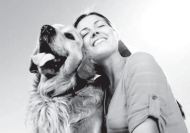
Dogs are called “man’s best friend” — women’s,
too — and scientists say the bond between people and
their pooches may be deeper than you might think.
Researchers in Japan said that oxytocin, a hormone that
[5] among other things helps reinforce bonds between parents
and their babies, increases in humans and their dogs
when they interact, particularly when gazing into one
another’s eyes. They described a series of experiments
that suggest that people and their canine companions
[10] have mutually developed this instinctual bonding
mechanism in the thousands of years since dogs were
first domesticated.
Sometimes called the “love hormone,” oxytocin is
made in a brain structure called the hypothalamus
[15] and secreted from the pituitary gland. It is involved
in emotional bonding, maternal behavior, child birth,
breast-feeding, sexual arousal and other functions.
“Oxytocin has many positive impacts on human
physiology and psychology,” said Takefumi Kikusui, a
[20] veterinary medicine professor at Japan’s Azabu University,
whose research was published in the journal Science.
In one experiment, dogs were put in a room with
their owners. The researchers tracked their interaction
and measured oxytocin levels through urine samples.
[25] People whose dogs had the most eye contact with
them — a mutual gaze — registered the largest increases
in oxytocin levels. The dogs also had an oxytocin spike
correlating with that of their owner. The researchers
conducted a similar experiment with wolves, close
[30] relatives of dogs, and found that no such thing happened
despite the fact that the wolves had been raised by the
people.
In another experiment, the researchers sprayed
oxytocin into dogs’ noses and put them in a room with
[35] their owners as well as people the dogs did not know.
With the female dogs, and not the males, this increased
the mutual gazing between dogs and their owners and
also led to an oxytocin increase in the owners. “I
personally believe that there is a tight bond between the
[40] owner and dogs,” Kikusui said. “I have three standard
poodles. I strongly feel the tight bonding with these dogs.
Actually, I participated in the experiment, and my oxytocin
boosted up after the eye gaze, like 300 percent,” Kikusui
added.
DOGS are... Disponível em: <www.reuters.com.br/article/us-sciencedogs-idUSKBNON728220150416>. Acesso em: 13 maio 2016.
“I participated in the experiment, and my oxytocin boosted up after the eye gaze” (l. 42-43)
The suitable rephrasing of this sentence in Reported Speech is
Kikusui said that she _____ in the experiment, and her oxytocin ___________ after the eye gaze.
The alternative that completes these two blanks correctly is
Questão 25 468136
UNIPE 2016/2TEXTO:
Dogs and humans
Dogs are called “man’s best friend” — women’s,
too — and scientists say the bond between people and
their pooches may be deeper than you might think.
Researchers in Japan said that oxytocin, a hormone that
[5] among other things helps reinforce bonds between parents
and their babies, increases in humans and their dogs
when they interact, particularly when gazing into one
another’s eyes. They described a series of experiments
that suggest that people and their canine companions
[10] have mutually developed this instinctual bonding
mechanism in the thousands of years since dogs were
first domesticated.
Sometimes called the “love hormone,” oxytocin is
made in a brain structure called the hypothalamus
[15] and secreted from the pituitary gland. It is involved
in emotional bonding, maternal behavior, child birth,
breast-feeding, sexual arousal and other functions.
“Oxytocin has many positive impacts on human
physiology and psychology,” said Takefumi Kikusui, a
[20] veterinary medicine professor at Japan’s Azabu University,
whose research was published in the journal Science.
In one experiment, dogs were put in a room with
their owners. The researchers tracked their interaction
and measured oxytocin levels through urine samples.
[25] People whose dogs had the most eye contact with
them — a mutual gaze — registered the largest increases
in oxytocin levels. The dogs also had an oxytocin spike
correlating with that of their owner. The researchers
conducted a similar experiment with wolves, close
[30] relatives of dogs, and found that no such thing happened
despite the fact that the wolves had been raised by the
people.
In another experiment, the researchers sprayed
oxytocin into dogs’ noses and put them in a room with
[35] their owners as well as people the dogs did not know.
With the female dogs, and not the males, this increased
the mutual gazing between dogs and their owners and
also led to an oxytocin increase in the owners. “I
personally believe that there is a tight bond between the
[40] owner and dogs,” Kikusui said. “I have three standard
poodles. I strongly feel the tight bonding with these dogs.
Actually, I participated in the experiment, and my oxytocin
boosted up after the eye gaze, like 300 percent,” Kikusui
added.
DOGS are... Disponível em: <www.reuters.com.br/article/us-sciencedogs-idUSKBNON728220150416>. Acesso em: 13 maio 2016.
“Actually, I participated in the experiment” (l. 42)
The word “Actually” in this sentence is synonymous with
Questão 24 468122
UNIPE 2016/2TEXTO:
Dogs and humans
Dogs are called “man’s best friend” — women’s,
too — and scientists say the bond between people and
their pooches may be deeper than you might think.
Researchers in Japan said that oxytocin, a hormone that
[5] among other things helps reinforce bonds between parents
and their babies, increases in humans and their dogs
when they interact, particularly when gazing into one
another’s eyes. They described a series of experiments
that suggest that people and their canine companions
[10] have mutually developed this instinctual bonding
mechanism in the thousands of years since dogs were
first domesticated.
Sometimes called the “love hormone,” oxytocin is
made in a brain structure called the hypothalamus
[15] and secreted from the pituitary gland. It is involved
in emotional bonding, maternal behavior, child birth,
breast-feeding, sexual arousal and other functions.
“Oxytocin has many positive impacts on human
physiology and psychology,” said Takefumi Kikusui, a
[20] veterinary medicine professor at Japan’s Azabu University,
whose research was published in the journal Science.
In one experiment, dogs were put in a room with
their owners. The researchers tracked their interaction
and measured oxytocin levels through urine samples.
[25] People whose dogs had the most eye contact with
them — a mutual gaze — registered the largest increases
in oxytocin levels. The dogs also had an oxytocin spike
correlating with that of their owner. The researchers
conducted a similar experiment with wolves, close
[30] relatives of dogs, and found that no such thing happened
despite the fact that the wolves had been raised by the
people.
In another experiment, the researchers sprayed
oxytocin into dogs’ noses and put them in a room with
[35] their owners as well as people the dogs did not know.
With the female dogs, and not the males, this increased
the mutual gazing between dogs and their owners and
also led to an oxytocin increase in the owners. “I
personally believe that there is a tight bond between the
[40] owner and dogs,” Kikusui said. “I have three standard
poodles. I strongly feel the tight bonding with these dogs.
Actually, I participated in the experiment, and my oxytocin
boosted up after the eye gaze, like 300 percent,” Kikusui
added.
DOGS are... Disponível em: <www.reuters.com.br/article/us-sciencedogs-idUSKBNON728220150416>. Acesso em: 13 maio 2016.
Fill in the parentheses with T (True) or F (False).
In the experiment in which oxytocin was sprayed into dogs’ noses,
( ) dog owners and their pets, as well as people with no prior relationship to the dogs were observed.
( ) female dogs were more sensitive to the effects of oxytocin than the male dogs.
( ) there was no oxytocin peak in the dogs’ owners.
( ) the artificial increase of oxytocin had little effect on the duration of the owner-dog gaze.
The correct sequence, from top to bottom, is
Questão 23 468109
UNIPE 2016/2TEXTO:
Dogs and humans
Dogs are called “man’s best friend” — women’s,
too — and scientists say the bond between people and
their pooches may be deeper than you might think.
Researchers in Japan said that oxytocin, a hormone that
[5] among other things helps reinforce bonds between parents
and their babies, increases in humans and their dogs
when they interact, particularly when gazing into one
another’s eyes. They described a series of experiments
that suggest that people and their canine companions
[10] have mutually developed this instinctual bonding
mechanism in the thousands of years since dogs were
first domesticated.
Sometimes called the “love hormone,” oxytocin is
made in a brain structure called the hypothalamus
[15] and secreted from the pituitary gland. It is involved
in emotional bonding, maternal behavior, child birth,
breast-feeding, sexual arousal and other functions.
“Oxytocin has many positive impacts on human
physiology and psychology,” said Takefumi Kikusui, a
[20] veterinary medicine professor at Japan’s Azabu University,
whose research was published in the journal Science.
In one experiment, dogs were put in a room with
their owners. The researchers tracked their interaction
and measured oxytocin levels through urine samples.
[25] People whose dogs had the most eye contact with
them — a mutual gaze — registered the largest increases
in oxytocin levels. The dogs also had an oxytocin spike
correlating with that of their owner. The researchers
conducted a similar experiment with wolves, close
[30] relatives of dogs, and found that no such thing happened
despite the fact that the wolves had been raised by the
people.
In another experiment, the researchers sprayed
oxytocin into dogs’ noses and put them in a room with
[35] their owners as well as people the dogs did not know.
With the female dogs, and not the males, this increased
the mutual gazing between dogs and their owners and
also led to an oxytocin increase in the owners. “I
personally believe that there is a tight bond between the
[40] owner and dogs,” Kikusui said. “I have three standard
poodles. I strongly feel the tight bonding with these dogs.
Actually, I participated in the experiment, and my oxytocin
boosted up after the eye gaze, like 300 percent,” Kikusui
added.
DOGS are... Disponível em: <www.reuters.com.br/article/us-sciencedogs-idUSKBNON728220150416>. Acesso em: 13 maio 2016.
In the first experiment mentioned in the text, it was found that
06