


![[Marketing] Questao Topo - deslogado](https://storage.estuda.com.br/banners/0_6b7ebee90b03af1c560c73bb8bcce34a_banner_deslogado_70_dias.png)
Questões de Inglês
19.971 Questões
Questão 17 778757
USS (Univassouras) 2016/2Reducing preventable harm in hospitals
Each year, in the United States, millions of patients are harmed while receiving care in hospitals.
They get infections, experience adverse reactions to drugs, develop dangerous bedsores or come
down with pneumonia from the very ventilators meant to help them breathe.
The estimates of the number of people who die each year as a result of hospital errors have ranged
[5] from as many as 98,000 in a landmark Institute of Medicine report from 1999 to as many as 440,000
in a 2013 study.
It’s believed that most of these deaths could be prevented if health care providers always adhered
to evidence-informed practices. In recent years, the Centers for Medicare and Medicaid Services,
have sought to drive improvements by linking payments to hospital performance, including patient
[10] safety.
Amid the complexity, the chaotic pace and the increasing need for coordination, how can hospitals
do better to improve patient safety? How can they ensure, for example, that every single time a
patient receives a medication, precautions are taken to reduce the risks of an adverse drug reaction?
The big challenge is not just designing systems with better defenses; it is gaining acceptance for
[15] them, and properly implementing them. Over the past decade, for example, many hospitals have
adopted a key feature of aviation safety − checklists − to improve safety in areas where standard
protocols can save many lives, such as inserting central line catheters, using ventilators and while
performing surgery and assisting childbirth.
When the checklists are well implemented, the results of their use have been stunning. However,
[20] as checklists have proliferated, the results have been inconsistent, often because front-line
practitioners rejected them or adopted them halfheartedly. The devotion to protocol that pilots
see as integral to their professionalism is derided by some doctors as “cookbook medicine”. Atul
Gawande, a surgeon and contributor to The New Yorker, has said that the high value that physicians
place on autonomy and independence makes them reluctant to submit to checklists.
[25] So the big question is: how can health systems be made safer when success means changing the
attitudes and habits of health care professionals at a time when many are overwhelmed and deeply
frustrated by all of the demands being made on them? What does it take to get them to embrace,
with urgency, new ways of working?
opinionator.blogs.nytimes.com
However, as checklists have proliferated, the results have been inconsistent, (l. 19-20)
In the fragment above, the underlined word introduces the idea of:
Questão 16 778752
USS (Univassouras) 2016/2Reducing preventable harm in hospitals
Each year, in the United States, millions of patients are harmed while receiving care in hospitals.
They get infections, experience adverse reactions to drugs, develop dangerous bedsores or come
down with pneumonia from the very ventilators meant to help them breathe.
The estimates of the number of people who die each year as a result of hospital errors have ranged
[5] from as many as 98,000 in a landmark Institute of Medicine report from 1999 to as many as 440,000
in a 2013 study.
It’s believed that most of these deaths could be prevented if health care providers always adhered
to evidence-informed practices. In recent years, the Centers for Medicare and Medicaid Services,
have sought to drive improvements by linking payments to hospital performance, including patient
[10] safety.
Amid the complexity, the chaotic pace and the increasing need for coordination, how can hospitals
do better to improve patient safety? How can they ensure, for example, that every single time a
patient receives a medication, precautions are taken to reduce the risks of an adverse drug reaction?
The big challenge is not just designing systems with better defenses; it is gaining acceptance for
[15] them, and properly implementing them. Over the past decade, for example, many hospitals have
adopted a key feature of aviation safety − checklists − to improve safety in areas where standard
protocols can save many lives, such as inserting central line catheters, using ventilators and while
performing surgery and assisting childbirth.
When the checklists are well implemented, the results of their use have been stunning. However,
[20] as checklists have proliferated, the results have been inconsistent, often because front-line
practitioners rejected them or adopted them halfheartedly. The devotion to protocol that pilots
see as integral to their professionalism is derided by some doctors as “cookbook medicine”. Atul
Gawande, a surgeon and contributor to The New Yorker, has said that the high value that physicians
place on autonomy and independence makes them reluctant to submit to checklists.
[25] So the big question is: how can health systems be made safer when success means changing the
attitudes and habits of health care professionals at a time when many are overwhelmed and deeply
frustrated by all of the demands being made on them? What does it take to get them to embrace,
with urgency, new ways of working?
opinionator.blogs.nytimes.com
According to the author, the appropriate use of checklists in specific hospital areas can improve safety and help prevent harm. However, there may be some inconsistency in the results of their use.
The only setback to successful results lies in the following factor:
Questão 48 762931
EEAR 2016/1Read the text and answer question.
Corruption Scandal at Petrobras Threatens Brazil’s Economy
[1] The accusations of corruption at Brazil’s statecontrolled
petroleum giant Petrobras have already led to
a political scandal and a change in management. Now,
the problems are threatening other Brazilian companies
[5] and may even tip the country into recession.
In the wake of a police investigation, called Operation
Car Wash, that indicated that Petrobras’s suppliers and
subcontractors had bribed executives in return for
inflated contracts, the company has halted payments on
[10] many projects. Petrobras has also prohibited new
contracts with some of the country’s biggest engineering
and oil services firms.
The drop in the company’s spending will probably
shave 0.75 percent off growth of the nation’s economy
[15] this year.
(Adapted from: www.nytimes.com)
GLOSSARY
threatens - ameaça
tip into - arrastar para
suppliers - fornecedores
bribed - subornou
halted - interrompeu
shave off - reduzir
According to the text, all the alternatives are correct, except:
Questão 45 762926
EEAR 2016/1Read the text and answer question.
Plane crashed in France
[1] A plane which was flying ______ Barcelona ______
Dusseldorf crashed in the French Alps last Tuesday.
Nobody survived of the 144 passengers and 6 crew on
board.
[5] Among the passengers were 16 school children and two
teachers from a German school. It is also thought that
two babies were on board the aeroplane.
The German airline says that it believes that the crash
was an accident, but it’s still working to establish the
[10] exact cause.
GLOSSARY
Crew - um grupo de pessoas que trabalham na aeronave.
“Establish”, in bold type in the text, is closest in meaning to
Questão 43 762924
EEAR 2016/1Read the cartoon and answer question.
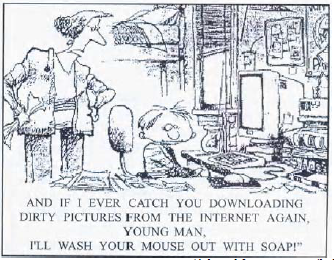
(Adapted from www.vestibular1.com.br)
The boy’s mother is expressing a
Questão 40 762918
EEAR 2016/1Select the alternative in which the use of “so” does not express the result of an action:
06