


![[Marketing] Questao Topo - deslogado](https://storage.estuda.com.br/banners/0_6b7ebee90b03af1c560c73bb8bcce34a_banner_deslogado_70_dias.png)
Questões de Inglês
19.971 Questões
Questão 44 2415165
UNINOVE 2016Leia o texto para responder à questão.
The most and least addictive foods
February 25, 2015
Food addiction might not be as real as drug or alcohol addiction, but research suggests you could be addicted to eating itself. Addicted enough to not being able to control the now-or-never food cravings, putting on considerable amount of weight and driving yourself to being obese.
Few years ago, a group of American psychiatrists studying obesity decided to explore food addiction and find out if it actually exists. They exposed rats to extremely palatable, fatty food and to healthy food for a certain period of time. After putting a stop to unhealthy food, researchers found signs of “tolerance, withdrawal, craving and measurable changes in neural chemicals.”
While this was one of the first few studies that explored the validity of food addiction, there have been many studies that have followed. Quite a few of them have been done on humans as well. In 2013, a group of researchers from the University of Missouri conducted a study on around 400 adults and found that obesity as a result of overeating is a type of condition that needs medical attention. The study was published in the journal PLOS One (Public Library of Sciences).
According to another 2014 study conducted by researchers at the University of Edinburgh, “the real problem underlying our unhealthy food consumption is the psychological compulsion to eat because of the pleasure and satisfaction we get from food.” The study also went on to explain that food addiction might not be substance related but instead a psychological disorder.
But this new study explores something different as it attempts to uncover which ‘foods or food attributes may be capable of triggering an addictive response’. The study goes on to explain - “the term ‘food’ is also broad and refers not only to foods in their natural state (e.g. vegetables), but also those with added amounts of fat and/or refined carbohydrates (e.g. cake) or artificial sweeteners (e.g. diet soda).”
The study was conducted by two researchers from the University of Michigan and one from the Department of Medicine, New York Obesity Research Centre. Researchers recruited 500 participants and asked them to identify foods that gave them most problems as described by the Yale Food Addiction Scale. The Yale Food Addiction Scale (YFAS) is a 25 point questionnaire that was created by Ashley Gearhardt, a Yale researcher, to identify symptoms that help figure out who is more likely to be dependent on certain kinds of food.
The study listed these as the ‘most addictive foods’.
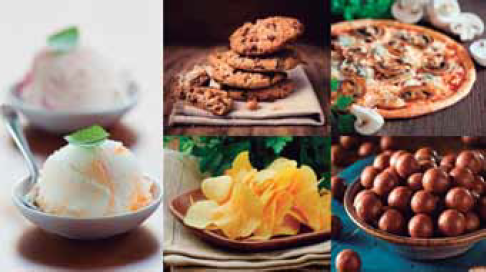 1. Ice-Cream
2. Chips
3. Chocolate
4. Cookies
5. Pizza
Here’s a list of the ‘least addictive foods’.
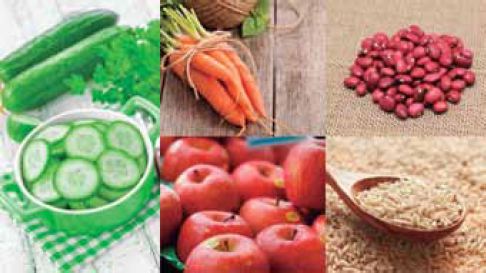
1. Cucumber
2. Carrots
3. Apples
4. Brown Rice
5. Beans
If you go over the list of most addictive foods, you’ll realise that all of them are processed. They’re not just unhealthy and high on calories but also high in fat and glycemic load (GL) which is essentially a measurement of how food can raise a person’s blood sugar after they eat it.
The current study found that highly processed foods, with added amounts of fat and/or refined carbohydrates (e.g. sugar, white flour), were most likely to be associated with behavioral indicators of addictive-like eating. While the lines between food addiction and the food itself are slightly blurry, this research might pave way to explore the exact triggers and help find a more permanent solution to food addiction and obesity
(http://food.ndtv.com)
O novo estudo da University of Michigan em conjunto com o New York Obesity Research Centre
Questão 41 2415044
UNINOVE 2016Leia o texto para responder à questão.
The most and least addictive foods
February 25, 2015
Food addiction might not be as real as drug or alcohol addiction, but research suggests you could be addicted to eating itself. Addicted enough to not being able to control the now-or-never food cravings, putting on considerable amount of weight and driving yourself to being obese.
Few years ago, a group of American psychiatrists studying obesity decided to explore food addiction and find out if it actually exists. They exposed rats to extremely palatable, fatty food and to healthy food for a certain period of time. After putting a stop to unhealthy food, researchers found signs of “tolerance, withdrawal, craving and measurable changes in neural chemicals.”
While this was one of the first few studies that explored the validity of food addiction, there have been many studies that have followed. Quite a few of them have been done on humans as well. In 2013, a group of researchers from the University of Missouri conducted a study on around 400 adults and found that obesity as a result of overeating is a type of condition that needs medical attention. The study was published in the journal PLOS One (Public Library of Sciences).
According to another 2014 study conducted by researchers at the University of Edinburgh, “the real problem underlying our unhealthy food consumption is the psychological compulsion to eat because of the pleasure and satisfaction we get from food.” The study also went on to explain that food addiction might not be substance related but instead a psychological disorder.
But this new study explores something different as it attempts to uncover which ‘foods or food attributes may be capable of triggering an addictive response’. The study goes on to explain - “the term ‘food’ is also broad and refers not only to foods in their natural state (e.g. vegetables), but also those with added amounts of fat and/or refined carbohydrates (e.g. cake) or artificial sweeteners (e.g. diet soda).”
The study was conducted by two researchers from the University of Michigan and one from the Department of Medicine, New York Obesity Research Centre. Researchers recruited 500 participants and asked them to identify foods that gave them most problems as described by the Yale Food Addiction Scale. The Yale Food Addiction Scale (YFAS) is a 25 point questionnaire that was created by Ashley Gearhardt, a Yale researcher, to identify symptoms that help figure out who is more likely to be dependent on certain kinds of food.
The study listed these as the ‘most addictive foods’.
1. Ice-Cream
2. Chips
3. Chocolate
4. Cookies
5. Pizza
Here’s a list of the ‘least addictive foods’.
1. Cucumber
2. Carrots
3. Apples
4. Brown Rice
5. Beans
If you go over the list of most addictive foods, you’ll realise that all of them are processed. They’re not just unhealthy and high on calories but also high in fat and glycemic load (GL) which is essentially a measurement of how food can raise a person’s blood sugar after they eat it.
The current study found that highly processed foods, with added amounts of fat and/or refined carbohydrates (e.g. sugar, white flour), were most likely to be associated with behavioral indicators of addictive-like eating. While the lines between food addiction and the food itself are slightly blurry, this research might pave way to explore the exact triggers and help find a more permanent solution to food addiction and obesity
(http://food.ndtv.com)
O texto discute
Questão 54 1966226
UnirG 2016/2
A palavra 'Coincidence' na frase “LISTEN & SILENT HAVE THE SAME LETTERS COINCIDENCE?”, estampada na camiseta, expressa uma pergunta que, transcrita de forma completa em inglês, ficaria da seguinte forma:
Questão 50 1966161
UnirG 2016/2Leia texto a seguir. A questão é baseada nele.
Futuristic Robot Ball May Be the Next Big Toy for Kids With Developmental Disabilities
By Elisabeth Brentano Staff Autism Spectrum Disorder
Meet Leka, a motion-sensitive ball designed specifically for kids with developmental disabilities. Leka lights up, vibrates, moves and makes noises to stimulate senses, all of which are designed to help with social, motor and intellectual skills, according to the company’s website.
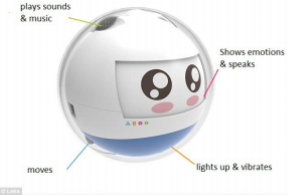
Disponivel em: http://i.dailymail.co.uk/i/pix/2016/01/12/2FC8EF2500000578-3383778-Leka_was_unveiled_at_global_consumer_electronics_and_tachaclogy-a-17_1451911685044.jpg Acesso em: 19 mai 2016.
The company notes that Leka “doesn’t replace therapy;” rather, it’s a tool for parents and caregivers “to teach through play and make therapy easier, more efficient and constant by bringing therapy home.”
The toy is not yet on the market, but a prototype made its debut at the annual Consumer Electronics Show (CES) event in Las Vegas earlier this month.
Leka co-founder/CEO Ladislas de Toldi chatted with BBC’s Leo Kelion about how he hopes the toy will help children with Down syndrome, autism and other developmental disabilities. When asked why this was better than any other toy, de Toldi replied:
Robots are very fun, very cute and they really get the children interested. Children with disabilities are still children — they want to play, they want to have fun and the robot allows that. If you use the robot as a learning support, for learning activities and playing activities, children get more engaged in those activities.
Primary research for the toy was done in Paris, and product development was based on studies in the United States and the United Kingdom.
Disponível em: http://themighty.com/2016/01/futuristic-robot-ball-may-be-the-next-bigtoy-for-kids-with-developmental-disabilities/ Acesso em: 19 mai 2016. [Adaptado].
According to the verbal and non-verbal information in the text, Leka is a/an
Questão 53 1952299
UnirG 2016/1Leia o texto a seguir e responda à questão
Winter Driving
Winter is dangerous because it’s so difcult to know what is going to happen and accidents take place so easily. Fog can be waiting to meet you over the top of a hill. Ice might be hiding beneath the melting snow, waiting to send you of the road. Te car coming towards you may suddenly slide across the road.
Rule Number One for driving on icy roads is to drive smoothly. Uneven movements can make a car suddenly very difcult to control. So every time you either turn the wheel, touch the brakes or increase your speed, you must be as gentle and slow as possible. Imagine you are driving with a full cup of hot cofee on the seat next to you. Drive so that you wouldn’t spill it.
Rule Number Two is to pay attention to what might happen. Te more ice there is, the further down the road you have to look. Test how long it takes to stop by gently braking. Remember that you may be driving more quickly than you think. In general, allow double your normal stopping distance when the road is wet, three times this distance on snow, and even more on ice. Try to stay in control of your car at all times and you will avoid trouble.
(Disponível em: http://esl-bits.net/pet.htm. Acesso em: 4 out. 2015.)
Com que finalidade o autor do texto fala sobre café?
Questão 52 1952277
UnirG 2016/1Leia o texto a seguir e responda à questão
Winter Driving
Winter is dangerous because it’s so difcult to know what is going to happen and accidents take place so easily. Fog can be waiting to meet you over the top of a hill. Ice might be hiding beneath the melting snow, waiting to send you of the road. Te car coming towards you may suddenly slide across the road.
Rule Number One for driving on icy roads is to drive smoothly. Uneven movements can make a car suddenly very difcult to control. So every time you either turn the wheel, touch the brakes or increase your speed, you must be as gentle and slow as possible. Imagine you are driving with a full cup of hot cofee on the seat next to you. Drive so that you wouldn’t spill it.
Rule Number Two is to pay attention to what might happen. Te more ice there is, the further down the road you have to look. Test how long it takes to stop by gently braking. Remember that you may be driving more quickly than you think. In general, allow double your normal stopping distance when the road is wet, three times this distance on snow, and even more on ice. Try to stay in control of your car at all times and you will avoid trouble.
(Disponível em: http://esl-bits.net/pet.htm. Acesso em: 4 out. 2015.)
Qual a intenção do autor ao escrever esse texto?
06