


![[Marketing] Questao Topo - deslogado](https://storage.estuda.com.br/banners/0_6b7ebee90b03af1c560c73bb8bcce34a_banner_deslogado_70_dias.png)
Questões de Inglês
19.971 Questões
Questão 41 6537892
FASM 1° Semestre 2016Leia o texto para responder à questão.
Birth Plan Overhaul: Brazil hopes to reduce 85% C-Section rate and change public’s attitude toward natural births
C-sections can increase the risk of harm for both mother and baby.
Dana Dovey
July 8, 2015
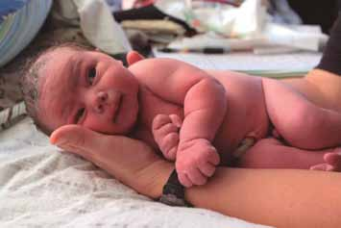
Dr. Alexandre Sasaoka, an obstetrician working in an upscale maternity clinic in Sao Paulo, Brazil struggles to remember the last time he delivered a baby naturally. This is because Brazil has one of the highest rates of cesarean deliveries in the world, with some hospitals reporting 99 percent C-section. However, a new government initiative aims to shave down these high figures.
According to Brazil’s pro-natural birth initiative, doctors must now inform women about all the risks associated with C-section births and ask them to sign a consent form before performing the operation, the BBC reported. The new ruling also states that doctors must justify the reasoning behind their C-section before proceeding with the operation, and must fill in a complete record of how the labor and birth developed step by step. The government hopes the initiative will help to reduce the country’s exceptionally high C-section rate, something that Brazilian pediatrician Luciana Herrero described as an “international shame.”
The World Health Organization recommends that a nation’s cesarean section rate should not be higher than 10 to 15 percent, but many countries greatly surpass this recommendation. In the United States, around a third of all births are C-section, and in the UK, nearly one in four women chooses to deliver this way. However, despite the current trend in favor of C-section births, few nations can touch Brazil figures. Eighty-five percent of all births in Brazilian private hospitals are cesareans, and in public hospitals the figure is 45 percent, the BBC reported.
The reason for Brazil’s high caesarean birth rate is complicated. For one matter, booking a C-section beforehand ensures a new mother will have a hospital bed, a commodity that has become quite rare in the South American nation. Hospital beds are almost exclusively reserved for women undergoing C-sections, Newser reported. In addition, in Brazil, vaginal birth is considered taboo, since many women regard natural childbirth as “uncivilized and primitive.” In private hospitals, C-sections are seen as a status symbol, NPR reported. Unfortunately, money also seems to be one of the main drivers behind Brazil’s high C-section rate. Brazilian doctors get paid more to perform C-sections. They also report feeling more in control during C-sections and therefore more protected from litigation.
While C-sections are sometimes necessary, when done unnecessarily, they can pose a danger to both mother and baby. Generally, women who have C-sections take longer to recover from giving birth and report residual pain for longer when compared to women who deliver vaginally. And although risk of life-threatening complications from birth are rare, women who undergo C-sections are three times more likely to suffer from serious birth complications, such as severe bleeding, blood clots, and major infection when compared to women who give birth naturally, according to Consumer Reports.
(www.medicaldaily.com. Adaptado.)
According to the text, Dr. Sasaoka
Questão 36 6512021
PUC-Campinas 2016Atenção: Para responder à questão, considere o texto abaixo.
The colors of the rainbow so pretty in the sky
Are also on the faces of people passing 
I see friends  hands
hands
Saying, "how do you do?"
They're really saying,
I love you.
The word that correctly fills the blank  is
is
Questão 35 6511971
PUC-Campinas 2016Atenção: Para responder à questão, considere o texto abaixo.
The colors of the rainbow so pretty in the sky
Are also on the faces of people passing
I see friends hands
Saying, "how do you do?"
They're really saying,
I love you.
The word that correctly fills the blank  is
is
Questão 31 6511742
PUC-Campinas 2016According to the author of the main text,
Questão 25 6511583
PUC-Campinas 2016A parte sublinhada em tudo teria começado com a haste vertical ao sol, conforme aparece no texto principal, é traduzida por:
Questão 34 6444164
UNISA 2016Leia o texto para responder à questão.
Pollution May Age the Brain
Nicholas Bakalar
June 22, 2015

Exposure to air pollution may hasten brain aging, a new study has found. Researchers studied 1,403 women without dementia who were initially enrolled in a large health study from 1996 to 1998. They measured their brain volume with M.R.I. (magnetic resonance imaging) scans in 2005 and 2006, when the women were 71 to 89 years old.
Using residential histories and air pollution data, they estimated their exposure to air pollution from 1999 to 2006. They used data recorded at monitoring sites on exposure to PM 2.5 – tiny particulate matter that easily penetrates the lungs.
Each increase of 3.49 micrograms per cubic centimeter cumulative exposure to pollutants was associated with a 6.23 cubic centimeter decrease in white matter, the equivalent of one to two years of brain aging. The association remained after adjusting for many variables, including age, smoking, physical activity, blood pressure, body mass index, education and income.
Previous studies have shown that air pollution can cause inflammation and damage to the vascular system, but this study, in The Annals of Neurology, showed damage to the brain itself. “This tells us that the damage air pollution can impart goes beyond the circulatory system,” said the lead author, Dr. Jiu-Chiuan Chen, an associate professor of preventive medicine at the Keck School of Medicine at the University of Southern California. “Particles in the ambient air are an environmental neurotoxin to the aging brain.”
(http://well.blogs.nytimes.com. Adaptado.)
No trecho do segundo parágrafo “they estimated their exposure to air pollution from 1999 to 2006”, o termo em destaque refere-se a
06