


![[Marketing] Questao Topo - deslogado](https://storage.estuda.com.br/banners/0_6b7ebee90b03af1c560c73bb8bcce34a_banner_deslogado_70_dias.png)
Questões de Inglês
19.971 Questões
Questão 30 7154205
PAS - UFLA 1° Etapa - 2° Dia 2016PASSAGE
THE NEED FOR SEXUALITY EDUCATION
According to Unesco (2009), the primary goal of sexuality education is to equip children and young
people with the knowledge, skills and values to make responsible choices about their sexual and social
relationships in a world affected by HIV. In addition to learning about the risks of pregnancy and sexually
transmitted infections (including HIV), children and young people also need to learn about the risk of sexual
[05] exploitation and abuse in order to recognize these when they occur, to protect themselves as far as possible and
to identify and access available sources of support. Sensitizing children, parents, teachers, police and local
communities to the nature and extent of sexual violence, and giving permission to discuss it, are essential steps
in tackling it. Sexuality education can provide an appropriate framework and context for educating students
about sexual abuse. For example, distinguishing between “good” and “bad” touch, learning how to express
[10] feelings, to resist pressure and to seek help are all key aspects of sexuality education that are also highly
pertinent to sexual abuse.
Available at:http://www.coe.int/t/dg3/children/1in5/Source/PublicationSexualViolence/Gordon.pdf. Access on:6/7/2016.
According to the passage: “(…) distinguishing between “good” and “bad” touch, learning how to express feelings, to resist pressure and to seek help (…)” (lines 9-10) are situations that define
Questão 29 7154181
PAS - UFLA 1° Etapa - 2° Dia 2016PASSAGE
THE NEED FOR SEXUALITY EDUCATION
According to Unesco (2009), the primary goal of sexuality education is to equip children and young
people with the knowledge, skills and values to make responsible choices about their sexual and social
relationships in a world affected by HIV. In addition to learning about the risks of pregnancy and sexually
transmitted infections (including HIV), children and young people also need to learn about the risk of sexual
[05] exploitation and abuse in order to recognize these when they occur, to protect themselves as far as possible and
to identify and access available sources of support. Sensitizing children, parents, teachers, police and local
communities to the nature and extent of sexual violence, and giving permission to discuss it, are essential steps
in tackling it. Sexuality education can provide an appropriate framework and context for educating students
about sexual abuse. For example, distinguishing between “good” and “bad” touch, learning how to express
[10] feelings, to resist pressure and to seek help are all key aspects of sexuality education that are also highly
pertinent to sexual abuse.
Available at:http://www.coe.int/t/dg3/children/1in5/Source/PublicationSexualViolence/Gordon.pdf. Access on:6/7/2016.
The word “these” in the sentence “In addition to learning about the risks of pregnancy and sexually transmitted infections (including HIV), children and young people also need to learn about the risk of sexual exploitation and abuse in order to recognize these when they occur,(…)” (lines 3-5) is replacing
Questão 28 7154143
PAS - UFLA 1° Etapa - 2° Dia 2016PASSAGE
THE NEED FOR SEXUALITY EDUCATION
According to Unesco (2009), the primary goal of sexuality education is to equip children and young
people with the knowledge, skills and values to make responsible choices about their sexual and social
relationships in a world affected by HIV. In addition to learning about the risks of pregnancy and sexually
transmitted infections (including HIV), children and young people also need to learn about the risk of sexual
[05] exploitation and abuse in order to recognize these when they occur, to protect themselves as far as possible and
to identify and access available sources of support. Sensitizing children, parents, teachers, police and local
communities to the nature and extent of sexual violence, and giving permission to discuss it, are essential steps
in tackling it. Sexuality education can provide an appropriate framework and context for educating students
about sexual abuse. For example, distinguishing between “good” and “bad” touch, learning how to express
[10] feelings, to resist pressure and to seek help are all key aspects of sexuality education that are also highly
pertinent to sexual abuse.
Available at:http://www.coe.int/t/dg3/children/1in5/Source/PublicationSexualViolence/Gordon.pdf. Access on:6/7/2016.
The expression “In addition to” in the sentence “In addition to learning about the risks of pregnancy and sexually transmitted infections (including HIV), (…)” (lines 3-4) and “For example” in the sentence “For example, distinguishing between “good” and “bad” touch, (…)” (line 9) are
Questão 25 7154089
PAS - UFLA 1° Etapa - 2° Dia 2016PASSAGE
SEX EDUCATION FOR CHILDREN: WHY PARENTS SHOULD TALK TO THEIR KIDS ABOUT SEX STARTING EARLY WITH AGE-APPROPRIATE INFORMATION ABOUT SEX IS A GOOD IDEA
Curiosity about sex is a natural step from learning about the body. Sex education helps kids understand
about the body and helps them feel positive about their own bodies. Younger kids are interested in pregnancy
and babies, rather than the mechanics of sex.
Discussing sex is also part of starting open communication with your child. Early, honest, and open
[05] communication between parents and kids is very important, especially when your child becomes an adolescent. If
open communication is normal, kids are more likely to speak with parents about all the other trials of
adolescence, such as depression, relationships, and the abuse of drugs and alcohol, as well as sexual issues.
Beginning a conversation about sex early and continuing that conversation as the child grows is the best
sex education strategy. It lets parents avoid giving one big, and likely uncomfortable talk when the child reaches
[10] adolescence (and will have already gotten information and misinformation from their friends). These
conversations are easier when they come out of a life experience, like seeing a pregnant woman or a baby.
When parents talk with their children about sex, they can make sure that they are getting the right
information. Parents should be a child’s first source of information about sex. Understanding correct information
can protect children from risky behaviour as they grow up.
Available at: http://www.ifrc.org/PageFiles/89397/the%20phenomenon%20of%20migration_TYPEFI_final_En.pdf Access on: 5/27/2015.
In paragraph two (lines 4-7), depression, relationships, the abuse of drugs and alcohol, and sexual issues are mentioned as examples of
Questão 24 7154057
PAS - UFLA 1° Etapa - 2° Dia 2016PASSAGE
SEX EDUCATION FOR CHILDREN: WHY PARENTS SHOULD TALK TO THEIR KIDS ABOUT SEX STARTING EARLY WITH AGE-APPROPRIATE INFORMATION ABOUT SEX IS A GOOD IDEA
Curiosity about sex is a natural step from learning about the body. Sex education helps kids understand
about the body and helps them feel positive about their own bodies. Younger kids are interested in pregnancy
and babies, rather than the mechanics of sex.
Discussing sex is also part of starting open communication with your child. Early, honest, and open
[05] communication between parents and kids is very important, especially when your child becomes an adolescent. If
open communication is normal, kids are more likely to speak with parents about all the other trials of
adolescence, such as depression, relationships, and the abuse of drugs and alcohol, as well as sexual issues.
Beginning a conversation about sex early and continuing that conversation as the child grows is the best
sex education strategy. It lets parents avoid giving one big, and likely uncomfortable talk when the child reaches
[10] adolescence (and will have already gotten information and misinformation from their friends). These
conversations are easier when they come out of a life experience, like seeing a pregnant woman or a baby.
When parents talk with their children about sex, they can make sure that they are getting the right
information. Parents should be a child’s first source of information about sex. Understanding correct information
can protect children from risky behaviour as they grow up.
Available at: http://www.ifrc.org/PageFiles/89397/the%20phenomenon%20of%20migration_TYPEFI_final_En.pdf Access on: 5/27/2015.
The word "trials" (line 6) is closest in meaning to
Questão 69 6853673
FEMA Medicina 2016Leia o texto para responder à questão.
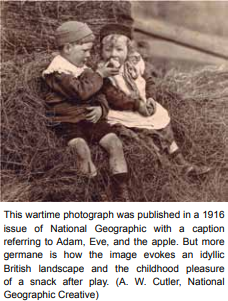
Food is more than survival
With it we make friends, court lovers, and count our blessings
Victoria Pope
The sharing of food has always been part of the human story. From Qesem Cave near Tel Aviv comes evidence of ancient meals prepared at a 300,000-year-old hearth, the oldest ever found, where diners gathered to eat together. Retrieved from the ashes of Vesuvius: a circular loaf of bread with scoring marks, baked to be divided. “To break bread together,” a phrase as old as the Bible, captures the power of a meal to forge relationships, bury anger, provoke laughter. Children make mud pies, have tea parties, trade snacks to make friends, and mimic the rituals of adults. They celebrate with sweets from the time of their first birthday, and the association of food with love will continue throughout life – and in some belief systems, into the afterlife. Consider the cultures that leave delicacies graveside to let the departed know they are not forgotten. And even when times are tough, the urge to celebrate endures. In the Antarctic in 1902, during Robert Falcon Scott’s Discovery expedition, the men prepared a fancy meal for Midwinter Day, the shortest day and longest night of the year. Hefty provisions had been brought on board. Forty-five live sheep were slaughtered and hung from the rigging, frozen by the elements until it was time to feast. The cold, the darkness, and the isolation were forgotten for a while. “With such a dinner,” Scott wrote, “we agreed that life in the Antarctic Regions was worth living.”
(www.nationalgeographic.com. Adaptado.)
Segundo o texto,
06