


![[Marketing] Questao Topo - deslogado](https://storage.estuda.com.br/banners/0_6b7ebee90b03af1c560c73bb8bcce34a_banner_deslogado_70_dias.png)
Questões de Inglês
19.971 Questões
Questão 41 132435
PUC-SP Verão 2017
Observando-se a tirinha acima, depreende-se que
Questão 40 132434
PUC-SP Verão 2017The Heyday of the Silents
GEOFFREY NOWELL-SMITH
By the middle of the 1920s the cinema had reached a peak of splendour which in certain respects it would never again surpass. It is true that there was not synchronized sound, nor Technicolor, except at a very experimental stage. Synchronized sound was to be introduced at the end of the decade, while Technicolor came into use only in the mid 1930s and beyond. Nor, except in isolated cases like Abel Gance\'s Napoléon (1927), was there anything approaching the wide screen that audiences were to be accustomed to from the 1950s onwards. It is also the case that viewing conditions in many parts of the world, particulary in rural areas, remained maskeshift and primitive.
Source: The Oxford History of World Cinema EDITED BYGEOFFREYNOWELL-SMITH OXFORD UNIVERSITY PRESS 1996
De acordo com o texto,
Questão 39 132433
PUC-SP Verão 2017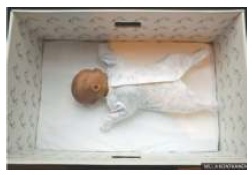
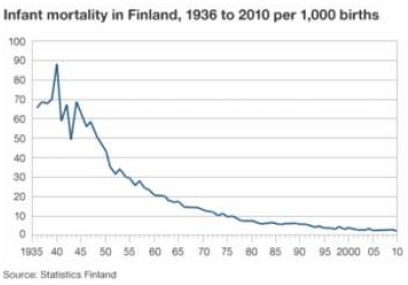
Relacionando o gráfico abaixo com o tema da questão 38, verifica-se que
Questão 38 132432
PUC-SP Verão 2017Why Finnish babies sleep in cardboard boxes
By Helena Lee, BBC News 4 June 2013
http://www.bbc.com/news/magazine-22751415
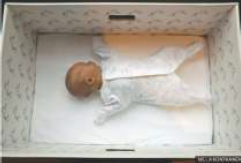
For 75 years, Finland's expectant mothers have been given a box by the state. It's like a starter kit of clothes, sheets and toys that can even be used as a bed. And some say it helped Finland achieve one of the world's lowest infant mortality rates.
Verifique a figura e o texto acima e escolha a alternativa correta.
Questão 37 132431
PUC-SP Verão 2017
A citação de Bernard Shaw permite concluir que, para ele,
Questão 35 131015
FAMEMA 2017Read books, live longer?
Nicholas Bakalar
August 3, 2016
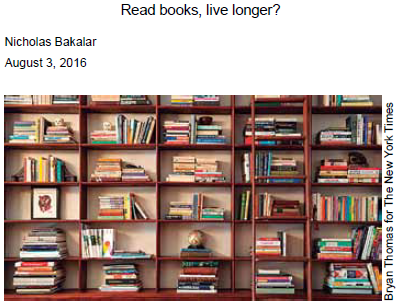
Reading books is tied to a longer life, according to a new report. Researchers used data on 3,635 people over 50 participating in a larger health study who had answered questions about reading. The scientists divided the sample into three groups: those who read no books, those who read books up to three and a half hours a week, and those who read books more than three and a half hours.
The study, in Social Science & Medicine, found that book readers tended to be female, college-educated and in higher income groups. So, researchers controlled for those factors as well as age, race, self-reported health, depression, employment and marital status.
Compared with those who did not read books, those who read for up to three and a half hours a week were 17 percent less likely to die over 12 years of follow-up, and those who read more than that were 23 percent less likely to die. Book readers lived an average of almost two years longer than those who did not read at all.
They found a similar association among those who read newspapers and periodicals, but it was weaker.
(http://well.blogs.nytimes.com. Adaptado.)
Os dados apresentados no terceiro parágrafo confirmam o seguinte trecho do texto:
06