


![[Marketing] Questao Topo - deslogado](https://storage.estuda.com.br/banners/0_6b7ebee90b03af1c560c73bb8bcce34a_banner_deslogado_70_dias.png)
Questões de Inglês
19.971 Questões
Questão 66 145690
UECE 1ª Fase 2017/2If all of the children who currently are sedentary started exercising every day, societies could save enormous amounts of money in the coming decades and have healthier citizens as a whole, according to a remarkable new study. In the United States alone, we could expect to save more than $120 billion every year in health care and associated expenses. The study is the first to usesophisticated computer simulations to arrive at a literal and sobering societal price tag for allowing our children to be sedentary. Inactivity is, of course, widespread among young people today. Recent research shows that in the
United States and Europe, physical activity tends to peak at about age 7 for both boys and girls and tail off continually throughout adolescence. More than two-thirds of children in theUnited States rarely exercise at all. The immediate health consequences for inactive children and their families are worrisome. Childhood obesity, which is linked to lack of exercise, is common, as is the incidence of Type 2 diabetes and other health problems related to being overweight among children as young as 6. But the long-term financial costs ofinactivity in the young, both for them and society as a whole, have never been quantified. So for the new study, which was published this week in Health Affairs, researchers with the Global Obesity Prevention Center at Johns Hopkins University in Baltimore and other institutions decided to create a bogglingly complex computer model of what the future could look like if we do or do not get more of our children moving.
The researchers began by gathering as much public data as is currently available about the health, weight and physical activity patterns of all 31.7 million American children now aged 8 to 11, using large-scale databases from the Census Bureau, the Centers for Disease Control and Prevention, and other groups. The researchers fed this information into a computerized modeling program that created an electronic avatar for every American child today. In line with reality, two-thirds of these children were programmed to rarely exercise and many were overweight or obese.The scientists then had the simulated children grow up. Using estimations about how calorie intake and activity patterns affect body weight, the program changed each virtual child’s body day-by-day and year-by-year into adulthood. Most became increasingly overweight. As the simulated children became adults,the scientists then modeled each one’s health, based on obesity-associated risks for heart disease, diabetes, stroke and cancer, and also the probable financial price of dealing with those diseases (adjusted for future inflation), both in terms of direct expenses for hospitalizations, drugs and so on, and lost productivity because of someone’s being ill.
The results were staggering. According to the computer model, the costs of today’s 8- to 11- year-olds being inactive and consequently overweight would be almost $3 trillion in medical expenses and lost productivity every year once the children reached adulthood and for decades until
their deaths.
But when the researchers tweaked children’s activity levels within their model, thenumbers began to look quite different. If they presumed that, in an imaginary America, half of all children exercised vigorously for about 25 minutes three times a week, such as during active recess or sports or, more ambitiously, ran around and moved for at least an hour every day, which is the amount of youth exercise recommended by the C.D.C., their virtual lives were transformed. Most obviously, the incidence of childhood obesity fell by more than 4 percent, a change that resonated throughout the simulated children’s lives and society. There were about half a million fewer cases of adult-onset heart disease, diabetes, cancer and strokes in this simulation, and the society-wide costs associated with these illnesses dropped by about $32 billion every year if the children romped about for 25 minutes three times per week and by almost $37 billion if they moved for an hour every day.
The impacts were even more substantial when the researchers assumed that 100 percent of the children who are now sedentary got regular exercise. In this scenario, the annual total costs during adulthood from obesity-associated medical expenses and lost productivity plummeted by about $62 billion when children were active three times a week and by more than $120 billion every year when all of the virtual children played and moved for at least an hour each day.
From: https://www.nytimes.com May 3, 2017
The new study conducted in the US linking the lack of children’s physical activity and the huge expenses in the coming years was carried out with data about children
Questão 66 145506
UECE 1ª Fase 2017/1Nearly 250 million young children across the world – 43% of under-fives – are unlikely to fulfil their potential as adults because of stunting and extreme poverty, new figures show.
The first three years of life are crucial to a child’s development, according to a series of research papers published in the Lancet medical journal, which says there are also economic costs to the failure to help them grow. Those who do not get the nutrition, care and stimulation they need will earn about 26% less than others as adults.
“The costs of not acting immediately to expand services to improve early childhood development are high for individuals and their families, as well as for societies,” say the researchers. The cost to some countries in GDP (gross domesticproduct), they estimate, is as much as twice their spending on healthcare.
The figures come as the World Bank prepares for a summit meeting with finance ministersaround the globe to discuss how nurturing children in their early years will help their countries’ economic development. The World Bank president, Jim Yong Kim, has told the Guardian that he intends to use the World Economic Forum in Davos each year to name and shame countries that do not reduce their high stunting rates.
The Lancet series says the first 24 months of life are the critical time for avoiding stunting. Undernourished children living in extreme poverty end up small and their brain development is affected, so that they find it hard to learn. “Some catch-up is possible in height-for-age after 24 months, with uncertain cognitive gains,” says one of the papers. In sub-Saharan Africa, 66% of children are estimated to be at risk of poor development because of stunting and poverty. In south Asia, the figure is 65%, and 18% in the Caribbean and South America. Mothers need to be well nourished to give their babies a good start in life and be able to breastfeed. Families need help to give children the nutrition and nurturing they need, say researchers. That includes breastfeeding, free pre-school education – which is available in only two-thirds of high-income countries – paid leave for parents and a minimum wage to pull more families out of poverty. There are children at risk in all countries, rich and poor. The series points to early childhood programs that have been effective, including SureStart in the UK, Early Head Start in the US, Chile’s Crece Contigo and Grade R in South Africa In a Comment piece in the journal, Dr Margaret Chan, director general of the World Health Organization, Anthony Lake, executive director of the United Nations Children’s Fund, and Keith Hansen, vice-president for human development at the World Bank, write:
“The early childhood agenda is truly global, because the need is not limited to low-income countries. Children living in disadvantaged households in middle-income and wealthy countries are also at risk. “In targeting our investments, we should give priority to populations in the greatest need, such as families and children in extreme poverty and those who require humanitarian assistance. In addition, we have to build more resilient systems in vulnerable communities to mitigate the disruptive influence ofnatural disasters, fragility, conflict, and violence.” Wanda Wyporska, executive director of the Equality Trust, said: “It’s no surprise that the richer you are, the better your health is likely to be”. But the chasm of health inequality between rich and poor has widened in recent years. “Being born into a poor family shouldn’t mean decades of poorer health and even premature death, but that’s the shameful reality of the UK’s health gap. If you rank neighborhoods in the UK from the richest to the poorest, you have almost perfectly ranked health from the best to the worst.”
https://www.theguardian.com/globaldevelopment/ 2016/oct/04
One of the facts mentioned in the article is that in recent years
Questão 5 144181
FMABC 2017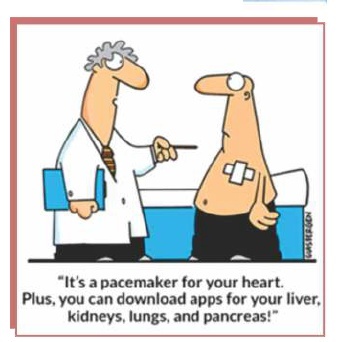
O quadrinho sugere que
Questão 4 144180
FMABC 2017The effects of aging: can they be reversed?
http://www.medicalnewstoday.com/articles/307383.php Acessado em 05/05/2016. Adaptado.

Wrinkles, gray hair, poorer physical and cognitive health: these are some of the common manifestations of aging. But could it be possible to reverse the aging process in the future? Studies are increasingly suggesting so. In simple terms, aging is defined as the process of becoming older, which involves a number of biological mechanisms that lead to deterioration of health - both cognitive and physical - over time. Of course, aging is inevitable; it is beyond the realms of medical science. What may be within reach one day, however, are ways to reduce or reverse the effects of aging.
De acordo com o texto,
Questão 3 144179
FMABC 2017New eye test could detect glaucoma years earlier
https://www.sciencedaily.com/releases/2016/07/160712110242.htm Acessado em 12/07/2016.
UNSW Australia scientists have developed a testing protocol that identifies the blinding eye disease glaucoma four years earlier than current techniques. The patented method involves patients looking at small dots of light of specially chosen size and light intensity. An inability to see them indicates blind spots in the eye and early loss of peripheral vision. According to Director of the UNSW Centre for Eye Health Professor Michael Kalloniatis, "Glaucoma is one of the leading causes of irreversible blindness in the world, and in the early stages patients usually have no symptoms and are not aware they are developing permanent vision loss. The cause of the disease is unknown and there is no cure, but its progression can be slowed with eye drops or surgery to lower pressure in the eye. So, early detectionand early treatment is vital for prolonging sight."
Segundo o texto,
Questão 2 144178
FMABC 2017Twenty years on from Dolly the sheep
http://www.bbc.com/news/science-environment-36707743 Acessado em 15.10.2016
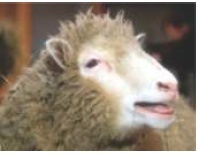
The birth of Dolly the sheep
seemed one of those
moments in scientific
research that would change
the world forever.
The cloning of the first animal from an adult cell was a remarkable scientific achievement. It promised new treatments for debilitating diseases. But it also raised fears of cloned human beings, designer babies and a dystopian future. Twenty years on, neither the hopes nor the fears have been realised. So what is Dolly's legacy?
Marque a alternativa cujo conteúdo NÃO corresponde às informações sobre Dolly.
06