


![[Marketing] Questao Topo - deslogado](https://storage.estuda.com.br/banners/0_6b7ebee90b03af1c560c73bb8bcce34a_banner_deslogado_70_dias.png)
Questões de Inglês
19.971 Questões
Questão 20 213486
FACISA 2017/2Read the TEXT below and answer the questions that follow.
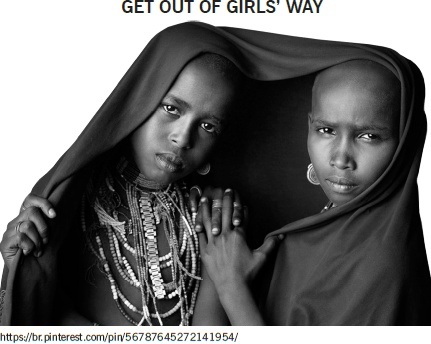
It isn’t easy being a girl, especially in Africa. […] To help them, we need not do anything complicated: we just need to get out of their way. Too many girls still hit barriers accessing fundamental rights. […] Three areas strike me as particularly ready for change: education, health and sanitation. And change should start in 2017.
First, education. […]. Despite major gains in primary education, girls attend secondary school and university in far fewer numbers than boys. […] Why is that? Girls face barriers to learning that boys don’t often have to contend with.[…] Social and cultural norms such as early marriage and pregnancy, and parental bias towards sons, also often cause girls to drop out. […] Countries with higher levels of discrimination in general against women performed worse on development indicators, including education. Yet we know how to demolish these barriers: among other things, improve school infrastructure, promote gender-sensitive curricula, make the cost of attending school affordable and end child marriage. […]
Second: health. Infectious disease like HIV/AIDS, tuberculosis and malaria, and conditions related to malnutrition, disproportionately affect girls and young women, either as sufferers or caregivers. These make it far harder for them to attend school or work. […] The hidden epidemic of poor nutrition undermines all aspects of women’s well-being […] But we have failed to invest in eradicating undernutrition.[…]
Lastly sanitation. An estimated 2.4 billion people live without adequate sanitation. This poses enormous obstacles every day for young women across sub-Saharan Africa. […]
Today’s young women, who are hungry for the chance to build a better world, still face the looming barriers of inequality. Let’s give them wings to fly.
Yvonne Chaka Chaka, The World in 2017
Which of the following groups of words from TEXT ONLY contains words in the COMPARATIVE degree?
Questão 19 213484
FACISA 2017/2Read the TEXT below and answer the questions that follow.
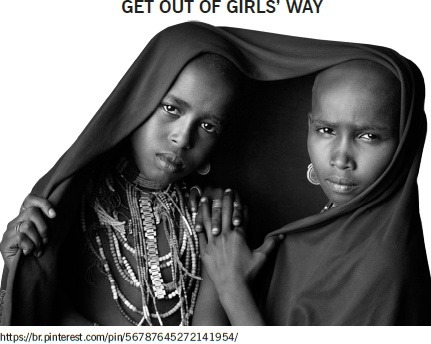
It isn’t easy being a girl, especially in Africa. […] To help them, we need not do anything complicated: we just need to get out of their way. Too many girls still hit barriers accessing fundamental rights. […] Three areas strike me as particularly ready for change: education, health and sanitation. And change should start in 2017.
First, education. […]. Despite major gains in primary education, girls attend secondary school and university in far fewer numbers than boys. […] Why is that? Girls face barriers to learning that boys don’t often have to contend with.[…] Social and cultural norms such as early marriage and pregnancy, and parental bias towards sons, also often cause girls to drop out. […] Countries with higher levels of discrimination in general against women performed worse on development indicators, including education. Yet we know how to demolish these barriers: among other things, improve school infrastructure, promote gender-sensitive curricula, make the cost of attending school affordable and end child marriage. […]
Second: health. Infectious disease like HIV/AIDS, tuberculosis and malaria, and conditions related to malnutrition, disproportionately affect girls and young women, either as sufferers or caregivers. These make it far harder for them to attend school or work. […] The hidden epidemic of poor nutrition undermines all aspects of women’s well-being […] But we have failed to invest in eradicating undernutrition.[…]
Lastly sanitation. An estimated 2.4 billion people live without adequate sanitation. This poses enormous obstacles every day for young women across sub-Saharan Africa. […]
Today’s young women, who are hungry for the chance to build a better world, still face the looming barriers of inequality. Let’s give them wings to fly.
Yvonne Chaka Chaka, The World in 2017
Some of the factors which hinder the progress of girls according to TEXT are:
Questão 18 213480
FACISA 2017/2Read the TEXT below and answer the questions that follow.
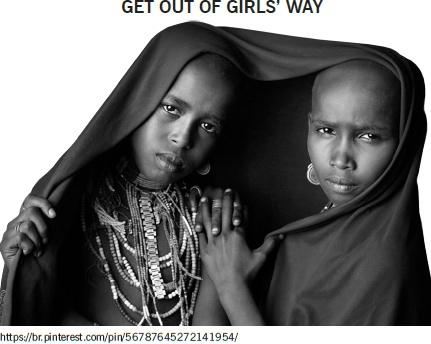
It isn’t easy being a girl, especially in Africa. […] To help them, we need not do anything complicated: we just need to get out of their way. Too many girls still hit barriers accessing fundamental rights. […] Three areas strike me as particularly ready for change: education, health and sanitation. And change should start in 2017.
First, education. […]. Despite major gains in primary education, girls attend secondary school and university in far fewer numbers than boys. […] Why is that? Girls face barriers to learning that boys don’t often have to contend with.[…] Social and cultural norms such as early marriage and pregnancy, and parental bias towards sons, also often cause girls to drop out. […] Countries with higher levels of discrimination in general against women performed worse on development indicators, including education. Yet we know how to demolish these barriers: among other things, improve school infrastructure, promote gender-sensitive curricula, make the cost of attending school affordable and end child marriage. […]
Second: health. Infectious disease like HIV/AIDS, tuberculosis and malaria, and conditions related to malnutrition, disproportionately affect girls and young women, either as sufferers or caregivers. These make it far harder for them to attend school or work. […] The hidden epidemic of poor nutrition undermines all aspects of women’s well-being […] But we have failed to invest in eradicating undernutrition.[…]
Lastly sanitation. An estimated 2.4 billion people live without adequate sanitation. This poses enormous obstacles every day for young women across sub-Saharan Africa. […]
Today’s young women, who are hungry for the chance to build a better world, still face the looming barriers of inequality. Let’s give them wings to fly.
Yvonne Chaka Chaka, The World in 2017
Which of the following statements is TRUE with reference to TEXT?
Questão 16 213477
FACISA 2017/2Read the TEXT below and answer the questions that follow.
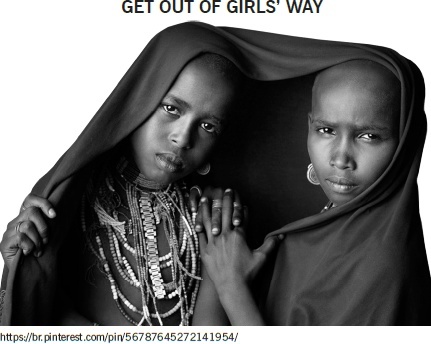
It isn’t easy being a girl, especially in Africa. […] To help them, we need not do anything complicated: we just need to get out of their way. Too many girls still hit barriers accessing fundamental rights. […] Three areas strike me as particularly ready for change: education, health and sanitation. And change should start in 2017.
First, education. […]. Despite major gains in primary education, girls attend secondary school and university in far fewer numbers than boys. […] Why is that? Girls face barriers to learning that boys don’t often have to contend with.[…] Social and cultural norms such as early marriage and pregnancy, and parental bias towards sons, also often cause girls to drop out. […] Countries with higher levels of discrimination in general against women performed worse on development indicators, including education. Yet we know how to demolish these barriers: among other things, improve school infrastructure, promote gender-sensitive curricula, make the cost of attending school affordable and end child marriage. […]
Second: health. Infectious disease like HIV/AIDS, tuberculosis and malaria, and conditions related to malnutrition, disproportionately affect girls and young women, either as sufferers or caregivers. These make it far harder for them to attend school or work. […] The hidden epidemic of poor nutrition undermines all aspects of women’s well-being […] But we have failed to invest in eradicating undernutrition.[…]
Lastly sanitation. An estimated 2.4 billion people live without adequate sanitation. This poses enormous obstacles every day for young women across sub-Saharan Africa. […]
Today’s young women, who are hungry for the chance to build a better world, still face the looming barriers of inequality. Let’s give them wings to fly.
Yvonne Chaka Chaka, The World in 2017
It would be correct to say that TEXT
Questão 16 212872
UNIVAG 2017/2Children’s sugar intake equals five doughnuts a day,
campaigners say

Children and young people are consuming the equivalent of 20 chocolate chip biscuits a day in sugar, according to anti-obesity campaigners. The calculations by the Obesity Health Alliance (OHA) have led to renewed calls for food and soft drinks manufacturers to make their products healthier to cut the number of dangerously overweight children. They want urgent action to reduce the amount of “hidden” sugar in many common foodstuffs.
Children and young people aged between 11 and 18 typically have an intake of 73.2 grams of sugar a day, far in excess of the 30 grams – or seven teaspoons – maximum recommended in official health advice, according to the OHA’s estimates. Those 73.2 grams are the equivalent of 20 chocolate chip or custard cream biscuits, 14.6 jelly babies or 4.8 jam-filled doughnuts. Four- to 10-year-olds are consuming 53.5 grams of sugar a day, while the figure among 19- to 64-year-olds is 59.9 grams daily.
Dr Alison Tedstone, Public Health England’s chief nutritionist, said that while some food manufacturers have pledged to cut the amount of sugar in their products, certain kinds of retailers – including coffee chains – need to follow suit. Producers including the supermarkets Tesco and Waitrose, Nestlé, and Kellogg’s have announced plans to reduce their use of sugar as part of a reformulation drive ahead of the government’s sugar tax coming into force in 2018. However, many other firms have made no such commitment and may be hit by the tax. Public Health England (PHE) wants all food manufacturers and outlets to strip 20% of all sugar out of a wide range of products by 2020.
Sarah Toule, head of health information at World Cancer Research Fund, said that overweight or obese children are much more likely to be dangerously overweight in adulthood and thus increase their risk of developing 11 forms of cancer.
(Denis Campbell. www.theguardian.com, 24.02.2017. Adaptado.)
No trecho do quarto parágrafo “dangerously overweight in adulthood and thus increase their risk of developing 11 forms of cancer”, o termo em destaque equivale, em português, a
Questão 15 212870
UNIVAG 2017/2Children’s sugar intake equals five doughnuts a day,
campaigners say
Children and young people are consuming the equivalent of 20 chocolate chip biscuits a day in sugar, according to anti-obesity campaigners. The calculations by the Obesity Health Alliance (OHA) have led to renewed calls for food and soft drinks manufacturers to make their products healthier to cut the number of dangerously overweight children. They want urgent action to reduce the amount of “hidden” sugar in many common foodstuffs.
Children and young people aged between 11 and 18 typically have an intake of 73.2 grams of sugar a day, far in excess of the 30 grams – or seven teaspoons – maximum recommended in official health advice, according to the OHA’s estimates. Those 73.2 grams are the equivalent of 20 chocolate chip or custard cream biscuits, 14.6 jelly babies or 4.8 jam-filled doughnuts. Four- to 10-year-olds are consuming 53.5 grams of sugar a day, while the figure among 19- to 64-year-olds is 59.9 grams daily.
Dr Alison Tedstone, Public Health England’s chief nutritionist, said that while some food manufacturers have pledged to cut the amount of sugar in their products, certain kinds of retailers – including coffee chains – need to follow suit. Producers including the supermarkets Tesco and Waitrose, Nestlé, and Kellogg’s have announced plans to reduce their use of sugar as part of a reformulation drive ahead of the government’s sugar tax coming into force in 2018. However, many other firms have made no such commitment and may be hit by the tax. Public Health England (PHE) wants all food manufacturers and outlets to strip 20% of all sugar out of a wide range of products by 2020.
Sarah Toule, head of health information at World Cancer Research Fund, said that overweight or obese children are much more likely to be dangerously overweight in adulthood and thus increase their risk of developing 11 forms of cancer.
(Denis Campbell. www.theguardian.com, 24.02.2017. Adaptado.)
De acordo com o terceiro parágrafo,
06