


![[Marketing] Questao Topo - deslogado](https://storage.estuda.com.br/banners/0_6b7ebee90b03af1c560c73bb8bcce34a_banner_deslogado_70_dias.png)
Questões de Inglês
19.971 Questões
Questão 6 220272
UNINTA Medicina 2017/2TEXTO:

It is widely known that walking and running are good
for our hearts. New research has also revealed pounding
the pavements can improve long-term brain function.
Experts believe the impact of the foot hitting the ground
{5} sends pressure waves through the arteries, significantly
increasing the brain’s blood supply. In the short term,
this triggers the well-known release of endorphins, making
people feel happy after a workout
But the new study suggests it may also help to
{10} improve brain function overall. Walking or running boosts
the brain’s blood supply, which improves its function and
wellbeing. Researchers at New Mexico Highlands
University used ultrasound to measure the brain’s blood
supply in 12 adults while resting, standing and steadily
{15} walking. Both walking and running created pressure
waves that significantly increased blood flow. The effect
was unsurprisingly bigger while running than walking. Yet,
the effect of walking was greater than cycling, which
involves no foot impact at all.
{20} It was once thought that the brain’s blood supply
was involuntarily regulated by the body and affected by
changes in blood pressure. The researchers wrote in
the study: ‘New data now strongly suggest that brain
blood flow is very dynamic. ‘Speculatively, walking and
{25} running may optimize brain perfusion, function and overall
sense of wellbeing during exercise.’
This comes after researchers from Iowa State
University found every hour you run could extend your
lifespan by seven hours. This holds true no matter how
{30} fast you run or how many miles you cover, they found.
THOMPSON, Alexandra. Health Reporter For Mailonline. Disponível em: <www.dailymail.co.uk/health/article-4440196/walking-running-boostsbrain- s-blood-supply.html>. Acesso em: 13 maio 2017.
The central idea of this text is summarized in
Questão 40 217630
UENP 2017/1Leia a letra da canção a seguir
Numb
Linkin Park
I’m tired of being what you want me to be
Feeling so faithless, lost under the surface
I don’t know what you’re expecting of me
Put under the pressure of walking in your shoes
Caught in the undertow, just caught in the undertow
Every step that I take is another mistake to you
Caught in the undertow, just caught in the undertow
I’ve become so numb
I can’t feel you there
I’ve become so tired
So much more aware
I’m becoming this
All I want to do
Is be more like me
And be less like you
Can’t you see that you’re smothering me?
Holding too tightly, afraid to lose control
’Cause everything that you thought I would be
Has fallen apart right in front of you
And I know
I may end up failing, too
But I know you were just like me
With someone disappointed in you
LINKIN PARK. Numb. In: Meteora. Warner Bros. Records, 2003, 1 CD (36min 43s). Faixa 13 (3min 08s). Produtor Don Gilmore.
Em relação à linguagem utilizada na canção, considere as afirmativas a seguir.
I. O trecho grifado no verso “Every step that I take is another mistake to you” é usado em seu sentido literal.
II. No verso “Put under the pressure of walking in your shoes”, o trecho grifado é usado em tom de ironia.
III. Em “I’ve become so tired”, o tempo verbal tem a função de indicar uma ação ocorrida no passado, que tem relevância no tempo presente.
IV. No verso “So much more aware”, a palavra “so” é usada com função de acrescentar maior ênfase à sentença.
Assinale a alternativa correta.
Questão 38 217621
UENP 2017/1Leia a letra da canção a seguir
Numb
Linkin Park
I’m tired of being what you want me to be
Feeling so faithless, lost under the surface
I don’t know what you’re expecting of me
Put under the pressure of walking in your shoes
Caught in the undertow, just caught in the undertow
Every step that I take is another mistake to you
Caught in the undertow, just caught in the undertow
I’ve become so numb
I can’t feel you there
I’ve become so tired
So much more aware
I’m becoming this
All I want to do
Is be more like me
And be less like you
Can’t you see that you’re smothering me?
Holding too tightly, afraid to lose control
’Cause everything that you thought I would be
Has fallen apart right in front of you
And I know
I may end up failing, too
But I know you were just like me
With someone disappointed in you
LINKIN PARK. Numb. In: Meteora. Warner Bros. Records, 2003, 1 CD (36min 43s). Faixa 13 (3min 08s). Produtor Don Gilmore.
Assinale a alternativa que apresenta, corretamente, o tema central da canção.
Questão 37 217616
UENP 2017/1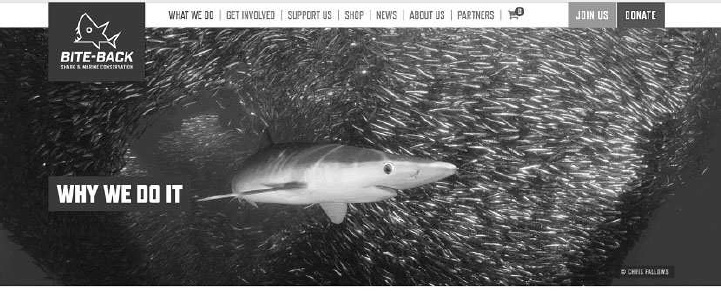
There aren’t plenty more fish in the sea.
The race is on to save sharks and other key marine species – including swordfish, marlin, monkfish and skates/rays – from being wiped out by overfishing. 73,000,000 sharks are slaughtered every year. That’s around 200,000 sharks a day. Or roughly two every second. Unless something changes, sharks could become a thing of the past. We’re not going to let that happen.
Choking to death
Sharks have been swimming in the oceans since before dinosaurs walked the earth. They’ve shaped the marine environment and everything in it. Without sharks the oceans could collapse, taking with them their ability to produce 50% of the oxygen we breathe and absorb 20% of the CO2 emissions we produce. With every shark slaughtered we’re strengthening our stranglehold on the planet.
Too many fishing boats, too few fish The International Union for the Conservation of Nature recently reported that 85% of the world’s fish stocks are fully exploited or overexploited. It’s the big fish that will disappear first. That’s why we’re focussing on key species that are most vulnerable to overfishing yet widely available in shops and restaurants.
Join us and help protect our blue planet.
(Adaptado de: Bite-Back Shark & Marine Conservation (website) Why we do it. Disponível em: https://www.bite-back.com/whatwe- do/why-we-do-it/. Acesso em: 15 ago. 2017).
De acordo com o texto, assinale a alternativa que apresenta, corretamente, a que se refere a expressão “Too many fishing boats, too few fish”.
Questão 36 217607
UENP 2017/1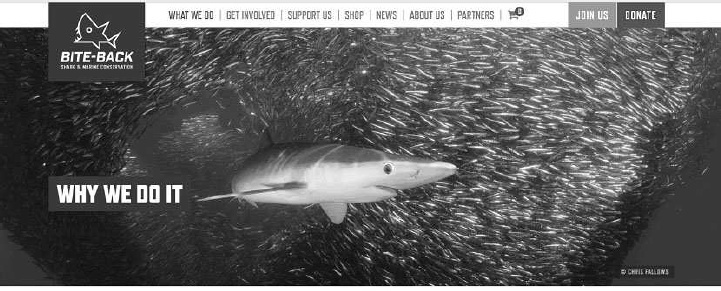
There aren’t plenty more fish in the sea.
The race is on to save sharks and other key marine species – including swordfish, marlin, monkfish and skates/rays – from being wiped out by overfishing. 73,000,000 sharks are slaughtered every year. That’s around 200,000 sharks a day. Or roughly two every second. Unless something changes, sharks could become a thing of the past. We’re not going to let that happen
Choking to death
Sharks have been swimming in the oceans since before dinosaurs walked the earth. They’ve shaped the marine environment and everything in it. Without sharks the oceans could collapse, taking with them their ability to produce 50% of the oxygen we breathe and absorb 20% of the CO2 emissions we produce. With every shark slaughtered we’re strengthening our stranglehold on the planet.
Too many fishing boats, too few fish The International Union for the Conservation of Nature recently reported that 85% of the world’s fish stocks are fully exploited or overexploited. It’s the big fish that will disappear first. That’s why we’re focussing on key species that are most vulnerable to overfishing yet widely available in shops and restaurants.
Join us and help protect our blue planet.
(Adaptado de: Bite-Back Shark & Marine Conservation (website) Why we do it. Disponível em: https://www.bite-back.com/whatwe- do/why-we-do-it/. Acesso em: 15 ago. 2017).
Com relação aos recursos linguísticos utilizados no texto, atribua V (verdadeiro) ou F (falso) às afirmativas a seguir.
( ) Em “Join us and help protect our blue planet”, o termo grifado tem a função de envolver o leitor.
( ) Em “that are most vulnerable to overfishing yet widely available”, o termo grifado pode ser substituído, sem alteração de sentido, por “even”.
( ) Na frase “We’re not going to let that happen.”, o termo grifado se refere a “choking to death”.
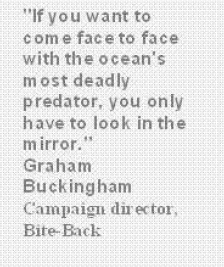
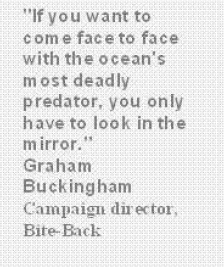
( ) O trecho “the ocean’s most deadly predator,” pode ser traduzido por “o predador mais mortal do oceano.”
( ) No trecho “Unless something changes, sharks could become a thing of the past”, o termo grifado indica uma condição
Assinale a alternativa que contém, de cima para baixo, a sequência correta.
Choking to death
Sharks have been swimming in the oceans since before dinosaurs walked the earth. They’ve shaped the marine environment and everything in it. Without sharks the oceans could collapse, taking with them their ability to produce 50% of the oxygen we breathe and absorb 20% of the CO2 emissions we produce. With every shark slaughtered we’re strengthening our stranglehold on the planet.
Too many fishing boats, too few fish The International Union for the Conservation of Nature recently reported that 85% of the world’s fish stocks are fully exploited or overexploited. It’s the big fish that will disappear first. That’s why we’re focussing on key species that are most vulnerable to overfishing yet widely available in shops and restaurants.
Join us and help protect our blue planet.
(Adaptado de: Bite-Back Shark & Marine Conservation (website) Why we do it. Disponível em: https://www.bite-back.com/whatwe- do/why-we-do-it/. Acesso em: 15 ago. 2017).
Com relação aos recursos linguísticos utilizados no texto, atribua V (verdadeiro) ou F (falso) às afirmativas a seguir.
( ) Em “Join us and help protect our blue planet”, o termo grifado tem a função de envolver o leitor.
( ) Em “that are most vulnerable to overfishing yet widely available”, o termo grifado pode ser substituído, sem alteração de sentido, por “even”.
( ) Na frase “We’re not going to let that happen.”, o termo grifado se refere a “choking to death”.
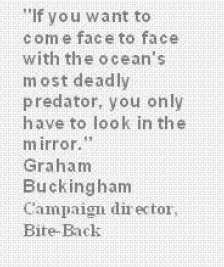
( ) O trecho “the ocean’s most deadly predator,” pode ser traduzido por “o predador mais mortal do oceano.”
( ) No trecho “Unless something changes, sharks could become a thing of the past”, o termo grifado indica uma condição
Assinale a alternativa que contém, de cima para baixo, a sequência correta.
Questão 34 217593
UENP 2017/1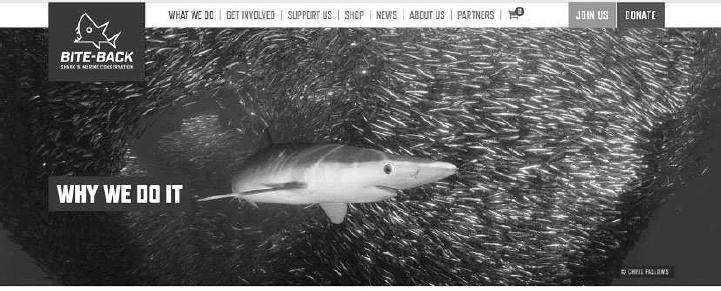
There aren’t plenty more fish in the sea.
The race is on to save sharks and other key marine species – including swordfish, marlin, monkfish and skates/rays – from being wiped out by overfishing
73,000,000 sharks are slaughtered every year. That’s around 200,000 sharks a day. Or roughly two every second. Unless something changes, sharks could become a thing of the past. We’re not going to let that happen.
Choking to death
Sharks have been swimming in the oceans since before dinosaurs walked the earth. They’ve shaped the marine environment and everything in it. Without sharks the oceans could collapse, taking with them their ability to produce 50% of the oxygen we breathe and absorb 20% of the CO2 emissions we produce. With every shark slaughtered we’re strengthening our stranglehold on the planet.
Too many fishing boats, too few fish The International Union for the Conservation of Nature recently reported that 85% of the world’s fish stocks are fully exploited or overexploited. It’s the big fish that will disappear first.
That’s why we’re focussing on key species that are most vulnerable to overfishing yet widely available in shops and restaurants. Join us and help protect our blue planet.
(Adaptado de: Bite-Back Shark & Marine Conservation (website) Why we do it. Disponível em: https://www.bite-back.com/whatwe- do/why-we-do-it/. Acesso em: 15 ago. 2017).
De acordo com o texto, o objetivo da organização Bite-Back é
06