


![[Marketing] Questao Topo - deslogado](https://storage.estuda.com.br/banners/0_6b7ebee90b03af1c560c73bb8bcce34a_banner_deslogado_70_dias.png)
Questões de Inglês
19.971 Questões
Questão 46 250006
Unit-SE Medicina - Caderno 1 2017TEXTO:
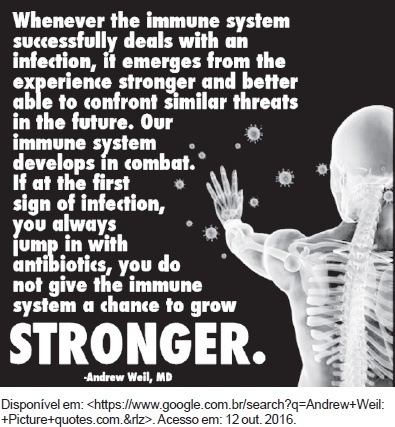
In this quote, Dr. Andrew Weil stresses
Questão 45 250003
Unit-SE Medicina - Caderno 1 2017TEXTO:
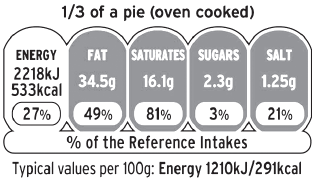
Traffic light-coded food labels indicating how much
fat, salt and sugar an item contains are to appear on
most food that is eaten in Britain in a move hailed by
health campaigners as ending shoppers’ confusion over
[5] what to buy.
All the main supermarket chains and some of the
biggest producers of snack food, such as PepsiCo and
Nestlé, have agreed with ministers to use front-of-pack
nutritional labels colored red, amber or green on some
[10] or all of their products in an effort to make it easier for
consumers to choose healthier options.
The traffic-light labels, which many food
campaigners and medical organizations have long called
for, will be part of a new hybrid nutritional labeling scheme
[15] that combines them with guideline daily amounts (GDAs),
which doctors have criticized as deceptive and utterly
baffling to most consumers.
The new labels are intended to help shoppers know
at a glance whether a product contains a low (green),
[20] medium (amber) or high (red) amount of fat, saturated
fat, salt, sugar and calories. The labels are not designed
to demonize foods with lots of reds but to have people
consider what they are eating and make sure it’s part of
a balanced diet. “Businesses that have signed up to using
[25] the new label today already account for more than 60%
of the food that is sold in the UK,” a spokesman added.
The UK public health minister, Anna Soubry, said
shoppers were confused by existing food labels:
“Research shows that, of all the current schemes, people
[30] like this [hybrid] label the most and can use the
information to make healthier choices.”
Disponível em: . Acesso em: 12 out. 2016.
The word or expression has been correctly defined in
Questão 43 250000
Unit-SE Medicina - Caderno 1 2017TEXTO:
Traffic light-coded food labels indicating how much
fat, salt and sugar an item contains are to appear on
most food that is eaten in Britain in a move hailed by
health campaigners as ending shoppers’ confusion over
[5] what to buy.
All the main supermarket chains and some of the
biggest producers of snack food, such as PepsiCo and
Nestlé, have agreed with ministers to use front-of-pack
nutritional labels colored red, amber or green on some
[10] or all of their products in an effort to make it easier for
consumers to choose healthier options.
The traffic-light labels, which many food
campaigners and medical organizations have long called
for, will be part of a new hybrid nutritional labeling scheme
[15] that combines them with guideline daily amounts (GDAs),
which doctors have criticized as deceptive and utterly
baffling to most consumers.
The new labels are intended to help shoppers know
at a glance whether a product contains a low (green),
[20] medium (amber) or high (red) amount of fat, saturated
fat, salt, sugar and calories. The labels are not designed
to demonize foods with lots of reds but to have people
consider what they are eating and make sure it’s part of
a balanced diet. “Businesses that have signed up to using
[25] the new label today already account for more than 60%
of the food that is sold in the UK,” a spokesman added.
The UK public health minister, Anna Soubry, said
shoppers were confused by existing food labels:
“Research shows that, of all the current schemes, people
[30] like this [hybrid] label the most and can use the
information to make healthier choices.”
Disponível em: . Acesso em: 12 out. 2016.
So far, ________of the food businesses in UK have agreed to use the hybrid nutritional labeling scheme.
The alternative that completes this blank correctly is
Questão 42 249998
Unit-SE Medicina - Caderno 1 2017TEXTO:
Traffic light-coded food labels indicating how much
fat, salt and sugar an item contains are to appear on
most food that is eaten in Britain in a move hailed by
health campaigners as ending shoppers’ confusion over
[5] what to buy.
All the main supermarket chains and some of the
biggest producers of snack food, such as PepsiCo and
Nestlé, have agreed with ministers to use front-of-pack
nutritional labels colored red, amber or green on some
[10] or all of their products in an effort to make it easier for
consumers to choose healthier options.
The traffic-light labels, which many food
campaigners and medical organizations have long called
for, will be part of a new hybrid nutritional labeling scheme
[15] that combines them with guideline daily amounts (GDAs),
which doctors have criticized as deceptive and utterly
baffling to most consumers.
The new labels are intended to help shoppers know
at a glance whether a product contains a low (green),
[20] medium (amber) or high (red) amount of fat, saturated
fat, salt, sugar and calories. The labels are not designed
to demonize foods with lots of reds but to have people
consider what they are eating and make sure it’s part of
a balanced diet. “Businesses that have signed up to using
[25] the new label today already account for more than 60%
of the food that is sold in the UK,” a spokesman added.
The UK public health minister, Anna Soubry, said
shoppers were confused by existing food labels:
“Research shows that, of all the current schemes, people
[30] like this [hybrid] label the most and can use the
information to make healthier choices.”
Disponível em: . Acesso em: 12 out. 2016.
Doctors say that the GDAs used on food packaging can be __________
According to the text, the alternative that does not complete this blank suitably is
Questão 41 249992
Unit-SE Medicina - Caderno 1 2017TEXTO:
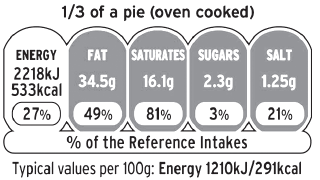
Traffic light-coded food labels indicating how much
fat, salt and sugar an item contains are to appear on
most food that is eaten in Britain in a move hailed by
health campaigners as ending shoppers’ confusion over
[5] what to buy.
All the main supermarket chains and some of the
biggest producers of snack food, such as PepsiCo and
Nestlé, have agreed with ministers to use front-of-pack
nutritional labels colored red, amber or green on some
[10] or all of their products in an effort to make it easier for
consumers to choose healthier options.
The traffic-light labels, which many food
campaigners and medical organizations have long called
for, will be part of a new hybrid nutritional labeling scheme
[15] that combines them with guideline daily amounts (GDAs),
which doctors have criticized as deceptive and utterly
baffling to most consumers.
The new labels are intended to help shoppers know
at a glance whether a product contains a low (green),
[20] medium (amber) or high (red) amount of fat, saturated
fat, salt, sugar and calories. The labels are not designed
to demonize foods with lots of reds but to have people
consider what they are eating and make sure it’s part of
a balanced diet. “Businesses that have signed up to using
[25] the new label today already account for more than 60%
of the food that is sold in the UK,” a spokesman added.
The UK public health minister, Anna Soubry, said
shoppers were confused by existing food labels:
“Research shows that, of all the current schemes, people
[30] like this [hybrid] label the most and can use the
information to make healthier choices.”
Disponível em: . Acesso em: 12 out. 2016.
The main objective of the use of traffic light-coded food labels is to
Questão 40 249989
Unit-SE Medicina - Caderno 1 2017TEXTO:

Coffee isn’t just warm and energizing, it may also
be extremely good for you. In recent years and decades,
scientists have studied the effects of coffee on various
aspects of health and their results have been nothing
[5] short of amazing.
Coffee doesn’t just keep you awake, it may literally
make you smarter as well. The active ingredient in coffee
is caffeine, which is a stimulant and the most commonly
consumed psychoactive substance in the world.
[10] Caffeine’s primary mechanism in the brain is blocking
the effects of an inhibitory neurotransmitter called
Adenosine. By blocking the inhibitory effects of
Adenosine, caffeine actually increases neuronal firing in
the brain and the release of other neurotransmitters like
[15] dopamine and norepinephrine. Many controlled trials have
examined the effects of caffeine on the brain,
demonstrating that caffeine can improve mood, reaction
time, memory, vigilance and general cognitive function.
There’s a good reason why you will find caffeine in
[20] most commercial fat burning supplements. Caffeine,
partly due to its stimulant effect on the central nervous
system, both raises metabolism and increases the
oxidation of fatty acids. Caffeine can also improve athletic
performance by several mechanisms, including by
[25] mobilizing fatty acids from the fat tissues.
Type II diabetes is a lifestyle-related disease
that has reached epidemic proportions, having increased
10-fold in a few decades and now afflicting about 300
million people. In observational studies, coffee has been
[30] repeatedly associated with a lower risk of diabetes. The
reduction in risk ranges from 23% all the way up to 67%.
A massive review article looked at 18 studies with a total
of 457.922 participants. Each additional cup of coffee
per day lowered the risk of diabetes by 7%. The more
[35] coffee people drank, the lower their risk.
Disponível em: https://authoritynutrition.com/why-coffee-is-good-foryou/. Acesso em: 12 out. 2016.
Considering language use in the text, it’s correct to say
06