


![[Marketing] Questao Topo - deslogado](https://storage.estuda.com.br/banners/0_6b7ebee90b03af1c560c73bb8bcce34a_banner_deslogado_70_dias.png)
Questões de Inglês
19.971 Questões
Questão 47 276181
UniCesumar Medicina 2017Malaria vs Yellow Fever
Malaria and yellow fever are similar in the sense that they are both diseases carried by mosquitoes and move from one victim to the next. Neither malaria  yellow fever can be transmitted between human beings. Yellow fever is a viral infectious disease, whereas malaria is caused by the Plasmodic genus called eukaryotic protist. Mosquitoes infected with the yellow fever virus breed around houses, and in forests or jungles. Occasionally, infected travellers from areas where yellow fever occurs have exported cases to countries that are free of yellow fever, but the disease can only spread easily if that country has mosquito species able to transmit it, specific climatic conditions and the animal reservoir needed to maintain it.
According to estimates by the World Health Organization, about 200,000 deaths are caused by yellow fever per year, while there were 212 million malaria cases worldwide just in 2015. However, there has been a 21% decrease in malaria incidence between 2010 and 2015, as well as a 29% decrease in mortality rates during the same period.
The first case of yellow fever was officially recorded in 1793; malaria is believed to have affected humans for more than 500,000 years.
Malaria can affect any type of population but is commonly found in the tropics. Generally, yellow fever occurs in the equatorial region, which is why it is more common among Africans than Caucasians.
(Adapted from www.differencebetween.net)
Segundo o texto,
Questão 46 276178
UniCesumar Medicina 2017Malaria vs Yellow Fever
Malaria and yellow fever are similar in the sense that they are both diseases carried by mosquitoes and move from one victim to the next. Neither malaria yellow fever can be transmitted between human beings. Yellow fever is a viral infectious disease, whereas malaria is caused by the Plasmodic genus called eukaryotic protist. Mosquitoes infected with the yellow fever virus breed around houses, and in forests or jungles. Occasionally, infected travellers from areas where yellow fever occurs have exported cases to countries that are free of yellow fever, but the disease can only spread easily if that country has mosquito species able to transmit it, specific climatic conditions and the animal reservoir needed to maintain it.
According to estimates by the World Health Organization, about 200,000 deaths are caused by yellow fever per year, while there were 212 million malaria cases worldwide just in 2015. However, there has been a 21% decrease in malaria incidence between 2010 and 2015, as well as a 29% decrease in mortality rates during the same period.
The first case of yellow fever was officially recorded in 1793; malaria is believed to have affected humans for more than 500,000 years.
Malaria can affect any type of population but is commonly found in the tropics. Generally, yellow fever occurs in the equatorial region, which is why it is more common among Africans than Caucasians.
(Adapted from www.differencebetween.net)
A palavra que preenche corretamente a lacuna I é
Questão 44 274747
FACASPER 2017REVIEW: ‘MULTITUDINOUS HEART,’ NEWLY TRANSLATED POETRY BY CARLOS DRUMMOND DE ANDRADE
Books of The Times By Dwight Garner JULY 2, 2015
Carlos Drummond de Andrade (1902-1987) is widely considered the greatest poet in the history of Brazil, a country where poets are taken seriously. One of his poems, “Canção Amiga” (“Friendly Song”), was once printed on the 50 cruzados bill.
Mr. Drummond’s bald, equine, bespectacled visage appears on T-shirts and book bags in Brazil. Since 2002 there has been a statue of him on the Copacabana in Rio de Janeiro, his adopted hometown. This statue faces away from, not toward, the ocean. This was a witty decision (he was an inward poet) that annoys the unintelligentsia, who want him spun around.
Now we have “Multitudinous Heart,” an expanded, reshuffled and welcome selection of Mr. Drummond’s verse. In new translations by Richard Zenith, we meet a sophisticated and cerebral poet who, true to this book’s title, speaks in many registers. He is by turns melancholy and ironic, sentimental and self-deprecating, remote and boyish.
His wealthy father owned ranches in the mountainous state of Minas Gerais, and the poet was the fifth of six children to reach adulthood. He was used to hubbub. Large family meals are recalled, and there is a constant sense of a raucous daily grind: “Weddings, mortgages,/the cousins with TB,/ the crazy aunt.”
Yet the poems more often contain a measured sense of solitude. Mr. Drummond studied to become a pharmacist but worked most of his life as a civil servant in the Ministry of Education. He was said to be anything but gregarious; he was never a “smiling public man,” in Yeats’s locution.
He was animated on the inside. One of his favorite words was “twisted.” He thought we humans were mostly impertinent and odd.
He felt wizened before his time. In a 1945 poem, he speaks of “the old man in me./He began to harass me in childhood.” In a 1951 poem, “The Table,” he writes:
A bunch of louts in our fifties,
balding, used up, burned out,
yet in our chests we preserve
intact that boyish candor,
that scampering into the woods,
that craving for things forbidden.
Mr. Drummond is worth encountering on the page. You probably need this volume and the earlier one, alas, to glimpse him in full. In a satirical 1945 poem titled “In Search of Poetry,” he offered this advice for the apprentice poet:
Don’t dramatize, don’t invoke,
don’t inquire. Don’t waste time lying.
Don’t get cross.
Your ivory yacht, your diamond shoe,
your mazurkas and superstitions, your family skeletons
all vanish in the curve of time, they’re worthless.
Ha. The good news about “Multitudinous Heart” is that it proves Mr. Drummond didn’t believe a word of that hooey.
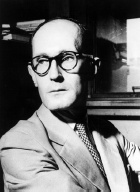
Source: http://www.nytimes.com/2015/07/03/books/review-multitudinous-heart-newly-translated- -poetry-by-carlos-drummond-de-andrade.html Access October 15, 2016. Adapted.
It is correct to say that Mr. Garner describes Mr. Drummond as:
Questão 41 274720
FACASPER 201710 YEARS AFTER AN INCONVENIENT TRUTH,
AL GORE MAY ACTUALLY BE WINNING
ISSIE LAPOWSKY SCIENCE 05.24.16 6:50 AM
AL GORE SNEEZES a hefty achoo. “Excuse me,” the former vice president says, dabbing a tissue at his nose before offering up an explanation. “Spring.”
Outside Gore’s New York City office, spring has certainly sprung—early too. This March was the hottest one ever, beating the prior record set in March 2015. The same goes for February and January of this year, and, oh, the eight consecutive months before. Gore knows these statistics by heart. The fact that you might know them too is likely because of him. These kinds of numbers— and the scary story they tell about the future of Earth—have been Gore’s chief motivation since he failed to win the presidency in 2000. Gore emerged from that weird, disputed election armed with what is now possibly the most famous slide¬show in human history. He has traveled the world delivering that deck to hundreds of people at a time, showing in irrefutable detail just how mind-bogglingly badly we have treated our planet and what we might be able to do about it.
Ten years ago, the slide¬show became An Inconvenient Truth, the documentary that spread those ideas to millions. Gore says he still tinkers with the slide¬show every day, because, well, the numbers keep changing. Not always for the better. Yet this year Gore and his fellow activists have a rare reason to celebrate. In April, 175 world leaders gathered at the United Nations to sign the Paris Agreement, a global pact that aims to keep global temperatures from rising more than 2 degrees Celsius above preindustrial levels. Now, a decade after his movie sounded the alarm about climate change and 16 years after he ran for president, it looks like Al Gore might finally be … winning?
WIRED: Why did you want to make An Inconvenient Truth?
GORE: I have to admit to you that initially I did not want to do a documentary.
What? Why not?
It’s a dumb reason. I didn’t think a slide¬show could translate into a movie. (…) Participant Media and Davis Guggenheim had to convince me it was a good idea, and I’m so glad they found ways to reveal to me the depths of my ignorance about moviemaking. It’s a message that has to be heard. Sorry to risk sounding grandiose, but the future of human civilization is at stake.
The Paris Agreement must feel like a big point of progress.
It really does. Sometimes in sports you can sense a palpable shift in the momentum of the contest. A team will be behind on the scoreboard, but the shift in momentum is so obvious and dramatic that you just have the feeling they’re going to win. That’s where we are in solving the climate crisis. We’re still behind on the scoreboard, but the momentum has shifted. We are winning
When renewable electricity becomes cheaper than electricity that comes from burning coal or gas, then that changes everything. The marketplace makes it the default option, and you get what you saw in the world in 2015—90 percent of the new electricity generated in the world last year was from renewables. That is an astonishing change. The Paris Agreement exceeded the upper range of my expectations. Does it go far enough? No, of course not. Can it be improved? Yes, it’s designed to be constantly improved, and that’s what I’m focused on now.
You’ve been at this a long time. Was it lonely fighting for this stuff in government in the 1980s and 1990s?
It was certainly a different time and a different environment. But I don’t ever remember feeling lonely, because I was always focused on reaching more and more people. Building a global grassroots movement is really the only way to solve this, because so many political systems have been captured by legacy industries. And that influence over policymaking has to be counterbalanced by a grassroots awareness.
It’s sometimes tough for people to get climate change because they’re not seeing its effects every day—or at least they don’t realize they are. What have you seen that has stuck with you?
In March, I went to Tacloban in the Philippines and talked with survivors there who endured the ravages of Super Typhoon Haiyan. When you see how their lives were utterly transformed and feel the painful losses they suffered, it certainly will stick with you. I conducted a training in Miami last fall during one of the highest high tides and saw fish from the ocean swimming in the streets in Miami Beach and Fort Lauderdale on a sunny day.
You talk a lot about “winning” the fight against climate change. How do you define a win?
Winning means avoiding catastrophic consequences that could utterly disrupt the future of human civilization. It means bending the curves downward so that the global warming pollution stops accumulating in the atmosphere and begins to reduce in volume. It means creating tens of millions of new jobs to retrofit buildings, to transform energy systems and install advanced batteries, to transform agriculture and forestry, and to make the solutions to the climate crisis the central organizing principle of our civilization.
Source: https://www.wired.com/2016/05/wired-al-gore-climate-change/ Access October 16, 2016. Adapted.
What is ‘Al Gore may actually be winning’ in the title?
Questão 22 272927
Unit-AL 2017TEXTO:
More than 300 years after sinking with a cargo of
200 tons of gold, silver and precious stones (which would
amount to some US$ 10 billion in current values), the
Spanish ship San José has just been located off the coast
[5] of Colombia and has become the target of a diplomatic
dispute between Colombia and Spain.
The fortune which has been at the bottom of the
ocean since 1708 came from the mines that the Spanish
Empire exploited in Peru, Bolivia and Ecuador. Along with
[10] the treasure, the bodies of 600 sailors are likely to be in
the ship. “It is Colombian patrimony and it belongs to the
Colombian people. Now many people will say that they
are the owners of the ship, but it belongs to Colombia,”
says President Juan Manuel Santos, who has announced
[15] the plan of a museum in Cartagena to exhibit the objects
found in the ship as soon as they are recovered.
The Colombian government says the shipwreck is
in “very deep waters.” It has not estimated how long it
will take to recover its contents. The Spanish government,
[20] however, says it will not give up recovering the ship. “The
ship belongs to the Spanish government – it is not a
private vessel. There is government ownership wherever
it is,” says Spanish Chancellor José Manuel García
Margallo.
[25] The San José galleon was sunk after an ambush
by the English Navy to stop the shipment from reaching
and serving Philip V of Spain in Bourbon in a war for the
succession of the Spanish throne. The ship was loaded
at a port in Panama and was approaching Cartagena for
[30] a stopover. From there it would leave for Havana, Cuba
and later sail to its final destination, Cádiz, Spain. Near
Cartagena, however, the San José was ambushed by
ships under the command of Captain Charles Wager.
Eventually the Spanish were defeated after a two-day
[35] naval battle and the San José sank on June 8, 1708.
MORE than... Disponível em: . Acesso em: 24 jun. 2016. Translated by Thomas Muello.
The alternative in which the word or phrase from the text has not been correctly defined is
Questão 21 272926
Unit-AL 2017TEXTO:
More than 300 years after sinking with a cargo of
200 tons of gold, silver and precious stones (which would
amount to some US$ 10 billion in current values), the
Spanish ship San José has just been located off the coast
[5] of Colombia and has become the target of a diplomatic
dispute between Colombia and Spain.
The fortune which has been at the bottom of the
ocean since 1708 came from the mines that the Spanish
Empire exploited in Peru, Bolivia and Ecuador. Along with
[10] the treasure, the bodies of 600 sailors are likely to be in
the ship. “It is Colombian patrimony and it belongs to the
Colombian people. Now many people will say that they
are the owners of the ship, but it belongs to Colombia,”
says President Juan Manuel Santos, who has announced
[15] the plan of a museum in Cartagena to exhibit the objects
found in the ship as soon as they are recovered.
The Colombian government says the shipwreck is
in “very deep waters.” It has not estimated how long it
will take to recover its contents. The Spanish government,
[20] however, says it will not give up recovering the ship. “The
ship belongs to the Spanish government – it is not a
private vessel. There is government ownership wherever
it is,” says Spanish Chancellor José Manuel García
Margallo.
[25] The San José galleon was sunk after an ambush
by the English Navy to stop the shipment from reaching
and serving Philip V of Spain in Bourbon in a war for the
succession of the Spanish throne. The ship was loaded
at a port in Panama and was approaching Cartagena for
[30] a stopover. From there it would leave for Havana, Cuba
and later sail to its final destination, Cádiz, Spain. Near
Cartagena, however, the San José was ambushed by
ships under the command of Captain Charles Wager.
Eventually the Spanish were defeated after a two-day
[35] naval battle and the San José sank on June 8, 1708.
MORE than... Disponível em: . Acesso em: 24 jun. 2016. Translated by Thomas Muello.
Fill in the parentheses with T (True) or F (False).
About the sunken ship, it’s correct to say:
( ) It is in relatively shallow waters.
( ) It was on its way back to Spain when it sank.
( ) It’s not yet known the amount of time needed to get back the things inside ship.
( ) The ship was attacked by the English Navy as soon as it left Havana.
The correct sequence, from top to bottom, is
06