


![[Marketing] Questao Topo - deslogado](https://storage.estuda.com.br/banners/0_6b7ebee90b03af1c560c73bb8bcce34a_banner_deslogado_70_dias.png)
Questões de Inglês
19.971 Questões
Questão 50 495970
UCPEL 2017Leia o texto publicitário abaixo e responda:
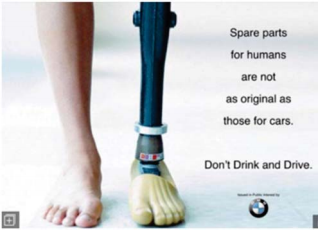
Esta campanha publicitária busca conscientizar as pessoas acerca do perigo da associação entre bebida alcoólica e condução de veículos automotores. Que mensagem a campanha constrói para convencer as pessoas em relação ao perigo dessa associação?
Questão 49 495966
UCPEL 2017Leia a letra de música abaixo e responda:
War Pigs
Generals gathered in their masses
Just like witches at black masses
Evil minds that plot destruction
Sorcerers of death’s construction
In the fields the bodies burning
As the war machine keeps turning
Death and hatred to mankind
Poisoning their brainwashed minds
Oh, Lord, yeah!
Politicians hide themselves away
They only started the war
Why should they go out to fight?
They leave that role to the poor, yeah!
Time will tell on their power minds
Making war just for fun
Treating people just like pawns in chess
Wait ‘till their judgement day comes, yeah!
Now in darkness, world stops turning
Ashes where their bodies burning
No more war pigs of the power
Hand of God has stuck the hour
Day of judgement, God is calling
On their knees, the war pigs crawling
Begging mercy for their sins
Satan, laughing, spreads his wings
Oh, Lord, yeah!
War Pigs, do grupo britânico de rock heavy metal Black Sabbath, critica as guerras, que causam morte e destruição. Com base na letra acima, responda quem são os “war pigs” referidos na música?
Questão 48 495959
UCPEL 2017Leia o trecho do texto jornalístico abaixo e responda:
Drone Surveillance
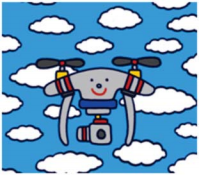
New rules from the U.S. Federal Aviation Administration (FAA) for the commercial use of unmanned aircraft lighter than 55 pounds have opened the door to what could be a massive industry. It’s much bigger than delivery drones, which are not yet practical or legal in the U.S. First we’ll see more drones doing things like surveying real estate and inspecting infrastructure such as roofs, high bridges, cell towers, power lines, and wind turbines.
But our new drone reality has privacy advocates spooked: low-cost vehicles and sensors are likely to spur widespread adoption of a technology that can be used for persistent aerial surveillance, and bad actors could exploit gaps in existing privacy laws. It’s also not clear which government entities, if any, are responsible for addressing drone-related privacy concerns. The FAA has declined to make rules. The Federal Trade Commission, the U.S. government’s primary consumer privacy cop, is still exploring the issue. A few state laws have emerged to fill the void, but the overall landscape is inconsistent and unclear.
Drone industry advocates argue that these aircraft are not all that different from other technologies that could be used to conduct surveillance, and that state voyeurism and nuisance laws already in place will protect consumers.
Adaptado de: www.technologyreview.com Acesso em: 13 nov. 2016
A indústria de veículos aéreos não tripulados tem crescido e aprimorado-se nos Estados Unidos. Em função disso, o texto levanta a seguinte questão:
Questão 17 492550
IFPR 2017O TEXTO ABAIXO REFERE-SE À QUESTÃO.
Millennials Are Giving Their Babies Increasingly Strange Names
Mandy Oaklander
Sept. 29, 2016
The people having the most kids in this country, Millennials, are giving their babies stranger and stranger names. In a time when actual people are naming their children Legendary and Sadman and Lux, that should perhaps come as no surprise.
Jean Twenge, a psychology professor at San Diego State University, and research assistant Lauren Dawson analyzed the first names of 358 million babies in a U.S. Social Security Administration database. Between 2004 and 2006, 66% of boys and 76% of girls had a name that wasn’t one of the 50 most common names of that time period. By contrast, in 2011-2015, 72% of boys and 79% of girls had names that were not in the top 50 most popular. In the top 10 for 2015 in the U.S. were Harper, Liam, Mason, Isabella, Olivia, Ava, and Mia. Brooklyn was ranked 31st most popular for girls across the U.S. (though not for girls in New York, where the name didn’t rank in the top 100).
Twenge credits the rise of stranger names on our increasingly individualistic culture: one that focuses on the self and is less concerned with social rules. “Millennials were raised with phrases like, you shouldn’t care what anyone else thinks of you, you can be anything you want to be, it’s good to be different, you have to love yourself first before you love anyone else,” says Twenge. Our obsession with celebrities is also a hallmark of individualism.
Twenge found that Millennials are much more accepting of same-sex relationships and experiences. “What we’re seeing is this movement toward more sexual freedom,” Twenge told TIME. “There’s more freedom for people to do what they want without following the traditional, often now seen as outdated, social rules about who you’re supposed to have sex with and when.”
Adaptado de: http://time.com/4511927/millennials-parents-baby-names/ Acesso em: 01º outubro 2016
According to the text, it is correct to say that Twenge:
Questão 14 492540
IFPR 2017O TEXTO ABAIXO REFERE-SE À QUESTÃO.
Millennials Are Giving Their Babies Increasingly Strange Names
Mandy Oaklander
Sept. 29, 2016
The people having the most kids in this country, Millennials, are giving their babies stranger and stranger names. In a time when actual people are naming their children Legendary and Sadman and Lux, that should perhaps come as no surprise.
Jean Twenge, a psychology professor at San Diego State University, and research assistant Lauren Dawson analyzed the first names of 358 million babies in a U.S. Social Security Administration database. Between 2004 and 2006, 66% of boys and 76% of girls had a name that wasn’t one of the 50 most common names of that time period. By contrast, in 2011-2015, 72% of boys and 79% of girls had names that were not in the top 50 most popular. In the top 10 for 2015 in the U.S. were Harper, Liam, Mason, Isabella, Olivia, Ava, and Mia. Brooklyn was ranked 31st most popular for girls across the U.S. (though not for girls in New York, where the name didn’t rank in the top 100).
Twenge credits the rise of stranger names on our increasingly individualistic culture: one that focuses on the self and is less concerned with social rules. “Millennials were raised with phrases like, you shouldn’t care what anyone else thinks of you, you can be anything you want to be, it’s good to be different, you have to love yourself first before you love anyone else,” says Twenge. Our obsession with celebrities is also a hallmark of individualism.
Twenge found that Millennials are much more accepting of same-sex relationships and experiences. “What we’re seeing is this movement toward more sexual freedom,” Twenge told TIME. “There’s more freedom for people to do what they want without following the traditional, often now seen as outdated, social rules about who you’re supposed to have sex with and when.”
Adaptado de: http://time.com/4511927/millennials-parents-baby-names/ Acesso em: 01º outubro 2016
The researchers analyzed ___ first names of babies.
Questão 13 492515
IFPR 2017O TEXTO ABAIXO REFERE-SE À QUESTÃO.
Millennials Are Giving Their Babies Increasingly Strange Names
Mandy Oaklander
Sept. 29, 2016
The people having the most kids in this country, Millennials, are giving their babies stranger and stranger names. In a time when actual people are naming their children Legendary and Sadman and Lux, that should perhaps come as no surprise.
Jean Twenge, a psychology professor at San Diego State University, and research assistant Lauren Dawson analyzed the first names of 358 million babies in a U.S. Social Security Administration database. Between 2004 and 2006, 66% of boys and 76% of girls had a name that wasn’t one of the 50 most common names of that time period. By contrast, in 2011-2015, 72% of boys and 79% of girls had names that were not in the top 50 most popular. In the top 10 for 2015 in the U.S. were Harper, Liam, Mason, Isabella, Olivia, Ava, and Mia. Brooklyn was ranked 31st most popular for girls across the U.S. (though not for girls in New York, where the name didn’t rank in the top 100).
Twenge credits the rise of stranger names on our increasingly individualistic culture: one that focuses on the self and is less concerned with social rules. “Millennials were raised with phrases like, you shouldn’t care what anyone else thinks of you, you can be anything you want to be, it’s good to be different, you have to love yourself first before you love anyone else,” says Twenge. Our obsession with celebrities is also a hallmark of individualism.
Twenge found that Millennials are much more accepting of same-sex relationships and experiences. “What we’re seeing is this movement toward more sexual freedom,” Twenge told TIME. “There’s more freedom for people to do what they want without following the traditional, often now seen as outdated, social rules about who you’re supposed to have sex with and when.”
Adaptado de: http://time.com/4511927/millennials-parents-baby-names/ Acesso em: 01º outubro 2016
According to the text, Millennials:
06