


![[Marketing] Questao Topo - deslogado](https://storage.estuda.com.br/banners/0_6b7ebee90b03af1c560c73bb8bcce34a_banner_deslogado_70_dias.png)
Questões de Inglês
19.971 Questões
Questão 18 600626
UNIC 2017/1TEXTO:
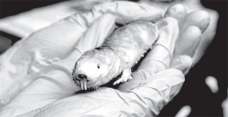
A rodent that never gets cancer could hold the key
to preventing or treating malignant tumors, say
scientists. A team led by researchers from the University
of Rochester, New York, US, investigated the anti-cancer
[5] properties of the naked mole-rat.
The US team cultured skin cells from the rodent in
the laboratory. They found that the animal’s tissues were
rich in high molecular weight hyaluronan (HMW-HA), a
gooey sugar that is involved in tissue repair. The
[10] researchers think the substance gives the naked molerat
its distinctive, elastic “baggy” skin, which it needs to
squeeze through underground tunnels. Experiments
show that when HMW-HA is removed from naked molerat
cells, they become susceptible to cancer, suggesting
[15] it plays a role in making the rodent “cancer-proof”.
Naked mole-rats can live for around 30 years, an
age unprecedented in small rodents. Mice, in
comparison, live for no longer than 4 years. The rodent
has no fur and spends its life living underground in dark
[20] tunnels in a colony. While it has probably evolved to
provide the rodent with an exceptionally flexible skin, it
also gives protection against cancer, possibly by stopping
cancerous cells from dividing.
The next step, they say, is to test the chemical in
[25] mice, then human cells. “There’s indirect evidence that
HMW-HA would work in people. It’s used in anti-wrinkle
injections and to relieve pain from arthritis in knee
joints, without any adverse effects. Our hope is that it
can also induce an anti-cancer response,” they say.
[30] Commenting on the research, Oliver Childs of
Cancer Research UK said:”They’re not going to win any
beauty contests, but these curious creatures have long
interested scientists because of their exceptionally
lengthy life spans and resistance to cancer. This
[35] fascinating research builds on previous work revealing
the biological tricks mole-rats have evolved to prevent
cancer. It’s a long way off, but it will be interesting to see
if further research can find a way to use hyaluronan to
help prevent or treat cancer in humans.”
A RODENT That...Disponível em:www.bbc.co.uk/news/health-22961694 Acesso em: 12 out. 2016. Adaptado.
Considering the use of the substance HMW-HA in humans, the scientists think that it
Questão 17 600625
UNIC 2017/1TEXTO:
A rodent that never gets cancer could hold the key
to preventing or treating malignant tumors, say
scientists. A team led by researchers from the University
of Rochester, New York, US, investigated the anti-cancer
[5] properties of the naked mole-rat.
The US team cultured skin cells from the rodent in
the laboratory. They found that the animal’s tissues were
rich in high molecular weight hyaluronan (HMW-HA), a
gooey sugar that is involved in tissue repair. The
[10] researchers think the substance gives the naked molerat
its distinctive, elastic “baggy” skin, which it needs to
squeeze through underground tunnels. Experiments
show that when HMW-HA is removed from naked molerat
cells, they become susceptible to cancer, suggesting
[15] it plays a role in making the rodent “cancer-proof”.
Naked mole-rats can live for around 30 years, an
age unprecedented in small rodents. Mice, in
comparison, live for no longer than 4 years. The rodent
has no fur and spends its life living underground in dark
[20] tunnels in a colony. While it has probably evolved to
provide the rodent with an exceptionally flexible skin, it
also gives protection against cancer, possibly by stopping
cancerous cells from dividing.
The next step, they say, is to test the chemical in
[25] mice, then human cells. “There’s indirect evidence that
HMW-HA would work in people. It’s used in anti-wrinkle
injections and to relieve pain from arthritis in knee
joints, without any adverse effects. Our hope is that it
can also induce an anti-cancer response,” they say.
[30] Commenting on the research, Oliver Childs of
Cancer Research UK said:”They’re not going to win any
beauty contests, but these curious creatures have long
interested scientists because of their exceptionally
lengthy life spans and resistance to cancer. This
[35] fascinating research builds on previous work revealing
the biological tricks mole-rats have evolved to prevent
cancer. It’s a long way off, but it will be interesting to see
if further research can find a way to use hyaluronan to
help prevent or treat cancer in humans.”
A RODENT That...Disponível em:www.bbc.co.uk/news/health-22961694 Acesso em: 12 out. 2016. Adaptado.
The naked mole-rat _______________
The only alternative that does not complete this blank correctly is
Questão 16 600623
UNIC 2017/1TEXTO:
A rodent that never gets cancer could hold the key
to preventing or treating malignant tumors, say
scientists. A team led by researchers from the University
of Rochester, New York, US, investigated the anti-cancer
[5] properties of the naked mole-rat.
The US team cultured skin cells from the rodent in
the laboratory. They found that the animal’s tissues were
rich in high molecular weight hyaluronan (HMW-HA), a
gooey sugar that is involved in tissue repair. The
[10] researchers think the substance gives the naked molerat
its distinctive, elastic “baggy” skin, which it needs to
squeeze through underground tunnels. Experiments
show that when HMW-HA is removed from naked molerat
cells, they become susceptible to cancer, suggesting
[15] it plays a role in making the rodent “cancer-proof”.
Naked mole-rats can live for around 30 years, an
age unprecedented in small rodents. Mice, in
comparison, live for no longer than 4 years. The rodent
has no fur and spends its life living underground in dark
[20] tunnels in a colony. While it has probably evolved to
provide the rodent with an exceptionally flexible skin, it
also gives protection against cancer, possibly by stopping
cancerous cells from dividing.
The next step, they say, is to test the chemical in
[25] mice, then human cells. “There’s indirect evidence that
HMW-HA would work in people. It’s used in anti-wrinkle
injections and to relieve pain from arthritis in knee
joints, without any adverse effects. Our hope is that it
can also induce an anti-cancer response,” they say.
[30] Commenting on the research, Oliver Childs of
Cancer Research UK said:”They’re not going to win any
beauty contests, but these curious creatures have long
interested scientists because of their exceptionally
lengthy life spans and resistance to cancer. This
[35] fascinating research builds on previous work revealing
the biological tricks mole-rats have evolved to prevent
cancer. It’s a long way off, but it will be interesting to see
if further research can find a way to use hyaluronan to
help prevent or treat cancer in humans.”
A RODENT That...Disponível em:www.bbc.co.uk/news/health-22961694 Acesso em: 12 out. 2016. Adaptado.
Fill in the parentheses with T (True) or F (False).
About the substance HMW-HA, found in the naked mole-rat’s tissues, it’s correct to say:
( ) It’s a sticky, sugary substance.
( ) It’s helpful for the healing of damaged tissues.
( ) It gives the naked mole-rat’s skin a rigid complexion.
( ) It seems to protect the naked mole-rat against cancerous cells.
The correct sequence, from top to bottom, is
Questão 16 599816
FCMSJF - Suprema 2017/2Syrian children in state of “toxic stress”, Save the Children says
Millions of Syrian children could be living in a state of “toxic stress” due to prolonged exposure to the horrors of war, aid group Save the Children says.
The damage to an entire generation of children could soon become irreversible without immediate help, it adds.
The stress of war has led to increased bedwetting, self-harm, suicide attempts and aggressive behaviour among many children, according to a new report.
The findings are based on hundreds of interviews in Syria.
Save the Children says its study is the largest of its kind into the mental health and well-being of Syria’s children amid the war, which began in 2011 and has left more than 300,000 people dead.
Save the Children spoke to more than 450 people in seven of Syria 14 governorates as part of its study, including children of varying ages, parents, caregivers, social workers, aid workers and teachers.
It found:
• Almost all children and 84% of adults said that bombing and shelling was the number one cause of psychological stress for children
• Two-thirds of children have either lost a loved one, had their house bombed or shelled, or been injured as a result of the war, according to adults interviewed (some had suffered more than one of these traumatic events)
• 71% of interviewees said that children were increasingly suffering from frequent bedwetting and “involuntary urination” - symptoms of toxic stress and post-traumatic stress disorder (PTSD)
• 48% of adults said they had seen children who had lost their ability to speak or begun to suffer from speech impediments since the war began
• Nearly half of those interviewed said children “regularly or always have feelings of grief or extreme sadness”
Hisham (not his real name) is a school teacher from the eastern city of Deir al-Zour, which is partially held by IS and partially by the government.
He, his wife and five children have now fled to the al-Hol refugee camp.
When the war first started, he said, children in Deir al-Zour found the sounds of shelling entertaining, like a game, until their relatives and people they know started dying.
Soon, they were spending all their time on the streets “because there was nothing to keep them occupied”, including schools.
His oldest child is nine, but “doesn’t even know how to add one plus one”.
BBC - 7 March 2017
According to the text “…children regularly or always have feelings of grief or extreme sadness”.
Grief is:
Questão 15 599815
FCMSJF - Suprema 2017/2Syrian children in state of “toxic stress”, Save the Children says
Millions of Syrian children could be living in a state of “toxic stress” due to prolonged exposure to the horrors of war, aid group Save the Children says.
The damage to an entire generation of children could soon become irreversible without immediate help, it adds.
The stress of war has led to increased bedwetting, self-harm, suicide attempts and aggressive behaviour among many children, according to a new report.
The findings are based on hundreds of interviews in Syria.
Save the Children says its study is the largest of its kind into the mental health and well-being of Syria’s children amid the war, which began in 2011 and has left more than 300,000 people dead.
Save the Children spoke to more than 450 people in seven of Syria 14 governorates as part of its study, including children of varying ages, parents, caregivers, social workers, aid workers and teachers.
It found:
• Almost all children and 84% of adults said that bombing and shelling was the number one cause of psychological stress for children
• Two-thirds of children have either lost a loved one, had their house bombed or shelled, or been injured as a result of the war, according to adults interviewed (some had suffered more than one of these traumatic events)
• 71% of interviewees said that children were increasingly suffering from frequent bedwetting and “involuntary urination” - symptoms of toxic stress and post-traumatic stress disorder (PTSD)
• 48% of adults said they had seen children who had lost their ability to speak or begun to suffer from speech impediments since the war began
• Nearly half of those interviewed said children “regularly or always have feelings of grief or extreme sadness”
Hisham (not his real name) is a school teacher from the eastern city of Deir al-Zour, which is partially held by IS and partially by the government.
He, his wife and five children have now fled to the al-Hol refugee camp.
When the war first started, he said, children in Deir al-Zour found the sounds of shelling entertaining, like a game, until their relatives and people they know started dying.
Soon, they were spending all their time on the streets “because there was nothing to keep them occupied”, including schools.
His oldest child is nine, but “doesn’t even know how to add one plus one”.
BBC - 7 March 2017
The verb “flee” in the past participle is “fled” and it is a synonym for:
Questão 14 599812
FCMSJF - Suprema 2017/2Syrian children in state of “toxic stress”, Save the Children says
Millions of Syrian children could be living in a state of “toxic stress” due to prolonged exposure to the horrors of war, aid group Save the Children says.
The damage to an entire generation of children could soon become irreversible without immediate help, it adds.
The stress of war has led to increased bedwetting, self-harm, suicide attempts and aggressive behaviour among many children, according to a new report.
The findings are based on hundreds of interviews in Syria.
Save the Children says its study is the largest of its kind into the mental health and well-being of Syria’s children amid the war, which began in 2011 and has left more than 300,000 people dead.
Save the Children spoke to more than 450 people in seven of Syria 14 governorates as part of its study, including children of varying ages, parents, caregivers, social workers, aid workers and teachers.
It found:
• Almost all children and 84% of adults said that bombing and shelling was the number one cause of psychological stress for children
• Two-thirds of children have either lost a loved one, had their house bombed or shelled, or been injured as a result of the war, according to adults interviewed (some had suffered more than one of these traumatic events)
• 71% of interviewees said that children were increasingly suffering from frequent bedwetting and “involuntary urination” - symptoms of toxic stress and post-traumatic stress disorder (PTSD)
• 48% of adults said they had seen children who had lost their ability to speak or begun to suffer from speech impediments since the war began
• Nearly half of those interviewed said children “regularly or always have feelings of grief or extreme sadness”
Hisham (not his real name) is a school teacher from the eastern city of Deir al-Zour, which is partially held by IS and partially by the government.
He, his wife and five children have now fled to the al-Hol refugee camp.
When the war first started, he said, children in Deir al-Zour found the sounds of shelling entertaining, like a game, until their relatives and people they know started dying.
Soon, they were spending all their time on the streets “because there was nothing to keep them occupied”, including schools.
His oldest child is nine, but “doesn’t even know how to add one plus one”.
BBC - 7 March 2017
A synonym for “occupied” is:
06