


![[Marketing] Questao Topo - deslogado](https://storage.estuda.com.br/banners/0_6b7ebee90b03af1c560c73bb8bcce34a_banner_deslogado_70_dias.png)
Questões de Inglês
19.971 Questões
Questão 24 600634
UNIC 2017/1TEXTO:
You don’t need extra minutes in your day to eat
less or to move more, the two basic pillars of weight
loss. Here’s how to reevaluate the time you do have, and
smart strategies to make dropping pounds easier, no
[5] matter how swamped you are.
Every small step you take toward a healthier lifestyle
matters, says Jeff Katula, PhD, associate professor of
health and exercise science at Wake Forest University.
“People often think they have to spend an hour at the
[10] gym or eat a diet full of hummus and superfoods, and
when they can’t attain that level they just give up and
don’t even try,” he says. Instead of looking at your whole
day as a success or failure, says Katula, consider every
decision you make a chance to do something healthy.
[15] Just because you skipped the gym doesn’t mean you
shouldn’t watch your calorie intake for the rest of the
day, for example. (In fact, it means the exact opposite!)
“You don’t need to cook your own food or even eat
different food to lose weight,” says Katula. “You just need
[20] to eat less.” Most people need to consume between 1,200
and 1,500 calories a day if they want to drop pounds in a
healthy and sustainable way — and for a lot of people,
eating appropriate portion sizes, skipping dessert, or not
going back for seconds is one of the easiest ways to
[25] reduce their total calorie intake.
Not skipping meals is crucial. This may seem
counterintuitive after advice to eat less overall, but busy
people especially may need to space out their calories
more throughout the day. That’s because going more
[30] than four or five hours without refueling can slow
metabolism, affect hormones and insulin levels, and
contribute to unhealthy food choices when you do finally
sit down to eat. “A lot of our overweight patients aren’t
necessarily overeating, but their eating patterns have
[35] become so erratic — they have a cup of coffee in the
morning and then no real food until late afternoon,” he
says. “The key is to avoid that and keep a consistent
schedule, whether that’s three meals a day and a couple
of snacks, or five mini meals.”
YOU DON’T NEED...Disponível em: Time.com/3761610/lose-weight-whenbusy/ Acesso em: 12 out. 2016. Adaptado.
According to Katula, a lot of people are heavier than they should because they
Questão 22 600632
UNIC 2017/1TEXTO:
You don’t need extra minutes in your day to eat
less or to move more, the two basic pillars of weight
loss. Here’s how to reevaluate the time you do have, and
smart strategies to make dropping pounds easier, no
[5] matter how swamped you are.
Every small step you take toward a healthier lifestyle
matters, says Jeff Katula, PhD, associate professor of
health and exercise science at Wake Forest University.
“People often think they have to spend an hour at the
[10] gym or eat a diet full of hummus and superfoods, and
when they can’t attain that level they just give up and
don’t even try,” he says. Instead of looking at your whole
day as a success or failure, says Katula, consider every
decision you make a chance to do something healthy.
[15] Just because you skipped the gym doesn’t mean you
shouldn’t watch your calorie intake for the rest of the
day, for example. (In fact, it means the exact opposite!)
“You don’t need to cook your own food or even eat
different food to lose weight,” says Katula. “You just need
[20] to eat less.” Most people need to consume between 1,200
and 1,500 calories a day if they want to drop pounds in a
healthy and sustainable way — and for a lot of people,
eating appropriate portion sizes, skipping dessert, or not
going back for seconds is one of the easiest ways to
[25] reduce their total calorie intake.
Not skipping meals is crucial. This may seem
counterintuitive after advice to eat less overall, but busy
people especially may need to space out their calories
more throughout the day. That’s because going more
[30] than four or five hours without refueling can slow
metabolism, affect hormones and insulin levels, and
contribute to unhealthy food choices when you do finally
sit down to eat. “A lot of our overweight patients aren’t
necessarily overeating, but their eating patterns have
[35] become so erratic — they have a cup of coffee in the
morning and then no real food until late afternoon,” he
says. “The key is to avoid that and keep a consistent
schedule, whether that’s three meals a day and a couple
of snacks, or five mini meals.”
YOU DON’T NEED...Disponível em: Time.com/3761610/lose-weight-whenbusy/ Acesso em: 12 out. 2016. Adaptado.
According to Katula, a good strategy to reduce your calorie intake is
Questão 20 600628
UNIC 2017/1TEXTO:
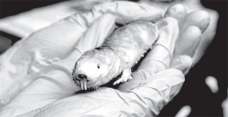
A rodent that never gets cancer could hold the key
to preventing or treating malignant tumors, say
scientists. A team led by researchers from the University
of Rochester, New York, US, investigated the anti-cancer
[5] properties of the naked mole-rat.
The US team cultured skin cells from the rodent in
the laboratory. They found that the animal’s tissues were
rich in high molecular weight hyaluronan (HMW-HA), a
gooey sugar that is involved in tissue repair. The
[10] researchers think the substance gives the naked molerat
its distinctive, elastic “baggy” skin, which it needs to
squeeze through underground tunnels. Experiments
show that when HMW-HA is removed from naked molerat
cells, they become susceptible to cancer, suggesting
[15] it plays a role in making the rodent “cancer-proof”.
Naked mole-rats can live for around 30 years, an
age unprecedented in small rodents. Mice, in
comparison, live for no longer than 4 years. The rodent
has no fur and spends its life living underground in dark
[20] tunnels in a colony. While it has probably evolved to
provide the rodent with an exceptionally flexible skin, it
also gives protection against cancer, possibly by stopping
cancerous cells from dividing.
The next step, they say, is to test the chemical in
[25] mice, then human cells. “There’s indirect evidence that
HMW-HA would work in people. It’s used in anti-wrinkle
injections and to relieve pain from arthritis in knee
joints, without any adverse effects. Our hope is that it
can also induce an anti-cancer response,” they say.
[30] Commenting on the research, Oliver Childs of
Cancer Research UK said:”They’re not going to win any
beauty contests, but these curious creatures have long
interested scientists because of their exceptionally
lengthy life spans and resistance to cancer. This
[35] fascinating research builds on previous work revealing
the biological tricks mole-rats have evolved to prevent
cancer. It’s a long way off, but it will be interesting to see
if further research can find a way to use hyaluronan to
help prevent or treat cancer in humans.”
A RODENT That...Disponível em:www.bbc.co.uk/news/health-22961694 Acesso em: 12 out. 2016. Adaptado.
“They’re not going to win any beauty contests” (l. 31-32)
This sentence can be exactly rephrased as
They ___________ beauty contests.
The alternative that completes this blank correctly is
Questão 19 600627
UNIC 2017/1TEXTO:
A rodent that never gets cancer could hold the key
to preventing or treating malignant tumors, say
scientists. A team led by researchers from the University
of Rochester, New York, US, investigated the anti-cancer
[5] properties of the naked mole-rat.
The US team cultured skin cells from the rodent in
the laboratory. They found that the animal’s tissues were
rich in high molecular weight hyaluronan (HMW-HA), a
gooey sugar that is involved in tissue repair. The
[10] researchers think the substance gives the naked molerat
its distinctive, elastic “baggy” skin, which it needs to
squeeze through underground tunnels. Experiments
show that when HMW-HA is removed from naked molerat
cells, they become susceptible to cancer, suggesting
[15] it plays a role in making the rodent “cancer-proof”.
Naked mole-rats can live for around 30 years, an
age unprecedented in small rodents. Mice, in
comparison, live for no longer than 4 years. The rodent
has no fur and spends its life living underground in dark
[20] tunnels in a colony. While it has probably evolved to
provide the rodent with an exceptionally flexible skin, it
also gives protection against cancer, possibly by stopping
cancerous cells from dividing.
The next step, they say, is to test the chemical in
[25] mice, then human cells. “There’s indirect evidence that
HMW-HA would work in people. It’s used in anti-wrinkle
injections and to relieve pain from arthritis in knee
joints, without any adverse effects. Our hope is that it
can also induce an anti-cancer response,” they say.
[30] Commenting on the research, Oliver Childs of
Cancer Research UK said:”They’re not going to win any
beauty contests, but these curious creatures have long
interested scientists because of their exceptionally
lengthy life spans and resistance to cancer. This
[35] fascinating research builds on previous work revealing
the biological tricks mole-rats have evolved to prevent
cancer. It’s a long way off, but it will be interesting to see
if further research can find a way to use hyaluronan to
help prevent or treat cancer in humans.”
A RODENT That...Disponível em:www.bbc.co.uk/news/health-22961694 Acesso em: 12 out. 2016. Adaptado.
The sentence “It’s a long way off” (l. 37) means
Questão 18 600626
UNIC 2017/1TEXTO:
A rodent that never gets cancer could hold the key
to preventing or treating malignant tumors, say
scientists. A team led by researchers from the University
of Rochester, New York, US, investigated the anti-cancer
[5] properties of the naked mole-rat.
The US team cultured skin cells from the rodent in
the laboratory. They found that the animal’s tissues were
rich in high molecular weight hyaluronan (HMW-HA), a
gooey sugar that is involved in tissue repair. The
[10] researchers think the substance gives the naked molerat
its distinctive, elastic “baggy” skin, which it needs to
squeeze through underground tunnels. Experiments
show that when HMW-HA is removed from naked molerat
cells, they become susceptible to cancer, suggesting
[15] it plays a role in making the rodent “cancer-proof”.
Naked mole-rats can live for around 30 years, an
age unprecedented in small rodents. Mice, in
comparison, live for no longer than 4 years. The rodent
has no fur and spends its life living underground in dark
[20] tunnels in a colony. While it has probably evolved to
provide the rodent with an exceptionally flexible skin, it
also gives protection against cancer, possibly by stopping
cancerous cells from dividing.
The next step, they say, is to test the chemical in
[25] mice, then human cells. “There’s indirect evidence that
HMW-HA would work in people. It’s used in anti-wrinkle
injections and to relieve pain from arthritis in knee
joints, without any adverse effects. Our hope is that it
can also induce an anti-cancer response,” they say.
[30] Commenting on the research, Oliver Childs of
Cancer Research UK said:”They’re not going to win any
beauty contests, but these curious creatures have long
interested scientists because of their exceptionally
lengthy life spans and resistance to cancer. This
[35] fascinating research builds on previous work revealing
the biological tricks mole-rats have evolved to prevent
cancer. It’s a long way off, but it will be interesting to see
if further research can find a way to use hyaluronan to
help prevent or treat cancer in humans.”
A RODENT That...Disponível em:www.bbc.co.uk/news/health-22961694 Acesso em: 12 out. 2016. Adaptado.
Considering the use of the substance HMW-HA in humans, the scientists think that it
Questão 17 600625
UNIC 2017/1TEXTO:
A rodent that never gets cancer could hold the key
to preventing or treating malignant tumors, say
scientists. A team led by researchers from the University
of Rochester, New York, US, investigated the anti-cancer
[5] properties of the naked mole-rat.
The US team cultured skin cells from the rodent in
the laboratory. They found that the animal’s tissues were
rich in high molecular weight hyaluronan (HMW-HA), a
gooey sugar that is involved in tissue repair. The
[10] researchers think the substance gives the naked molerat
its distinctive, elastic “baggy” skin, which it needs to
squeeze through underground tunnels. Experiments
show that when HMW-HA is removed from naked molerat
cells, they become susceptible to cancer, suggesting
[15] it plays a role in making the rodent “cancer-proof”.
Naked mole-rats can live for around 30 years, an
age unprecedented in small rodents. Mice, in
comparison, live for no longer than 4 years. The rodent
has no fur and spends its life living underground in dark
[20] tunnels in a colony. While it has probably evolved to
provide the rodent with an exceptionally flexible skin, it
also gives protection against cancer, possibly by stopping
cancerous cells from dividing.
The next step, they say, is to test the chemical in
[25] mice, then human cells. “There’s indirect evidence that
HMW-HA would work in people. It’s used in anti-wrinkle
injections and to relieve pain from arthritis in knee
joints, without any adverse effects. Our hope is that it
can also induce an anti-cancer response,” they say.
[30] Commenting on the research, Oliver Childs of
Cancer Research UK said:”They’re not going to win any
beauty contests, but these curious creatures have long
interested scientists because of their exceptionally
lengthy life spans and resistance to cancer. This
[35] fascinating research builds on previous work revealing
the biological tricks mole-rats have evolved to prevent
cancer. It’s a long way off, but it will be interesting to see
if further research can find a way to use hyaluronan to
help prevent or treat cancer in humans.”
A RODENT That...Disponível em:www.bbc.co.uk/news/health-22961694 Acesso em: 12 out. 2016. Adaptado.
The naked mole-rat _______________
The only alternative that does not complete this blank correctly is
06