


![[Marketing] Questao Topo - deslogado](https://storage.estuda.com.br/banners/0_6b7ebee90b03af1c560c73bb8bcce34a_banner_deslogado_70_dias.png)
Questões de Inglês
19.971 Questões
Questão 56 11560829
APMBB 2017Leia o texto para responder à questão.
Domestic violence victims denied justice: state of Roraima fails to investigate, prosecute abusers
June 21, 2017
The authorities in the Brazilian state of Roraima are failing to investigate or prosecute domestic violence cases, leaving women at further risk of abuse, Human Rights Watch said in a report released today. The serious problems in Roraima, the state with the highest rate of killings of women in Brazil, reflect nationwide failures to provide victims of domestic violence with access to justice and protection.
Killings of women rose 139 percent from 2010 to 2015 in Roraima, reaching 11.4 homicides per 100,000 women that year, the latest for which there is data available. The national average is 4.4 killings per 100,000 women—already one of the highest in the world. Studies in Brazil and worldwide estimate that a large percentage of women who suffer violent deaths are killed by partners or former partners.
Only a quarter of women who suffer violence in Brazil report it, according to a February 2017 survey that does not provide state-by-state data. Human Rights Watch found in Roraima that when women do call police they face considerable barriers to having their cases heard. Military police told Human Rights Watch that, for lack of personnel, they do not respond to all emergency calls from women who say they are experiencing domestic violence. Other women are turned away at police stations. Some civil police officers in Boa Vista, the state´s capital, decline to register domestic violence complaints or to request protection orders. Instead, they direct victims to the single “women’s police station” in the state – which specializes in crimes against women – even at times when that station is closed. Even when police receive their complaints, women must tell their story of abuse, including sexual abuse, in open reception areas, as there are no private rooms to take statements in any police station in the state.
Not a single civil police officer in Roraima receives training in how to handle domestic violence cases. Some police officers, when receiving women seeking protection orders, take statements so carelessly that judges lack the basic information they need to decide whether to issue the order. Civil police are unable to keep up with the volume of complaints they do receive. In Boa Vista, the police have failed to do investigative work on a backlog of 8,400 domestic violence complaints.
(Human Rights Watch. www.hrw.org/news/2017/06/21/ brazil-domestic-violence-victims-denied-justice. Adaptado)
According to the first and second paragraphs, the state of Roraima
Questão 60 10102975
CEFSA Conhecimentos Gerais 2017/1Leia o texto para responder à questão.
Explained: What is the Internet of Things (IoT)?
Bridget Botelho, Editorial Director
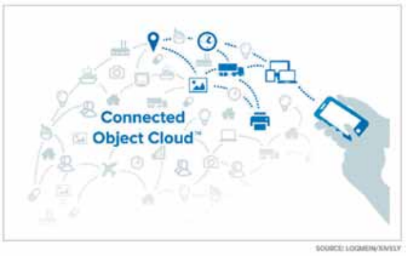
So what is the Internet of Things? Simply put, it’s machine-to-machine communication, but it’s much more than just connected devices. What is the Internet of Things, exactly? It is an ambiguous term, but it is fast becoming a tangible technology that can be applied in data centers to collect information on just about anything that Information Technology (IT) wants to control. The Internet of Things (IoT) is essentially a system of machines or objects outfitted with data-collecting technologies so that those objects can communicate with one another. The machine-to-machine (M2M) data that is generated has a wide range of uses, but is commonly seen as a way to determine the health and status of things – inanimate or living.
IT administrators can use the IoT for anything in their physical environment that they want information about. In fact, they already do. In one case, IoT is being used to stymie deforestation in the Amazon rainforest. A Brazilian location-services company called Cargo Tracck places M2M sensors from security company Gemalto in trees in protected areas. When a tree is cut or moved, law enforcement receives a message with its GPS location, allowing authorities to track down the illegally removed tree.
One analyst explained the IoT using the iPhone as an analogy. Disconnected third-party applications that are hosted in the cloud can be connected, and users can access all sorts of data from the device, according to Sam Lucero, senior principal analyst, M2M and Internet of Things, at IHS Electronics & Media in Tempe, Ariz.
How the Internet of Things works
While some consider IoT to be M2M communication over a closed network, that model is really just an intranet of things, Lucero said. With an Intranet of Things, apps are mobilized for a specific purpose and don’t interact outside of that network. The true IoT is where different applications are mobilized for specific reasons and the data collected from the machines and objects being monitored are made available to third-party applications. The expectation is that true IoT will provide more value than what can be derived from secluded islands of information, Lucero said.
For the IoT to work in data centers, platforms from competing vendors need to be able to communicate with one another. This requires standard APIs that all vendors and equipment can plug into, for both the systems interfaces as well as various devices, said Mike Sapien, a principal analyst with Ovum.
(http://internetofthingsagenda.techtarget.com/feature/Explained -What-is-the-Internet-of-Things. Adaptado)
No trecho do quinto parágrafo – This requires standard APIs that all vendors and equipment can plug into, for both the systems interfaces as well as various devices –, a expressão em destaque indica uma ideia de
Questão 59 10102926
CEFSA Conhecimentos Gerais 2017/1Leia o texto para responder à questão.
Explained: What is the Internet of Things (IoT)?
Bridget Botelho, Editorial Director
So what is the Internet of Things? Simply put, it’s machine-to-machine communication, but it’s much more than just connected devices. What is the Internet of Things, exactly? It is an ambiguous term, but it is fast becoming a tangible technology that can be applied in data centers to collect information on just about anything that Information Technology (IT) wants to control. The Internet of Things (IoT) is essentially a system of machines or objects outfitted with data-collecting technologies so that those objects can communicate with one another. The machine-to-machine (M2M) data that is generated has a wide range of uses, but is commonly seen as a way to determine the health and status of things – inanimate or living.
IT administrators can use the IoT for anything in their physical environment that they want information about. In fact, they already do. In one case, IoT is being used to stymie deforestation in the Amazon rainforest. A Brazilian location-services company called Cargo Tracck places M2M sensors from security company Gemalto in trees in protected areas. When a tree is cut or moved, law enforcement receives a message with its GPS location, allowing authorities to track down the illegally removed tree.
One analyst explained the IoT using the iPhone as an analogy. Disconnected third-party applications that are hosted in the cloud can be connected, and users can access all sorts of data from the device, according to Sam Lucero, senior principal analyst, M2M and Internet of Things, at IHS Electronics & Media in Tempe, Ariz.
How the Internet of Things works
While some consider IoT to be M2M communication over a closed network, that model is really just an intranet of things, Lucero said. With an Intranet of Things, apps are mobilized for a specific purpose and don’t interact outside of that network. The true IoT is where different applications are mobilized for specific reasons and the data collected from the machines and objects being monitored are made available to third-party applications. The expectation is that true IoT will provide more value than what can be derived from secluded islands of information, Lucero said.
For the IoT to work in data centers, platforms from competing vendors need to be able to communicate with one another. This requires standard APIs that all vendors and equipment can plug into, for both the systems interfaces as well as various devices, said Mike Sapien, a principal analyst with Ovum.
(http://internetofthingsagenda.techtarget.com/feature/Explained -What-is-the-Internet-of-Things. Adaptado)
No trecho do quinto parágrafo – For the IoT to work in data centers, platforms from competing vendors need to be able to communicate with one another –, os termos em destaque referem-se a
Questão 58 10102915
CEFSA Conhecimentos Gerais 2017/1Leia o texto para responder à questão.
Explained: What is the Internet of Things (IoT)?
Bridget Botelho, Editorial Director
So what is the Internet of Things? Simply put, it’s machine-to-machine communication, but it’s much more than just connected devices. What is the Internet of Things, exactly? It is an ambiguous term, but it is fast becoming a tangible technology that can be applied in data centers to collect information on just about anything that Information Technology (IT) wants to control. The Internet of Things (IoT) is essentially a system of machines or objects outfitted with data-collecting technologies so that those objects can communicate with one another. The machine-to-machine (M2M) data that is generated has a wide range of uses, but is commonly seen as a way to determine the health and status of things – inanimate or living.
IT administrators can use the IoT for anything in their physical environment that they want information about. In fact, they already do. In one case, IoT is being used to stymie deforestation in the Amazon rainforest. A Brazilian location-services company called Cargo Tracck places M2M sensors from security company Gemalto in trees in protected areas. When a tree is cut or moved, law enforcement receives a message with its GPS location, allowing authorities to track down the illegally removed tree.
One analyst explained the IoT using the iPhone as an analogy. Disconnected third-party applications that are hosted in the cloud can be connected, and users can access all sorts of data from the device, according to Sam Lucero, senior principal analyst, M2M and Internet of Things, at IHS Electronics & Media in Tempe, Ariz.
How the Internet of Things works
While some consider IoT to be M2M communication over a closed network, that model is really just an intranet of things, Lucero said. With an Intranet of Things, apps are mobilized for a specific purpose and don’t interact outside of that network. The true IoT is where different applications are mobilized for specific reasons and the data collected from the machines and objects being monitored are made available to third-party applications. The expectation is that true IoT will provide more value than what can be derived from secluded islands of information, Lucero said.
For the IoT to work in data centers, platforms from competing vendors need to be able to communicate with one another. This requires standard APIs that all vendors and equipment can plug into, for both the systems interfaces as well as various devices, said Mike Sapien, a principal analyst with Ovum.
(http://internetofthingsagenda.techtarget.com/feature/Explained -What-is-the-Internet-of-Things. Adaptado)
No trecho do quarto parágrafo – While some consider IoT to be M2M communication over a closed network, that model is really just an intranet of things –, o termo em destaque equivale, em português, a
Questão 54 10102829
CEFSA Conhecimentos Gerais 2017/1Leia o texto para responder à questão.
Explained: What is the Internet of Things (IoT)?
Bridget Botelho, Editorial Director
So what is the Internet of Things? Simply put, it’s machine-to-machine communication, but it’s much more than just connected devices. What is the Internet of Things, exactly? It is an ambiguous term, but it is fast becoming a tangible technology that can be applied in data centers to collect information on just about anything that Information Technology (IT) wants to control. The Internet of Things (IoT) is essentially a system of machines or objects outfitted with data-collecting technologies so that those objects can communicate with one another. The machine-to-machine (M2M) data that is generated has a wide range of uses, but is commonly seen as a way to determine the health and status of things – inanimate or living.
IT administrators can use the IoT for anything in their physical environment that they want information about. In fact, they already do. In one case, IoT is being used to stymie deforestation in the Amazon rainforest. A Brazilian location-services company called Cargo Tracck places M2M sensors from security company Gemalto in trees in protected areas. When a tree is cut or moved, law enforcement receives a message with its GPS location, allowing authorities to track down the illegally removed tree.
One analyst explained the IoT using the iPhone as an analogy. Disconnected third-party applications that are hosted in the cloud can be connected, and users can access all sorts of data from the device, according to Sam Lucero, senior principal analyst, M2M and Internet of Things, at IHS Electronics & Media in Tempe, Ariz.
How the Internet of Things works
While some consider IoT to be M2M communication over a closed network, that model is really just an intranet of things, Lucero said. With an Intranet of Things, apps are mobilized for a specific purpose and don’t interact outside of that network. The true IoT is where different applications are mobilized for specific reasons and the data collected from the machines and objects being monitored are made available to third-party applications. The expectation is that true IoT will provide more value than what can be derived from secluded islands of information, Lucero said.
For the IoT to work in data centers, platforms from competing vendors need to be able to communicate with one another. This requires standard APIs that all vendors and equipment can plug into, for both the systems interfaces as well as various devices, said Mike Sapien, a principal analyst with Ovum.
(http://internetofthingsagenda.techtarget.com/feature/Explained -What-is-the-Internet-of-Things. Adaptado)
Em relação ao uso da IoT, o trecho do segundo parágrafo – In one case, IoT is being used to stymie deforestation in the Amazon rainforest. A Brazilian location-services company called Cargo Tracck places M2M sensors from security company Gemalto in trees in protected areas. When a tree is cut or moved, law enforcement receives a message with its GPS location, allowing authorities to track down the illegally removed tree –, é
Questão 53 10102788
CEFSA Conhecimentos Gerais 2017/1Leia o texto para responder à questão.
Explained: What is the Internet of Things (IoT)?
Bridget Botelho, Editorial Director
So what is the Internet of Things? Simply put, it’s machine-to-machine communication, but it’s much more than just connected devices. What is the Internet of Things, exactly? It is an ambiguous term, but it is fast becoming a tangible technology that can be applied in data centers to collect information on just about anything that Information Technology (IT) wants to control. The Internet of Things (IoT) is essentially a system of machines or objects outfitted with data-collecting technologies so that those objects can communicate with one another. The machine-to-machine (M2M) data that is generated has a wide range of uses, but is commonly seen as a way to determine the health and status of things – inanimate or living.
IT administrators can use the IoT for anything in their physical environment that they want information about. In fact, they already do. In one case, IoT is being used to stymie deforestation in the Amazon rainforest. A Brazilian location-services company called Cargo Tracck places M2M sensors from security company Gemalto in trees in protected areas. When a tree is cut or moved, law enforcement receives a message with its GPS location, allowing authorities to track down the illegally removed tree.
One analyst explained the IoT using the iPhone as an analogy. Disconnected third-party applications that are hosted in the cloud can be connected, and users can access all sorts of data from the device, according to Sam Lucero, senior principal analyst, M2M and Internet of Things, at IHS Electronics & Media in Tempe, Ariz.
How the Internet of Things works
While some consider IoT to be M2M communication over a closed network, that model is really just an intranet of things, Lucero said. With an Intranet of Things, apps are mobilized for a specific purpose and don’t interact outside of that network. The true IoT is where different applications are mobilized for specific reasons and the data collected from the machines and objects being monitored are made available to third-party applications. The expectation is that true IoT will provide more value than what can be derived from secluded islands of information, Lucero said.
For the IoT to work in data centers, platforms from competing vendors need to be able to communicate with one another. This requires standard APIs that all vendors and equipment can plug into, for both the systems interfaces as well as various devices, said Mike Sapien, a principal analyst with Ovum.
(http://internetofthingsagenda.techtarget.com/feature/Explained -What-is-the-Internet-of-Things. Adaptado)
Segundo o texto, a Internet das Coisas
06