


![[Marketing] Questao Topo - deslogado](https://storage.estuda.com.br/banners/0_6b7ebee90b03af1c560c73bb8bcce34a_banner_deslogado_70_dias.png)
Questões de Inglês
19.971 Questões
Questão 46 11201638
PUC-MG Medicina 2023/1Quiet quitting: The workplace trend taking over TikTok
Despite the name, "quiet quitting" actually has nothing to do with quitting your job. It means doing only what your job demands and nothing more. Quitting doing anything extra. You still show up for work but stay strictly within the boundaries of your job requirements. So, no more helping out with additional tasks or checking emails outside work hours. Since the pandemic, an increasing number of young workers have grown tired of not getting the recognition and compensation for putting in extra hours. They're saying no to burnout, and instead focusing on work-life balance. The movement is centered around selfpreservation and "acting your wage".
The term "quiet quitting" has taken off recently after American TikTokker @zaidlepplin posted a video on it that went viral, saying "work is not your life". Perhaps surprisingly, the overall movement may have its origins in China, where the now-censored hashtag #tangping, meaning "lie flat", was used in protest against the long-hours culture.
However, not everyone's on board with the quiet quitting phenomenon. Workplace decorum expert Pattie Ehsaei expressed her disagreement with it in a TikTok video, saying you'll never succeed at work with that mindset. "Quiet quitting is doing the bare minimum required of you at work and being content with mediocrity," she told the BBC. "Advancement and pay increases will go to those whose level of effort warrants advancement and doing the bare minimum certainly does not."
Career coach and podcast host Joanne Mallon says many of her clients have already started to quiet quit when they come to her for coaching. She says that while she would never advise someone to quiet quit, she asks them what their reasons are for doing so. According to her, "Everybody has quiet quit at some point in their lives, but ultimately it might be a sign that it's time to move on and get out of a space physically".
Adapted from: https://www.bbc.com/news/business-62638908 Available on September 15th, 2022.
Which of the sentences below is correct according to the text?
Questão 49 11173613
PUC-MG Medicina 2023/2READ THE FOLLOWING TEXT AND CHOOSE THE OPTION WHICH BEST COMPLETES EACH QUESTION ACCORDING TO THE TEXT:
Tech chiefs call on scientists to pause development of AI systems.
Technology experts, including Elon Musk, have urged scientists to pause developing artificial intelligence to ensure it does not pose a risk to humanity. Tech chiefs including Apple co-founder Steve Wozniak and Skype co-founder Jaan Tallinn have signed an open letter demanding all labs stop training AI systems for at least six months.
The letter said: “Recent months have seen AI labs locked in an out-of-control race to develop and deploy ever more powerful digital minds that no one – not even their creators – can understand, predict, or reliably control. Contemporary AI systems are now becoming human-competitive at general tasks, and we must ask ourselves: Should we let machines flood our information channels with propaganda and untruth?” It added: “Powerful AI systems should be developed only once we are confident that their effects will be positive, and their risks will be manageable.” The technology chiefs do not want any AI systems more powerful than new chatbot GPT-4 and called for researchers to focus on making sure the technology is accurate, safe, and transparent.
US tech firm OpenAI has just released its latest version of AI chatbot ChatGPT. It was launched late last year, and it has become an online sensation because of its ability to hold natural conversations and to generate speeches, songs, and essays. The bot can respond to questions in a human-like manner and understand the context of follow-up queries, much like in human conversations. It can even admit its own mistakes or reject inappropriate requests. According to OpenAI, GPT-4 has “more advanced reasoning skills” than ChatGPT but, like its predecessors, GPT-4 is still not fully reliable and may “hallucinate” – a phenomenon where AI invents facts or makes reasoning errors.
The letter said humanity can now enjoy an “AI summer” where it can reap the rewards of the systems but only once safety protocols have been made. It added “Humanity can enjoy a flourishing future with AI. Having succeeded in creating powerful AI systems, we can now enjoy an ‘AI summer’ in which we reap the rewards, engineer these systems for the clear benefit of all and give society a chance to adapt. Society has hit pause on other technologies with potentially catastrophic effects on society. We can do so here. Let’s enjoy a long AI summer, not rush unprepared into a fall.”
(From: https://www.independent.co.uk/tech Access: 04/11/2023. Adapted.)
What can we infer from the sentence “The bot can respond to questions in a human-like manner and understand the context of follow-up queries, much like in human conversations.” (paragraph 3)?
Questão 81 11145025
UECE 1ª Fase 2023/2Text
Social Media Use Is Linked to Brain Changes in Teens, Research Finds
The effect of social media use on children is a fraught area of research, as parents and policymakers try to ascertain the results of a vast experiment already in full swing. Successive studies have added pieces to the puzzle, fleshing out the implications of a nearly constant stream of virtual interactions beginning in childhood.
A new study by neuroscientists at the University of North Carolina tries something new, conducting successive brain scans of middle schoolers between the ages of 12 and 15, a period of especially rapid brain development.
The researchers found that children who habitually checked their social media feeds at around age 12 showed a distinct trajectory, with their sensitivity to social rewards from peers heightening over time. Teenagers with less engagement in social media followed the opposite path, with a declining interest in social rewards.
The study has important limitations, the authors acknowledge. Because adolescence is a period of expanding social relationships, the brain differences could reflect a natural pivot toward peers, which could be driving more frequent social media use.
“We can’t make causal claims that social media is changing the brain,” said Eva H. Telzer, an associate professor of psychology and neuroscience at the University of North Carolina, Chapel Hill, and one of the authors of the study.
But, she added, “teens who are habitually checking their social media are showing these pretty dramatic changes in the way their brains are responding, which could potentially have long-term consequences well into adulthood, sort of setting the stage for brain development over time.”
A team of researchers studied an ethnically diverse group of 169 students in the sixth and seventh grades from a middle school in rural North Carolina, splitting them into groups according to how often they reported checking Facebook, Instagram and Snapchat feeds.
At around age 12, the students already showed distinct patterns of behavior. Habitual users reported checking their feeds 15 or more times a day; moderate users checked between one and 14 times; nonhabitual users checked less than once a day.
The subjects received full brain scans three times, at approximately one-year intervals, as they played a computerized game that delivered rewards and punishment in the form of smiling or scowling peers. While carrying out the task, the frequent checkers showed increasing activation of three brain areas: reward-processing circuits, which also respond to experiences like winning money or risk-taking behavior; brain regions that determine salience, picking out what stands out in the environment; and the prefrontal cortex, which helps with regulation and control.
The results showed that “teens who grow up checking social media more often are becoming hypersensitive to feedback from their peers,” Dr. Telzer said. Social sensitivity could be adaptive, showing that the teenagers are learning to connect with others; or it could lead to social anxiety and depression if social needs are not met.
“They are showing that the way you use it at one point in your life does influence the way your brain develops, but we don’t know by how much, or whether it’s good or bad,” said Jeff Hancock, the founding director of the Stanford Social Media Lab, who was not involved in the study. He said that many other variables could have contributed to these changes. He described the paper as “a very sophisticated piece of work,” contributing to research that has emerged recently showing that sensitivity to social media varies from person to person.
Over the last decade, social media has remapped the central experiences of adolescence, a period of rapid brain development. Researchers have documented a range of effects on children’s mental health. Some studies have linked use of social media with depression and anxiety, while others found little connection.
Without more information about other aspects of the students’ lives, “it is challenging to discern how specific differences in brain development are to social media checking,” said Adriana Galvan, a specialist in adolescent brain development at the University of California Los Angeles, who was not involved in the study.
Dr. Telzer, one of the study’s authors, described the rising sensitivity to social feedback as “neither good nor bad.” “It’s helping them connect to others and obtain rewards from the things that are common in their social world, which is engaging in social interactions online,” she said. This is the new norm,” she added. “Understanding how this new digital world is influencing teens is important. It may be associated with changes in the brain, but that may be for good or for bad. We don’t necessarily know the long-term implications yet.”
Adapted from: https://www.nytimes.com/2023/01/03/
Jeff Hancock, from the Stanford Social Media Lab, believes that using social media
Questão 80 11145020
UECE 1ª Fase 2023/2Text
Social Media Use Is Linked to Brain Changes in Teens, Research Finds
The effect of social media use on children is a fraught area of research, as parents and policymakers try to ascertain the results of a vast experiment already in full swing. Successive studies have added pieces to the puzzle, fleshing out the implications of a nearly constant stream of virtual interactions beginning in childhood.
A new study by neuroscientists at the University of North Carolina tries something new, conducting successive brain scans of middle schoolers between the ages of 12 and 15, a period of especially rapid brain development.
The researchers found that children who habitually checked their social media feeds at around age 12 showed a distinct trajectory, with their sensitivity to social rewards from peers heightening over time. Teenagers with less engagement in social media followed the opposite path, with a declining interest in social rewards.
The study has important limitations, the authors acknowledge. Because adolescence is a period of expanding social relationships, the brain differences could reflect a natural pivot toward peers, which could be driving more frequent social media use.
“We can’t make causal claims that social media is changing the brain,” said Eva H. Telzer, an associate professor of psychology and neuroscience at the University of North Carolina, Chapel Hill, and one of the authors of the study.
But, she added, “teens who are habitually checking their social media are showing these pretty dramatic changes in the way their brains are responding, which could potentially have long-term consequences well into adulthood, sort of setting the stage for brain development over time.”
A team of researchers studied an ethnically diverse group of 169 students in the sixth and seventh grades from a middle school in rural North Carolina, splitting them into groups according to how often they reported checking Facebook, Instagram and Snapchat feeds.
At around age 12, the students already showed distinct patterns of behavior. Habitual users reported checking their feeds 15 or more times a day; moderate users checked between one and 14 times; nonhabitual users checked less than once a day.
The subjects received full brain scans three times, at approximately one-year intervals, as they played a computerized game that delivered rewards and punishment in the form of smiling or scowling peers. While carrying out the task, the frequent checkers showed increasing activation of three brain areas: reward-processing circuits, which also respond to experiences like winning money or risk-taking behavior; brain regions that determine salience, picking out what stands out in the environment; and the prefrontal cortex, which helps with regulation and control.
The results showed that “teens who grow up checking social media more often are becoming hypersensitive to feedback from their peers,” Dr. Telzer said. Social sensitivity could be adaptive, showing that the teenagers are learning to connect with others; or it could lead to social anxiety and depression if social needs are not met.
“They are showing that the way you use it at one point in your life does influence the way your brain develops, but we don’t know by how much, or whether it’s good or bad,” said Jeff Hancock, the founding director of the Stanford Social Media Lab, who was not involved in the study. He said that many other variables could have contributed to these changes. He described the paper as “a very sophisticated piece of work,” contributing to research that has emerged recently showing that sensitivity to social media varies from person to person.
Over the last decade, social media has remapped the central experiences of adolescence, a period of rapid brain development. Researchers have documented a range of effects on children’s mental health. Some studies have linked use of social media with depression and anxiety, while others found little connection.
Without more information about other aspects of the students’ lives, “it is challenging to discern how specific differences in brain development are to social media checking,” said Adriana Galvan, a specialist in adolescent brain development at the University of California Los Angeles, who was not involved in the study.
Dr. Telzer, one of the study’s authors, described the rising sensitivity to social feedback as “neither good nor bad.” “It’s helping them connect to others and obtain rewards from the things that are common in their social world, which is engaging in social interactions online,” she said. This is the new norm,” she added. “Understanding how this new digital world is influencing teens is important. It may be associated with changes in the brain, but that may be for good or for bad. We don’t necessarily know the long-term implications yet.”
Adapted from: https://www.nytimes.com/2023/01/03/
Regarding social sensitivity, Dr. Eva H. Telzer points out that some of the negative consequences might be
Questão 15 11045444
UTFPR Inverno 2023Read the text and answer the question below.
Go Board Game Rules
1. The game starts with an empty board unless players agree to place a handicap*;
2. Black should always make the first move towards the upper right corner;
3. White makes the second move towards the lower right corner;
4. A player makes a move when he places a stone on a vacant intersection on the board;
5. Players are allowed to pass their turns;
6. Two successive passes bring the game to an end;
7. The player who occupies the most extensive area wins;
8. The player’s area comprises of all the points he has surrounded;
9. A stone should be removed when the enemy occupies adjacent intersections.
*Handicap is a form of betting that gives an advantage or disadvantage to one of the competitors
https://www.siammandalay.com/blogs/puzzles/play-goboard-game-instructions-rules-strategies
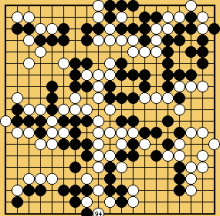
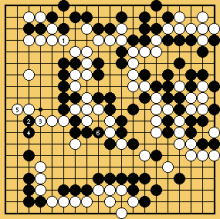
https://gobase.org/
Go game is believed to have originated around 4,000 years ago in China, although it is a very popular game in many Asian countries nowadays.
Read the rules of the game e check the option which shows appropriate translations of the underlined words into Brazilian Portuguese.
Questão 22 10916767
UEL 2ª Fase - Conhecimentos Gerais 2023/2Leia o texto a seguir e responda à questão.

(Disponível em: fifaworldcupcatarmeaningofthelogo-Bingimages. Acesso em: 18 out. 2022.)
Sobre a propaganda da Copa do Qatar, é correto afirmar que objetiva
06