


![[Marketing] Questao Topo - deslogado](https://storage.estuda.com.br/banners/0_6b7ebee90b03af1c560c73bb8bcce34a_banner_deslogado_70_dias.png)
Questões de Inglês
19.971 Questões
Questão 59 191514
IMEPAC 2018FDA approves new drug to treat type of liver cancer
Hepatocellular carcinoma is the most common form of liver cancer, accounting for three-quarters of liver cancers in the United States and is the second leading cause of cancer-related deaths worldwide.
By Amy Wallace | May 4, 2017 at 4:48 PM
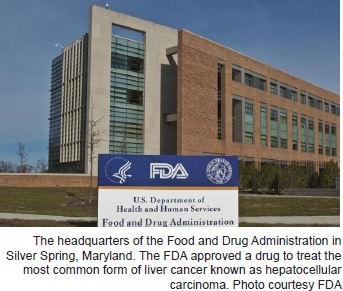
May 4 (UPI) – The U.S. Food & Drug Administration Thursday approved a new drug to treat the most common form of liver cancer, hepatocellular carcinoma.
The drug, regorafenib, is the first and only treatment approved by the FDA in more than a decade to show significant improvement in patients with hepatocellular carcinoma, or HCC.
HCC accounts for three-quarters of liver cancers in the United States and is the second leading cause of cancer related deaths worldwide. Roughly 40,000 Americans will be diagnosed with liver cancer in 2017 with more than 28,000 dying from the disease.
Doctors were only able to treat the early and intermediate stages of the disease in the affected area of the liver with surgery, transplantation or chemotherapy. But when the cancer progresses, patients are often candidates for systemic therapies.
Sorafenib was initially approved by the FDA 10 years ago as the first systemic therapy for patients with advanced HCC. The new approval by the FDA allows for another option for patients whose cancer progressed after traditional and systemic treatments.
Researchers at UCLA and 21 other sites in the United States, Europe and Asia tested the drug on 567 people with HCC in a two-year Phase III clinical trial called RESORCE.
Regorafenib was shown to extend overall survival by 10.6 months compared to 7.8 months for patients receiving a placebo, resulting in an average improvement in survival of 3.1 months and a 37 percent reduction in the risk of death in patients with HCC.
"When liver cancer progresses to advanced stages, a cure is no longer possible,” Dr. Richard Finn, associate professor of medicine at the David Geffen School of Medicine and director of the Signal Transduction and Therapeutics Program at UCLA’s Jonsson Comprehensive Cancer Center, said in a press release. “Traditional treatments can help slow and control the disease for a short period of time, but eventually tumor growth will continue. Today’s approval of regorafenib is a major clinical advancement for patients when initial therapies are no longer working.”
Available at: . Accessed on: September 4th, 2017 (Adapted).
The treatments hitherto used for the treatment of HCC were NOT
Questão 58 191512
IMEPAC 2018FDA approves new drug to treat type of liver cancer
Hepatocellular carcinoma is the most common form of liver cancer, accounting for three-quarters of liver cancers in the United States and is the second leading cause of cancer-related deaths worldwide.
By Amy Wallace | May 4, 2017 at 4:48 PM
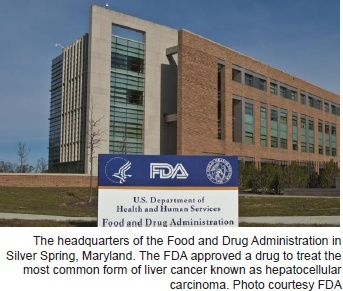
May 4 (UPI) – The U.S. Food & Drug Administration Thursday approved a new drug to treat the most common form of liver cancer, hepatocellular carcinoma.
The drug, regorafenib, is the first and only treatment approved by the FDA in more than a decade to show significant improvement in patients with hepatocellular carcinoma, or HCC.
HCC accounts for three-quarters of liver cancers in the United States and is the second leading cause of cancer related deaths worldwide. Roughly 40,000 Americans will be diagnosed with liver cancer in 2017 with more than 28,000 dying from the disease.
Doctors were only able to treat the early and intermediate stages of the disease in the affected area of the liver with surgery, transplantation or chemotherapy. But when the cancer progresses, patients are often candidates for systemic therapies.
Sorafenib was initially approved by the FDA 10 years ago as the first systemic therapy for patients with advanced HCC. The new approval by the FDA allows for another option for patients whose cancer progressed after traditional and systemic treatments.
Researchers at UCLA and 21 other sites in the United States, Europe and Asia tested the drug on 567 people with HCC in a two-year Phase III clinical trial called RESORCE.
Regorafenib was shown to extend overall survival by 10.6 months compared to 7.8 months for patients receiving a placebo, resulting in an average improvement in survival of 3.1 months and a 37 percent reduction in the risk of death in patients with HCC.
"When liver cancer progresses to advanced stages, a cure is no longer possible,” Dr. Richard Finn, associate professor of medicine at the David Geffen School of Medicine and director of the Signal Transduction and Therapeutics Program at UCLA’s Jonsson Comprehensive Cancer Center, said in a press release. “Traditional treatments can help slow and control the disease for a short period of time, but eventually tumor growth will continue. Today’s approval of regorafenib is a major clinical advancement for patients when initial therapies are no longer working.”
Available at: . Accessed on: September 4th, 2017 (Adapted).
According to the text, in the United States it is NOT TRUE that
Questão 57 191511
IMEPAC 2018FDA approves new drug to treat type of liver cancer
Hepatocellular carcinoma is the most common form of liver cancer, accounting for three-quarters of liver cancers in the United States and is the second leading cause of cancer-related deaths worldwide.
By Amy Wallace | May 4, 2017 at 4:48 PM
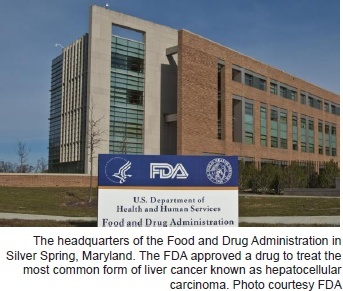
May 4 (UPI) – The U.S. Food & Drug Administration Thursday approved a new drug to treat the most common form of liver cancer, hepatocellular carcinoma.
The drug, regorafenib, is the first and only treatment approved by the FDA in more than a decade to show significant improvement in patients with hepatocellular carcinoma, or HCC.
HCC accounts for three-quarters of liver cancers in the United States and is the second leading cause of cancer related deaths worldwide. Roughly 40,000 Americans will be diagnosed with liver cancer in 2017 with more than 28,000 dying from the disease.
Doctors were only able to treat the early and intermediate stages of the disease in the affected area of the liver with surgery, transplantation or chemotherapy. But when the cancer progresses, patients are often candidates for systemic therapies.
Sorafenib was initially approved by the FDA 10 years ago as the first systemic therapy for patients with advanced HCC. The new approval by the FDA allows for another option for patients whose cancer progressed after traditional and systemic treatments.
Researchers at UCLA and 21 other sites in the United States, Europe and Asia tested the drug on 567 people with HCC in a two-year Phase III clinical trial called RESORCE.
Regorafenib was shown to extend overall survival by 10.6 months compared to 7.8 months for patients receiving a placebo, resulting in an average improvement in survival of 3.1 months and a 37 percent reduction in the risk of death in patients with HCC.
"When liver cancer progresses to advanced stages, a cure is no longer possible,” Dr. Richard Finn, associate professor of medicine at the David Geffen School of Medicine and director of the Signal Transduction and Therapeutics Program at UCLA’s Jonsson Comprehensive Cancer Center, said in a press release. “Traditional treatments can help slow and control the disease for a short period of time, but eventually tumor growth will continue. Today’s approval of regorafenib is a major clinical advancement for patients when initial therapies are no longer working.”
Available at: . Accessed on: September 4th, 2017 (Adapted).
The approval of a new drug to treat hepatocellular carcinoma by FDA is an important event
Questão 56 191506
IMEPAC 2018INSTRUCTIONS: This test comprises five questions based on the text below. Read the text carefully and then mark the alternatives that answer the questions or complete the sentences presented after it.
FDA approves new drug to treat type of liver cancer
Hepatocellular carcinoma is the most common form of liver cancer, accounting for three-quarters of liver cancers in the United States and is the second leading cause of cancer-related deaths worldwide.
By Amy Wallace | May 4, 2017 at 4:48 PM
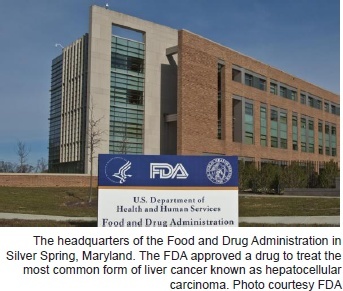
May 4 (UPI) – The U.S. Food & Drug Administration Thursday approved a new drug to treat the most common form of liver cancer, hepatocellular carcinoma.
The drug, regorafenib, is the first and only treatment approved by the FDA in more than a decade to show significant improvement in patients with hepatocellular carcinoma, or HCC.
HCC accounts for three-quarters of liver cancers in the United States and is the second leading cause of cancer related deaths worldwide. Roughly 40,000 Americans will be diagnosed with liver cancer in 2017 with more than 28,000 dying from the disease.
Doctors were only able to treat the early and intermediate stages of the disease in the affected area of the liver with surgery, transplantation or chemotherapy. But when the cancer progresses, patients are often candidates for systemic therapies.
Sorafenib was initially approved by the FDA 10 years ago as the first systemic therapy for patients with advanced HCC. The new approval by the FDA allows for another option for patients whose cancer progressed after traditional and systemic treatments.
Researchers at UCLA and 21 other sites in the United States, Europe and Asia tested the drug on 567 people with HCC in a two-year Phase III clinical trial called RESORCE.
Regorafenib was shown to extend overall survival by 10.6 months compared to 7.8 months for patients receiving a placebo, resulting in an average improvement in survival of 3.1 months and a 37 percent reduction in the risk of death in patients with HCC.
"When liver cancer progresses to advanced stages, a cure is no longer possible,” Dr. Richard Finn, associate professor of medicine at the David Geffen School of Medicine and director of the Signal Transduction and Therapeutics Program at UCLA’s Jonsson Comprehensive Cancer Center, said in a press release. “Traditional treatments can help slow and control the disease for a short period of time, but eventually tumor growth will continue. Today’s approval of regorafenib is a major clinical advancement for patients when initial therapies are no longer working.”
Available at: . Accessed on: September 4th, 2017 (Adapted).
All the following are true about liver cancer, EXCEPT:
Questão 19 184538
ITA 2018AUGMENTATION OF BRAIN FUNCTION: FACTS, FICTION AND CONTROVERSY
[1] Augmentation of brain function is no longer just a theme of science fiction. __________(I) advances in
neural sciences, it has become a matter of reality that a person may consider at some point in life, for example
as a treatment of a neurodegenerative disease. Currently, several approaches offer enhancements for sensory,
motor and cognitive brain functions,__________(II) for mood and emotions. Such enhancements may be
[5] achieved pharmacologically, using brain implants for recordings, stimulation and drug delivery,__________(III)
employing brain-machine interfaces, or even by ablation of certain brain areas.
In this Research Topic, we welcome papers critically evaluating the existing methods of brain
augmentation, introducing new approaches and probing particular parts of brain circuitry and particular
neuronal mechanisms as candidates for an enhancement. We welcome scientists from different fields: from
[10] neuroscience of microcircuits to systems neuroscience of large-scale networks and neural engineering. The
work can be experimental or computational. Reviews and papers on philosophical and ethical issues are
__________(IV) welcome.
While the scope of possible relevant topics is broad, the authors are encouraged to clearly indicate how
their studies address the announced theme of brain augmentation.
[15]
Important Note: All contributions to this Research Topic must be within the scope of the section and
journal to which they are submitted, as defined in their mission statements. Frontiers reserves the right to guide
an out-of-scope manuscript to a more suitable section or journal at any stage of peer review.
Fonte: . Acesso em: 15 jul. 2017.
Com base no texto, é INCORRETO afirmar que estudos sobre a melhoria das funções cerebrais
Questão 18 184537
ITA 2018AUGMENTATION OF BRAIN FUNCTION: FACTS, FICTION AND CONTROVERSY
[1] Augmentation of brain function is no longer just a theme of science fiction. __________(I) advances in
neural sciences, it has become a matter of reality that a person may consider at some point in life, for example
as a treatment of a neurodegenerative disease. Currently, several approaches offer enhancements for sensory,
motor and cognitive brain functions,__________(II) for mood and emotions. Such enhancements may be
[5] achieved pharmacologically, using brain implants for recordings, stimulation and drug delivery,__________(III)
employing brain-machine interfaces, or even by ablation of certain brain areas.
In this Research Topic, we welcome papers critically evaluating the existing methods of brain
augmentation, introducing new approaches and probing particular parts of brain circuitry and particular
neuronal mechanisms as candidates for an enhancement. We welcome scientists from different fields: from
[10] neuroscience of microcircuits to systems neuroscience of large-scale networks and neural engineering. The
work can be experimental or computational. Reviews and papers on philosophical and ethical issues are
__________(IV) welcome.
While the scope of possible relevant topics is broad, the authors are encouraged to clearly indicate how
their studies address the announced theme of brain augmentation.
[15]
Important Note: All contributions to this Research Topic must be within the scope of the section and
journal to which they are submitted, as defined in their mission statements. Frontiers reserves the right to guide
an out-of-scope manuscript to a more suitable section or journal at any stage of peer review.
Fonte: . Acesso em: 15 jul. 2017.
Considere as seguintes afirmações:
I. A melhoria ou o aumento das funções cerebrais pode ser obtida via: estimulação farmacológica, interface cérebro-máquina, implantes cerebrais ou mesmo remoção de determinadas áreas do cérebro.
II. Atualmente, abordagens para melhoria das funções cerebrais envolvem exclusivamente funções sensoriais, cognitivas e motoras.
III. O aumento das funções cerebrais pode vir a ser usado no tratamento de doenças neurodegenerativas.
Com base no texto, estão corretas
06