


![[Marketing] Questao Topo - deslogado](https://storage.estuda.com.br/banners/0_6b7ebee90b03af1c560c73bb8bcce34a_banner_deslogado_70_dias.png)
Questões de Inglês
19.971 Questões
Questão 78 191696
UFPR 2018Britain bans gasoline and diesel cars starting in 2040
Britain will ban sales of new gasoline and diesel cars starting in 2040 as part of a bid to clean up the country’s air. The decision to phase out the internal combustion engine heralds a new era of low-emission technologies with major implications for the auto industry, society and the environment. “We can’t carry on with diesel and petrol cars”, U.K. environment secretary Michael Gove told the BBC on Wednesday. “There is no alternative to embracing new technology”. Almost 2.7 million new cars were registered in the U.K. in 2016, making it the second biggest market in Europe after Germany.
Meeting the 2040 deadline will be a heavy lift. British demand for electric and fuel cell cars, as well as plug-in hybrids, grew 40% in 2015, but they only accounted for less than 3% of the market. Still, experts say sales of clean cars are likely to continue on their dramatic upward trajectory.
The car industry says that demand for electric vehicles will only reach a tipping point once they're cheaper to own than conventional vehicles.
The deadline was announced by the government on Wednesday as part of a plan to reduce air pollution. The blueprint highlighted roughly £1.4 billion in government investment designed to help ensure that every vehicle on the road in Britain produces zero emissions by 2050.
Gove said action was needed because gasoline and diesel engines contribute to health problems, “accelerate climate change, do damage to the planet and the next generation”. Roughly 40,000 deaths in Britain each year are attributable to outdoor air pollution, according to a study published last year by the Royal College of Physicians. Dirty air has been linked to cancer, asthma, stroke and heart disease, among other health issues.
The problem is especially pronounced in big cities. London surpassed the European Union’s annual limit for nitrogen dioxide exposure just five days into the new year, according to King’s College. The university estimates that air pollution is responsible for 9,400 premature deaths in the city every year.
The timeline for ending sales of internal combustion engines mirrors one proposed in early July by France. President Emmanuel Macron has given the auto industry the same deadline to make the switch to cleaner tech.
“We are quite rightly in a position of global leadership when it comes to shaping new technology”, Gove said. But the auto industry, which supports over 800,000 jobs in the U.K., is wary of hard deadlines.
Other countries have been even more ambitious than the U.K. India is planning to stop selling gas-powered vehicles by 2030.
The German car industry and government officials will meet in early August to discuss the future of diesel engine technology. Manufacturers are trying to avoid diesel cars being banned from German towns and cities.
(Disponível: . Adaptado. Acesso: 26 de julho de 2017.)
The main idea of the text is related to:
Questão 75 191690
UFPR 2018- Consider the following excerpt:
Difficulty interpreting what I have come to call ‘Ahorita Time’ is a reflection of different cultural understandings of time. Dr Company explained that if she is giving a talk in Mexico and goes over her allotted time, Mexicans “feel like I am giving them a gift”. In the UK or the US, however, “The audience starts to leave, feeling like I am wasting their time”.
Choose the alternative that conveys the same meaning of the excerpt above.
Questão 74 191688
UFPR 2018The ways Mexicans tell time
Understanding this takes not a fluency in the language but rather a fluency in Mexican culture.
Mexicans are famous in the Spanish-speaking world for their extensive use of the diminutive. While in most Spanish-speaking countries the addition of the diminutive ‘ita’ to an adverb like ahora (meaning ‘now’) would strengthen it to indicate immediacy (i.e. ‘right now’), this is not the case in Mexico. Dr Company explained that Mexicans instead use the diminutive form to break down the space between the speaker and the listener and lessen formality. In this case of ‘ahorita’, the addition of the diminutive reduces urgency rather than increasing it – a difference that can be extremely confusing for foreigners.
(Disponível: . Adaptado. Acesso: 26 de julho de 2017.)
The text illustrates:
Questão 73 191685
UFPR 2018The ways Mexicans tell time
Understanding this takes not a fluency in the language but rather a fluency in Mexican culture.
Mexicans are famous in the Spanish-speaking world for their extensive use of the diminutive. While in most Spanish-speaking countries the addition of the diminutive ‘ita’ to an adverb like ahora (meaning ‘now’) would strengthen it to indicate immediacy (i.e. ‘right now’), this is not the case in Mexico. Dr Company explained that Mexicans instead use the diminutive form to break down the space between the speaker and the listener and lessen formality. In this case of ‘ahorita’, the addition of the diminutive reduces urgency rather than increasing it – a difference that can be extremely confusing for foreigners.
(Disponível: . Adaptado. Acesso: 26 de julho de 2017.)
Consider the following affirmatives:
1. The use of the diminutive in Mexico does not follow the same rules for other Spanish speaking countries.
2. Dr Company says that Mexicans use ‘ahorita’ to indicate immediacy.
3. The use of the diminutive in Mexico indicates more proximity between speaker and listener.
4. The ‘ahorita’ example indicates the particular way Mexicans have adapted language to their cultural patterns.
Choose the correct alternative.
Questão 60 191517
IMEPAC 2018FDA approves new drug to treat type of liver cancer
Hepatocellular carcinoma is the most common form of liver cancer, accounting for three-quarters of liver cancers in the United States and is the second leading cause of cancer-related deaths worldwide.
By Amy Wallace | May 4, 2017 at 4:48 PM
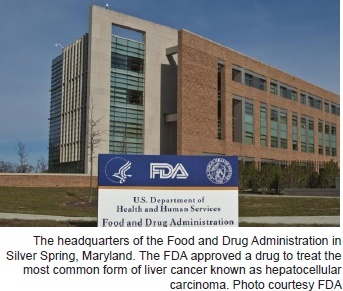
May 4 (UPI) – The U.S. Food & Drug Administration Thursday approved a new drug to treat the most common form of liver cancer, hepatocellular carcinoma.
The drug, regorafenib, is the first and only treatment approved by the FDA in more than a decade to show significant improvement in patients with hepatocellular carcinoma, or HCC.
HCC accounts for three-quarters of liver cancers in the United States and is the second leading cause of cancer related deaths worldwide. Roughly 40,000 Americans will be diagnosed with liver cancer in 2017 with more than 28,000 dying from the disease.
Doctors were only able to treat the early and intermediate stages of the disease in the affected area of the liver with surgery, transplantation or chemotherapy. But when the cancer progresses, patients are often candidates for systemic therapies.
Sorafenib was initially approved by the FDA 10 years ago as the first systemic therapy for patients with advanced HCC. The new approval by the FDA allows for another option for patients whose cancer progressed after traditional and systemic treatments.
Researchers at UCLA and 21 other sites in the United States, Europe and Asia tested the drug on 567 people with HCC in a two-year Phase III clinical trial called RESORCE.
Regorafenib was shown to extend overall survival by 10.6 months compared to 7.8 months for patients receiving a placebo, resulting in an average improvement in survival of 3.1 months and a 37 percent reduction in the risk of death in patients with HCC.
"When liver cancer progresses to advanced stages, a cure is no longer possible,” Dr. Richard Finn, associate professor of medicine at the David Geffen School of Medicine and director of the Signal Transduction and Therapeutics Program at UCLA’s Jonsson Comprehensive Cancer Center, said in a press release. “Traditional treatments can help slow and control the disease for a short period of time, but eventually tumor growth will continue. Today’s approval of regorafenib is a major clinical advancement for patients when initial therapies are no longer working.”
Available at: . Accessed on: September 4th, 2017 (Adapted).
Professor Richard Finn declared in a press release that the approval of regorafenib
Questão 59 191514
IMEPAC 2018FDA approves new drug to treat type of liver cancer
Hepatocellular carcinoma is the most common form of liver cancer, accounting for three-quarters of liver cancers in the United States and is the second leading cause of cancer-related deaths worldwide.
By Amy Wallace | May 4, 2017 at 4:48 PM
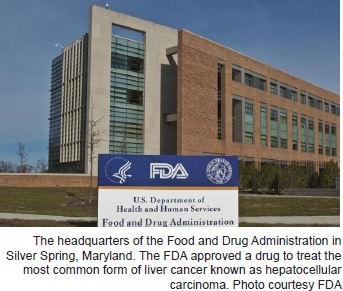
May 4 (UPI) – The U.S. Food & Drug Administration Thursday approved a new drug to treat the most common form of liver cancer, hepatocellular carcinoma.
The drug, regorafenib, is the first and only treatment approved by the FDA in more than a decade to show significant improvement in patients with hepatocellular carcinoma, or HCC.
HCC accounts for three-quarters of liver cancers in the United States and is the second leading cause of cancer related deaths worldwide. Roughly 40,000 Americans will be diagnosed with liver cancer in 2017 with more than 28,000 dying from the disease.
Doctors were only able to treat the early and intermediate stages of the disease in the affected area of the liver with surgery, transplantation or chemotherapy. But when the cancer progresses, patients are often candidates for systemic therapies.
Sorafenib was initially approved by the FDA 10 years ago as the first systemic therapy for patients with advanced HCC. The new approval by the FDA allows for another option for patients whose cancer progressed after traditional and systemic treatments.
Researchers at UCLA and 21 other sites in the United States, Europe and Asia tested the drug on 567 people with HCC in a two-year Phase III clinical trial called RESORCE.
Regorafenib was shown to extend overall survival by 10.6 months compared to 7.8 months for patients receiving a placebo, resulting in an average improvement in survival of 3.1 months and a 37 percent reduction in the risk of death in patients with HCC.
"When liver cancer progresses to advanced stages, a cure is no longer possible,” Dr. Richard Finn, associate professor of medicine at the David Geffen School of Medicine and director of the Signal Transduction and Therapeutics Program at UCLA’s Jonsson Comprehensive Cancer Center, said in a press release. “Traditional treatments can help slow and control the disease for a short period of time, but eventually tumor growth will continue. Today’s approval of regorafenib is a major clinical advancement for patients when initial therapies are no longer working.”
Available at: . Accessed on: September 4th, 2017 (Adapted).
The treatments hitherto used for the treatment of HCC were NOT
06