


![[Marketing] Questao Topo - deslogado](https://storage.estuda.com.br/banners/0_6b7ebee90b03af1c560c73bb8bcce34a_banner_deslogado_70_dias.png)
Questões de Inglês
19.971 Questões
Questão 23 242841
UEFS Caderno 1 2018/1‘I wish they could be saved’:
The victims of India’s poisonous dust
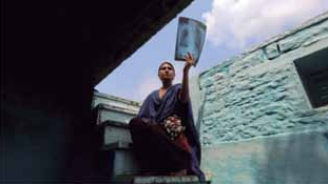
Silicosis, which kills thousands around the world, is caused by inhaling silica dust found in rock, sand, quartz and many building materials. It can lead to breathing difficulties, regular coughing, chest pains and, sometimes, tuberculosis and other chest infections.
Two years ago, at the age of 17, Urmila Yadav, from the village of Budhpura, located in the north-western state of Rajasthan, became one of the youngest certified cases of silicosis in India. Her case is singular; even in this village where mining and quarry1 work is the only occupation and silicosis is a commonplace disease that strikes almost every family, it is mostly men who are affected.
Rajasthan has been the epicentre of silicosis in India. The number of silicosis certified patients in the state, according to government data, is 8441 (the figures are available up to April 2017). Actual numbers are likely to be much higher, claim advocacy groups. It is the only state to have a monetary relief mechanism for certified patients, in place since 2013; however, the onus is on workers to get a diagnosis and prove their occupational history, which is challenging in an unregulated industry like mining in India.
For a young teenage girl like Urmila to have silicosis is “quite an unusual case”, says Dr Vinod Jangid, responsible for diagnosing silicosis at the medical college in the district of Kota. There could be more children with silicosis but the government will hesitate to certify young people. “If children are diagnosed with silicosis, it means they are either living close to the mines, or they are working in the mines, both of which are illegal.”
Urmila began to work in the stone quarries next to her village in her childhood. It is common here for men to work in mines and for women and children to supplement the family earnings by carving cobblestones by hand. Most of them work in quarries and head back there after classes. “There are many girls in Budhpura who do this work. Some are 15 or 16 years, and some even younger. I wish they can be saved from this work,” Urmila says.
(Sunaina Kumar. www.bbc.com, 09.10.2017. Adaptado.)
1 quarry: an open excavation, usually for obtaining building material.
According to the text, silicosis is a disease which
Questão 22 242838
UEFS Caderno 1 2018/1Twitter’s testing a 280-character limit for tweets
Twitter chief executive Jack Dorsey last year made a definitive announcement about the company’s famous 140-character count amid rumors that the firm would substantially relax the limit. “It’s staying, It’s a good constraint for us.”
On Tuesday, the company took it back – for some people, at least.
Twitter is testing a feature to let some users double the amount of characters allowed in a tweet. The 280-character limit will be available to a small group of people on the site. When asked for more information, Twitter said it would be a “single-digit percentage” of its 328 million users – so, millions – who will be “randomly chosen.”
The company declined to comment directly on how it’s choosing those people or why it changed its mind about its 140-character limit. But in a company blog post, product manager Aliza Rosen and senior software engineer Ikuhiro Ihara said the team started looking into the restrictions of the 140-character limit after noticing differences among languages. Some languages – specifically Chinese, Japanese and Korean – allow for greater expression in fewer characters.
“We see that a small percent of tweets sent in Japanese have 140 characters (only 0.4%). But in English, a much higher percentage of tweets have 140 characters (9%). Most Japanese tweets are 15 characters while most English tweets are 34,” the post said.
The 280-character test will roll out in all languages except for Chinese, Japanese and Korean. It’s true that some languages allow each character to count for more. My own last name, Tsukayama, is nine letters in English; phonetically in Japanese, it’s four letters. If you use Japanese kanji characters, it’s three.
But Twitter users in other languages have found workarounds to bypass the 140-character limit. It’s common to see someone send out a thread, or “Twitterstorm,” by signaling that their thoughts are going to come in several bite-sized chunks. Twitter itself did this when addressing why it hasn’t suspended President Trump from its platform. Dorsey himself has used a common workaround – posting an image of longer text – to get around the character limit, even while extolling the virtues of brevity early last year.
“Although we feel confident about our data and the positive impact this change will have, we want to try it out with a small group of people before we make a decision to launch to everyone,” the blog post said. “We understand since many of you have been tweeting for years, there may be an emotional attachment to 140 characters – we felt it, too. But we tried this, saw the power of what it will do, and fell in love with this new, still brief, constraint.”
(Hayley Tsukayama. www.washingtonpost.com, 26.09.2017. Adaptado.)
In the fragment from the last paragraph “We understand since many of you have been tweeting for years, there may be an emotional attachment to 140 characters”, the term underlined could be replaced, with no change meaning, by
Questão 20 242836
UEFS Caderno 1 2018/1Twitter’s testing a 280-character limit for tweets
Twitter chief executive Jack Dorsey last year made a definitive announcement about the company’s famous 140-character count amid rumors that the firm would substantially relax the limit. “It’s staying, It’s a good constraint for us.”
On Tuesday, the company took it back – for some people, at least.
Twitter is testing a feature to let some users double the amount of characters allowed in a tweet. The 280-character limit will be available to a small group of people on the site. When asked for more information, Twitter said it would be a “single-digit percentage” of its 328 million users – so, millions – who will be “randomly chosen.”
The company declined to comment directly on how it’s choosing those people or why it changed its mind about its 140-character limit. But in a company blog post, product manager Aliza Rosen and senior software engineer Ikuhiro Ihara said the team started looking into the restrictions of the 140-character limit after noticing differences among languages. Some languages – specifically Chinese, Japanese and Korean – allow for greater expression in fewer characters.
“We see that a small percent of tweets sent in Japanese have 140 characters (only 0.4%). But in English, a much higher percentage of tweets have 140 characters (9%). Most Japanese tweets are 15 characters while most English tweets are 34,” the post said.
The 280-character test will roll out in all languages except for Chinese, Japanese and Korean. It’s true that some languages allow each character to count for more. My own last name, Tsukayama, is nine letters in English; phonetically in Japanese, it’s four letters. If you use Japanese kanji characters, it’s three.
But Twitter users in other languages have found workarounds to bypass the 140-character limit. It’s common to see someone send out a thread, or “Twitterstorm,” by signaling that their thoughts are going to come in several bite-sized chunks. Twitter itself did this when addressing why it hasn’t suspended President Trump from its platform. Dorsey himself has used a common workaround – posting an image of longer text – to get around the character limit, even while extolling the virtues of brevity early last year.
“Although we feel confident about our data and the positive impact this change will have, we want to try it out with a small group of people before we make a decision to launch to everyone,” the blog post said. “We understand since many of you have been tweeting for years, there may be an emotional attachment to 140 characters – we felt it, too. But we tried this, saw the power of what it will do, and fell in love with this new, still brief, constraint.”
(Hayley Tsukayama. www.washingtonpost.com, 26.09.2017. Adaptado.)
In the fragment from the fifth paragraph “Most Japanese tweets are 15 characters while most English tweets are 34”, the word underlined twice means the same as
Questão 19 242835
UEFS Caderno 1 2018/1Twitter’s testing a 280-character limit for tweets
Twitter chief executive Jack Dorsey last year made a definitive announcement about the company’s famous 140-character count amid rumors that the firm would substantially relax the limit. “It’s staying, It’s a good constraint for us.”
On Tuesday, the company took it back – for some people, at least.
Twitter is testing a feature to let some users double the amount of characters allowed in a tweet. The 280-character limit will be available to a small group of people on the site. When asked for more information, Twitter said it would be a “single-digit percentage” of its 328 million users – so, millions – who will be “randomly chosen.”
The company declined to comment directly on how it’s choosing those people or why it changed its mind about its 140-character limit. But in a company blog post, product manager Aliza Rosen and senior software engineer Ikuhiro Ihara said the team started looking into the restrictions of the 140-character limit after noticing differences among languages. Some languages – specifically Chinese, Japanese and Korean – allow for greater expression in fewer characters.
“We see that a small percent of tweets sent in Japanese have 140 characters (only 0.4%). But in English, a much higher percentage of tweets have 140 characters (9%). Most Japanese tweets are 15 characters while most English tweets are 34,” the post said.
The 280-character test will roll out in all languages except for Chinese, Japanese and Korean. It’s true that some languages allow each character to count for more. My own last name, Tsukayama, is nine letters in English; phonetically in Japanese, it’s four letters. If you use Japanese kanji characters, it’s three.
But Twitter users in other languages have found workarounds to bypass the 140-character limit. It’s common to see someone send out a thread, or “Twitterstorm,” by signaling that their thoughts are going to come in several bite-sized chunks. Twitter itself did this when addressing why it hasn’t suspended President Trump from its platform. Dorsey himself has used a common workaround – posting an image of longer text – to get around the character limit, even while extolling the virtues of brevity early last year.
“Although we feel confident about our data and the positive impact this change will have, we want to try it out with a small group of people before we make a decision to launch to everyone,” the blog post said. “We understand since many of you have been tweeting for years, there may be an emotional attachment to 140 characters – we felt it, too. But we tried this, saw the power of what it will do, and fell in love with this new, still brief, constraint.”
(Hayley Tsukayama. www.washingtonpost.com, 26.09.2017. Adaptado.)
In the fragment from the fourth paragraph “The company declined to comment directly on how it’s choosing those people”, the term underlined can be replaced, without any change in meaning, by
Questão 16 242826
UEFS Caderno 1 2018/1Twitter’s testing a 280-character limit for tweets
Twitter chief executive Jack Dorsey last year made a definitive announcement about the company’s famous 140-character count amid rumors that the firm would substantially relax the limit. “It’s staying, It’s a good constraint for us.”
On Tuesday, the company took it back – for some people, at least.
Twitter is testing a feature to let some users double the amount of characters allowed in a tweet. The 280-character limit will be available to a small group of people on the site. When asked for more information, Twitter said it would be a “single-digit percentage” of its 328 million users – so, millions – who will be “randomly chosen.”
The company declined to comment directly on how it’s choosing those people or why it changed its mind about its 140-character limit. But in a company blog post, product manager Aliza Rosen and senior software engineer Ikuhiro Ihara said the team started looking into the restrictions of the 140-character limit after noticing differences among languages. Some languages – specifically Chinese, Japanese and Korean – allow for greater expression in fewer characters.
“We see that a small percent of tweets sent in Japanese have 140 characters (only 0.4%). But in English, a much higher percentage of tweets have 140 characters (9%). Most Japanese tweets are 15 characters while most English tweets are 34,” the post said.
The 280-character test will roll out in all languages except for Chinese, Japanese and Korean. It’s true that some languages allow each character to count for more. My own last name, Tsukayama, is nine letters in English; phonetically in Japanese, it’s four letters. If you use Japanese kanji characters, it’s three.
But Twitter users in other languages have found workarounds to bypass the 140-character limit. It’s common to see someone send out a thread, or “Twitterstorm,” by signaling that their thoughts are going to come in several bite-sized chunks. Twitter itself did this when addressing why it hasn’t suspended President Trump from its platform. Dorsey himself has used a common workaround – posting an image of longer text – to get around the character limit, even while extolling the virtues of brevity early last year.
“Although we feel confident about our data and the positive impact this change will have, we want to try it out with a small group of people before we make a decision to launch to everyone,” the blog post said. “We understand since many of you have been tweeting for years, there may be an emotional attachment to 140 characters – we felt it, too. But we tried this, saw the power of what it will do, and fell in love with this new, still brief, constraint.”
(Hayley Tsukayama. www.washingtonpost.com, 26.09.2017. Adaptado.)
The text is mainly about
Questão 29 242657
UNICENTRO 2018Re-Planting a Forest, One Drone at a Time
That funny little buzz you hear in the forest may not just be the hum of summer insects. In the near future it could be a small fleet of drones, coming to replant and restore forests that have been stripped of trees by industrial-scale deforestation.
It’s all part of an ambitious plan by BioCarbon Engineering, a U.K.-based startup on a global mission to battle widespread clear-cutting, which strips more than 26 billion trees off the planet each year. CEO Lauren Fletcher, who spent 20 years as an engineer with NASA, says the only way to fight industrial-scale deforestation is with industrial-scale reforestation. Their idea: plant 1 billion trees a year. The first targets are in South Africa and the Amazonian jungles, both of which have suffered from widespread forest eradication.
BioCarbon’s reforestation scheme is simple and efficient. Here’s a quick look at how it plans to deploy its drone fleet:
1 Do a 3-D aerial survey. First, drones are sent to fly over a potential planting zone, snapping photos that create 3-D maps of the area to be reforested. The number of drones will vary depending up on the size of the seeding.
2 Create a seeding plan. Once all that terrain data has been analyzed, it then generates a seeding pattern that best suits the terrain.
3 Load the seed pods. The drones, which are equipped with guidance and control software, carry pressurized canisters of seed pods with germinated seeds immersed in a nutrient-rich gel.
4 Hover and plant. Flying at a height of 1 or 2 meters, the drones follow the planting patterns, firing the biodegradable seed pods down to the ground. The pods break open upon impact, allowing the germinated seed a chance to take root.
5 Monitor growth. After planting, the drones do low-level flights to assess the health of the sprouts and saplings.
Such “precision forestry,” as BioCarbon calls it, is extremely efficient. A farmer might hand plant as many as 3,000 seeds a day; Fletcher says his drones can drop up to 36,000 seed pods daily, often in areas where a human can’t reach. Working with local ecologists, BioCarbon will use the drones to spread a variety of tree species, as well as microorganisms and fungi designed to improve the soil quality. “The central focus is ecosystem restoration,” Fletcher says.
On a planetary climatological scale, Morton notes that “tropical deforestation plays a big role in global climate cycles,” claiming the accelerated pace of cutting and burning of forests accounted for 20 percent of greenhouse gas emissions in the 1990s.
Fletcher and his team want to help reverse that trend. “By planting at the scale we’re looking at,” he says, “we can make a real long-term impact. We hope to do a lot of good in the world.”
(Adapted from https://www.wired.com/brandlab/2015/07/re-planting-forest-one-drone-time/. Access on 22/8/2017)
The word widespread is closest in meaning to
06