


![[Marketing] Questao Topo - deslogado](https://storage.estuda.com.br/banners/0_6b7ebee90b03af1c560c73bb8bcce34a_banner_deslogado_70_dias.png)
Questões de Inglês
19.971 Questões
Questão 43 275937
FMJ 2018Leia o texto para responder à questão.
The hunger gains: extreme calorie-restriction diet shows anti-aging results
The idea that organisms can live longer, healthier lives by sharply reducing their calorie intake is not exactly new. Laboratory research has repeatedly demonstrated the anti- -aging value of calorie restriction, often called CR, in animals from nematodes to rats – with the implication that the same might be true for humans.
In practice though, permanently reducing calorie intake by 25 to 50 percent or more sounds to many like a way to extend life by making it not worth living. Researchers have also warned that what works for nematodes or rats may not work – and could even prove dangerous – in humans, by causing muscle or bone density loss, for example.
But now two new studies appear to move calorie restriction from the realm of wishful thinking to the brink of practical, and perhaps even tolerable, reality. Writing in Nature Communications, researchers at the University of Wisconsin- -Madison and the National Institute on Aging reported last month chronic calorie restriction produces significant health benefits in rhesus monkeys – a primate with humanlike aging patterns – indicating “that CR mechanisms are likely translatable to human health.” The researchers describe one monkey they started on a 30 percent calorie restriction diet when he was 16 years old, late middle age for this type of animal. He is now 43, a longevity record for the species, according to the study, and the equivalent of a human living to 130.
In the second study, published in Science Translational Medicine, a research team led by gerontologist Valter Longo at the University of Southern California (U.S.C.) suggests it is possible to gain anti-aging benefits without signing up for a lifetime of hunger. Instead, a “fasting-mimicking diet,” practiced just five days a month for three months – and repeated at intervals as needed – is “safe, feasible and effective in reducing risk factors for aging and age-related diseases.”
Some researchers, however, still find the calorie-restriction argument unpersuasive. Leslie Robert, a biochemist and physician at the University of Paris who was not involved in the two new studies, says pharmaceutical approaches offer greater anti-aging potential than “inefficient and apparently harmful” diets. The important thing, adds Luigi Fontana, a longevity researcher at the Washington University School of Medicine in Saint Louis who also was not involved in the new work, is “if you’re doing a healthy diet, exercising, everything good, without doing anything extreme, without making life miserable by counting every single calorie.”
(Richard Conniff. www.scientificamerican.com, 16.02.2017. Adaptado.)
No trecho do segundo parágrafo “In practice though, permanently reducing calorie intake”, o termo em destaque indica
Questão 47 275122
UniCesumar Medicina 2018Parental mental illness is a family matter
A family-focused approach enables early identification and intervention to prevent mental illness in children and their families
Since we first wrote in the Medical Journal of Australia - MJA - about children of parents with mental illness in 1995, there have been substantial developments in our knowledge of, and responses to, these families. At that time, prevalence rates for children living with a parent with mental illness were unknown, and there was minimal identification of the needs of these children and their parents, with little research evidence on which to base interventions. This article contributes to a growing evidence base. Prevalence rates are now known, and the impact on children of parental mental illness is well recognised, as is the impact of parenting on mental illness symptoms.
The role of general practitioners is pivotal as a first point of contact for potentially affected children and their parents and families. Effective multidisciplinary relationships between GPs and community and mental health practitioners are essential. These relationships are an important component of interventions for pregnant women with severe mental illness, may involve clinical and community-based services, and may begin during pregnancy or earlier. A multidisciplinary approach at this point is an opportunity to assess the interrelationship between impending parenting responsibility and mental illness.
While assessment of risk and protective factors is advisable for children in all age groups, the developmental vulnerability of infants, toddlers and preschool children makes it a priority. As well as physical health and psychosocial functioning, assessment of the relationship between young children and their parents may lead to an intervention that enhances parents’ capacity to feel more secure in their role and enjoy their young children. This may be an individual or group intervention. Groups for parents with mental illness offer a safe environment for them to become more confident as parents, and the Positive Parenting Program has been enhanced for delivery to parents with mental illness, and has been shown to reduce the number of dysfunctional parenting strategies.
A parent’s mental illness also impacts severely on adolescents. This too has only recently begun to receive serious attention. The advent of more accessible mental health services for young people may bring this issue more strongly into focus.
Intervention programs for children often include psychoeducation, which is a core component of family-intervention programs for families where a parent has depression. Knowledge of mental health is also important in the context of goal setting for children and parents when making family care plans.
Until recently, fathers with mental illness have been overlooked, but practitioners in health and mental health services can, with positive effect, ask fathers about their parenting role, and the degree to which it may be affected by their mental illness. Grandparents who are primary care providers for their grandchildren have also been overlooked. This role can affect their physical and mental health, and social and financial status.
(Adapted from: www.mja.com.au)
Segundo o texto,
Questão 45 272946
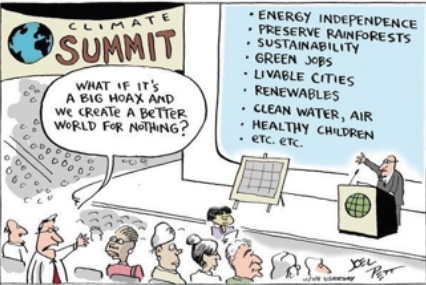
FACASPER 2018According to the cartoon, the creation of a better world only makes sense if
Questão 44 272942
FACASPER 2018Giving Capitalism a Social Conscience
David Bornstein
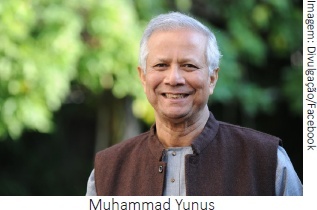
For more than 40 years, Muhammad Yunus, the Bangladeshi founder of the Grameen Bank and recipient of the 2006 Nobel Peace Prize, has been asserting that the most powerful way to eradicate poverty is to unleash the untapped entrepreneurial capacity of people everywhere. “Poverty is not created by poor people,” he says. “It’s created by the system we built. Poor people are like a bonsai tree. You take the best seed from the tallest tree in the forest, but if you put it in a flower pot to grow, it grows only a meter high. There’s nothing wrong with the seed. The problem is the size of the pot. Society doesn’t give poor people the space to grow as tall as everybody else. This is the crux of the matter"
Yunus has recently written a new book, “A World of Three Zeros: The New Economics of Zero Poverty, Zero Unemployment, and Zero Net Carbon Emissions,” in which he argues that capitalism is in crisis and remains moored in a flawed conception of human motivation. He proposes a far more robust role in the economy for “social businesses,” which he defines as “non-dividend” companies “dedicated to solving human problems.”
At 77, Yunus shows no signs of slowing down. He reports on an astonishing array of work he has been involved in — supporting and codeveloping social businesses (often in partnership with large corporations) in Bangladesh, Brazil, Colombia, France, Haiti, India, Japan, Uganda and numerous other countries.
“We need to abandon our unquestioning faith in the power of personal-profit-centered markets to solve all problems and confess that the problems of inequality are not going to be solved by the natural working of the economy as it is currently structured,” Yunus writes.
“This is not a comfortable situation for anyone, including those who are on top of the social heap at any given time. Do the wealthy and powerful … like having to avert their eyes from the homeless and hungry people they pass on the street? Do they enjoy using the tools of the state — including its police powers and other forms of coercion — to suppress the inevitable protests mounted by those on the bottom? Do they really want their own children and grandchildren to inherit this kind of world?”
Fonte: New York Times. Publicado em 10/10/2017. Disponível em: https://www.nytimes.com/2017/10/10/ opinion/giving-capitalism-a-social-conscience.html . Acesso em 06/11/2017. [Excerpt]
It is correct to say that in the last paragraph, Yunus words are:
Questão 43 272933
FACASPER 2018Giving Capitalism a Social Conscience
David Bornstein
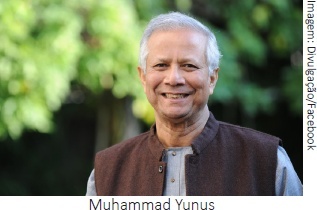
For more than 40 years, Muhammad Yunus, the Bangladeshi founder of the Grameen Bank and recipient of the 2006 Nobel Peace Prize, has been asserting that the most powerful way to eradicate poverty is to unleash the untapped entrepreneurial capacity of people everywhere. “Poverty is not created by poor people,” he says. “It’s created by the system we built. Poor people are like a bonsai tree. You take the best seed from the tallest tree in the forest, but if you put it in a flower pot to grow, it grows only a meter high. There’s nothing wrong with the seed. The problem is the size of the pot. Society doesn’t give poor people the space to grow as tall as everybody else. This is the crux of the matter"
Yunus has recently written a new book, “A World of Three Zeros: The New Economics of Zero Poverty, Zero Unemployment, and Zero Net Carbon Emissions,” in which he argues that capitalism is in crisis and remains moored in a flawed conception of human motivation. He proposes a far more robust role in the economy for “social businesses,” which he defines as “non-dividend” companies “dedicated to solving human problems.”
At 77, Yunus shows no signs of slowing down. He reports on an astonishing array of work he has been involved in — supporting and codeveloping social businesses (often in partnership with large corporations) in Bangladesh, Brazil, Colombia, France, Haiti, India, Japan, Uganda and numerous other countries.
“We need to abandon our unquestioning faith in the power of personal-profit-centered markets to solve all problems and confess that the problems of inequality are not going to be solved by the natural working of the economy as it is currently structured,” Yunus writes.
“This is not a comfortable situation for anyone, including those who are on top of the social heap at any given time. Do the wealthy and powerful … like having to avert their eyes from the homeless and hungry people they pass on the street? Do they enjoy using the tools of the state — including its police powers and other forms of coercion — to suppress the inevitable protests mounted by those on the bottom? Do they really want their own children and grandchildren to inherit this kind of world?”
Fonte: New York Times. Publicado em 10/10/2017. Disponível em: https://www.nytimes.com/2017/10/10/ opinion/giving-capitalism-a-social-conscience.html . Acesso em 06/11/2017. [Excerpt]
What does Yunus mean by “Poor people are like a bonsai tree”?
Questão 42 272931
FACASPER 2018Drugs and Democracy in Rio de Janeiro: Trafficking, Social Networks, and Public Security
INTRODUCTION: Thinking about Social Violence in Brazil
Recently, drug traffickers based in Rio de Janeiro’s favelas have attacked government buildings, bombed buses, and successfully ordered widespread business closings. Over the past decade, murder rates have averaged 50 per 100,000, in line with the most violent U.S. cities, and overall rates may actually be even higher as a result of increasing rates of disappearances. In poor districts, murder rates can exceed 150 per 100,000 inhabitants. Indeed, riding this wave of criminal and police violence, human rights abuse has increased in Brazil since its transition to democracy two decades ago.
Fonte: ARIAS, Enrique Desmond. Drugs and Democracy in Rio de Janeiro: Trafficking, Social Networks, and Public Security. Chapel Hill: University of North Carolina Press, 2006. Disponível em: www.jstor. org/stable/10.5149/9780807877371_arias. Acesso em 06/11/2017. [Introduction: p. 1-17]
Which of the statements below is FALSE according to the text above?
06