


![[Marketing] Questao Topo - deslogado](https://storage.estuda.com.br/banners/0_6b7ebee90b03af1c560c73bb8bcce34a_banner_deslogado_70_dias.png)
Questões de Inglês
19.971 Questões
Questão 43 13400967
FMJ 2023Leia o texto para responder à questão.
Of the 8,300 million tonnes of virgin plastic produced up to the end of 2015, 6,300 million tonnes have been discarded. Most of that plastic waste is still with us, buried in landfills or polluting the environment. But what if we could wave a magic wand and remove all plastics from our lives? For the sake of the planet, it would be a tempting prospect — but we’d quickly find out just how far plastic has seeped into every aspect of our existence. Is life as we know it even possible without plastic?
Our food system would quickly collapse. We use packaging to protect food from damage in transit and preserve it long enough to reach supermarket shelves, but also for communication and marketing. “I cannot imagine how [plastic] would be replaced completely in our system,” says Eleni Iacovidou, a lecturer in environmental management at Brunel University London.
Swapping out plastic packaging would produce several environmental side-effects. While glass has some advantages over plastic, such as being endlessly recyclable, a one litre glass bottle can weigh as much as 800g compared to a 40g plastic one. This results in glass bottles having a higher overall environmental impact compared to plastic containers for milk or fruit juice, for example. When those heavier bottles and jars need to be transported over long distances, carbon emissions grow even more.
In some ways, though, changing food packaging would be the easy part. You might buy milk in a glass bottle, but plastic tubing is used in the dairy industry to get that milk from cow to bottle. Even if you buy vegetables loose, sheets of plastic protective cover may have helped the farmer who grew them save water. Without plastic, industrial agriculture as we know it would be impossible. Instead, we’d need shorter food chains — think farm shops and community-supported agriculture. But with over half of the global population now living in cities, this would require huge changes in where and how we grow food. It wouldn’t be an impossible task, says Iacovidou, but “we have to devote the time to do it”.
(Kelly Oakes. www.bbc.com, 07.06.2022. Adaptado.)
In the excerpt from the first paragraph “But what if we could wave a magic wand and remove all plastics from our lives?”, the underlined term is used to express
Questão 41 13400923
FMJ 2023Analyze the infographic from the National Institute on Aging, in the United States.
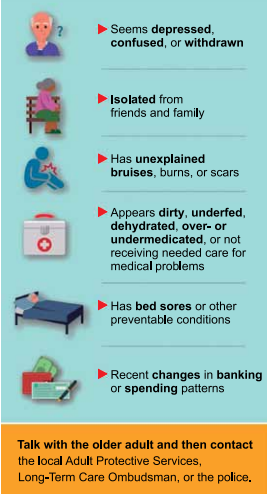
(www.nia.nih.gov. Adaptado.)
The most suitable title for the infographic is:
Questão 30 12750645
UFAM PSI - CG 1 2023Responda à questão abaixo com base na tirinha a seguir:

Fonte: https://www.thequint.com/neon/fun/10-times-calvin-and-hobbesgot-adulting-101-on-point. Acessado em: 06.04.0223
Enquanto espera pelo ônibus, Calvin faz a reflexão de que:
Questão 29 12750620
UFAM PSI - CG 1 2023Responda à questão abaixo com base na tirinha a seguir:
Fonte: https://www.thequint.com/neon/fun/10-times-calvin-and-hobbesgot-adulting-101-on-point. Acessado em: 06.04.0223
De acordo com o garoto Calvin, a coisa mais estúpida que alguém pode fazer é:
Questão 12 12658302
UEA - SIS 2ª Etapa 2024/2026 2023Leia a tirinha de Jim Davis.

(www.gocomics.com)
A fala do homem no primeiro quadrinho apresenta uma
Questão 11 12658283
UEA - SIS 2ª Etapa 2024/2026 2023Leia o texto para responder à questão abaixo.
Paul McCartney is an English singer, songwriter and musician who gained worldwide fame with The Beatles, a rock band formed in Liverpool in 1960. He has collaborated with countless artists over his 60-year career, from Rihanna to Michael Jackson. Now, the former Beatle has teamed up with artificial intelligence (AI). In a recent interview, the 80-year-old revealed that AI has made it possible to release one “last Beatles record.”
McCartney said that during the creation of the docuseries “The Beatles: Get Back”, produced in 2021 by Peter Jackson, they found an old demo tape that John Lennon had recorded. Through the use of artificial intelligence, they were able to start the process of taking the decades-old recording and turning it into something usable.
“Peter Jackson was able to extricate John’s voice from an old cassette tape,” McCartney said. “He could tell the machine ‘That’s the voice. This is the guitar. Lose the guitar.’ We were able to take John’s voice and get it pure through this AI,” McCartney continued. “Then we could mix the record as you would normally do.”
Though McCartney called recent uses of AI in music “kind of scary” — in April, a rap song featuring AI-generated voices mimicking Drake and The Weeknd was yanked from streaming services — the “Let It Be” singer admitted that the technology is “exciting, because it’s the future. There’s a good side to it, and then a scary side. And we’ll just have to see where that leads,” he said.
(Nicolas Vega. www.cnbc.com, 14.06.2023. Adaptado.)
A expressão “‘kind of scary’”, no início do quarto parágrafo, equivale, em português, a
06