


![[Marketing] Questao Topo - deslogado](https://storage.estuda.com.br/banners/0_6b7ebee90b03af1c560c73bb8bcce34a_banner_deslogado_70_dias.png)
Questões de Inglês
19.971 Questões
Questão 17 301651
UNIVESP 2018/1Modern-day slavery: an explainer

Photograph: Mario Tama/Getty
What is modern-day slavery?
About 150 years after most countries banned slavery – Brazil was the last to abolish its participation in the transatlantic slave trade, in 1888 – millions of men, women and children are still enslaved. Contemporary slavery takes many forms, from women forced into prostitution, to child slavery in agriculture supply chains or whole families working for nothing to pay off generational debts. Slavery thrives on every continent and in almost every country. Forced labour, people trafficking, debt bondage and child marriage are all forms of modern-day slavery that affect the world’s most vulnerable people.
How is slavery defined?
Slavery is prohibited under the 1948 Universal Declaration of Human Rights, which states: “No one shall be held in slavery or servitude: slavery and the slave trade shall be prohibited in all their forms.”
Definitions of modern-day slavery are mainly taken from the 1956 UN supplementary convention, which says: “debt bondage, serfdom, forced marriage and the delivery of a child for the exploitation of that child are all slavery-like practices and require criminalisation and abolishment”. The 1930 Forced Labour Convention defines forced labour as “all work or service which is exacted from any person under the menace of any penalty and for which the said person has not offered himself voluntarily”. As contemporary systems of slavery have evolved, new definitions, including trafficking and distinguishing child slavery from child labour, have developed.
How many people are enslaved across the world?
Due to its illegality, data on modern-day slavery is difficult to collate. The UN’s International Labour Organisation (ILO) estimates that about 21 million people are in forced labour at any point in time. The ILO says this estimate includes trafficking and other forms of modern slavery. The only exceptions are trafficking for organ removal, forced marriage and adoption, unless the last two practices result in forced labour. The ILO calculates that 90% of the 21 million are exploited by individuals or companies, while 10% are forced to work by the state, rebel military groups, or in prisons under conditions that violate ILO standards. Sexual exploitation accounts for 22% of slaves.
(www.theguardian.com/global-development/2013/apr/03/ modern-day-slavery-explainer. Adaptado)
No trecho do terceiro parágrafo – all work or service which is exacted from any person under the menace of any penalty and for which the said person has not offered himself voluntarily – o termo em destaque se refere a
Questão 16 301650
UNIVESP 2018/1Modern-day slavery: an explainer
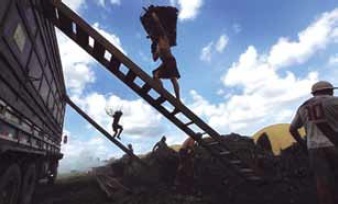
Photograph: Mario Tama/Getty
What is modern-day slavery?
About 150 years after most countries banned slavery – Brazil was the last to abolish its participation in the transatlantic slave trade, in 1888 – millions of men, women and children are still enslaved. Contemporary slavery takes many forms, from women forced into prostitution, to child slavery in agriculture supply chains or whole families working for nothing to pay off generational debts. Slavery thrives on every continent and in almost every country. Forced labour, people trafficking, debt bondage and child marriage are all forms of modern-day slavery that affect the world’s most vulnerable people.
How is slavery defined?
Slavery is prohibited under the 1948 Universal Declaration of Human Rights, which states: “No one shall be held in slavery or servitude: slavery and the slave trade shall be prohibited in all their forms.”
Definitions of modern-day slavery are mainly taken from the 1956 UN supplementary convention, which says: “debt bondage, serfdom, forced marriage and the delivery of a child for the exploitation of that child are all slavery-like practices and require criminalisation and abolishment”. The 1930 Forced Labour Convention defines forced labour as “all work or service which is exacted from any person under the menace of any penalty and for which the said person has not offered himself voluntarily”. As contemporary systems of slavery have evolved, new definitions, including trafficking and distinguishing child slavery from child labour, have developed.
How many people are enslaved across the world?
Due to its illegality, data on modern-day slavery is difficult to collate. The UN’s International Labour Organisation (ILO) estimates that about 21 million people are in forced labour at any point in time. The ILO says this estimate includes trafficking and other forms of modern slavery. The only exceptions are trafficking for organ removal, forced marriage and adoption, unless the last two practices result in forced labour. The ILO calculates that 90% of the 21 million are exploited by individuals or companies, while 10% are forced to work by the state, rebel military groups, or in prisons under conditions that violate ILO standards. Sexual exploitation accounts for 22% of slaves.
(www.theguardian.com/global-development/2013/apr/03/ modern-day-slavery-explainer. Adaptado)
Leia o primeiro parágrafo, em que se responde à pergunta “What is modern-day slavery?”. De acordo com esse parágrafo, uma das formas que a escravidão moderna assume é
Questão 2 301536
UEG 2018/2Leia o texto a seguir para responder à questão.
Who's driving? Autonomous cars may be entering the most dangerous phase
Autopilot controls are not yet fully capable of functioning without human intervention – but they’re good enough to lull us into a false sense of security.
When California police officers approached a Tesla stopped in the centre of a five-lane highway outside San Francisco last week, they found a man asleep at the wheel. The driver, who was arrested on suspicion of drunk driving, told them his car was in “autopilot”, Tesla’s semi-autonomous driver assist system.
In a separate incident, firefighters in Culver City reported that a Tesla vehicle parked at the rear of their fire truck as it attended an accident on the freeway. Again, the driver said the vehicle was in autopilot.
The oft-repeated promise of driverless technology is that it will make the roads safer by reducing human error, the primary cause of accidents. However, those vehicles have a long way to go before they can eliminate the drivers.
However, research has shown that drivers get lulled into a false sense of security to the point where their minds and gazes start to wander away from the road. People become distracted or preoccupied with their smartphones. So when the car encounters a situation where the human needs to intervene, the driver can be slow to react.
During tests the IIHS recorded a Mercedes having problems when the lane on the highway forked in two. The radar system locked onto the right-hand exit lane when the driver was trying to go straight.
Concern over this new type of distracted driving is forcing engineers to introduce additional safety features to compensate. For example, GM has introduced eye-tracking technology to check the driver’s eyes are on the road while Tesla drivers can be locked out of autopilot if they ignore warnings to keep their hands on the steering wheel.
In spite of these problems, Tesla’s CEO, Elon Musk, remains bullish about his company’s autonomous technology, even suggesting that by 2019 drivers would be able to sleep in their cars – presumably without being arrested by highway patrol officers.
Disponível em: <https://www.theguardian.com/technology/2018/jan/24/self-driving-cars-dangerous-period-false-security>. Acesso em: 23 fev. 2018. (Adaptado).
Analisando-se aspectos linguísticos e estruturais do texto, constata-se que
Questão 1 301535
UEG 2018/2Leia o texto a seguir para responder à questão.
Who's driving? Autonomous cars may be entering the most dangerous phase
Autopilot controls are not yet fully capable of functioning without human intervention – but they’re good enough to lull us into a false sense of security.
When California police officers approached a Tesla stopped in the centre of a five-lane highway outside San Francisco last week, they found a man asleep at the wheel. The driver, who was arrested on suspicion of drunk driving, told them his car was in “autopilot”, Tesla’s semi-autonomous driver assist system.
In a separate incident, firefighters in Culver City reported that a Tesla vehicle parked at the rear of their fire truck as it attended an accident on the freeway. Again, the driver said the vehicle was in autopilot.
The oft-repeated promise of driverless technology is that it will make the roads safer by reducing human error, the primary cause of accidents. However, those vehicles have a long way to go before they can eliminate the drivers.
However, research has shown that drivers get lulled into a false sense of security to the point where their minds and gazes start to wander away from the road. People become distracted or preoccupied with their smartphones. So when the car encounters a situation where the human needs to intervene, the driver can be slow to react.
During tests the IIHS recorded a Mercedes having problems when the lane on the highway forked in two. The radar system locked onto the right-hand exit lane when the driver was trying to go straight.
Concern over this new type of distracted driving is forcing engineers to introduce additional safety features to compensate. For example, GM has introduced eye-tracking technology to check the driver’s eyes are on the road while Tesla drivers can be locked out of autopilot if they ignore warnings to keep their hands on the steering wheel.
In spite of these problems, Tesla’s CEO, Elon Musk, remains bullish about his company’s autonomous technology, even suggesting that by 2019 drivers would be able to sleep in their cars – presumably without being arrested by highway patrol officers.
Disponível em: <https://www.theguardian.com/technology/2018/jan/24/self-driving-cars-dangerous-period-false-security>. Acesso em: 23 fev. 2018. (Adaptado).
Considering to the information expressed in the text, autonomous cars
Questão 15 301430
IFPE Superior 2018Leia o TEXTO 8 para responder à questão.
TEXTO 8
AUGUST 2017 WAS THE SECOND WARMEST ON RECORD
August 2017 was the second warmest August in 137 years of modern record-keeping, according to a monthly analysis of global temperatures by scientists at NASA's Goddard Institute for Space Studies (GISS) in New York.
The measured value is consistent with the trend in global average surface temperatures that has been observed during the past few decades. Last month was +0.85 degrees Celsius warmer than the mean August temperature from 1951-1980.
It was surpassed by August 2016, which was still affected by the 2015-2016 El Niño and was 0.99 degrees Celsius warmer than normal. However, August 2017 was about +0.2 degrees warmer than the August following the last large El Niño event in 1997-1998.
The monthly analysis by the GISS team is assembled from publicly available data acquired by about 6,300 meteorological stations around the world, ship- and buoy-based instruments measuring sea surface temperature, and Antarctic research stations.
The modern global temperature record begins around 1880 because previous observations didn't cover enough of the planet. Monthly analyses are sometimes updated when additional data becomes available, and the results are subject to change.
NASA’S GODDARD INSTITUTE FOR SPACE STUDIES. August 2017 was the second warmest on record. Disponível em: <https://climate.nasa.gov/news/2630/august-2017-was-second-warmest-on-record/> Acesso: 09 out. 2017. Adaptado.
O TEXTO 8, que apresenta um recente estudo feito pela NASA sobre a temperatura da Terra, traz a informação de que
Questão 11 301422
IFPE Superior 2018Leia o TEXTO 6 para responder à questão.
TEXTO 6
INTERNATIONAL DAY OF THE GIRL CHILD – 11 OCTOBER
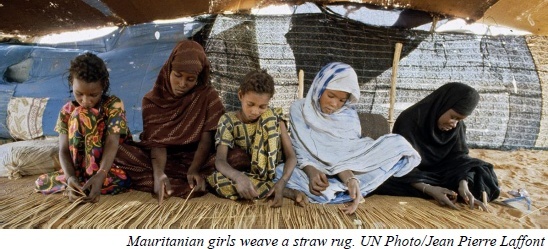
[1] On December 19, 2011, United Nations General Assembly adopted Resolution 66/170 to declare
October 11 as the International Day of the Girl Child, to recognize girls’ rights and the unique challenges
girls face around the world.
[4] The International Day of the Girl Child focuses attention on the need to address the challenges girls
face and to promote girls’ empowerment and the fulfilment of their human rights.
[6] Adolescent girls have the right to a safe, educated, and healthy life, not only during these critical
formative years, but also as they mature into women. If effectively supported during the adolescent years,
girls have the potential to change the world – both as the empowered girls of today and as tomorrow’s
workers, mothers, entrepreneurs, mentors, household heads, and political leaders. An investment in
realising the power of adolescent girls upholds their rights today and promises a more equitable and
prosperous future, one in which half of humanity is an equal partner in solving the problems of climate
change, political conflict, economic growth, disease prevention, and global sustainability.
[13] Over the last 15 years, the global community has made significant progress in improving the lives of
girls during early childhood. In 2015, girls in the first decade of life are more likely to enrol in primary
school, receive key vaccinations, and are less likely to suffer from health and nutrition problems than
were previous generations. However, there has been insufficient investment in addressing the challenges
girls face when they enter the second decade of their lives. This includes obtaining quality secondary and
higher education, avoiding child marriage, receiving information and services related to puberty and
reproductive health, and protecting themselves against unwanted pregnancy, sexually transmitted disease
and gender-based violence.
[21] As the global community launches the Sustainable Development Goals (SDGs) for implementation
over the next 15 years, it is a good time to recognise the achievements made in supporting young girls,
while at the same time aspiring to support the current and upcoming generation of adolescent girls, to
truly fulfil their potential as key actors in achieving a sustainable and equitable world.
UNITED NATIONS. International day of the girl child – 11 october: background. Disponível em: <http://www.un.org/en/events/girlchild/background.shtml>. Acesso: 09 out. 2017. Adaptado.
No último dia 11 de outubro, foi celebrado o sexto Dia Internacional das Meninas. De acordo com o TEXTO 6, a comunidade global, durante os últimos 15 anos, tem conseguido progredir de forma significativa no que se refere à melhoria da vida das meninas na primeira infância. Dentre os progressos elencados pelo TEXTO 6 que puderam ser observados em 2015, está o fato de que, na primeira década de vida, as meninas estão mais propensas a
06