


![[Marketing] Questao Topo - deslogado](https://storage.estuda.com.br/banners/0_6b7ebee90b03af1c560c73bb8bcce34a_banner_deslogado_70_dias.png)
Questões de Inglês
19.971 Questões
Questão 25 301912
FATEC 2018/25 Ways to Boost Your Resilience at Work
Since the pace and intensity of contemporary work culture are not likely to change, it’s more important than ever to build resilience skills to effectively navigate your worklife. While working as a CEO I’ve seen over and over again that the most resilient individuals aren’t the ones that don’t fail, but rather the ones that fail, learn and thrive1 because of it.
Resilience is built by attitudes, behaviors and social supports that can be adopted and cultivated by anyone. Factors that lead to resilience include optimism and the ability to stay balanced and manage difficult emotions. To build resilience skills at work it’s important to understand and manage some of the factors that cause us to feel so stressed at work. Being hyperconnected and responsive to work anytime, anywhere, can be extremely onerous.
The current and rising levels of stress in the workplace should be cause for concern, as there is a direct and adverse relationship between negative stress, wellness and productivity. Stress that causes us to experience difficulty or unhealthy strain is a major cause for concern as it directly and adversely affects personal and business success. Here are some tips on how to develop resilience and stay motivated:
Exercise mindfulness – Turn your attention to mental training practices associated with mindfulness to improve your judgment accuracy and problem solving, job performance and cognitive flexibility.
Compartmentalize your cognitive load – Create dedicated times in the day to do specific work-related activities and not others.
Take detachment2 breaks – Step away from work for even a few minutes to reset energy and attention. Balancing work activity can promote greater energy, mental clarity, creativity and focus.
Develop mental agility – Decenter stress: step back, reflect, shift perspectives, create options and choose wisely.
Cultivate compassion – Create positive work relationships, increase cooperation and collaboration, happiness and well-being to decrease stress.
Acesso em: 04.03.2018. Adaptado.
Glossário:
(1) Thrive: prosperar, desenvolver, ter sucesso.
(2) Detachment: descolamento, distanciamento, separação.
Na frase, “I’ve seen over and over again ....”, presente no primeiro parágrafo do texto, o autor refere-se a uma ação que
Questão 40 301786
FPP Demais Cursos 2018Read the text.
Paris Agreement and Trump
Environmentalists are outraged, as Trump announced the US would withdraw out of the Paris Agreement, which is an agreement on dealing with greenhouse gas emissions mitigation.
Public figures, including Leonardo DiCaprio, Justin Trudeau and Hillary Clinton, took to Twitter with the #ParisAgreement. Emmanuel Macron, Australia Green’s Party leader, and the Japanese Environment Minister made announcement in response to Trump, with the Japanese Minister saying that he is not only disappointed, but greatly angered. In contrast, Americans in coal-mining regions of the USA are applauding Trump’s decision, which protects their jobs, as he promised.
Disponível em: . Acesso em: 06/06/17.
The underlined words could be substituted without changing the meaning by
Questão 39 301785
FPP Demais Cursos 2018Read the text.
A PNEUMONIA-DIAGNOSING JACKET CAN HELP SAVE LIVES IN A MATTER OF MINUTES
“Over 1 month of age, pneumonia is still the largest killer of children anywhere in the world,” says Shamim Ahmad Qazi, a pediatrician who works with the World Health Organization (WHO). In 2015, this figure was close to 1 million – more deaths in children under the age of 5 than malaria, measles and HIV/AIDS combined. “In most cases, it’s difficult to diagnose,” says Qazi, especially in less-developed countries where X-ray equipment isn’t widely available. In Uganda, pneumonia is often mistaken for malaria – the two share common symptoms like fever and cough –, but people are quick to assume malaria because the disease has gotten greater publicity in recent years. And yet, according to UNICEF, only 2 cents go toward pneumonia for every health dollar spent globally.
To combat this “forgotten killer of children,” as the WHO calls it, the Ugandan engineers, together with their partner Besufekad Shifferaw, a fellow student from Uganda’s Makerere University, have come up with a new tool to improve diagnoses in young children. The prototype Mama-Ope is a biomedical jacket that measures vital signs that can indicate the presence of pneumonia. Once the jacket is fitted snugly over a child’s chest, it syncs with an app over Bluetooth, and in under two minutes readings flash up indicating the child’s temperature, breathing rate and an assessment of whether the lungs sound normal or not.
Disponível em: http://www.newsweek.com/2017/03/24/pneumonia-jacket-mama-ope-helps-save-lives-567230.html.
According to the text, we can state that
I. wearing jackets make kids warmer so they do not get pneumonia.
II. X-ray is a tool which helps diagnosing pneumonia.
III. at the age of 5, kids are more affected by malaria than by pneumonia.
IV. the investments to fight pneumonia are short.
V. the use of the jacket is not possible in places like Uganda since they are an undeveloped country.
Questão 21 301655
UNIVESP 2018/1Modern-day slavery: an explainer
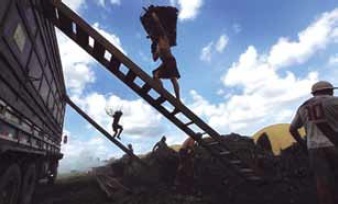
Photograph: Mario Tama/Getty
What is modern-day slavery?
About 150 years after most countries banned slavery – Brazil was the last to abolish its participation in the transatlantic slave trade, in 1888 – millions of men, women and children are still enslaved. Contemporary slavery takes many forms, from women forced into prostitution, to child slavery in agriculture supply chains or whole families working for nothing to pay off generational debts. Slavery thrives on every continent and in almost every country. Forced labour, people trafficking, debt bondage and child marriage are all forms of modern-day slavery that affect the world’s most vulnerable people.
How is slavery defined?
Slavery is prohibited under the 1948 Universal Declaration of Human Rights, which states: “No one shall be held in slavery or servitude: slavery and the slave trade shall be prohibited in all their forms.”
Definitions of modern-day slavery are mainly taken from the 1956 UN supplementary convention, which says: “debt bondage, serfdom, forced marriage and the delivery of a child for the exploitation of that child are all slavery-like practices and require criminalisation and abolishment”. The 1930 Forced Labour Convention defines forced labour as “all work or service which is exacted from any person under the menace of any penalty and for which the said person has not offered himself voluntarily”. As contemporary systems of slavery have evolved, new definitions, including trafficking and distinguishing child slavery from child labour, have developed.
How many people are enslaved across the world?
Due to its illegality, data on modern-day slavery is difficult to collate. The UN’s International Labour Organisation (ILO) estimates that about 21 million people are in forced labour at any point in time. The ILO says this estimate includes trafficking and other forms of modern slavery. The only exceptions are trafficking for organ removal, forced marriage and adoption, unless the last two practices result in forced labour. The ILO calculates that 90% of the 21 million are exploited by individuals or companies, while 10% are forced to work by the state, rebel military groups, or in prisons under conditions that violate ILO standards. Sexual exploitation accounts for 22% of slaves.
(www.theguardian.com/global-development/2013/apr/03/ modern-day-slavery-explainer. Adaptado)
No trecho do quarto parágrafo – unless the last two practices result in forced labour – o termo em destaque indica ideia de
Questão 19 301653
UNIVESP 2018/1Modern-day slavery: an explainer
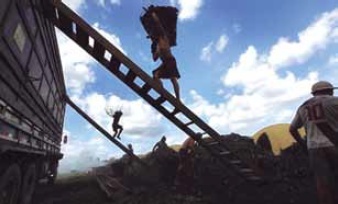
Photograph: Mario Tama/Getty
What is modern-day slavery?
About 150 years after most countries banned slavery – Brazil was the last to abolish its participation in the transatlantic slave trade, in 1888 – millions of men, women and children are still enslaved. Contemporary slavery takes many forms, from women forced into prostitution, to child slavery in agriculture supply chains or whole families working for nothing to pay off generational debts. Slavery thrives on every continent and in almost every country. Forced labour, people trafficking, debt bondage and child marriage are all forms of modern-day slavery that affect the world’s most vulnerable people.
How is slavery defined?
Slavery is prohibited under the 1948 Universal Declaration of Human Rights, which states: “No one shall be held in slavery or servitude: slavery and the slave trade shall be prohibited in all their forms.”
Definitions of modern-day slavery are mainly taken from the 1956 UN supplementary convention, which says: “debt bondage, serfdom, forced marriage and the delivery of a child for the exploitation of that child are all slavery-like practices and require criminalisation and abolishment”. The 1930 Forced Labour Convention defines forced labour as “all work or service which is exacted from any person under the menace of any penalty and for which the said person has not offered himself voluntarily”. As contemporary systems of slavery have evolved, new definitions, including trafficking and distinguishing child slavery from child labour, have developed.
How many people are enslaved across the world?
Due to its illegality, data on modern-day slavery is difficult to collate. The UN’s International Labour Organisation (ILO) estimates that about 21 million people are in forced labour at any point in time. The ILO says this estimate includes trafficking and other forms of modern slavery. The only exceptions are trafficking for organ removal, forced marriage and adoption, unless the last two practices result in forced labour. The ILO calculates that 90% of the 21 million are exploited by individuals or companies, while 10% are forced to work by the state, rebel military groups, or in prisons under conditions that violate ILO standards. Sexual exploitation accounts for 22% of slaves.
(www.theguardian.com/global-development/2013/apr/03/ modern-day-slavery-explainer. Adaptado)
No trecho do terceiro parágrafo – As contemporary systems of slavery have evolved – o termo em destaque equivale, em português, a
Questão 18 301652
UNIVESP 2018/1Modern-day slavery: an explainer
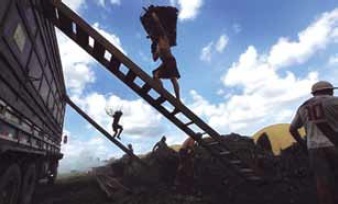
Photograph: Mario Tama/Getty
What is modern-day slavery?
About 150 years after most countries banned slavery – Brazil was the last to abolish its participation in the transatlantic slave trade, in 1888 – millions of men, women and children are still enslaved. Contemporary slavery takes many forms, from women forced into prostitution, to child slavery in agriculture supply chains or whole families working for nothing to pay off generational debts. Slavery thrives on every continent and in almost every country. Forced labour, people trafficking, debt bondage and child marriage are all forms of modern-day slavery that affect the world’s most vulnerable people.
How is slavery defined?
Slavery is prohibited under the 1948 Universal Declaration of Human Rights, which states: “No one shall be held in slavery or servitude: slavery and the slave trade shall be prohibited in all their forms.”
Definitions of modern-day slavery are mainly taken from the 1956 UN supplementary convention, which says: “debt bondage, serfdom, forced marriage and the delivery of a child for the exploitation of that child are all slavery-like practices and require criminalisation and abolishment”. The 1930 Forced Labour Convention defines forced labour as “all work or service which is exacted from any person under the menace of any penalty and for which the said person has not offered himself voluntarily”. As contemporary systems of slavery have evolved, new definitions, including trafficking and distinguishing child slavery from child labour, have developed.
How many people are enslaved across the world?
Due to its illegality, data on modern-day slavery is difficult to collate. The UN’s International Labour Organisation (ILO) estimates that about 21 million people are in forced labour at any point in time. The ILO says this estimate includes trafficking and other forms of modern slavery. The only exceptions are trafficking for organ removal, forced marriage and adoption, unless the last two practices result in forced labour. The ILO calculates that 90% of the 21 million are exploited by individuals or companies, while 10% are forced to work by the state, rebel military groups, or in prisons under conditions that violate ILO standards. Sexual exploitation accounts for 22% of slaves.
(www.theguardian.com/global-development/2013/apr/03/ modern-day-slavery-explainer. Adaptado)
De acordo com o terceiro parágrafo, a Convenção Suplementar das Nações Unidas de 1956 inclui como escravidão moderna
06