


![[Marketing] Questao Topo - deslogado](https://storage.estuda.com.br/banners/0_6b7ebee90b03af1c560c73bb8bcce34a_banner_deslogado_70_dias.png)
Questões de Inglês
19.971 Questões
Questão 10 14256219
UnB - PAS 2023/2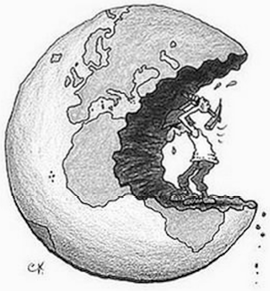
Internet: hechoecologico.weebly.com.
The preceding cartoon conveys the idea that
Questão 30 14047621
UnB Conhecimentos Gerais 2023/1Read the following cartoon.
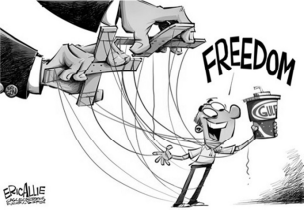
Internet: www.baileyaplangandcomp.wordpress.com.
The cartoon above conveys the idea that, in general, people
Questão 5 13426621
ENEM PPL 1º Dia (Azul – Reaplicação) 2023
MCPHAIL, W. Disponível em: https://fineartamerica.com. Acesso em: 25 out. 2021.
Ao utilizar a expressão “be a shame if something were to happen to it”, o pássaro
Questão 1 13426448
ENEM PPL 1º Dia (Azul – Reaplicação) 2023
Disponível em: https://images1.the-dots.com. Acesso em: 29 out. 2021.
Por meio de recursos verbais e não verbais, esse cartaz de campanha objetiva
Questão 49 13401123
FMJ 2023Examine the comic strip Hagar The Horrible.

(www.arcamax.com)
In the comic strip,
Questão 43 13400967
FMJ 2023Leia o texto para responder à questão.
Of the 8,300 million tonnes of virgin plastic produced up to the end of 2015, 6,300 million tonnes have been discarded. Most of that plastic waste is still with us, buried in landfills or polluting the environment. But what if we could wave a magic wand and remove all plastics from our lives? For the sake of the planet, it would be a tempting prospect — but we’d quickly find out just how far plastic has seeped into every aspect of our existence. Is life as we know it even possible without plastic?
Our food system would quickly collapse. We use packaging to protect food from damage in transit and preserve it long enough to reach supermarket shelves, but also for communication and marketing. “I cannot imagine how [plastic] would be replaced completely in our system,” says Eleni Iacovidou, a lecturer in environmental management at Brunel University London.
Swapping out plastic packaging would produce several environmental side-effects. While glass has some advantages over plastic, such as being endlessly recyclable, a one litre glass bottle can weigh as much as 800g compared to a 40g plastic one. This results in glass bottles having a higher overall environmental impact compared to plastic containers for milk or fruit juice, for example. When those heavier bottles and jars need to be transported over long distances, carbon emissions grow even more.
In some ways, though, changing food packaging would be the easy part. You might buy milk in a glass bottle, but plastic tubing is used in the dairy industry to get that milk from cow to bottle. Even if you buy vegetables loose, sheets of plastic protective cover may have helped the farmer who grew them save water. Without plastic, industrial agriculture as we know it would be impossible. Instead, we’d need shorter food chains — think farm shops and community-supported agriculture. But with over half of the global population now living in cities, this would require huge changes in where and how we grow food. It wouldn’t be an impossible task, says Iacovidou, but “we have to devote the time to do it”.
(Kelly Oakes. www.bbc.com, 07.06.2022. Adaptado.)
In the excerpt from the first paragraph “But what if we could wave a magic wand and remove all plastics from our lives?”, the underlined term is used to express
06