


![[Marketing] Questao Topo - deslogado](https://storage.estuda.com.br/banners/0_6b7ebee90b03af1c560c73bb8bcce34a_banner_deslogado_70_dias.png)
Questões de Inglês
19.971 Questões
Questão 45 306524
ESPM 2018/3News Feed FYI: Bringing People Closer Together
By Adam Mosseri, Head of News Feed
Facebook was built to bring people closer together and build relationships. One of the ways we do this is by connecting people to meaningful posts from their friends and family in News Feed. Over the next few months, we’ll be making updates to ranking so people have more opportunities to interact with the people they care about. Mark (Zuckerberg) outlined this in a post last January.
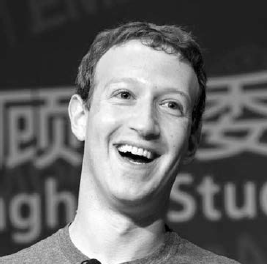
“One of our big focus areas for 2018 is making sure the time we all spend on Facebook is time well spent.
We built Facebook to help people stay connected and bring us closer together with the people that matter to us. That’s why we’ve always put friends and family at the core of the experience.
But recently we’ve gotten feedback from our community that public content -- posts from businesses, brands and media -- is crowding out the personal moments that lead us to connect more with each other.
It’s easy to understand how we got here. Video and other public content have exploded on Facebook in the past couple of years. Since there’s more public content than posts from your friends and family, the balance of what’s in News Feed has shifted away from the most important thing Facebook can do -- help us connect with each other.
We feel a responsibility to make sure our services aren’t just fun to use, but also good for people’s well-being. So, we’ve studied this trend carefully by looking at the academic research and doing our own research with leading experts at universities.
The research shows that when we use social media to connect with people we care about, it can be good for our well-being. We can feel more connected and less lonely, and that correlates with long term measures of happiness and health. On the other hand, passively reading articles or watching videos -- even if they’re entertaining or informative -- may not be as good.
Based on this, we’re making a major change to how we build Facebook. I’m changing the goal I give our product teams from focusing on helping you find relevant content to helping you have more meaningful social interactions.
We started making changes in this direction last year, but it will take months for this new focus to make its way through all our products. The first changes you’ll see will be in News Feed, where you can expect to see more from your friends, family and groups.
As we carry this on, you’ll see less public content like posts from businesses, brands, and media. And the public content you see more will be held to the same standard -- it should encourage meaningful interactions between people.
For example, there are many tightknit communities around TV shows and sports teams. We’ve seen people interact way more around live videos than regular ones. Some news helps start conversations on important issues. But too often today, watching video, reading news or getting a page update is just a passive experience.
Now, I want to be clear: by making these changes, I expect the time people spend on Facebook and some measures of engagement will go down. But I also expect the time you do spend on Facebook will be more valuable. And if we do the right thing, I believe that will be good for our community and our business over the long term too.”
What is the update?
Today we use signals like how many people react to, comment on or share posts to determine how high they appear in News Feed.
With this update, we will also prioritize posts that spark conversations and meaningful interactions between people. To do this, we will predict which posts you might want to interact with your friends about, and show these posts higher in feed. These are posts that inspire backand- forth discussion in the comments and posts that you might want to share and react to.
What does this mean for Pages and public content?
Because space in News Feed is limited, showing more posts from friends and family and updates that spark conversation means we’ll show less public content, including videos and other posts from publishers or businesses.
As we make these updates, Pages may see their reach, video watch time and referral traffic decrease. The impact will vary from Page to Page. Pages making posts that people generally don’t react to or comment on could see the biggest decreases in distribution. Pages whose posts prompt conversations between friends will see less of an effect.
Can people still see posts from the Pages they follow at the top of News Feed?
Yes. People who want to see more posts from Pages they follow can choose See First in News Feed Preferences to make sure they always see posts from their favorite Pages.
What types of Page posts will show higher in News Feed?
Page posts that generate conversation between people will show higher in News Feed. For example, live videos often lead to discussion among viewers on Facebook – in fact, live videos on average get six times as many interactions as regular videos. Many creators who post videos on Facebook prompt discussion among their followers, as do posts from celebrities. In Groups, people often interact around public content. Local businesses connect with their communities by posting relevant updates and creating events. And news can help start conversations on important issues.
(Adapted from Facebook Newsroom, https://newsroom.fb.com, January 11, 2018)
The referent of the pronoun “this” in “Based on this, we’re making a major change to how we build Facebook.” (boldfaced in paragraph 8) is:
Questão 44 306522
ESPM 2018/3News Feed FYI: Bringing People Closer Together
By Adam Mosseri, Head of News Feed
Facebook was built to bring people closer together and build relationships. One of the ways we do this is by connecting people to meaningful posts from their friends and family in News Feed. Over the next few months, we’ll be making updates to ranking so people have more opportunities to interact with the people they care about. Mark (Zuckerberg) outlined this in a post last January.
“One of our big focus areas for 2018 is making sure the time we all spend on Facebook is time well spent.
We built Facebook to help people stay connected and bring us closer together with the people that matter to us. That’s why we’ve always put friends and family at the core of the experience.
But recently we’ve gotten feedback from our community that public content -- posts from businesses, brands and media -- is crowding out the personal moments that lead us to connect more with each other.
It’s easy to understand how we got here. Video and other public content have exploded on Facebook in the past couple of years. Since there’s more public content than posts from your friends and family, the balance of what’s in News Feed has shifted away from the most important thing Facebook can do -- help us connect with each other.
We feel a responsibility to make sure our services aren’t just fun to use, but also good for people’s well-being. So, we’ve studied this trend carefully by looking at the academic research and doing our own research with leading experts at universities.
The research shows that when we use social media to connect with people we care about, it can be good for our well-being. We can feel more connected and less lonely, and that correlates with long term measures of happiness and health. On the other hand, passively reading articles or watching videos -- even if they’re entertaining or informative -- may not be as good.
Based on this, we’re making a major change to how we build Facebook. I’m changing the goal I give our product teams from focusing on helping you find relevant content to helping you have more meaningful social interactions.
We started making changes in this direction last year, but it will take months for this new focus to make its way through all our products. The first changes you’ll see will be in News Feed, where you can expect to see more from your friends, family and groups.
As we carry this on, you’ll see less public content like posts from businesses, brands, and media. And the public content you see more will be held to the same standard -- it should encourage meaningful interactions between people.
For example, there are many tightknit communities around TV shows and sports teams. We’ve seen people interact way more around live videos than regular ones. Some news helps start conversations on important issues. But too often today, watching video, reading news or getting a page update is just a passive experience.
Now, I want to be clear: by making these changes, I expect the time people spend on Facebook and some measures of engagement will go down. But I also expect the time you do spend on Facebook will be more valuable. And if we do the right thing, I believe that will be good for our community and our business over the long term too.”
What is the update?
Today we use signals like how many people react to, comment on or share posts to determine how high they appear in News Feed.
With this update, we will also prioritize posts that spark conversations and meaningful interactions between people. To do this, we will predict which posts you might want to interact with your friends about, and show these posts higher in feed. These are posts that inspire backand- forth discussion in the comments and posts that you might want to share and react to.
What does this mean for Pages and public content?
Because space in News Feed is limited, showing more posts from friends and family and updates that spark conversation means we’ll show less public content, including videos and other posts from publishers or businesses.
As we make these updates, Pages may see their reach, video watch time and referral traffic decrease. The impact will vary from Page to Page. Pages making posts that people generally don’t react to or comment on could see the biggest decreases in distribution. Pages whose posts prompt conversations between friends will see less of an effect.
Can people still see posts from the Pages they follow at the top of News Feed?
Yes. People who want to see more posts from Pages they follow can choose See First in News Feed Preferences to make sure they always see posts from their favorite Pages.
What types of Page posts will show higher in News Feed?
Page posts that generate conversation between people will show higher in News Feed. For example, live videos often lead to discussion among viewers on Facebook – in fact, live videos on average get six times as many interactions as regular videos. Many creators who post videos on Facebook prompt discussion among their followers, as do posts from celebrities. In Groups, people often interact around public content. Local businesses connect with their communities by posting relevant updates and creating events. And news can help start conversations on important issues.
(Adapted from Facebook Newsroom, https://newsroom.fb.com, January 11, 2018)
The phrasal verb used in the sentence “As we carry this on, you’ll see less public content like posts from businesses, brands, and media.” (boldfaced in paragraph 10) means:
Questão 43 306520
ESPM 2018/3News Feed FYI: Bringing People Closer Together
By Adam Mosseri, Head of News Feed
Facebook was built to bring people closer together and build relationships. One of the ways we do this is by connecting people to meaningful posts from their friends and family in News Feed. Over the next few months, we’ll be making updates to ranking so people have more opportunities to interact with the people they care about. Mark (Zuckerberg) outlined this in a post last January.
“One of our big focus areas for 2018 is making sure the time we all spend on Facebook is time well spent.
We built Facebook to help people stay connected and bring us closer together with the people that matter to us. That’s why we’ve always put friends and family at the core of the experience.
But recently we’ve gotten feedback from our community that public content -- posts from businesses, brands and media -- is crowding out the personal moments that lead us to connect more with each other.
It’s easy to understand how we got here. Video and other public content have exploded on Facebook in the past couple of years. Since there’s more public content than posts from your friends and family, the balance of what’s in News Feed has shifted away from the most important thing Facebook can do -- help us connect with each other.
We feel a responsibility to make sure our services aren’t just fun to use, but also good for people’s well-being. So, we’ve studied this trend carefully by looking at the academic research and doing our own research with leading experts at universities.
The research shows that when we use social media to connect with people we care about, it can be good for our well-being. We can feel more connected and less lonely, and that correlates with long term measures of happiness and health. On the other hand, passively reading articles or watching videos -- even if they’re entertaining or informative -- may not be as good.
Based on this, we’re making a major change to how we build Facebook. I’m changing the goal I give our product teams from focusing on helping you find relevant content to helping you have more meaningful social interactions.
We started making changes in this direction last year, but it will take months for this new focus to make its way through all our products. The first changes you’ll see will be in News Feed, where you can expect to see more from your friends, family and groups.
As we carry this on, you’ll see less public content like posts from businesses, brands, and media. And the public content you see more will be held to the same standard -- it should encourage meaningful interactions between people.
For example, there are many tightknit communities around TV shows and sports teams. We’ve seen people interact way more around live videos than regular ones. Some news helps start conversations on important issues. But too often today, watching video, reading news or getting a page update is just a passive experience.
Now, I want to be clear: by making these changes, I expect the time people spend on Facebook and some measures of engagement will go down. But I also expect the time you do spend on Facebook will be more valuable. And if we do the right thing, I believe that will be good for our community and our business over the long term too.”
What is the update?
Today we use signals like how many people react to, comment on or share posts to determine how high they appear in News Feed.
With this update, we will also prioritize posts that spark conversations and meaningful interactions between people. To do this, we will predict which posts you might want to interact with your friends about, and show these posts higher in feed. These are posts that inspire backand- forth discussion in the comments and posts that you might want to share and react to.
What does this mean for Pages and public content?
Because space in News Feed is limited, showing more posts from friends and family and updates that spark conversation means we’ll show less public content, including videos and other posts from publishers or businesses.
As we make these updates, Pages may see their reach, video watch time and referral traffic decrease. The impact will vary from Page to Page. Pages making posts that people generally don’t react to or comment on could see the biggest decreases in distribution. Pages whose posts prompt conversations between friends will see less of an effect.
Can people still see posts from the Pages they follow at the top of News Feed?
Yes. People who want to see more posts from Pages they follow can choose See First in News Feed Preferences to make sure they always see posts from their favorite Pages.
What types of Page posts will show higher in News Feed?
Page posts that generate conversation between people will show higher in News Feed. For example, live videos often lead to discussion among viewers on Facebook – in fact, live videos on average get six times as many interactions as regular videos. Many creators who post videos on Facebook prompt discussion among their followers, as do posts from celebrities. In Groups, people often interact around public content. Local businesses connect with their communities by posting relevant updates and creating events. And news can help start conversations on important issues.
(Adapted from Facebook Newsroom, https://newsroom.fb.com, January 11, 2018)
In his message, Zuckerberg implies that Facebook users:
Questão 42 306518
ESPM 2018/3News Feed FYI: Bringing People Closer Together
By Adam Mosseri, Head of News Feed
Facebook was built to bring people closer together and build relationships. One of the ways we do this is by connecting people to meaningful posts from their friends and family in News Feed. Over the next few months, we’ll be making updates to ranking so people have more opportunities to interact with the people they care about. Mark (Zuckerberg) outlined this in a post last January.
“One of our big focus areas for 2018 is making sure the time we all spend on Facebook is time well spent.
We built Facebook to help people stay connected and bring us closer together with the people that matter to us. That’s why we’ve always put friends and family at the core of the experience.
But recently we’ve gotten feedback from our community that public content -- posts from businesses, brands and media -- is crowding out the personal moments that lead us to connect more with each other.
It’s easy to understand how we got here. Video and other public content have exploded on Facebook in the past couple of years. Since there’s more public content than posts from your friends and family, the balance of what’s in News Feed has shifted away from the most important thing Facebook can do -- help us connect with each other.
We feel a responsibility to make sure our services aren’t just fun to use, but also good for people’s well-being. So, we’ve studied this trend carefully by looking at the academic research and doing our own research with leading experts at universities.
The research shows that when we use social media to connect with people we care about, it can be good for our well-being. We can feel more connected and less lonely, and that correlates with long term measures of happiness and health. On the other hand, passively reading articles or watching videos -- even if they’re entertaining or informative -- may not be as good.
Based on this, we’re making a major change to how we build Facebook. I’m changing the goal I give our product teams from focusing on helping you find relevant content to helping you have more meaningful social interactions.
We started making changes in this direction last year, but it will take months for this new focus to make its way through all our products. The first changes you’ll see will be in News Feed, where you can expect to see more from your friends, family and groups.
As we carry this on, you’ll see less public content like posts from businesses, brands, and media. And the public content you see more will be held to the same standard -- it should encourage meaningful interactions between people.
For example, there are many tightknit communities around TV shows and sports teams. We’ve seen people interact way more around live videos than regular ones. Some news helps start conversations on important issues. But too often today, watching video, reading news or getting a page update is just a passive experience.
Now, I want to be clear: by making these changes, I expect the time people spend on Facebook and some measures of engagement will go down. But I also expect the time you do spend on Facebook will be more valuable. And if we do the right thing, I believe that will be good for our community and our business over the long term too.”
What is the update?
Today we use signals like how many people react to, comment on or share posts to determine how high they appear in News Feed.
With this update, we will also prioritize posts that spark conversations and meaningful interactions between people. To do this, we will predict which posts you might want to interact with your friends about, and show these posts higher in feed. These are posts that inspire backand- forth discussion in the comments and posts that you might want to share and react to.
What does this mean for Pages and public content?
Because space in News Feed is limited, showing more posts from friends and family and updates that spark conversation means we’ll show less public content, including videos and other posts from publishers or businesses.
As we make these updates, Pages may see their reach, video watch time and referral traffic decrease. The impact will vary from Page to Page. Pages making posts that people generally don’t react to or comment on could see the biggest decreases in distribution. Pages whose posts prompt conversations between friends will see less of an effect.
Can people still see posts from the Pages they follow at the top of News Feed?
Yes. People who want to see more posts from Pages they follow can choose See First in News Feed Preferences to make sure they always see posts from their favorite Pages.
What types of Page posts will show higher in News Feed?
Page posts that generate conversation between people will show higher in News Feed. For example, live videos often lead to discussion among viewers on Facebook – in fact, live videos on average get six times as many interactions as regular videos. Many creators who post videos on Facebook prompt discussion among their followers, as do posts from celebrities. In Groups, people often interact around public content. Local businesses connect with their communities by posting relevant updates and creating events. And news can help start conversations on important issues.
(Adapted from Facebook Newsroom, https://newsroom.fb.com, January 11, 2018)
According to the text, the changes announced by Facebook will basically affect:
Questão 41 306516
ESPM 2018/3News Feed FYI: Bringing People Closer Together
By Adam Mosseri, Head of News Feed
Facebook was built to bring people closer together and build relationships. One of the ways we do this is by connecting people to meaningful posts from their friends and family in News Feed. Over the next few months, we’ll be making updates to ranking so people have more opportunities to interact with the people they care about. Mark (Zuckerberg) outlined this in a post last January.
“One of our big focus areas for 2018 is making sure the time we all spend on Facebook is time well spent.
We built Facebook to help people stay connected and bring us closer together with the people that matter to us. That’s why we’ve always put friends and family at the core of the experience.
But recently we’ve gotten feedback from our community that public content -- posts from businesses, brands and media -- is crowding out the personal moments that lead us to connect more with each other.
It’s easy to understand how we got here. Video and other public content have exploded on Facebook in the past couple of years. Since there’s more public content than posts from your friends and family, the balance of what’s in News Feed has shifted away from the most important thing Facebook can do -- help us connect with each other.
We feel a responsibility to make sure our services aren’t just fun to use, but also good for people’s well-being. So, we’ve studied this trend carefully by looking at the academic research and doing our own research with leading experts at universities.
The research shows that when we use social media to connect with people we care about, it can be good for our well-being. We can feel more connected and less lonely, and that correlates with long term measures of happiness and health. On the other hand, passively reading articles or watching videos -- even if they’re entertaining or informative -- may not be as good.
Based on this, we’re making a major change to how we build Facebook. I’m changing the goal I give our product teams from focusing on helping you find relevant content to helping you have more meaningful social interactions.
We started making changes in this direction last year, but it will take months for this new focus to make its way through all our products. The first changes you’ll see will be in News Feed, where you can expect to see more from your friends, family and groups.
As we carry this on, you’ll see less public content like posts from businesses, brands, and media. And the public content you see more will be held to the same standard -- it should encourage meaningful interactions between people.
For example, there are many tightknit communities around TV shows and sports teams. We’ve seen people interact way more around live videos than regular ones. Some news helps start conversations on important issues. But too often today, watching video, reading news or getting a page update is just a passive experience.
Now, I want to be clear: by making these changes, I expect the time people spend on Facebook and some measures of engagement will go down. But I also expect the time you do spend on Facebook will be more valuable. And if we do the right thing, I believe that will be good for our community and our business over the long term too.”
What is the update?
Today we use signals like how many people react to, comment on or share posts to determine how high they appear in News Feed.
With this update, we will also prioritize posts that spark conversations and meaningful interactions between people. To do this, we will predict which posts you might want to interact with your friends about, and show these posts higher in feed. These are posts that inspire backand- forth discussion in the comments and posts that you might want to share and react to.
What does this mean for Pages and public content?
Because space in News Feed is limited, showing more posts from friends and family and updates that spark conversation means we’ll show less public content, including videos and other posts from publishers or businesses.
As we make these updates, Pages may see their reach, video watch time and referral traffic decrease. The impact will vary from Page to Page. Pages making posts that people generally don’t react to or comment on could see the biggest decreases in distribution. Pages whose posts prompt conversations between friends will see less of an effect.
Can people still see posts from the Pages they follow at the top of News Feed?
Yes. People who want to see more posts from Pages they follow can choose See First in News Feed Preferences to make sure they always see posts from their favorite Pages.
What types of Page posts will show higher in News Feed?
Page posts that generate conversation between people will show higher in News Feed. For example, live videos often lead to discussion among viewers on Facebook – in fact, live videos on average get six times as many interactions as regular videos. Many creators who post videos on Facebook prompt discussion among their followers, as do posts from celebrities. In Groups, people often interact around public content. Local businesses connect with their communities by posting relevant updates and creating events. And news can help start conversations on important issues.
(Adapted from Facebook Newsroom, https://newsroom.fb.com, January 11, 2018)
The capital letters “FYI” in the title of the article:
Questão 20 304733
FCM PB 2018/1TEXTO II
Wild and Captive Chimpanzees Share Personality Traits With Humans

A chimpanzee in Gombe National Park in Tanzania. Researchers have found that wild and captive chimps share personality traits much like those observed in humans. Credit: Alexander Weiss
"In the late 1950s and early 1960s, Jane Goodall started attributing personalities to the chimpanzees she followed in Gombe National Park in what is now Tanzania. In her descriptions, some were more playful or aggressive, affectionate or nurturing.
Many scientists at the time were horrified, she recalled. Considered an amateur — she didn’t yet have her Ph.D. — they contended she was inventing personality traits for animals. Dr. Goodall, now 83 years old, said in a phone interview on Monday from her home in England that scientists thought “I was guilty of the worst kind of anthropomorphism.”
But time has borne out her insights. Chimpanzees in the wild have personalities similar to those in captivity, and both strongly overlap with traits that are familiar in humans, a new study published in Scientific Data confirms. The new examination of chimpanzees at Gombe updates personality research conducted on 24 animals in 1973 to include more than 100 additional chimps that were evaluated a few years ago. The animals were individually assessed by graduate students in the earlier study, and in the latest by Tanzanian field assistants, on personality traits like agreeableness, extroversion, depression, aggression and self-control.
Researchers used different questionnaires to assess the chimps’ traits in the two studies, but most of the personality types were consistent across the two studies. These traits seen among wild chimps matched ones seen among captive animals, the study found, and are similar to those described in people. Dr. Goodall, who is promoting a new documentary, “Jane,” about those early days of her research, said she’s not surprised. She knew from childhood experiences with guinea pigs, tortoises and her favorite dog, Rusty, that animals have personalities that are quite familiar. “I honestly don’t think you can be close to any animals and not realize their very vivid personalities,” she said.
Clive Wynne, a professor and director of the Canine Science Collaboratory at Arizona State University in Tempe, who was not involved in the research, said the new study offered a “really rich picture” of the overlap among species. “It’s backing up and reinforcing a number of things that we assume about animal personality that are seldom established with this degree of security in substantial wild-living populations,” said Dr. Wynne, who concurs that dogs, his area of specialty, also have similar personality traits.
Robert Latzman, an associate professor at Georgia State University, who was not involved in the study, said his research with chimpanzees in zoos has always left open the question of whether animals in the wild are somehow different. “What’s exciting about these data is there’s some suggestion that wild apes look very similar to what we would expect in terms of basic dispositional traits and continuity of those traits — and I don’t mean just to captive chimpanzees, but to humans,” he said. “The work in the wild underscores how similar these animals truly are to humans.”
Alexander Weiss, who led the new study, said he was particularly interested in examining the personality traits of animals in the wild. His findings were in line with previous research he’s done on chimpanzees in captivity. “The fact that we’re showing this consistency in the wild is nice, because it allows us to draw more general conclusions,” said Dr. Weiss, a senior lecturer at the University of Edinburgh. “It’s not just being in a zoo that’s causing these individual traits to be stable.” The study’s underlying data will be made publicly available so other scientists can use them in their own research, he said.
Although most of the animals tested in 1973 had died by the time the recent analysis was conducted, the study also concluded that an animal’s personality traits were generally consistent over time. Dr. Goodall said that fits what she’s seen, too. She only visits Gombe twice a year now, and only two animals are still alive from the days when she knew them as individuals. One, a mother of twins named Gremlin, has changed a bit, Dr. Goodall said. “I think the main difference in her personality is she’s become more confident as she gets older, just like people do,” she said.
Dr. Goodall added that she’s pleased that researchers are still finding so much of interest at Gombe, and tapping into the expertise of Tanzanian field workers. And, of course, she’s happy that the academic perspective has shifted from the time when she was told only humans had personalities, minds and emotions. “Today you can get your Ph.D. studying animal personality. I think we’ve come around full-cycle,” she said. “It absolutely vindicates all that I’ve ever believed.”
(Adapted from https://www.nytimes.com/2017/10/24/science/chimpanzees-goodall.html)
The adverb seldom (5th paragraph) may be replaced by:
06