


![[Marketing] Questao Topo - deslogado](https://storage.estuda.com.br/banners/0_6b7ebee90b03af1c560c73bb8bcce34a_banner_deslogado_70_dias.png)
Questões de Inglês
19.971 Questões
Questão 22 335432
CESMAC Medicina 1° Dia 2018/1Read the text below and answer the following question based on it.
Is gene editing ethical?
Gene editing is the modification of DNA sequences in living cells. What that means in reality is that researchers can either add mutations or substitute genes in cells or organisms.
Gene editing holds the key to preventing or treating debilitating genetic diseases, giving hope to millions of people around the world. Yet the same technology could unlock the path to designing our future children, enhancing their genome by selecting desirable traits such as height, eye color, and intelligence.
While this concept is not new, a real breakthrough came 5 years ago when several scientists saw the potential of a system called CRISPR/Cas9 to edit the human genome.
CRISPR/Cas9 allows us to target specific locations in the genome with much more precision than previous techniques. This process allows a faulty gene to be replaced with a non-faulty copy, making this technology attractive to those looking to cure genetic diseases.
The technology is not foolproof, however. Scientists have been modifying genes for decades, but there are always trade-offs. We have yet to develop a technique that works 100 percent and doesn't lead to unwanted and uncontrollable mutations in other locations in the genome.
In a laboratory experiment, these so-called off-target effects are not the end of the world. But when it comes to gene editing in humans, this is a major stumbling block.
The fact that gene editing is possible in human embryos has opened a Pandora's box of ethical issues.
Here, the ethical debate around gene editing really gets off the ground.
When gene editing is used in embryos — or earlier, on the sperm or egg of carriers of genetic mutations — it is called germline gene editing. The big issue here is that it affects both the individual receiving the treatment and their future children.
This is a potential game-changer as it implies that we may be able to change the genetic makeup of entire generations on a permanent basis.
Adaptado de: <https://www.medicalnewstoday.com/articles/319817.php> (Acessado em 21 de outubro de 2017)
As for the new CRISPR/Cas9 system technique,
Questão 21 335431
CESMAC Medicina 1° Dia 2018/1Read the text below and answer the following question based on it.
Is gene editing ethical?
Gene editing is the modification of DNA sequences in living cells. What that means in reality is that researchers can either add mutations or substitute genes in cells or organisms.
Gene editing holds the key to preventing or treating debilitating genetic diseases, giving hope to millions of people around the world. Yet the same technology could unlock the path to designing our future children, enhancing their genome by selecting desirable traits such as height, eye color, and intelligence.
While this concept is not new, a real breakthrough came 5 years ago when several scientists saw the potential of a system called CRISPR/Cas9 to edit the human genome.
CRISPR/Cas9 allows us to target specific locations in the genome with much more precision than previous techniques. This process allows a faulty gene to be replaced with a non-faulty copy, making this technology attractive to those looking to cure genetic diseases.
The technology is not foolproof, however. Scientists have been modifying genes for decades, but there are always trade-offs. We have yet to develop a technique that works 100 percent and doesn't lead to unwanted and uncontrollable mutations in other locations in the genome.
In a laboratory experiment, these so-called off-target effects are not the end of the world. But when it comes to gene editing in humans, this is a major stumbling block.
The fact that gene editing is possible in human embryos has opened a Pandora's box of ethical issues.
Here, the ethical debate around gene editing really gets off the ground.
When gene editing is used in embryos — or earlier, on the sperm or egg of carriers of genetic mutations — it is called germline gene editing. The big issue here is that it affects both the individual receiving the treatment and their future children.
This is a potential game-changer as it implies that we may be able to change the genetic makeup of entire generations on a permanent basis.
Adaptado de: <https://www.medicalnewstoday.com/articles/319817.php> (Acessado em 21 de outubro de 2017)
One could state that
Questão 24 331034
CESMAC Medicina 1° Dia 2018/2Read the comic strip below and answer the following question based on it.
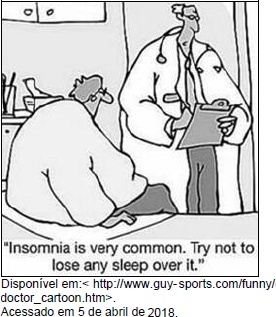
What the doctor implies is that
Questão 23 331033
CESMAC Medicina 1° Dia 2018/2Read the illustration below and answer the following question based on it.
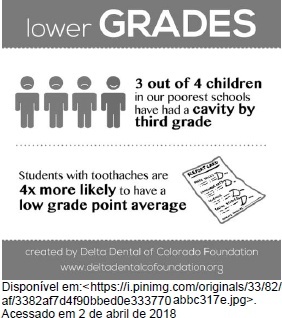
It can be inferred that
Questão 22 331031
CESMAC Medicina 1° Dia 2018/2Read the text below and answer the following question based on it.
More than half your body is not human
Human cells make up only 43% of the body's total cell count. The rest are microscopic colonists.
Understanding this hidden half of ourselves - our microbiome - is rapidly transforming understanding of diseases from allergy to Parkinson's.
No matter how well you wash, nearly every nook and cranny of your body is covered in microscopic creatures.
This includes bacteria, viruses, fungi and archaea (organisms originally misclassified as bacteria). The greatest concentration of this microscopic life is in the dark murky depths of our oxygen-deprived bowels.
The human genome - the full set of genetic instructions for a human being - is made up of 20,000 instructions called genes.
But add all the genes in our microbiome together and the figure comes out between two and 20 million microbial genes.
Prof Sarkis Mazmanian, a microbiologist from Caltech, argues: "We don't have just one genome, the genes of our microbiome present essentially a second genome which augment the activity of our own.
Science is rapidly uncovering the role the microbiome plays in digestion, regulating the immune system, protecting against disease and manufacturing vital vitamins.
It is a new way of thinking about the microbial world. To date, our relationship with microbes has largely been one of warfare.
Antibiotics and vaccines have been the weapons unleashed against the likes of smallpox, Mycobacterium tuberculosis or MRSA.
That's been a good thing and has saved large numbers of lives.
But some researchers are concerned that our assault on the bad guys has done untold damage to our "good bacteria".
Prof Knight has performed experiments on mice that were born in the most sanitised world imaginable.
He says: "We were able to show that if you take lean and obese humans and take their faeces and transplant the bacteria into mice you can make the mouse thinner or fatter depending on whose microbiome it got."
"This is pretty amazing right, but the question now is will this be translatable to humans"
This is the big hope for the field, that microbes could be a new form of medicine. It is known as using "bugs as drugs".
Adaptado de: < http://www.bbc.com/news/health-43674270> Acessado em 13 de abril de 2018.
Experiments on mice
Questão 21 331029
CESMAC Medicina 1° Dia 2018/2Read the text below and answer the following question based on it.
More than half your body is not human
Human cells make up only 43% of the body's total cell count. The rest are microscopic colonists.
Understanding this hidden half of ourselves - our microbiome - is rapidly transforming understanding of diseases from allergy to Parkinson's.
No matter how well you wash, nearly every nook and cranny of your body is covered in microscopic creatures.
This includes bacteria, viruses, fungi and archaea (organisms originally misclassified as bacteria). The greatest concentration of this microscopic life is in the dark murky depths of our oxygen-deprived bowels.
The human genome - the full set of genetic instructions for a human being - is made up of 20,000 instructions called genes.
But add all the genes in our microbiome together and the figure comes out between two and 20 million microbial genes.
Prof Sarkis Mazmanian, a microbiologist from Caltech, argues: "We don't have just one genome, the genes of our microbiome present essentially a second genome which augment the activity of our own.
Science is rapidly uncovering the role the microbiome plays in digestion, regulating the immune system, protecting against disease and manufacturing vital vitamins.
It is a new way of thinking about the microbial world. To date, our relationship with microbes has largely been one of warfare.
Antibiotics and vaccines have been the weapons unleashed against the likes of smallpox, Mycobacterium tuberculosis or MRSA.
That's been a good thing and has saved large numbers of lives.
But some researchers are concerned that our assault on the bad guys has done untold damage to our "good bacteria".
Prof Knight has performed experiments on mice that were born in the most sanitised world imaginable.
He says: "We were able to show that if you take lean and obese humans and take their faeces and transplant the bacteria into mice you can make the mouse thinner or fatter depending on whose microbiome it got."
"This is pretty amazing right, but the question now is will this be translatable to humans"
This is the big hope for the field, that microbes could be a new form of medicine. It is known as using "bugs as drugs".
Adaptado de: < http://www.bbc.com/news/health-43674270> Acessado em 13 de abril de 2018.
Understanding how our microbiome works
06