


![[Marketing] Questao Topo - deslogado](https://storage.estuda.com.br/banners/0_6b7ebee90b03af1c560c73bb8bcce34a_banner_deslogado_70_dias.png)
Questões de Inglês
19.971 Questões
Questão 1 14742772
UFMS PASSE - 2 Etapa 2023-2025Read the text to answer the question.
The incorporation of the English language in everyday life in Brazil can also be seen on the T-shirts or blouses worn by Brazilians, many of whom do not know the meaning of what is printed on them. T-shirts with messages written in Portuguese are hardly found on the streets in Brazil and messages in English are as common as is the practice of wearing T-shirts. Needless to say, the very word “T-shirt” is a consolidated loan word in Brazilian Portuguese. A samba composer, João Nogueira, refers to that fact with the following verses: [Gerusa bought a blouse / These were made in USA and she did the translation / The sentence she had on her chest / When she looked closely it was a bad word]. According to Lima (1988:45), Brazilian people’s habit of wearing clothes with statements printed in English may signal a desire to become part of what they see as the most important part of the world, the American consumer society, which for them epitomizes the global consumer society.
Paiva (1991) interviewed printing f irm representatives to verify their attitude towards the English language and found that their preference for that was supported by their prejudice in regarding Portuguese as an inferior language and certainly by the gross profits they envisage by selling shirts with English on them. Interestingly, some of the representatives explained the use of English on T-shirts as a status symbol pursued by some groups who feel the need to differentiate themselves from the popular sectors. On the other hand, if Brazilian people use Portuguese on their T-shirts, they will be linked to the desires of certain groups to differentiate themselves from the large number of people who now wear English on their T-shirts.
(AMMON, Ulrich.The dominance of English as a Language of science. Mouton de Gruyter, 2001. Disponível em: https://www.veramenezes.com/outlook.htm#:~:text=English%20circulates%20in%20Brazil%20as,presti ge%2C%20culture%20and%20technological%20development. Acesso em: 1 nov. 2024. Adaptado).
Assinale a alternativa que traduza, corretamente, as frases: “Gerusa bought a blouse / These were made in USA and she did the translation / The sentence she had on her chest / When she looked closely it was a bad word.”
Questão 19 14725139
UNESP 2 Fase - Conhecimentos Específicos 2023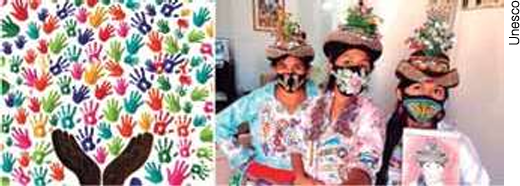
Why does cultural diversity matter?
Three-quarters of the world's major conflicts have a cultural dimension. Bridging the gap between cultures is urgent and necessary for peace, stability and development.
Cultural diversity is a driving force of development, not only with respect to economic growth, but also as a means of leading a more fulfilling intellectual, emotional, moral and spiritual life. Cultural diversity is thus an asset that is indispensable for poverty reduction and the achievement of sustainable development.
At the same time, acceptance and recognition of cultural diversity — in particular through innovative use of media and Information and Communications Technologies (ICTs) — are conducive to dialogue among civilizations and cultures, respect and mutual understanding.
(www.un.org. Adaptado.)
No trecho do primeiro parágrafo Bridging the gap between cultures is urgent, a expressão sublinhada indica
Questão 16 14725136
UNESP 2 Fase - Conhecimentos Específicos 2023Leia o texto para responder à questão.
Black authors shake up Brazil's literary scene
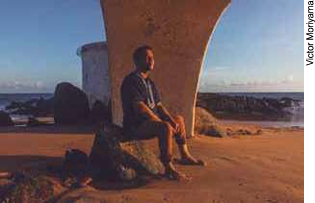
Itamar Vieira Junior, an author, says a major reason Black Brazilian writers are making their mark is because of a shift in how race and racism are being discussed in the country today.
Itamar Vieira Junior, whose day job working for the Brazilian government on land reform took him deep into the impoverished countryside, knew next to nothing about the mainstream publishing industry when he put the final touches on a novel he had been writing on and off for decades. On a whim, in April 2018, he sent the manuscript for Torto Arado, which means crooked plow, to a literary contest in Portugal, wondering what the jury would make of the hardscrabble tale of two sisters in a rural district in northeastern Brazil where the legacy of slavery remains palpable.
To his astonishment, Torto Arado won the 2018 LeYa award, a major Portuguese-language literary prize focused on discovering new voices. The recognition jump-started Mr. Vieira's career, making him a leading voice among the Black authors who have jolted Brazil's literary establishment in recent years with imaginative and searing works that have found commercial success and critical acclaim.
Torto Arado was the best-selling book in Brazil in 2021, with more than 300,000 copies sold to date. The previous year, that distinction went to Djamila Ribeiro's A Little Anti-Racist Handbook (Pequeno Manual Antirracista), a succinct and plainly written dissection of systemic racism in Brazil.
Mr. Vieira, a geographer, and Ms. Ribeiro, who studied philosophy, are part of a generation of Black Brazilians who became the first in their families to get a college degree, taking advantage of Federal Government programs. Mr. Vieira managed to use his day job at Brazil's land reform agency, where he has worked since 2006, to do field research. He studied the politics and power dynamics that shape the lives of rural workers, including some who toil in conditions analogous to modern-day slavery. That experience, he said, made the characters in his novel more layered and their fictional hometown, Água Negra, which means black water, feel authentic.
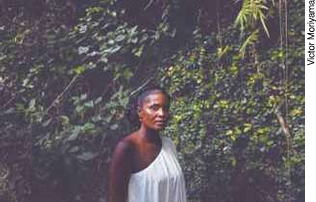
"I felt a calling to be generous enough to write in the same accessible way that generous authors before me wrote," Djamila Ribeiro said, "because otherwise you only legitimize the power spheres of those who are privileged."
The two authors are among the highest profile figures of a literary boom that includes Black contemporary writers and authors who are experiencing a revival. The clearest example is Carolina Maria de Jesus, who died in 1977 and whose memoir, Child of the Dark (Quarto de Despejo), is now a literary sensation, as it was when it was published in 1960. The book, a compilation of diary entries by Ms. Jesus, a single mother of three, offers a raw account of daily life in a São Paulo slum where dwellers picked through garbage for food and slept in shacks patched together with slabs of cardboard.
(Ernesto Londoño. www.nytimes.com, 12.02.2022. Adaptado.)
No trecho da legenda da imagem que retrata Djamila Ribeiro because otherwise you only legitimize the power spheres of those who are privileged, o termo sublinhado expressa
Questão 13 14725127
UNESP 2 Fase - Conhecimentos Específicos 2023Leia o texto para responder à questão.
Black authors shake up Brazil's literary scene
Itamar Vieira Junior, an author, says a major reason Black Brazilian writers are making their mark is because of a shift in how race and racism are being discussed in the country today.
Itamar Vieira Junior, whose day job working for the Brazilian government on land reform took him deep into the impoverished countryside, knew next to nothing about the mainstream publishing industry when he put the final touches on a novel he had been writing on and off for decades. On a whim, in April 2018, he sent the manuscript for Torto Arado, which means crooked plow, to a literary contest in Portugal, wondering what the jury would make of the hardscrabble tale of two sisters in a rural district in northeastern Brazil where the legacy of slavery remains palpable.
To his astonishment, Torto Arado won the 2018 LeYa award, a major Portuguese-language literary prize focused on discovering new voices. The recognition jump-started Mr. Vieira's career, making him a leading voice among the Black authors who have jolted Brazil's literary establishment in recent years with imaginative and searing works that have found commercial success and critical acclaim.
Torto Arado was the best-selling book in Brazil in 2021, with more than 300,000 copies sold to date. The previous year, that distinction went to Djamila Ribeiro's A Little Anti-Racist Handbook (Pequeno Manual Antirracista), a succinct and plainly written dissection of systemic racism in Brazil.
Mr. Vieira, a geographer, and Ms. Ribeiro, who studied philosophy, are part of a generation of Black Brazilians who became the first in their families to get a college degree, taking advantage of Federal Government programs. Mr. Vieira managed to use his day job at Brazil's land reform agency, where he has worked since 2006, to do field research. He studied the politics and power dynamics that shape the lives of rural workers, including some who toil in conditions analogous to modern-day slavery. That experience, he said, made the characters in his novel more layered and their fictional hometown, Água Negra, which means black water, feel authentic.
"I felt a calling to be generous enough to write in the same accessible way that generous authors before me wrote," Djamila Ribeiro said, "because otherwise you only legitimize the power spheres of those who are privileged."
The two authors are among the highest profile figures of a literary boom that includes Black contemporary writers and authors who are experiencing a revival. The clearest example is Carolina Maria de Jesus, who died in 1977 and whose memoir, Child of the Dark (Quarto de Despejo), is now a literary sensation, as it was when it was published in 1960. The book, a compilation of diary entries by Ms. Jesus, a single mother of three, offers a raw account of daily life in a São Paulo slum where dwellers picked through garbage for food and slept in shacks patched together with slabs of cardboard.
(Ernesto Londoño. www.nytimes.com, 12.02.2022. Adaptado.)
The aim of the text is to
Questão 15 14712255
PUC-SP Verão A 20234 Tips for Avoiding Math Errors When Reporting
1. Keep in mind the “percent change” is the rate of change. Use “percentage point” to indicate the amount of the change. We use “percent” to describe how much a number has changed in relation to a previous number.
2. Be extra cautious when comparing percentages, because this is where many people make mistakes.
3. When covering a story based heavily on numbers, look for ways to eliminate some numbers without sacrificing meaning or context. For instance, instead of reporting that tuition at a local college increased 100%, say it doubled.
4. If your math skills need sharpening, get training. A firm understanding of key math concepts helps journalists spot misinformation and math errors.
ORDWAY, Denise-Marie. 4 Tips for Avoiding Math Errors When Reporting. GIJN. Disponível em: https://gijn.org/2022/10/12/4-tips-foravoiding-math-errors-when-reporting/. Acesso em: 16 out. 2022.
O texto apresenta algumas dicas para os profissionais do jornalismo, com o objetivo de orientá-los, especialmente, para
Questão 13 14712251
PUC-SP Verão A 2023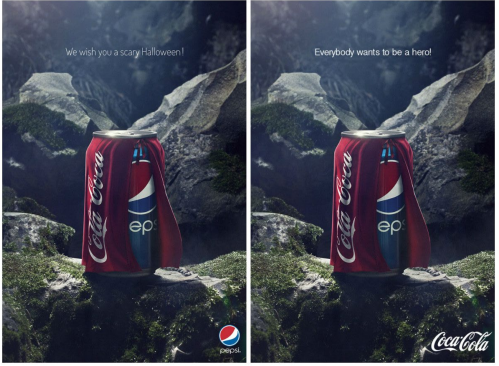
WHY DO COCA-COLA ADVERTISE?. The Marketing Agenda. Disponível em: https://themarketingagenda.com/2013/11/25/why-do-cocacola-bother-advertising/. Acesso em: 16 out. 2022.
O toque de humor na resposta dada pela Coca-Cola ao anúncio iniciado pela Pepsi pode ser percebido por meio do(a)
06