


![[Marketing] Questao Topo - deslogado](https://storage.estuda.com.br/banners/0_6b7ebee90b03af1c560c73bb8bcce34a_banner_deslogado_70_dias.png)
Questões de Inglês
19.971 Questões
Questão 31 482172
UniAtenas Sete Lagoas 2018/1How to Beat the Robots
Claire Cain Miller @clairecm MARCH 7, 2017
Maybe the automation of jobs will eventually create new, better jobs. Maybe it will put us all out of work. But as we argue about this, work is changing.
Today’s jobs — white collar, blue collar or no collar — require more education and interpersonal skills than those in the past. And many of the people whose jobs have already been automated can’t find new ones. Technology leads to economic growth, but the benefits aren’t being parceled out equally. Policy makers have the challenge of helping workers share the gains.
That will take at least some government effort, just as it did when the United States moved from an agricultural economy to an industrial one, with policies like high school for all or workers’ rights.
Whether there’s political will for big changes remains to be seen, but here are some policies that economists and policy experts think could help now. Disponível em: https://www.nytimes.com/2017/03/07/upshot/how-to-beat-the-robots.html?ref=economy. Acesso em: 07 de março de 2017.
Accordingo to the text,why can we be without job in the future?
Questão 32 481616
UniAtenas 2018/1Who Hasn’t Trump Banned? People From Places Where He’s Done Business
By RICHARD W. PAINTER and NORMAN L. EISENJAN. 29, 2017
President Trump’s executive order banning travel to the United States from seven predominantly Muslim countries is being rightly challenged in the courts for, among other things, its unconstitutional interference with free exercise of religion and denial of due process. Overlooked in the furor is another troubling aspect of the situation: President Trump omitted from his ban a number of other predominantly Muslim nations where his company has done business. This adds further illegitimacy to one of the most arbitrary executive actions in our recent history, and raises significant constitutional questions.
The seven countries whose citizens are subject to the ban are relatively poor. Some, such as Syria, are torn by civil war; others are only now emerging from war. One thing these countries have in common is that they are places where the Trump organization does little to no business.
By contrast, other neighboring Muslim countries are not on the list, even though some of their citizens pose just as great a risk — if not greater — of exporting terrorism to the United States. Among them are Saudi Arabia, the United Arab Emirates and Egypt. A vast majority of people living in these countries, like the people living in the seven subject to the immigration ban, are peaceful and law abiding. But these three countries have exported terror to the United States in the past. They accounted for 18 of the 19 terrorists who perpetrated the Sept. 11 attack on American soil (an attack which was directed by another Saudi, Osama Bin Laden, with the assistance of an Egyptian, Ayman al-Zawahri).
These countries, unlike those subject to the ban, are ones where Donald Trump has done business. In Saudi Arabia, his most recent government financial disclosure revealed several limited liability Trump corporations. In Egypt, he had two Trump companies registered. In the United Arab Emirates, he had licensed his name to a Dubai golf resort and a luxury residential development and spa. Some of these entities have since been closed, and others remain active.
Dispoível.em:https://www.nytimes.com/2017/01/29/opinion/who-hasnttrump-banned-people-from-places-where-hes-mademoney.html?action=click&pgtype=Homepage&clickSource=storyheading&module=opinion-c-col-left-region®ion=opinion-c-col-leftregion&WT.nav=opinion-c-col-left-region&_r=1. Acesso em 07 de março de 2017.
The author, from The New York Times, expresses one reason about Trump prohibed just some countries of the entering in the american area , what is this reason:
Questão 25 476612
UNEB Medicina 2018/1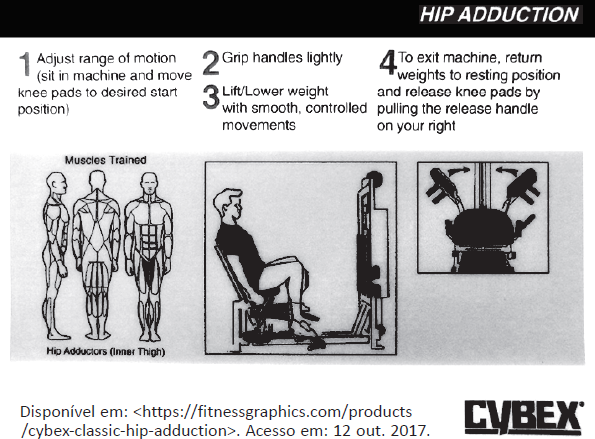
According to the instructions for using this workout machine, you should
Questão 24 476600
UNEB Medicina 2018/1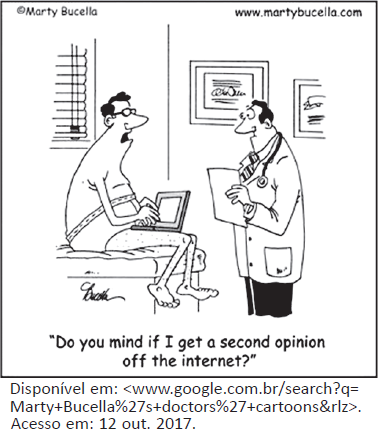
The patient in this cartoon
Questão 23 476598
UNEB Medicina 2018/1TEXTO:
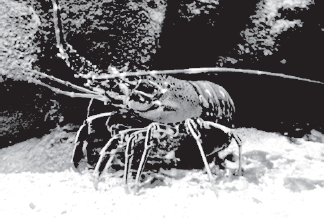
“The lobster’s a soft mushy animal that lives
inside a rigid shell. That rigid shell does not expand.
How can the lobster grow? Well, as the lobster grows,
that shell becomes very confining, and the lobster
[5] feels itself under pressure and uncomfortable. It goes
under a rock formation to protect itself from
predatory fish, casts off the shell, and produces a new
one. Well, eventually, that shell becomes very
uncomfortable as it grows. Back under the rocks. The
[10] lobster repeats this numerous times.
The stimulus for the lobster to be able to grow
is that it feels uncomfortable. Now, if lobsters had
doctors, they would never grow because as soon as
the lobster feels uncomfortable, goes to the doctor,
[15] gets a Valium, feels fine, never casts off its shell.
I think that we have to realize that times of stress
are also times that are signals for growth, and if we
use adversity properly, we can grow through
adversity.”
TWERSKI, Abraham. Disponível em: https://www.goalcast.com/2016/10/28/rabbi-twerski-times-stress-signals-growth/. Acesso em: 12 out. 2017.
Considering language use in the text, it’s correct to say:
Questão 22 476593
UNEB Medicina 2018/1TEXTO:
“The lobster’s a soft mushy animal that lives
inside a rigid shell. That rigid shell does not expand.
How can the lobster grow? Well, as the lobster grows,
that shell becomes very confining, and the lobster
[5] feels itself under pressure and uncomfortable. It goes
under a rock formation to protect itself from
predatory fish, casts off the shell, and produces a new
one. Well, eventually, that shell becomes very
uncomfortable as it grows. Back under the rocks. The
[10] lobster repeats this numerous times.
The stimulus for the lobster to be able to grow
is that it feels uncomfortable. Now, if lobsters had
doctors, they would never grow because as soon as
the lobster feels uncomfortable, goes to the doctor,
[15] gets a Valium, feels fine, never casts off its shell.
I think that we have to realize that times of stress
are also times that are signals for growth, and if we
use adversity properly, we can grow through
adversity.”
TWERSKI, Abraham. Disponível em: https://www.goalcast.com/2016/10/28/rabbi-twerski-times-stress-signals-growth/. Acesso em: 12 out. 2017.
For one to achieve personal and spiritual growth, the author stresses the importance of ____________
The alternative that does not complete this blank accordingly is
06